
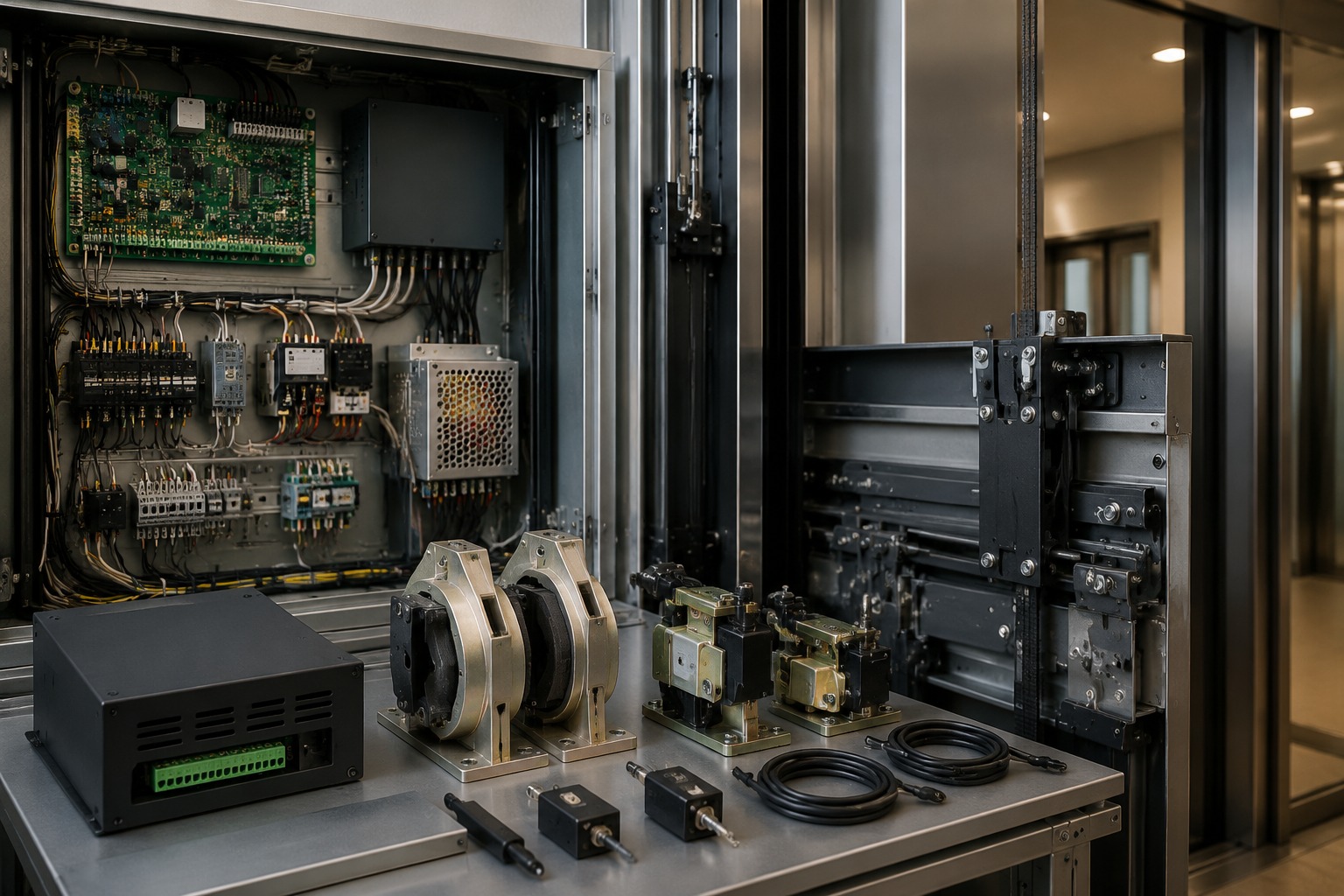
Brake power components are small parts with a very large safety role in any elevator system. In practical terms, the brake release power supply energises the brake coil so the machine can run, while the brake itself must close reliably when power is removed so the car can stop and hold. In South Africa, where maintenance teams often manage mixed fleets across Johannesburg, Cape Town, Durban, Pretoria, Gqeberha, Bloemfontein, and mining or logistics sites far from major depots, choosing the correct brake power part is not only a technical issue but also a downtime, compliance, and passenger safety issue.
This guide explains how brake release power supplies work, when a constant current brake supply is the better choice, what must be checked for a 48V brake power supply, how wire rope brake controllers fit into some applications, and what signs usually point to a failing brake circuit. It also covers testing after replacement, maintenance planning, spare stock strategy, and buying advice for service companies, distributors, building owners, and modernization contractors. If you are sourcing replacement parts for Hitachi, Toshiba, KONE, Mitsubishi, or other elevator systems, careful model matching is essential because brake power characteristics, connectors, current regulation, mounting, and response timing can vary widely between models.
For many lift owners and maintenance teams in South Africa, the main goal is simple: restore safe operation quickly without fitting an incompatible part. That is why many buyers look for dependable options such as a brake release power supply for lift applications, a constant current brake release supply, a 48V brake power unit, or a wire rope brake controller when the original system design requires it.
From a market perspective, South Africa has a broad installed base of passenger lifts, hospital lifts, goods lifts, service lifts, hotel lifts, and modernization projects. Demand is strongest in commercial buildings, residential towers, healthcare facilities, retail centres, logistics hubs, and public infrastructure. Imported elevator parts typically move through major trade routes linked to Durban, Cape Town, and Johannesburg distribution networks, so lead time, protective packaging, and clear identification of part numbers matter just as much as pricing.
The trend above reflects a realistic pattern seen in maintenance-heavy markets: aging equipment, more modernization work, and stronger emphasis on rescue readiness lead to steady demand for brake-related electrical parts. In 2026, this trend is likely to be reinforced by three factors: more predictive maintenance, tighter building safety expectations, and greater interest in energy-conscious, long-life components that reduce repeat callouts.
What brake release power supplies do
A brake release power supply converts and controls electrical power so the elevator brake coil receives the correct energising voltage or current required to open the brake. When the brake opens correctly, the traction machine can rotate freely and the elevator can move. When the command ends or a safety event occurs, power is removed and the brake springs apply mechanical holding force to stop and secure the machine.
In day-to-day elevator operation, this process happens repeatedly and very quickly. A good brake power unit helps the brake open with stable force, reduce unwanted delay, avoid excessive coil heating, and support smooth starts and stops. A poor or failing unit may cause inconsistent release, chatter, delayed opening, nuisance trips, or coil stress. These issues can affect ride quality and, more importantly, system reliability.
Brake release power supplies are especially important in high-use buildings such as shopping centres in Sandton, apartment towers in Cape Town, hospitals in Pretoria, and industrial facilities near Durban and Richards Bay, where elevators must cope with frequent starts. In such settings, repeated under-voltage or unstable current can accelerate wear and increase the chance of emergency shutdowns.
| Function | Why It Matters | Typical Risk If Incorrect | Operational Effect | Maintenance Impact | Buyer Checkpoint |
|---|---|---|---|---|---|
| Brake coil energising | Opens the brake when the elevator is commanded to run | Brake may not release fully | Delayed start or no movement | Extra fault tracing time | Confirm output matches original spec |
| Voltage conversion | Provides the required DC or controlled supply from system input | Wrong voltage may overheat or under-drive the coil | Unstable operation | Higher replacement frequency | Check input and output ratings |
| Current control | Helps maintain correct holding and release behaviour | Excess current can damage the coil | Harsh release or component stress | Possible coil replacement | Review current regulation type |
| Response timing | Supports proper coordination with control logic | Out-of-sequence action may trigger faults | Jerky starts or shutdowns | Repeated callouts | Match timing characteristics |
| Heat management | Protects the supply and coil in frequent-use lifts | Premature part failure | Intermittent operation | Unexpected downtime | Inspect thermal design and installation space |
| Protection features | Helps resist surge, overload, or short-circuit damage | Board burnout or blown fuses | Lift out of service | Emergency sourcing required | Check fuse and protection design |
The table shows why this part cannot be treated as a generic accessory. Even when a brake release power supply looks similar physically, electrical behaviour may differ enough to create service problems. Good sourcing practice includes checking the machine model, brake coil data, controller references, original part code, connector style, and installation environment.
Constant current brake supply use cases
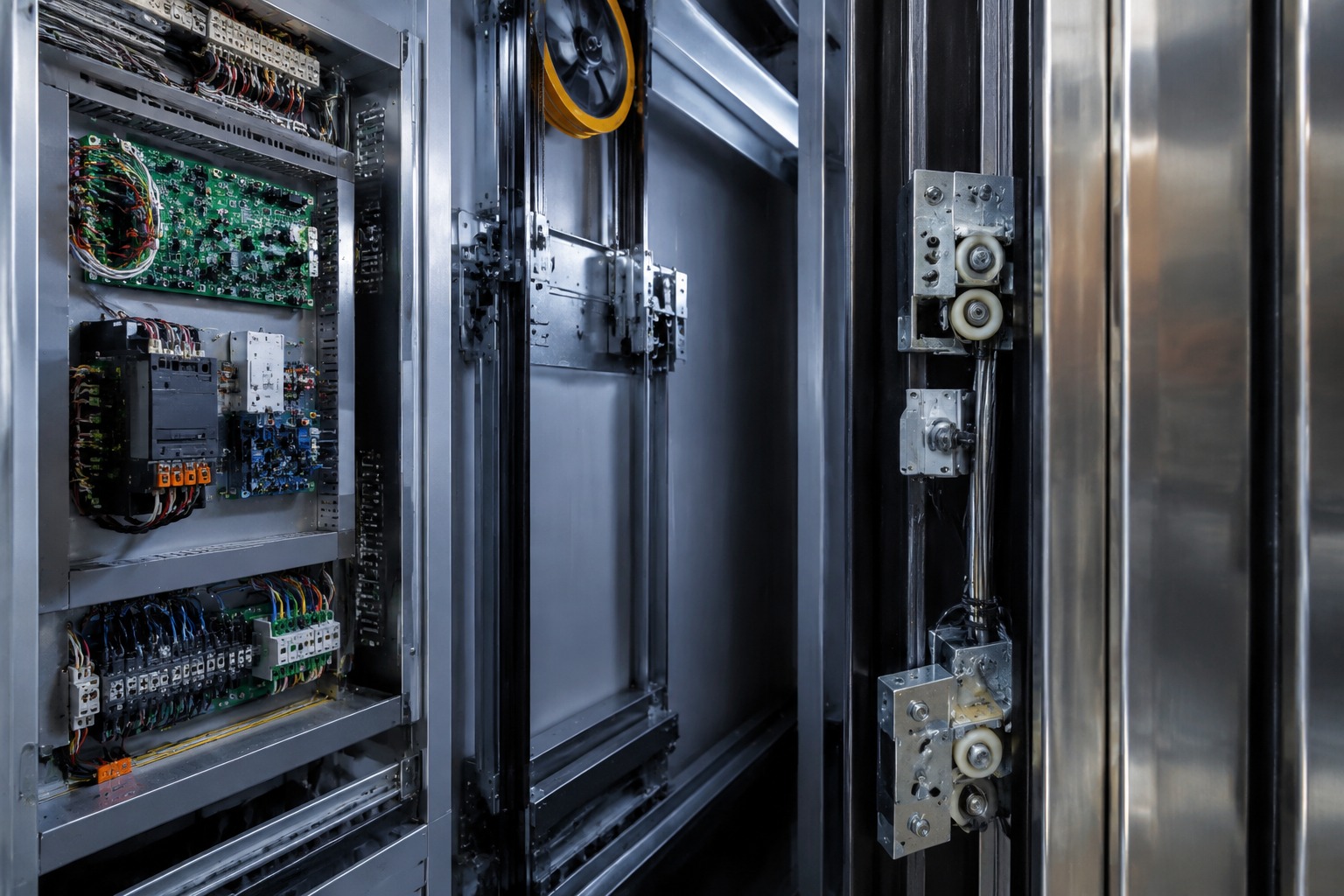
A constant current brake supply is designed to maintain a more controlled current to the brake circuit rather than simply delivering a fixed voltage output. This can be particularly useful where brake coils are sensitive to variation, where thermal stability matters, or where the original equipment manufacturer specified current-regulated operation for release consistency.
In practical field use, constant current designs are often chosen for elevators that experience variable mains conditions, frequent cycling, or older systems where maintaining predictable brake behaviour is important for safe operation. South African sites with voltage fluctuation concerns, remote commercial estates, mixed-use buildings, or heavily loaded service lifts may benefit from current-controlled performance when specified by the original system design.
Use cases commonly include modernization projects, replacement in aging control systems, and fleets where maintenance teams want to reduce repeat faults caused by marginal brake release performance. However, it is not a universal upgrade. A constant current supply should only be used when it matches the control philosophy and technical requirements of the elevator.
| Use Case | Why Constant Current Helps | Typical Site Type | Expected Benefit | Key Caution | Recommended Verification |
|---|---|---|---|---|---|
| Frequent start-stop traffic | More stable brake actuation over many cycles | Retail centres | Reduced nuisance brake faults | Must match coil rating | Check current and duty cycle |
| Voltage variation environment | Better current consistency to the brake coil | Older commercial buildings | Improved release reliability | Do not assume universal compatibility | Verify original wiring diagram |
| Modernization of legacy lifts | Helps align new part behaviour with brake needs | City office towers | Less repeated troubleshooting | Interface with controller must be correct | Confirm terminal mapping |
| Machine room heat exposure | Controlled current may reduce over-stress on coil | Coastal or warm regions | Better long-term stability | Ventilation still required | Assess ambient temperature |
| Hospital or passenger-critical use | Supports dependable brake release where uptime matters | Hospitals and hotels | Lower disruption risk | Testing must be documented | Perform rescue and stop tests |
| Mixed fleet maintenance planning | Useful when OEM spec clearly calls for current regulation | Service portfolios across cities | Simpler stock strategy for matched models | Never substitute across unmatched systems | Use part-code cross-checking |
For buyers comparing options, the important point is that constant current is not just a sales phrase. It changes how the brake coil is driven. If the equipment originally used this type of unit, replacing it with a non-equivalent supply can create intermittent faults that are hard to diagnose. This is one reason technical matching and traceable sourcing are so valuable.
From our technological capability side, we support model identification, part-code comparison, and compatibility review based on available labels, photos, and circuit references. That process helps maintenance teams avoid ordering a part that appears similar but behaves differently in operation.
48V brake power supply considerations
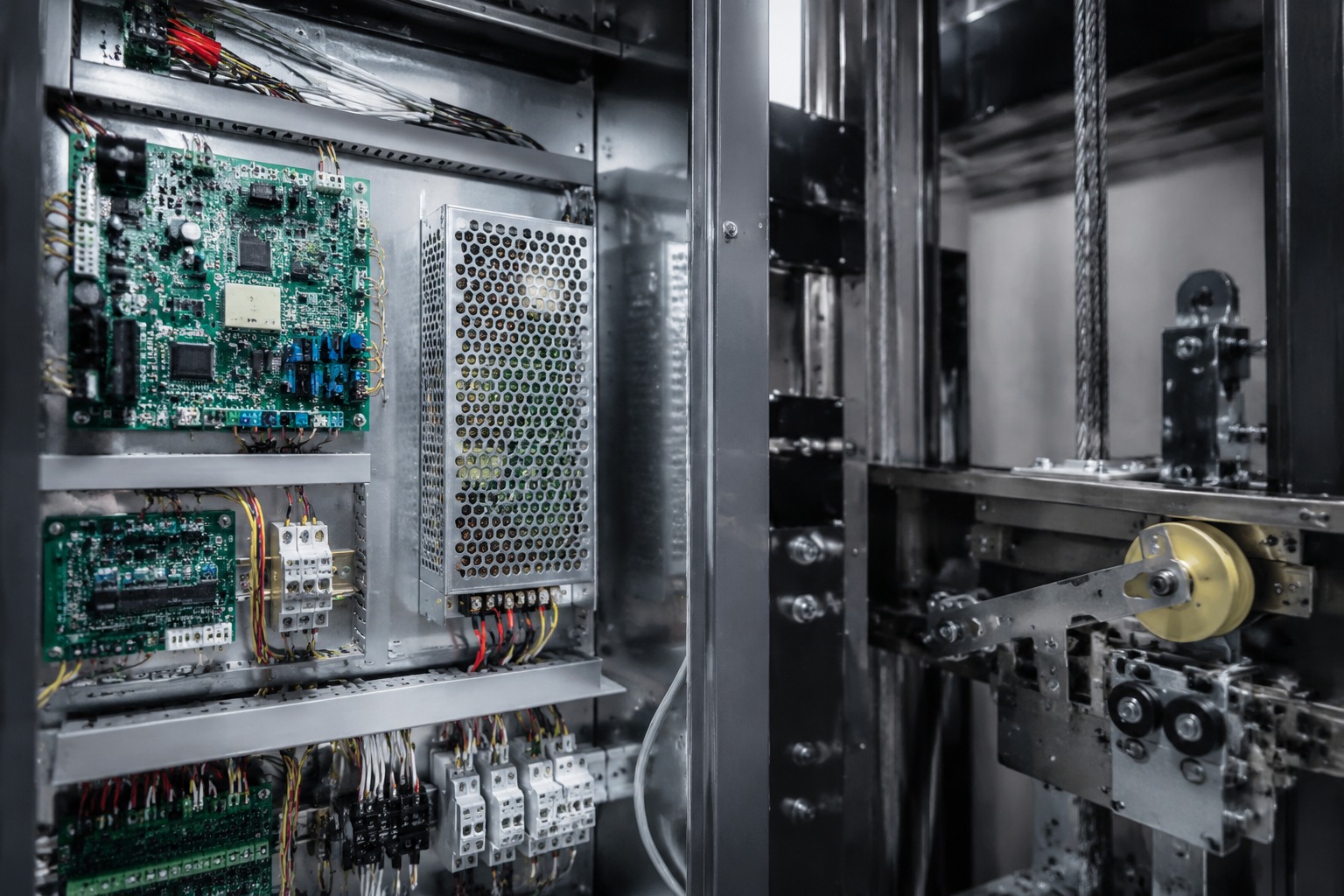
A 48V brake power supply is common in specific elevator brake circuits, but the voltage label alone is not enough for correct selection. Buyers should also review whether the output is DC48V as required, what the current capacity is, how the supply starts and holds the brake, whether surge protection is built in, and if the connector layout matches the installed panel.
In South Africa, 48V brake power supply replacement often appears in routine maintenance, reactive repair after electrical faults, or modernization of older equipment where spare parts are no longer locally stocked. Coastal locations such as Durban and Cape Town can add humidity and corrosion considerations, while inland machine rooms exposed to dust or heat may place extra stress on boards and terminals.
Another critical factor is system history. If a brake coil has been overheating, blowing fuses, or showing insulation weakness, replacing only the power supply may not solve the problem. The root cause could be elsewhere in the circuit. A complete check of wiring, connectors, control outputs, coil resistance, and brake mechanical condition should be part of the service process.
| 48V Check Item | Why It Is Important | Common Problem | Field Symptom | Inspection Method | Action Before Purchase |
|---|---|---|---|---|---|
| DC output rating | Brake coils need the specified output type | Wrong output causes poor release | Lift fails to start | Read label and measure output | Match OEM specification |
| Current capacity | Undersized supply may overload | Supply heats up or trips | Intermittent faults | Compare coil demand and part data | Confirm rated current |
| Input voltage range | Must suit controller power conditions | Unstable operation | Random stopping | Review panel documentation | Verify installation site power |
| Connector and terminal style | Ensures safe physical fit | Loose or modified wiring | Burn marks or poor contact | Visual check and photo match | Confirm terminal configuration |
| Thermal condition | High heat shortens life | Component aging | Occasional no-run faults | Inspect machine room ventilation | Plan cooling and cleaning |
| Protection circuitry | Helps resist shorts and surges | Board damage after electrical event | Blown fuse immediately after start | Inspect board and test related circuit | Check full circuit health |
When selecting a 48V brake power supply, it is wise to compare the exact part number, machine type, and application notes rather than relying only on the voltage marking. This is especially relevant where older installations in Johannesburg CBD, university campuses, or public buildings have gone through prior repairs and undocumented modifications.
Wire rope brake controller notes
A wire rope brake controller is used in systems where rope-related braking or associated control logic forms part of the overall safety and stopping strategy. Application details differ by manufacturer and elevator design, so this part should be selected and replaced with extra care. It is not interchangeable with a standard brake power board simply because both are involved in braking.
For maintenance teams, the main points to check are control compatibility, input and output signal logic, wiring condition, installation environment, and any linked safety circuits. If the elevator has experienced rope brake alarms, uneven response, or event-triggered shutdowns, the controller, sensors, cable terminations, and related mechanical interfaces should all be inspected together.
This is particularly relevant in modernization, goods lift service, and specialised building applications where a rope brake controller forms part of a broader safety arrangement. In ports, warehouses, industrial estates, and freight-related properties around Durban, Gqeberha, and Johannesburg logistics corridors, service teams often need parts that can be matched accurately and delivered in protective packaging because site downtime has immediate commercial cost.
| Controller Review Point | Reason | Possible Fault Sign | Operational Risk | Best Practice | Procurement Note |
|---|---|---|---|---|---|
| Model compatibility | Different controllers use different control logic | Alarm remains after replacement | Safety function may not reset | Verify exact reference | Use photo and label confirmation |
| Signal input type | Wrong signal expectation prevents correct response | No activation or false activation | Unexpected shutdown | Review wiring diagram | Check terminal numbering |
| Output behaviour | Must coordinate with safety sequence | Brake event out of timing | Service interruption | Test with controller logic | Request matching technical data |
| Environmental protection | Dust, moisture, and heat affect reliability | Intermittent controller error | Repeat callouts | Inspect enclosure and seals | Choose well-packed replacement stock |
| Associated wiring condition | Old wiring may mimic controller failure | Erratic signal reading | Misdiagnosis | Megger and continuity tests where appropriate | Order connectors if needed |
| Maintenance records | History often reveals recurring pattern | Same fault returns every few months | Unresolved underlying cause | Review logs before replacement | Build spares list from failure history |
For sites needing a matched wire rope brake controller, the safest approach is to provide the old part number, clear board photos, elevator brand, and installation details. This reduces the chance of ordering a controller that is physically similar but electrically different.
Common brake circuit failure signs
Brake circuit faults rarely appear in only one way. Some elevators fail to start, some stop irregularly, and others produce intermittent alarms that clear after a reset but return later. A systematic approach is important because the problem may come from the power supply, brake coil, wiring, relay contacts, control board output, fuse, connector damage, or heat-related deterioration.
Common signs include a brake that does not release consistently, repeated blown fuses, a burnt smell near the brake power module, visible darkening on terminals, abnormal machine noise at start, car hesitation, or fault logs related to brake release timing. In some cases, the elevator may run for a while and then fail once the machine room temperature rises. In others, corrosion or loose connections cause voltage drop that becomes worse under load.
The bar chart reflects where replacement demand commonly concentrates. Office towers, retail centres, and industrial sites often show higher brake component wear due to heavy traffic, longer service hours, and older mixed fleets.
| Failure Sign | Likely Cause | Urgency Level | First Check | Possible Corrective Action | Replacement Part Consideration |
|---|---|---|---|---|---|
| Lift does not start | Brake not releasing | High | Measure brake supply output | Check power unit and coil | Match power rating exactly |
| Intermittent start fault | Heat-related board issue or loose connection | High | Inspect terminals and machine room temperature | Retighten, clean, or replace damaged part | Choose stable quality unit |
| Blown fuse in brake circuit | Shorted supply, damaged coil, wiring fault | High | Isolate circuit and test resistance | Repair root cause before restart | Do not replace board blindly |
| Burn marks on terminals | Poor contact or overload | Medium to high | Check contact integrity | Replace damaged connectors | Order accessories if needed |
| Brake chatter or noise | Unstable voltage/current or mechanical issue | Medium | Observe release sequence | Check supply behaviour and brake setting | Verify proper supply type |
| Repeat brake alarm in logs | Timing mismatch or weak component | High | Review fault history and output timing | Replace failing module after diagnosis | Confirm controller compatibility |
In field service, the most expensive mistake is replacing the wrong part first. A weak brake coil can damage a new supply, and a failing board can be blamed on wiring when the real issue is current control. This is why experienced buyers prefer suppliers who can help with model matching and who understand the application rather than shipping a generic substitute.
Testing after replacement
After any brake power component replacement, testing is essential. The job is not complete when the board powers up. The elevator must be checked for correct brake release, smooth start, proper stopping, normal fault-free operation, and safe rescue performance according to the equipment design and site procedures.
Testing should normally include visual inspection, wiring confirmation, output measurement, sequence observation, no-load runs, loaded runs if applicable, repeated start-stop cycles, and fault log review. On some systems, rescue-related operation or emergency release logic should also be confirmed. Maintenance teams should follow the manufacturer instructions and local safety procedures applicable to the installation.
For buildings with high traffic such as hospitals, malls, transport-linked properties, or business districts in Johannesburg and Cape Town, post-replacement testing should be documented carefully. A fast repair is useful, but a stable repair is what prevents another shutdown two days later.
| Test Step | Purpose | What to Observe | Pass Indicator | If It Fails | Record to Keep |
|---|---|---|---|---|---|
| Visual inspection | Confirm proper installation | Terminals, mounting, signs of heat | No loose or burnt connections | Rework wiring and hardware | Photos before handover |
| Output measurement | Verify supply performance | Voltage/current at brake circuit | Within specified range | Check part match and input condition | Meter readings |
| Brake release observation | Check actuation timing | Clean release, no chatter | Smooth and repeatable action | Inspect coil and control sequence | Technician notes |
| Multiple run cycles | Expose intermittent faults | Starts, stops, heat build-up | No alarm or hesitation | Repeat diagnosis under load | Cycle count results |
| Emergency or rescue check | Confirm safe support function | Expected system behaviour | Procedure completes correctly | Stop service and investigate | Safety checklist |
| Fault log review | Ensure no hidden recurring issue | Controller history after test | No new brake-related faults | Trace related circuit or logic issue | Service report entry |
Strong service capability is not only about supplying the part. It is also about quick communication, careful packaging, support with identification, and a practical understanding of what installers need after arrival. That helps customers reduce repeat downtime and improve first-time replacement success.
Maintenance and spare stock planning
Brake power components are ideal candidates for planned spare stocking because failures can stop an elevator completely and often need quick replacement. For maintenance companies in South Africa serving multiple cities or remote sites, keeping selected stock on hand can reduce response time dramatically.
The best spare strategy depends on fleet size, brand mix, age of equipment, site criticality, and lead time risk. A hospital, hotel, logistics centre, university residence, or high-rise residential complex may justify holding critical brake power parts in local stock. For service providers managing varied brands, the most effective approach is usually a focused list of high-failure or high-risk items rather than random overstocking.
Manufacturing capability also matters when choosing a supplier. Buyers benefit from stable quality inspection, model-based sourcing, clean assembly standards where relevant, and protective packaging that helps electronic boards arrive safely despite long-distance transport through ports and inland distribution routes. In the South African context, this is valuable because parts may travel from import point to warehouse to regional technician stock before installation.
The area chart illustrates a strong market shift: service teams are moving away from purely reactive buying toward planned stocking, especially for electronic safety-related parts where downtime cost is high.
Good spare planning should include part number standardisation, stock rotation, environmental storage checks, and replacement history review. A spare sitting for years in poor conditions may be less reliable than expected. Packaging, humidity control, and labelling are therefore important even after purchase.
| Planning Factor | Why It Matters | Typical South Africa Scenario | Risk If Ignored | Suggested Action | Who Benefits Most |
|---|---|---|---|---|---|
| Fleet age profile | Older lifts need more critical spares | Modernized and legacy mixed portfolios | Longer downtime after failure | Identify high-risk models | Maintenance contractors |
| Site criticality | Some buildings cannot tolerate long outages | Hospitals and hotels | Operational disruption | Hold local emergency stock | Building owners |
| Lead time exposure | Imported parts may take time | Remote regions away from major hubs | Extended service interruption | Stock fast-moving brake parts | Regional distributors |
| Brand concentration | Repeated models simplify stocking | Portfolio with many Hitachi units | Too many low-use items | Stock by model family | Service companies |
| Storage condition | Electronics need proper protection | Hot or humid storerooms | Degraded spare before use | Use sealed, labelled packaging | All buyers |
| Failure history tracking | Data improves purchasing decisions | Recurring brake faults at high-traffic sites | Reactive and costly buying | Review annual replacement trends | Asset managers |
Buying advice is straightforward: do not purchase only on appearance or headline voltage. Ask for confirmation of model, output data, and application fit. Provide clear photos of labels, connectors, and the installed board. If possible, include the elevator brand, machine model, and fault description. This makes sourcing faster and more accurate.
Industries that commonly require these parts include commercial real estate, residential property management, hospitality, healthcare, education, mining-related support buildings, logistics, retail, and public infrastructure. Applications range from passenger lifts and bed lifts to service lifts and goods lifts, especially where traffic density, age, and stop frequency increase wear on brake circuits.
FAQ about elevator brake power parts
1. Can a brake release power supply be replaced with any unit of the same voltage?
No. Voltage alone is not enough. Output behaviour, current capacity, timing, connector layout, and controller compatibility must match the original application.
2. When is a constant current brake supply necessary?
It is necessary when the original elevator design specifies current-regulated brake operation or when the matched system requires that control method. It should not be treated as a universal substitute.
3. What should be checked before ordering a 48V brake power supply?
Check the exact part number, DC output requirement, current rating, input power, connector type, machine model, and whether there are signs of coil or wiring damage that may have caused the failure.
4. What are the usual signs that a brake power board is failing?
Common signs include failure to start, intermittent running faults, blown fuses, darkened terminals, burnt smell, brake chatter, and repeated brake-related alarms in the controller log.
5. Is replacing the board enough to solve every brake fault?
No. The brake coil, relay contacts, control outputs, terminals, cable condition, and mechanical brake adjustment may also need inspection. A complete diagnosis is the safest approach.
6. How should testing be done after replacement?
Testing should include visual inspection, electrical measurement, repeated run cycles, stop-and-start observation, and review of any rescue or emergency-related functions according to the equipment design and site procedure.
7. Should maintenance companies keep brake power parts in stock?
Yes, especially for common models, critical sites, or remote areas. Planned stock can reduce downtime significantly for hospitals, hotels, residential towers, and business-critical buildings.
8. What details help a supplier match the right part?
The most useful details are part number, brand, model, clear photos of labels and connectors, board dimensions, application notes, and the fault description.
9. How do local market conditions in South Africa affect buying decisions?
Lead times, import logistics, distance from ports to inland cities, mixed-brand installed bases, and the need for fast service all make accurate matching and reliable packaging especially important.
10. What trends will shape brake power parts demand in 2026?
Expect more predictive maintenance, stronger emphasis on rescue readiness, wider modernization activity, greater documentation of replacement history, and more interest in durable components that support sustainability through longer service life and lower repeat waste.
The comparison chart highlights what buyers value most when selecting a supplier for elevator brake power parts. Accurate model matching ranks first because the cost of receiving a near-match but not exact-match part is often another service visit, another outage, and avoidable safety risk.
In real projects, case results usually follow the same pattern. A distributor supporting maintenance teams in Gauteng may reduce callback rates by standardising the correct constant current units for a known fleet. A building owner in Cape Town may cut downtime by keeping one matched 48V brake power supply on site for a critical lift. A modernization contractor in Durban may avoid commissioning delays by sourcing a correctly identified wire rope brake controller before the old part is removed. These are practical improvements, not just purchasing decisions.
For companies comparing local suppliers and international sourcing channels, the best partners are those that combine technical awareness, careful quality review, and dependable service. Our role in this market is to help customers source compatible elevator spare parts across control boards, inverter and frequency converter parts, door components, locks, sensors, encoders, power supplies, buttons, COP panels, intercom parts, and related lift accessories. The value we add comes from three areas: technological capability for model matching and part identification, manufacturing and inspection capability for stable quality and protective packing, and service capability for responsive communication that helps reduce downtime.
If your team is evaluating a standard lift brake release power supply, a constant current brake release unit, a DC48V brake power supply, or a rope brake controller, the key to a successful replacement is simple: match the part correctly, inspect the full circuit, test thoroughly after installation, and build a smart spare plan for critical sites.
As South Africa moves further into 2026, lift maintenance will increasingly be shaped by digital fault tracking, selective predictive maintenance, stronger safety documentation, and sustainability goals that favour longer-lasting, properly matched components over repeated emergency substitutions. Brake power parts will remain a small but essential part of that wider reliability strategy.