
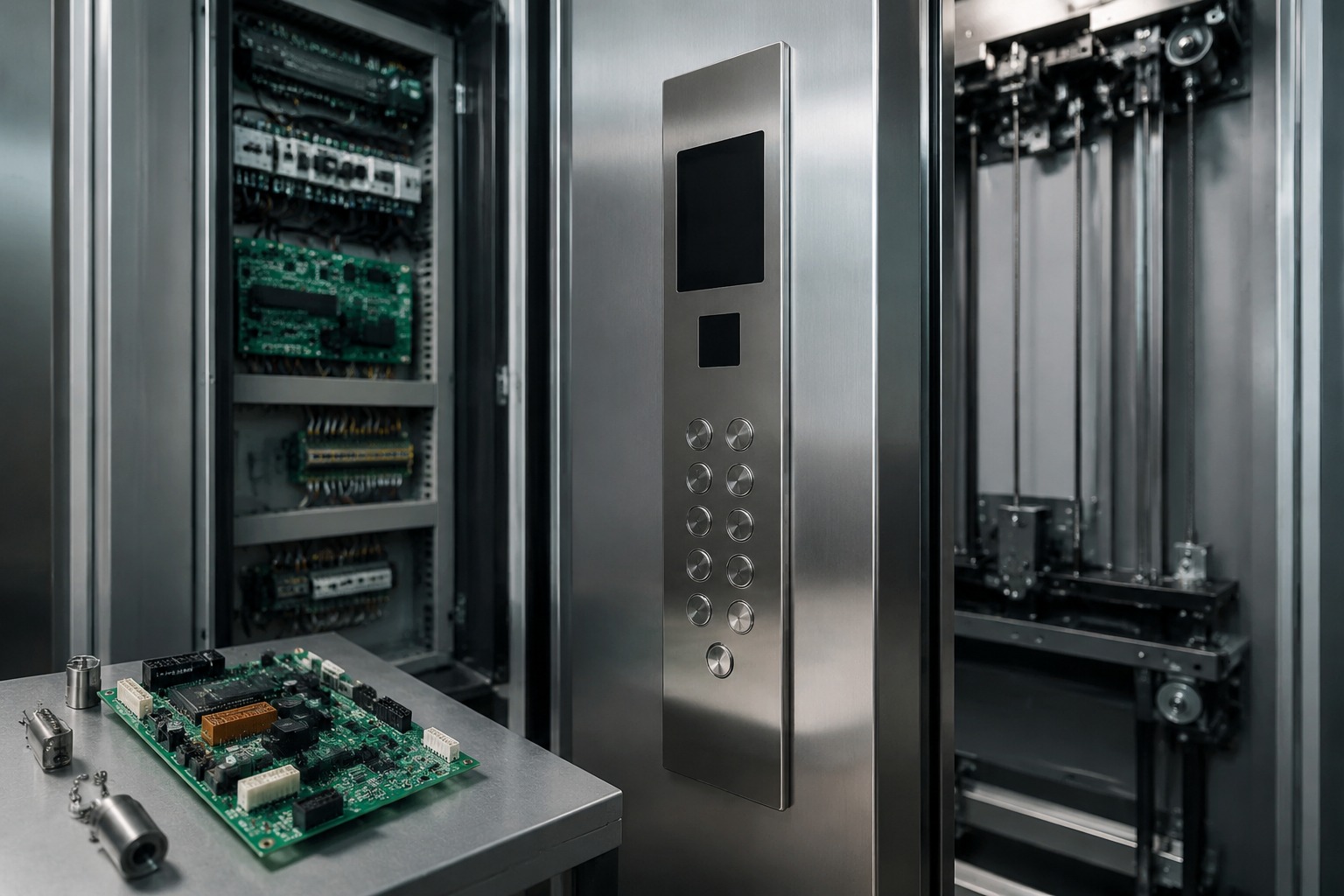
An elevator car operating panel, often called a COP, is more than a row of buttons inside a lift car. It is the main point where passengers interact with the elevator, where technicians diagnose faults, and where building owners express the quality level of the property. In South Africa, where lifts serve premium office towers in Sandton, residential buildings in Cape Town, hospitals in Pretoria, hotels in Durban, and mixed-use projects near growing logistics hubs, COP design affects usability, safety, maintenance efficiency, and long-term replacement cost.
The direct answer is simple: a good COP should match the building’s traffic pattern, the controller’s communication method, accessibility rules, and the visual standard expected by users. It should also be durable enough for the local environment, whether that means high daily traffic, coastal humidity, dust exposure, vandal resistance, or the need for fast spare part replacement. When buyers select a COP only by appearance, they often create wiring conflicts, poor readability, or frequent button failures. When they select based on compatibility, materials, and practical service needs, the result is smoother operation and lower downtime.
For maintenance companies and modernization contractors, COP customization is also a sourcing decision. The right supplier helps confirm dimensions, mounting positions, button layout, display type, logo requirements, and controller matching before production. That matters when the project involves replacing an outdated panel without changing the complete lift system. In these cases, model accuracy is just as important as finish quality.
In the South African market, demand for replacement and custom elevator panels is shaped by aging building stock, modernization of commercial lifts, refurbishment of hospitality properties, and the need to support multiple lift brands still operating in the field. Projects may require standard stainless steel panels, slim-profile COPs for narrow cabins, vandal-resistant buttons for public transport buildings, or highly branded faceplates for premium developments. Buyers reviewing custom elevator car control panels and button display options usually compare not only appearance, but also installation time, signal compatibility, and spare part support.
This guide explains what a COP includes, how to choose faceplates and displays, how to customize a panel for different applications, what accessibility and durability factors matter, how to align design with building use, how wiring and controllers affect panel selection, and what quality checks should happen before installation. It also reviews market trends for 2026, practical buying advice, and common questions from South African lift professionals.
What a COP includes
A complete elevator car operating panel normally includes the faceplate, floor buttons, door open and door close buttons, alarm button, emergency communication module or intercom connection point, display module, key switches where needed, braille or tactile markings, mounting hardware, wiring harnesses, and in some projects a card reader opening, overload indicator, fan or light controls, and service functions. The exact configuration depends on the type of building, the age of the control system, and the passenger profile.
In a standard commercial office lift, the COP is expected to provide fast, reliable floor selection, a clear floor position indicator, and a neat appearance. In hospitals, there may be larger buttons, clearer symbols, and enhanced visibility for stretcher use. In residential towers, the COP may include access control integration. In hotels, aesthetics often become part of the cabin branding strategy. In public buildings and transport nodes, impact resistance becomes a major concern.
Technically, the COP can be simple or advanced. A simple unit may use discrete button wiring and a segmented display. A more advanced unit may integrate a serial communication board, touchless call options, voice prompts, multimedia display functions, and custom engraving. In modernization projects, the most important point is often whether the new panel can connect to the existing controller and button signal logic without introducing unstable operation.
| COP Component | Main Function | Why It Matters | Common South Africa Use Case |
|---|---|---|---|
| Faceplate | Structural front surface of the panel | Defines appearance, mounting, and resistance to wear | Brushed stainless steel for offices and apartments |
| Floor Buttons | Passenger floor selection | Directly affects responsiveness and user confidence | Heavy-use replacement in CBD commercial buildings |
| Door Open/Close Buttons | Control door action | Important for accessibility and loading convenience | Frequent use in retail and hotel lifts |
| Display Module | Shows floor position, direction, or messages | Improves wayfinding and passenger comfort | LCD or LED indicators in modernized buildings |
| Alarm/Emergency Button | Emergency call initiation | Critical for passenger safety | Required in all occupied buildings |
| Intercom or Communication Port | Links to rescue communication system | Supports emergency response and compliance | High priority in hospitals and public buildings |
| Key Switches | Access for service or restricted functions | Prevents unauthorized use | Fire service, independent service, VIP floors |
The table above shows that a COP is not only a cosmetic item. Each part serves a functional purpose, and replacing one incorrectly can affect user safety or controller behavior. That is why experienced buyers verify the whole panel specification instead of treating buttons and displays as interchangeable.
Button display and faceplate choices
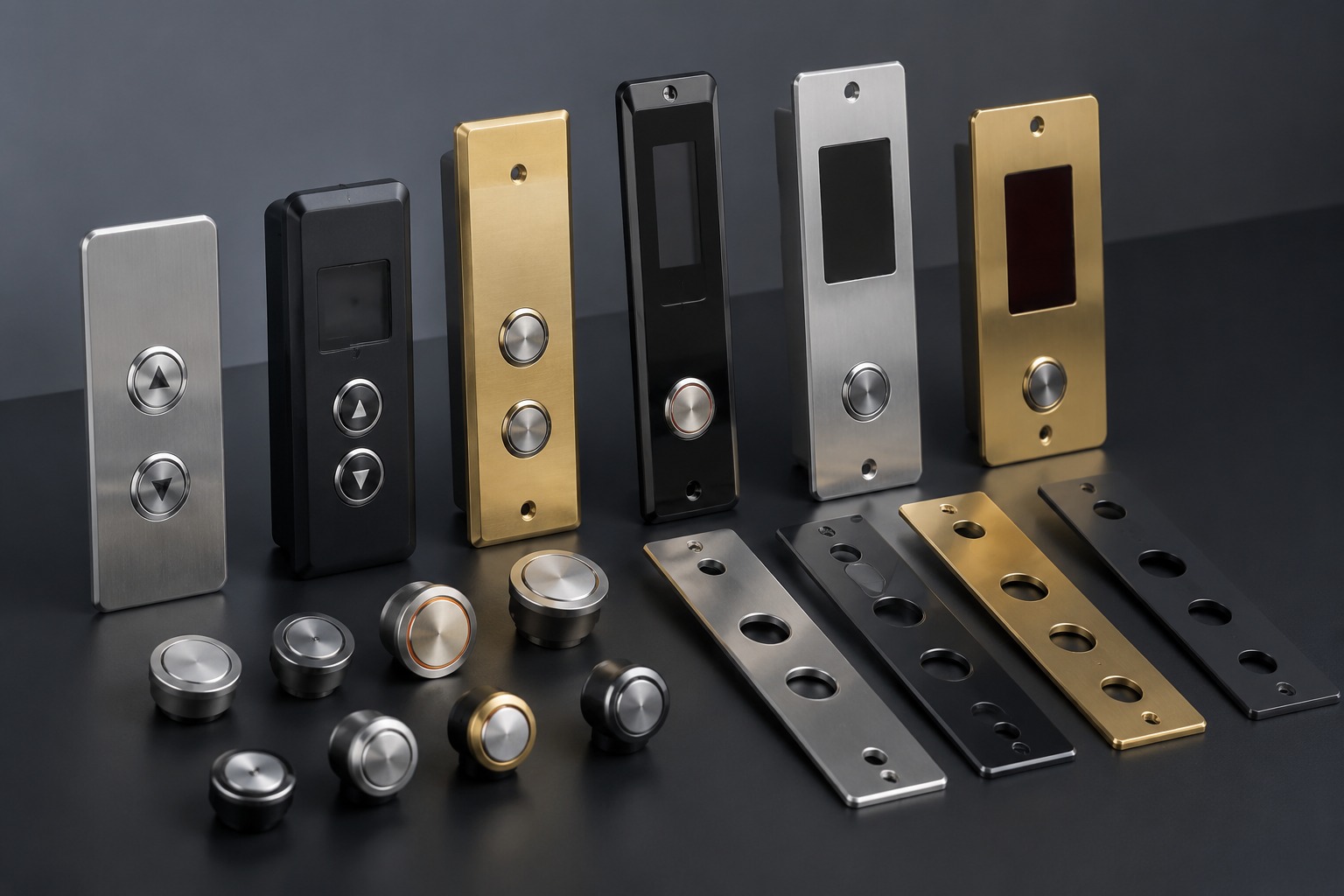
Button type, display style, and faceplate finish determine how the elevator feels to users from the moment they enter the car. For a modern office in Johannesburg, passengers may expect flush buttons with clean white backlighting and a sleek digital display. For a busy residential block, the priority may be robust round metal buttons that survive repeated use. For a coastal property in Durban or Cape Town, corrosion resistance may influence both the faceplate alloy and finishing process.
Common button choices include round mechanical buttons, square buttons, flush-mount designs, tactile braille buttons, vandal-resistant buttons with stronger housings, and illuminated push buttons in different colors. Display options may include seven-segment LED, dot matrix, LCD, TFT, and simple directional arrows. Faceplates are usually made from stainless steel, mirror stainless steel, hairline stainless steel, powder-coated steel, or decorative laminated finishes.
The right combination depends on branding, budget, and maintenance strategy. Mechanical buttons are widely used because they are straightforward to replace and easy for technicians to diagnose. Premium displays add visual value but may require more careful integration with older controllers. Mirror finishes look impressive but show fingerprints more quickly. Hairline stainless steel is often preferred because it balances appearance and practicality.
| Choice Category | Option | Advantages | Limitations |
|---|---|---|---|
| Button Style | Round metal push button | Reliable, familiar, easy to replace | Less premium than flush designs |
| Button Style | Flush button | Modern look, smooth surface | Needs accurate panel fabrication |
| Button Style | Vandal-resistant button | High durability in public areas | Higher unit cost |
| Display Type | LED segment display | Clear, simple, durable | Basic graphics only |
| Display Type | LCD/TFT display | Better visuals, branding options | More sensitive to compatibility and power issues |
| Faceplate Finish | Hairline stainless steel | Professional appearance, practical maintenance | Less reflective if a luxury look is required |
| Faceplate Finish | Mirror stainless steel | High-end visual effect | Shows marks and scratches more easily |
The explanation behind these choices is practical. A hospital or university building may prioritize durability and visibility over decorative finishes. A premium hotel may accept higher maintenance demands for a stronger design impact. A distributor serving multiple maintenance teams may prefer standardized button formats that simplify spare stock. Where older Hitachi installations are being refurbished, buyers often compare replacement panel geometry and hall fixture style together, including products such as Hitachi outbound call panels for matching elevator accessories to keep the interior and landing presentation consistent.
The line chart above illustrates a realistic growth trend in demand for replacement and customized COP panels in South Africa. Growth is supported by modernization projects, aging equipment, and the need for more reliable spare sourcing across office, residential, and hospitality segments.
How to customize elevator car panels
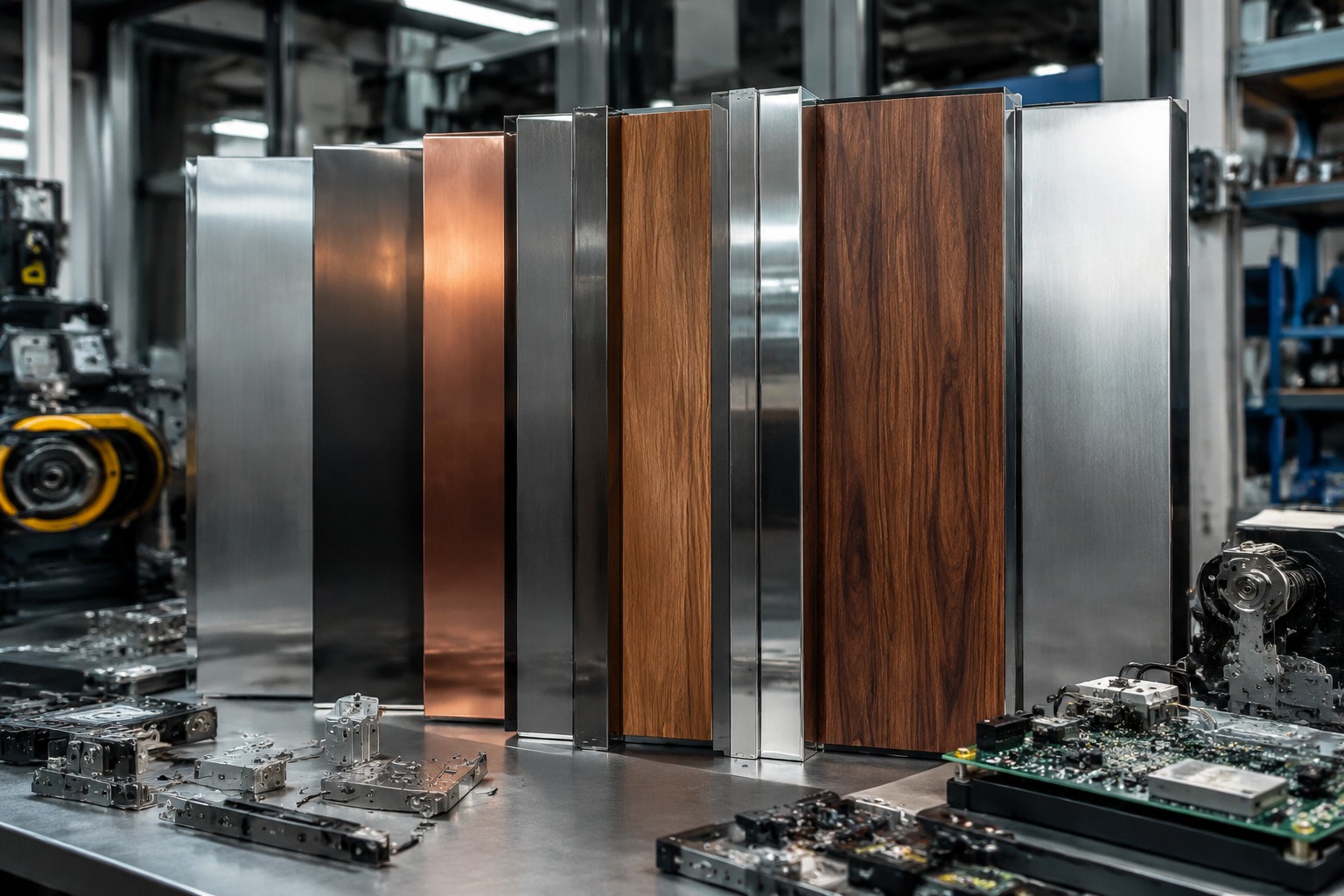
Customizing a car operating panel starts with identifying what must remain fixed and what can be changed. The fixed items are usually cabinet width, controller signal type, cut-out positions, mounting points, car return functions, and emergency communication requirements. The flexible items are normally faceplate thickness, finish, engraving, button style, display type, logo placement, braille markings, button illumination color, and optional features such as card reader windows or attendant controls.
A strong customization process usually follows eight steps. First, confirm the elevator brand, model, and controller details. Second, measure the existing COP, including total length, width, fixing holes, and cut-out diameters. Third, map all active functions on the old panel. Fourth, review desired appearance updates. Fifth, confirm button voltage, contact type, and display communication protocol. Sixth, create drawings for approval. Seventh, test sample components where possible. Eighth, perform pre-shipment inspection.
For modernization contractors, panel customization often has to balance visual improvement with installation speed. The best panel is not always the most complex one; it is the one that fits the car neatly, connects to the controller correctly, and can be maintained over time. In South African cities where lift downtime can affect office productivity or resident satisfaction immediately, quick replacement matters. This is especially true in dense business districts like Sandton or Cape Town CBD, where tenants expect minimal service disruption.
Customization also includes operational logic. For example, some buildings require a concealed fireman switch position, independent service key switch, extra rear door button, or speaker grille arrangement. Luxury residential towers may want discreet numbering and warm lighting, while industrial or municipal buildings may want strong legends and easy cleaning. In retrofits, it is wise to keep common service buttons in familiar positions to reduce passenger confusion.
| Customization Item | Typical Options | Decision Factor | Installer Benefit |
|---|---|---|---|
| Panel Size | Full height, half height, slim vertical | Car wall space and existing opening | Reduces rework inside the cabin |
| Button Layout | Single column, double column, grouped controls | Number of floors and usability | Improves passenger flow |
| Display Position | Top, center, integrated with buttons | Viewing angle and design preference | Better visibility after installation |
| Engraving | Laser etched, printed, braille marked | Durability and code requirements | Lower risk of fading labels |
| Lighting | White, blue, amber, custom illumination | Branding and visibility | Consistent user experience |
| Access Features | Card reader, key switch, code pad cut-out | Security level | Supports building access control |
| Service Features | Inspection controls or hidden switches | Technical maintenance needs | Easier servicing and troubleshooting |
The explanation here is that customization should never be treated as decoration alone. Every design choice affects fabrication accuracy, field installation, spare stock planning, and user behavior. A well-customized COP combines the right appearance with long-term practical value.
Accessibility and durability considerations
Accessibility and durability are two of the most important filters when specifying a COP for South Africa. Passenger diversity, building intensity, and environmental conditions all influence the final design. A panel that looks excellent in a showroom may perform poorly in a hospital, student residence, airport-adjacent building, or beachfront property if the button pressure, visibility, or material quality is not appropriate.
Accessibility begins with button height, tactile recognition, braille, contrast, and ease of force required to press buttons. Passengers should be able to locate and understand controls quickly. Direction indicators and floor information should remain readable under different lighting conditions. Alarm functions must be obvious. In buildings serving elderly users or patients, larger legends and highly visible button illumination can make a major difference.
Durability starts with material selection. Stainless steel faceplates are widely used because they resist scratches and are relatively easy to clean. Coastal areas may require stronger attention to corrosion risk. Frequent-use environments such as shopping centres, transit-linked properties, and public institutions benefit from reinforced buttons and anti-vandal design. Internal connectors and wiring must also be stable, because many failures that appear to be button issues are actually caused by weak terminals or inconsistent harness quality.
Future trends for 2026 include stronger demand for antimicrobial surfaces in healthcare, energy-efficient displays, recyclable material choices, touch-reduction options, and more attention to inclusive design. Sustainability is becoming more relevant in property portfolios that are targeting green building certifications. While a COP is only one component in the total lift system, its material and service life affect lifecycle cost and waste reduction.
| Requirement | Recommended Specification | Why It Helps | Typical Building Type |
|---|---|---|---|
| Braille Marking | Integrated on each floor button | Improves independent use | Public buildings, offices, apartments |
| High Contrast Legends | Clear symbols with strong visibility | Reduces user confusion | Hospitals, schools, municipal facilities |
| Low Activation Force | Comfortable button pressure | Supports elderly and disabled passengers | Healthcare and retirement properties |
| Reinforced Button Housing | Metal or anti-vandal structure | Survives abuse and heavy traffic | Retail, transport, student housing |
| Corrosion-Resistant Finish | Quality stainless or treated surface | Improves life in humid conditions | Durban, Cape Town coastal sites |
| Stable Internal Connectors | Secure harnesses and terminals | Prevents intermittent faults | All modernization projects |
| Readable Display | Balanced brightness and viewing angle | Supports wayfinding | Hotels, offices, mixed-use towers |
The table shows that accessibility and durability overlap. A panel that remains readable, pressable, and intact over time serves both users and maintenance teams. In practice, this means that cheap cosmetic upgrades often fail first in the real-world environment.
This bar chart reflects where COP upgrade demand is likely to be strongest. Commercial office refurbishments and residential modernization remain major drivers, but hospitals and retail also create steady demand because of intense daily usage and stricter user expectations.
Matching COP design with building use
The best COP for one building may be the wrong one for another. Matching panel design with building use is essential because passenger behavior, traffic density, maintenance frequency, and visual expectations vary widely. In South Africa, a practical specification often depends on the property type as much as on the lift brand.
In office towers, COPs should support high throughput, clear floor visibility, and a polished but practical finish. In residential properties, they should be durable, intuitive, and easy to maintain. In hotels, they should align with interior design while still allowing quick service access. In hospitals, readability, hygiene, and simple operation take priority. In warehouses or industrial support buildings, ruggedness matters more than decorative style.
Local conditions also matter. Buildings near the Port of Durban or industrial logistics corridors may face different environmental and maintenance realities compared with premium urban sites in Rosebank or Umhlanga. Public-facing buildings in busy transport zones may need vandal-resistant buttons and stronger faceplates. Premium mixed-use developments may prioritize visual consistency from hall stations to cabin panels. Where interior and landing fixture design must match, buyers may also compare outbound call panels for coordinated lift accessory upgrades to create a more complete modernization result.
| Building Use | Preferred COP Features | Reason | Recommended Priority |
|---|---|---|---|
| Commercial Office | Clear display, durable buttons, neat finish | High passenger turnover and brand image | Speed and appearance |
| Residential Tower | Robust buttons, access control support | Daily repeated use and resident security | Durability and familiarity |
| Hospital | Large legends, tactile guidance, hygiene-focused materials | Diverse users and critical transport need | Accessibility and clarity |
| Hotel | Premium faceplate, discreet controls, elegant lighting | Guest experience and interior design | Aesthetics with serviceability |
| Retail Centre | Anti-vandal buttons, easy cleaning, strong display | High traffic and varied users | Impact resistance |
| Municipal or Public Building | Simple layout, reliable emergency controls | Broad user base and maintenance practicality | Function over decoration |
| Industrial Support Facility | Heavy-duty components, basic but tough finish | Harsh usage conditions | Longevity |
The explanation is straightforward: elevator panel design should support how the building actually works. A stylish panel with unsuitable buttons or weak display visibility creates problems quickly. A practical panel aligned with real building traffic lasts longer and reduces complaints.
Wiring and controller compatibility
Wiring and controller compatibility are where many COP replacement projects succeed or fail. Two panels can look identical on the front and still be completely different behind the faceplate. Buyers must confirm signal voltage, common wiring arrangement, indicator lamp requirements, display communication protocol, harness connector type, and mounting space for boards or adapters.
Older elevators may use direct-wired button contacts and simple indicator lamps. Newer systems may use serial communication boards, multiplexed signals, or integrated display modules. Some brands allow straightforward substitution of mechanical components, while others need model-specific matching. In modernization work, a custom COP often acts as the bridge between an old controller and a refreshed cabin interior, so accurate interface design is essential.
This is also where supplier technical capability matters. A reliable parts partner should be able to review photos, drawings, old labels, and wiring data to reduce mismatch risk. From a technological capabilities standpoint, the best suppliers do more than sell panels. They help verify button circuits, display requirements, and replacement equivalence for brands such as Hitachi, Toshiba, KONE, Mitsubishi, and other systems commonly encountered in the field. That reduces installation surprises and supports safer maintenance planning.
For contractors working across Johannesburg, Durban, Pretoria, and Gqeberha, compatibility support can save significant travel time and return visits. If the panel arrives with incorrect connectors or unsupported display logic, the cost is not only the replacement part. It also includes lost technician hours, extended lift downtime, and pressure from building management.
The area chart shows the trend toward retrofit-matched and customized panels rather than generic replacements. As building owners extend asset life and control budgets, compatibility becomes more important than simply choosing a standard off-the-shelf faceplate.
Quality checks before installation
Quality inspection before installation is one of the most cost-effective steps in the whole procurement cycle. A COP should be checked visually, mechanically, electrically, and dimensionally before it reaches the site. This reduces the chance of discovering a problem only after the old panel has already been removed.
Basic checks include panel dimensions, mounting hole alignment, faceplate finish consistency, button movement, button illumination, braille and engraving accuracy, display function, connector matching, harness labeling, packaging protection, and accessory completeness. If the project includes a custom layout, approved drawings should be compared with the final product. If the panel is intended for an older controller, continuity or bench checks may be advisable before dispatch.
From a manufacturing capabilities perspective, panel quality is strongest when suppliers control material selection, cut-out precision, assembly consistency, and final inspection. Good fabrication is not only about clean metalwork. It is also about repeatable hole accuracy, stable button seating, proper internal fastening, and careful packaging that prevents scratches during shipment to South Africa through major ports such as Durban, Cape Town, or Coega.
Service capabilities matter after production as well. A responsive supplier should support model confirmation, provide clear photos or drawings before dispatch, label parts properly, and help resolve installation questions quickly. In the elevator parts trade, after-sales clarity often matters as much as the original price because downtime pressure is immediate.
| Pre-Installation Check | What to Verify | Risk if Ignored | Who Benefits |
|---|---|---|---|
| Dimensions | Length, width, thickness, mounting points | Panel does not fit existing opening | Installer and building owner |
| Button Operation | Smooth travel and proper feedback | Poor user experience or early failure | Passengers and maintenance team |
| Engraving/Braille | Correct floor numbers and symbols | Confusion and compliance issues | Passengers and inspectors |
| Display Function | Readability and signal response | Wrong floor indication or blank screen | Passengers and service team |
| Connector Matching | Harness and terminal compatibility | Delayed installation and rewiring | Technicians |
| Finish Quality | Scratches, dents, corrosion marks | Rejected handover appearance | Contractor and owner |
| Packaging Integrity | Protective wrap and support materials | Transit damage | Distributor and end user |
The explanation is simple: every quality check done before site work saves time and cost later. For maintenance firms managing several contracts, consistent pre-installation control improves customer trust and reduces repeat visits.
FAQ about elevator COP panels
What is the difference between a standard COP and a custom COP?
A standard COP follows a fixed format, while a custom COP is built to match specific dimensions, button layouts, finishes, display requirements, and controller interfaces. Custom options are especially useful in modernization projects where the old panel opening must be reused.
Can I replace only the buttons and keep the old faceplate?
Sometimes yes, if the cut-outs, electrical ratings, and mounting method match. However, if the faceplate is worn, poorly aligned, or not compatible with the new button body, replacing the full COP is often the better long-term solution.
How do I know if a COP is compatible with my elevator controller?
Check brand, model, controller type, wiring method, button voltage, display communication, connector style, and function map. Photos of the old panel front and back, plus label details, are very useful when confirming compatibility.
Which faceplate material is best for South Africa?
Hairline stainless steel is a common and balanced choice because it is durable, practical, and visually professional. For high-end interiors, mirror stainless may be preferred. For coastal sites, corrosion resistance should be reviewed carefully.
Are braille and tactile markings necessary?
They are strongly recommended because they improve accessibility and usability. In many buildings, they are an essential part of good practice and a better passenger experience.
What display type should I choose?
LED segment displays are simple and robust. LCD or TFT displays provide a more modern appearance and flexible messaging, but compatibility and power requirements should be verified carefully in retrofit work.
How long should a good COP last?
That depends on traffic and environment, but a properly built panel with quality buttons and correct installation should deliver reliable service for many years. High-use buildings may need periodic button replacement sooner than the faceplate itself.
What should distributors and maintenance companies look for in a supplier?
Look for accurate model matching, clear technical communication, reliable sourcing, stable inspection standards, protective packaging, and responsive support. These factors reduce mismatch risk and downtime.
The comparison chart highlights the capabilities that buyers usually value most when selecting a COP supplier. Appearance matters, but dependable model matching, inspection discipline, and service response are often what determine whether a project runs smoothly.
South Africa market, industries, and buying advice
South Africa remains a practical and technically diverse market for lift modernization and replacement parts. Major urban centres such as Johannesburg, Cape Town, Durban, and Pretoria continue to generate demand for elevator upgrades in offices, apartments, healthcare facilities, education buildings, hospitality sites, and logistics-linked developments. At the same time, aging installed bases mean that many buyers need support for legacy systems, mixed-brand portfolios, and non-standard replacement needs.
For buyers, the smartest purchasing approach is to begin with technical clarity instead of price alone. Confirm the exact need: full COP replacement, button-only replacement, display upgrade, or coordinated car and landing fixture modernization. Then evaluate supplier strength in three areas. First, technological capabilities: can the supplier help verify controller interfaces, signal logic, and model compatibility? Second, manufacturing capabilities: can the panel be fabricated accurately with stable quality, correct cut-outs, and durable assembly? Third, service capabilities: can the supplier respond quickly, package safely, and support problem-solving after dispatch?
These three capabilities are especially important for South African customers because imported parts must travel farther, lead times may matter, and site downtime is costly. Maintenance companies want fewer surprises. Distributors want repeatable product quality. Building owners want practical replacement options that do not force complete system change when only the COP needs renewal.
A useful buying checklist includes: controller details, panel dimensions, function list, finish preference, accessibility requirements, environmental risks, display format, connector photos, installation deadline, and spare part policy. If any of these are missing, ask for clarification before ordering. A cheaper but mismatched panel nearly always costs more in the field.
Looking ahead to 2026, several trends are likely to shape purchasing decisions in South Africa: stronger interest in retrofit-friendly components, more focus on inclusive design, increased attention to sustainability and service life, wider use of energy-efficient displays, and rising expectation for coordinated cabin and landing fixture aesthetics. Buyers who plan around compatibility and lifecycle value will be in the strongest position.
In summary, elevator COP customization is not just a design exercise. It is a technical, operational, and service decision. When the panel is chosen correctly, it improves passenger confidence, supports technicians, and helps building owners manage assets more effectively. When it is chosen poorly, the result is frustration, delay, and avoidable maintenance cost. For the South African market, the best results come from balancing local building needs with careful model matching, durable materials, reliable manufacturing, and responsive support.