
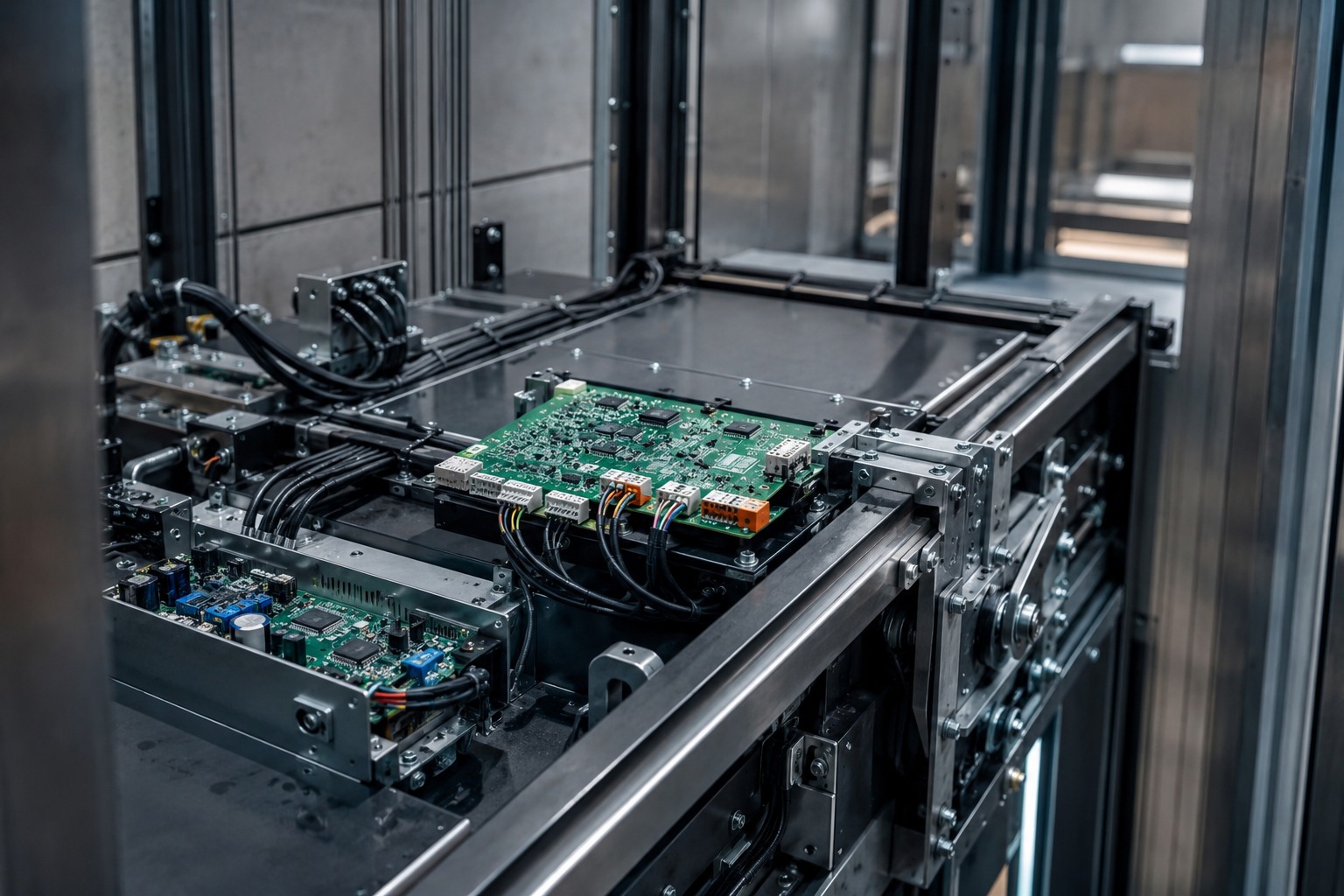
A car top communication board is the signal bridge mounted on or near the top of the elevator car that helps important devices communicate with the main control system. In practical maintenance work, it supports the exchange of door signals, car top inspection commands, safety circuit information, leveling inputs, sensor data, and service interface communication. When this board becomes unstable, technicians may see intermittent faults that are hard to trace: inspection mode may not respond correctly, door commands may drop out, communication alarms may appear, or the lift may stop unpredictably. For maintenance teams in South Africa, where uptime matters in office towers, hospitals, shopping centres, hotels, residential complexes, and public transport hubs, understanding the role of the car top communication board is essential for faster diagnosis and safer repairs.
In local service conditions from Johannesburg and Pretoria to Cape Town, Durban, Gqeberha, and Bloemfontein, many elevator contractors deal with mixed fleets that include legacy systems, modernized units, and imported components. That makes board identification, protocol matching, cable inspection, and replacement planning especially important. If your team is handling Toshiba systems or working through a modernization project, a careful check of the car top communication path can reduce repeat callouts and help prevent unnecessary replacement of unrelated parts.
For buyers, service managers, and field engineers, this guide covers what a car top communication board does, common communication failure signs, Toshiba car top board replacement notes, cable connector and protocol checks, inspection box links, post-repair testing, spare parts planning, and frequently asked questions. It also explains current market demand in South Africa, useful purchasing criteria, product comparison points, and expected 2026 trends around digital maintenance, safety compliance, and sustainability.
What a car top communication board does
The car top communication board is not just a passive junction board. In many elevator systems, it acts as an interface node between car-mounted devices and the main controller. Depending on design, it may condition signals, distribute power, collect sensor inputs, convert communication formats, or serve as a gateway for maintenance functions. In Toshiba-related systems, it can be closely tied to inspection functions, car top command processing, and interface communication for accessories installed on the car.
Typical devices linked through or around the car top board include door operators, limit or position sensors, leveling sensors, light curtains, car top inspection controls, emergency stop wiring, communication harnesses, and maintenance diagnostic points. In some systems, the board also helps ensure clean signal exchange in an electrically noisy environment created by motors, inverters, traveling cables, and door operators.
For a building owner, the easiest way to understand the board is this: it helps the elevator controller know what is happening on top of the car and allows technicians to work safely during inspection and maintenance. For a service company, it is a critical diagnostic point because faults here can mimic problems elsewhere in the system.
| Function | Purpose | Typical connected device | Common fault result | Service priority | Maintenance note |
|---|---|---|---|---|---|
| Signal collection | Receives inputs from car top devices | Door sensors, limits, inspection switches | Missed or unstable status feedback | High | Check terminal tightness and input voltage |
| Communication relay | Passes data to main controller | Serial bus or dedicated harness | Communication loss alarm | High | Confirm protocol and addressing |
| Maintenance interface | Supports technician inspection work | Car top inspection box | Inspection mode unavailable | High | Test switch logic and wiring continuity |
| Power distribution | Feeds connected modules or sensors | Sensors and auxiliary boards | Multiple devices offline together | Medium to high | Measure output rails under load |
| Signal conditioning | Improves integrity of transmitted data | Encoder or logic-level inputs | Noise-related intermittent faults | Medium | Inspect shielding and grounding paths |
| Status indication | Provides LED or code-based diagnostics | Board indicators | Harder troubleshooting if ignored | Medium | Record LED patterns before powering down |
The table above shows why car top board issues often affect more than one symptom at a time. When several signals disappear together, the board or its shared cable path should be inspected early rather than replacing separate field devices one by one.
In South African high-use buildings, especially in Sandton office towers, Durban beachfront hotels, and mixed-use developments around Cape Town, repeated start-stop cycles and varying environmental conditions can accelerate connector wear and contamination. This is one reason communication boards deserve routine attention during preventive maintenance visits.
Common communication failure signs
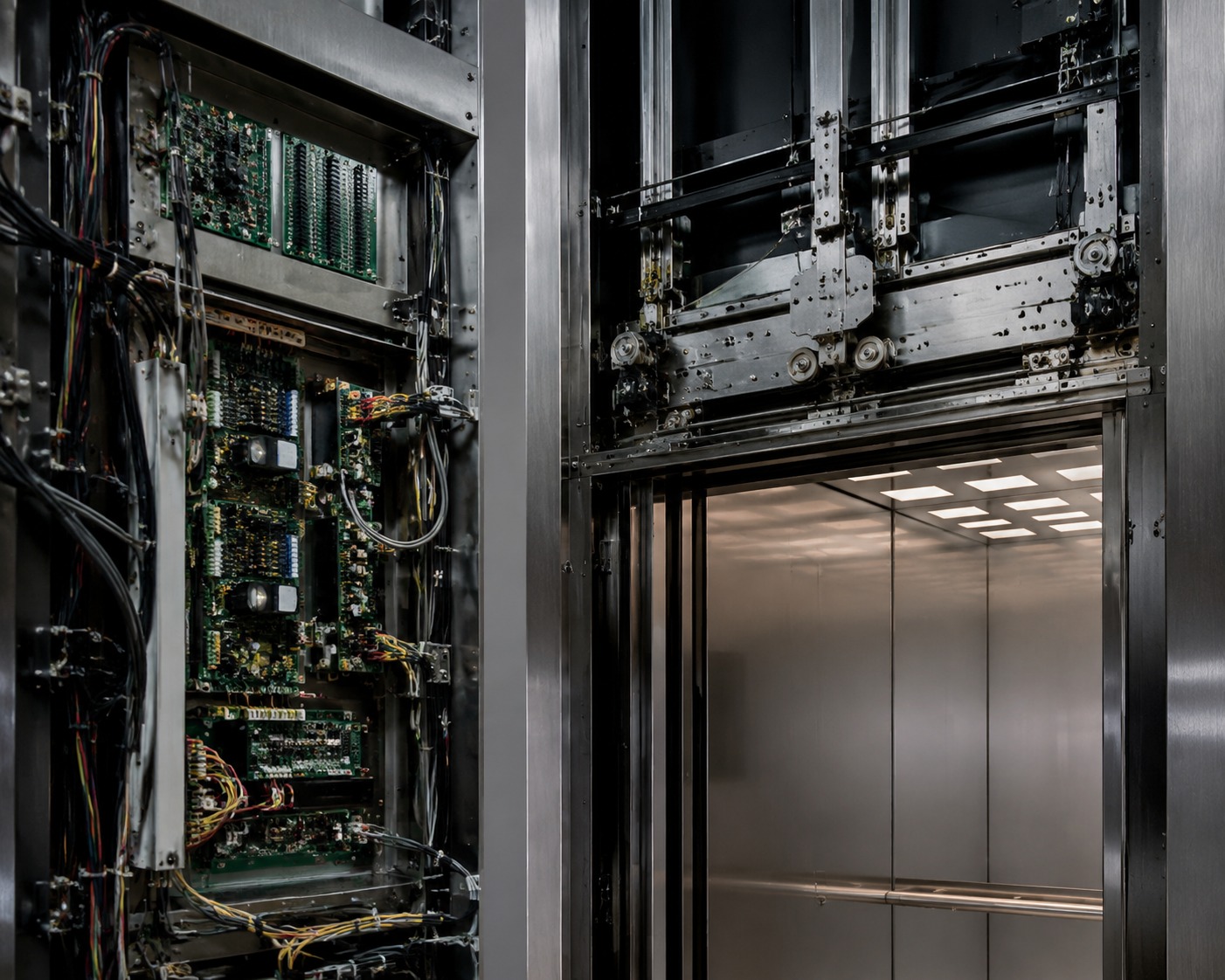
Communication failure on the car top side is often intermittent before it becomes permanent. That makes pattern recognition extremely important. A lift may run normally for hours, then fail when the car reaches a certain floor, when doors cycle repeatedly, or when vibration affects a weak connector. Maintenance teams should therefore log the operating conditions at the time of fault instead of only recording the alarm code.
Common signs include random car top communication alarms, inspection controls failing to take over correctly, door operation becoming erratic without a confirmed door mechanism fault, disappearing sensor feedback, unexplained safety circuit interruptions, and unstable behavior after rain or humidity spikes in machine spaces or shafts. In coastal locations such as Durban and Gqeberha, corrosion at connectors can be more prominent. In older commercial buildings in Johannesburg CBD, harness aging and repeated service interventions may be more common causes.
| Observed sign | Possible board issue | Possible cable issue | Possible connector issue | Operational impact | Recommended first check |
|---|---|---|---|---|---|
| Intermittent communication alarm | Board component instability | Traveling cable stress | Loose plug seating | Random shutdowns | Wiggle test and LED observation |
| Inspection mode not responding | Input processing fault | Broken inspection line | Oxidized terminal | Maintenance delay | Verify inspection switch signals |
| Door-related false faults | Signal relay error | Shielding damage | Mixed pin assignment | Door re-open or stop | Check door input mapping |
| Multiple sensors offline | Power distribution failure | Shared common line fault | Burned connector pin | Lift out of service | Measure supply at board outputs |
| Fault only at certain floors | Vibration sensitivity | Cable stretch at travel point | Intermittent contact | Position-based stoppage | Inspect cable movement path |
| Works after reboot, fails later | Heat-related board fault | Marginal conductor continuity | Connector expansion issue | Repeat callouts | Run extended loaded test |
The table highlights a practical service reality: the same symptom can come from the board, the cable, or the connector. That is why a disciplined troubleshooting sequence saves time and cost. Field teams should avoid replacing the board first unless the diagnostic evidence clearly supports it.
Another frequent mistake is overlooking the difference between data loss and logic conflict. If the board receives an input but the protocol or configuration is wrong, the system may still show communication status while behaving incorrectly. This is especially relevant after modernization work or when a replacement board is sourced without full model confirmation.
The line chart above reflects a realistic growth pattern in demand for communication-related elevator spare parts in South Africa. Rising modernization work, increased uptime expectations, and longer operating hours in commercial properties all contribute to more frequent replacement of signal and interface components.
Toshiba car top board replacement notes
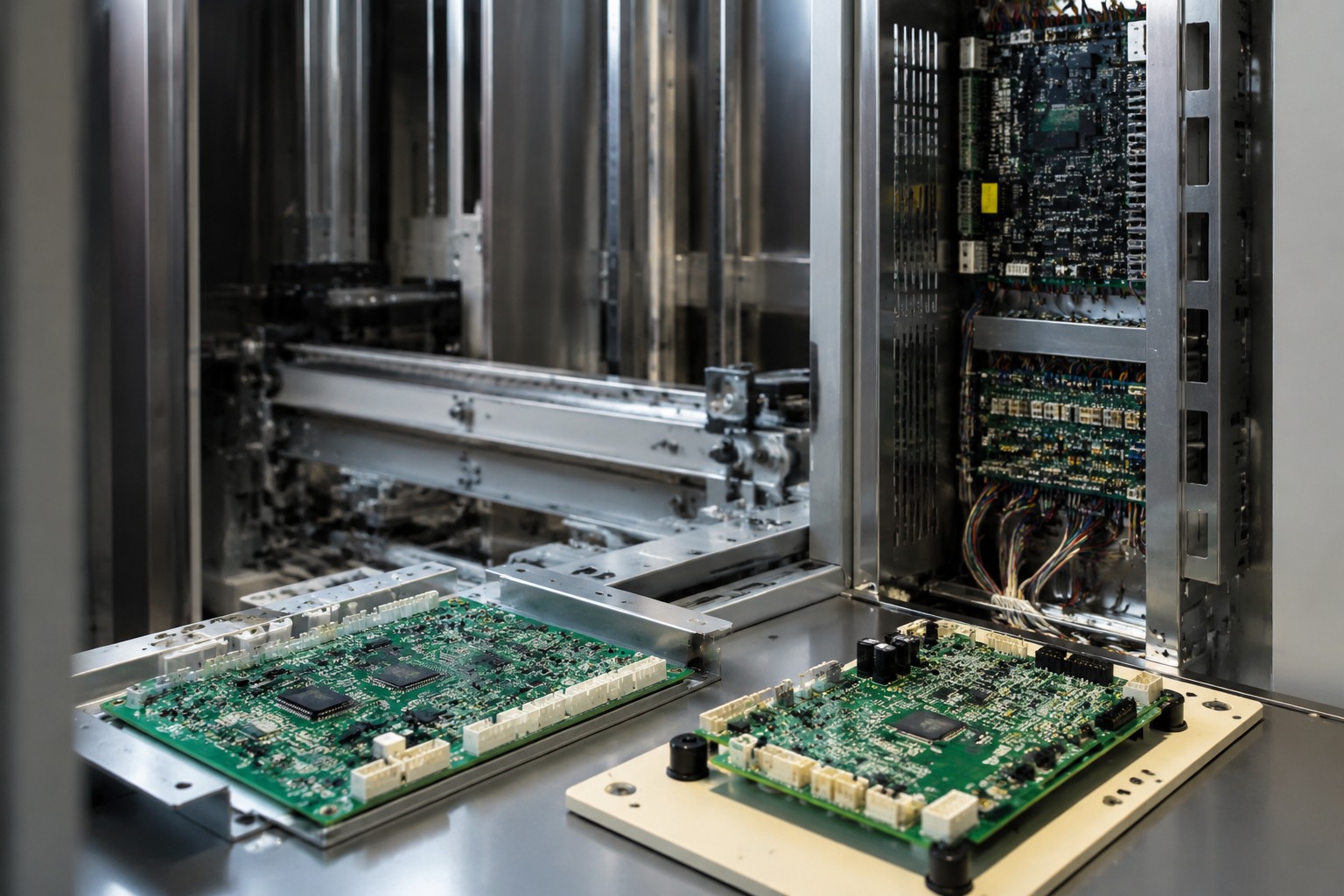
When replacing a Toshiba car top communication board, model matching is critical. Physical similarity alone is not enough. Version differences may involve connector layout, firmware behavior, input mapping, address settings, voltage range, or communication protocol. Before removing the old board, technicians should photograph the installation, record all labels, note the board revision, capture connector positions, and document any DIP switch or jumper settings.
If you are sourcing a replacement, it is best to compare at least the board part number, elevator model family, controller generation, connector count, and application context. For example, a car top board used with a particular inspection arrangement may not be interchangeable with another board that appears nearly identical. Where possible, cross-check against the mating harness and the connected inspection box or expansion module.
For Toshiba-related replacement options, some customers start by reviewing the Toshiba elevator car top communication board range to compare available models and identify suitable matching details. In cases where signal handling extends into additional interface modules, it may also be useful to review a Toshiba elevator expansion board if the system architecture includes linked control or communication extensions.
One good field practice is to inspect the old board for signs that the root cause may not actually be board failure. Burn marks around terminals can point to wiring or power issues. White or green residue may indicate moisture or corrosion. Repeated damage on one connector may suggest vibration or a misaligned harness. If these contributing factors are not corrected, even a correct replacement board may fail prematurely.
| Checkpoint | Why it matters | What to record | Risk if skipped | Who should verify | Best timing |
|---|---|---|---|---|---|
| Part number | Ensures direct matching | Full code and revision | Wrong board supplied | Buyer and technician | Before ordering |
| Board photos | Preserves installation reference | Front, rear, terminals, labels | Rewiring error | Field technician | Before removal |
| Switch settings | Controls logic or address | DIP and jumper positions | Communication conflict | Field technician | Before removal |
| Connector condition | Identifies root cause | Corrosion, heat, looseness | Repeat failure | Technician and supervisor | During replacement |
| Supply voltage | Protects new board | Measured values under load | Immediate board damage | Technician | Before power-up |
| Functional test | Confirms full recovery | Inspection, door, travel, alarms | Undetected incomplete repair | Technician and building rep | After installation |
The checklist shows why replacement is both a technical and documentation task. Good records protect service companies from avoidable repeat visits and help procurement teams source the right board faster next time.
In South Africa, where parts may move through Durban Port, Cape Town Port, and inland distribution routes before reaching site, reducing ordering errors has a real cost benefit. Correct model confirmation lowers delivery delays and improves fleet uptime for service contractors managing buildings across multiple provinces.
Cable connector and protocol checks
Many communication problems blamed on the board are actually caused by harnesses, terminals, and protocol mismatches. The traveling cable is under continuous mechanical stress, and its conductors can degrade internally even when the outer jacket appears acceptable. Similarly, a connector may look seated but still have poor contact force, oxidation, or pin damage. A disciplined cable and connector inspection should therefore happen before and after board replacement.
Start with a visual inspection. Look for bent pins, darkened contacts, moisture ingress, dust buildup, cable abrasion, flattened sections, and evidence of previous field splicing. Then confirm continuity, insulation quality where relevant, shielding integrity, and proper grounding. For data lines, measure whether pair assignment and polarity match the expected communication standard. When a system uses serial communication, reversed lines or mismatched termination can create unstable or one-way communication.
Protocol checks matter just as much as physical checks. Even with a correct board, wrong settings or mismatched accessory modules can create communication failure. If the car top board interacts with another interface layer, verify the software generation, addressing scheme, and logic relationship with the main controller.
| Inspection point | What to examine | Typical defect | Testing method | Likely symptom | Corrective action |
|---|---|---|---|---|---|
| Traveling cable | Flex wear and conductor integrity | Internal break | Continuity during movement | Floor-position faults | Replace damaged cable section |
| Connector housing | Locking tab and fit | Loose seating | Manual retention check | Intermittent alarm | Refit or replace housing |
| Terminal pins | Contact force and corrosion | Oxidation or heat damage | Visual and resistance check | Random signal loss | Clean or replace contacts |
| Shielding and earth | Noise protection path | Broken shield drain | Ground continuity test | Noise-related instability | Restore shield termination |
| Bus polarity | Correct line assignment | Reversed data pair | Wiring comparison to diagram | No communication | Correct pin mapping |
| Address/protocol setup | Compatibility with controller | Mismatch after replacement | Parameter and switch verification | False communication state | Set correct configuration |
This table is useful because it links visible defects to specific tests and outcomes. Instead of treating cable inspection as a quick visual step, teams can use it as a structured diagnostic process.
For modernization contractors, connector and protocol checks are especially important when integrating old shaft wiring with newer interface boards. A clean-looking installation does not always mean true compatibility. In older properties in Pretoria or large residential towers in Umhlanga, legacy wiring can create hidden risks unless every communication path is verified carefully.
Inspection box and maintenance interface links
The inspection box and the car top communication board are closely related in day-to-day service work. The inspection box gives the technician control during maintenance and testing, while the communication board helps transmit and interpret these commands within the larger control system. If inspection mode is unstable, the problem may lie in the box, the board, the cable, or the interface between them.
When reviewing a suspected communication issue, technicians should confirm whether the inspection box switches are cleanly changing state, whether emergency stop wiring is intact, and whether the communication board receives those inputs correctly. If there is wear in the switch box assembly or uncertainty about compatibility, it helps to compare the installed unit against an appropriate inspection box and mobile switch box solution used in lift maintenance applications.
Maintenance interface reliability matters because troubleshooting often begins on the car top. If technicians cannot trust inspection commands, fault isolation becomes slower and riskier. In hospital lifts, airport facilities, student accommodation, and high-density apartment blocks, this has a direct effect on downtime and service quality.
The bar chart illustrates where communication-board related maintenance demand is strongest. Commercial towers and residential estates often generate the highest service volume because of heavy use, aging equipment variation, and the need for rapid uptime recovery.
For local suppliers and service partners, these patterns influence stocking decisions. Johannesburg and Cape Town generally show strong demand from offices and mixed-use properties, while Durban can present additional environmental stress due to humidity and coastal conditions. Building type, not just city, should guide spare-part planning.
Testing communication after repair
After replacing or repairing a car top communication board, testing should go beyond a simple power-up check. The goal is to confirm stable communication under normal operation, inspection mode, repeated door cycles, and full travel conditions. A repair that appears successful during idle testing may still fail once vibration, motion, and electrical noise increase.
A strong post-repair test plan includes static checks, dynamic checks, and documentation. Static checks verify supply voltage, LED status, connector seating, and expected signal states while the elevator is stationary. Dynamic checks confirm communication during travel, at terminal floors, during acceleration and deceleration, and through repeated door open-close cycles. If the original fault was intermittent, the lift should be run enough times to reproduce the previous operating conditions.
| Test step | Purpose | Expected result | Tool or method | Failure meaning | Next action |
|---|---|---|---|---|---|
| Power and LED check | Confirm board startup | Normal indication pattern | Visual inspection | Board not initializing | Recheck power and model match |
| Input state verification | Confirm sensor and switch signals | Inputs change correctly | Diagnostic display or meter | Wiring or input fault remains | Trace field device circuit |
| Inspection mode test | Validate maintenance control | Safe takeover and response | Car top operation | Interface problem persists | Check inspection box path |
| Door cycle repetition | Test high-frequency signaling | No dropped door signals | Repeated automatic cycles | Connector or noise issue | Review door-related wiring |
| Full travel run | Test movement-related stress | Stable operation at all floors | Multiple complete runs | Traveling cable problem likely | Inspect moving harness path |
| Alarm history review | Verify no hidden communication faults | No new relevant faults | Controller log review | Issue may be unresolved | Extend testing and compare logs |
This test sequence helps technicians convert a repair into a verified service result. It also supports better reporting to building managers, who often need proof that the elevator was tested beyond a basic restart.
For service companies with maintenance contracts, storing before-and-after fault history can improve future troubleshooting across the same equipment family. Over time, this creates a valuable failure pattern database that helps distinguish board faults from cable and field-device issues faster.
The area chart shows a realistic industry shift: more South African service firms are moving from emergency replacement toward planned communication-part maintenance. This trend is driven by uptime guarantees, customer expectations, and the need to control technician hours more efficiently.
Spare parts planning for service companies
For elevator maintenance companies, communication boards are not ideal as fully generic stock. They should be planned as targeted inventory based on fleet profile, building criticality, and lead time risk. Service companies supporting hospitals, premium hotels, large retail centres, or high-rise offices usually need at least limited ready stock for common communication boards, inspection interfaces, connectors, and matching harness accessories.
Smart stock planning begins with failure history. Review the last 12 to 24 months of faults involving inspection mode, car top communication, intermittent travel issues, and unexplained signal loss. Then group these by brand, controller generation, and building type. This allows a service business to decide whether to stock complete boards, only high-failure connectors, or both.
Another key factor is logistics. Some parts are available quickly inland; others may require import lead time. For companies serving multiple provinces, especially those dispatching technicians from Gauteng to the Western Cape, KwaZulu-Natal, or the Eastern Cape, keeping the most failure-prone communication parts available can sharply reduce downtime and travel inefficiency.
| Stock item type | When to stock | Ideal quantity logic | Customer type | Business benefit | Review cycle |
|---|---|---|---|---|---|
| Common car top boards | High fleet repetition | Based on installed base and lead time | Large contract portfolios | Reduces outage duration | Quarterly |
| Inspection boxes | Frequent wear in service work | Per active maintenance region | Field service teams | Faster safe troubleshooting | Quarterly |
| Connector kits | Mixed-age equipment | Higher quantity, lower cost stock | All service companies | Solves intermittent faults quickly | Monthly |
| Traveling cable repair items | Movement-related failures | Linked to callout history | Residential and commercial fleets | Cuts repeat visits | Quarterly |
| Expansion/interface boards | Modernized or specialized systems | Selective stock only | Modernization contractors | Supports complex repairs | Biannual |
| Documentation archive | Always | Digital record rather than quantity | All technical teams | Prevents ordering mistakes | Continuous |
This planning table shows that inventory should include not only boards, but also the smaller components and records that make board replacement successful. Many delays come from missing matching information rather than unavailable hardware alone.
When selecting a supplier, South African service companies usually value three things most: accurate model matching support, stable product quality, and protective shipping that reduces transit damage. These factors matter as much as price because a wrong or damaged communication board increases downtime, technician travel, and customer frustration.
The comparison chart reflects a realistic buying pattern for elevator spare parts. Accurate matching and quality inspection rank highest because they directly affect whether the part solves the fault on the first visit.
FAQ about car top communication boards
1. Can a car top communication board fail intermittently before total failure?
Yes. Intermittent failure is common. Heat, vibration, marginal solder joints, weak connectors, or cable stress can cause temporary communication loss long before the board stops working completely.
2. Is every communication fault caused by the board itself?
No. Connectors, traveling cables, moisture, grounding problems, protocol mismatches, and inspection box issues can all create similar symptoms. A full diagnostic sequence is essential.
3. Can a visually similar Toshiba board be used as a substitute?
Not safely without proper confirmation. Similar appearance does not guarantee the same part number, revision, protocol, or connector mapping. Always verify the complete model details.
4. What should be recorded before removing the old board?
Record the part number, revision, all labels, wire positions, connector orientation, switch settings, board LEDs, and any active faults shown by the controller.
5. Why does the lift fail only at certain floors?
This often points to traveling cable stress or movement-related connector interruption. As the car moves, the cable flexes differently and may momentarily lose continuity.
6. How important is the inspection box in diagnosing board problems?
Very important. If inspection commands are not transmitted correctly, technicians may wrongly conclude the communication board has failed when the issue is actually within the inspection box or its wiring.
7. Should service companies stock these boards?
If they support a repeated fleet type or critical buildings, yes. At minimum, they should stock the most common matching boards, connectors, and associated interface items for fast turnaround.
8. What future trends will affect car top communication boards by 2026?
Three trends stand out. First, more modernization projects will increase demand for compatible communication interfaces between old and new systems. Second, digital maintenance practices will lead to better fault logging and predictive replacement of communication parts. Third, sustainability goals will push service companies to extend component life through better diagnostics, selective replacement, and improved packaging and logistics efficiency.
South Africa market, product types, and buying advice
The South African elevator service market combines mature urban installations with ongoing modernization needs. Major demand clusters are found in Johannesburg, Sandton, Pretoria, Cape Town, Durban, and Gqeberha, where commercial properties, residential towers, healthcare sites, and hospitality buildings require dependable vertical transport. Communication boards matter most in environments where uptime directly affects revenue, patient movement, tenant satisfaction, or public safety.
Product types in this area generally include dedicated car top communication boards, expansion or interface boards, inspection box-linked modules, connector assemblies, and wiring harness accessories. Buyers should decide whether the requirement is a direct replacement, a modernization-compatible alternative, or a support item such as a connector repair kit. This distinction prevents overbuying and improves repair speed.
Good buying advice includes the following: confirm the old board number fully; compare all connector positions; share clear photos with the supplier; ask about revision compatibility; inspect packaging standards for electronics; and prepare a post-installation test plan before the part arrives. Service firms should also consider whether the supplier can support repeat sourcing as their installed base grows.
Industries, applications, and case-style examples
Different industries experience communication-board issues differently. In commercial towers, frequent trips and tight service expectations make intermittent communication faults highly visible. In hospitals, inspection and reliability functions are critical because patient transport cannot tolerate prolonged outages. In hotels, repeated guest use and image-sensitive operations mean even short disruptions matter. In residential estates, cost control and quick restoration are often the main priorities. In retail centres and transport hubs, high traffic can expose weak communication paths quickly.
A typical office tower case in Sandton may involve intermittent car top communication alarms during peak traffic, eventually traced to a combination of connector oxidation and harness vibration. A coastal hotel in Durban may show repeated inspection mode issues after periods of moisture exposure, where both the interface wiring and board terminals need corrective attention. A residential modernization project in Cape Town may require close matching between a newly installed interface module and an existing car top communication pathway to avoid false alarms after commissioning.
These examples show why there is no single fault pattern. Board replacement works best when supported by methodical diagnosis, compatibility checks, and practical knowledge of the building environment.
Our company: technology, manufacturing, and service capabilities
Technological capabilities: We support elevator parts buyers with careful model matching for communication boards, control boards, expansion boards, door operator parts, sensors, encoders, intercom parts, power supplies, COP components, and other lift accessories across brands such as Toshiba, Hitachi, KONE, Mitsubishi, and more. For communication-board sourcing, the focus is on identifying the correct part reference, confirming application context, and helping customers reduce uncertainty when replacing boards in mixed fleets or modernization projects.
Manufacturing capabilities: Our supply approach emphasizes stable quality inspection, practical compatibility review, and protective packaging suitable for sensitive electronic parts. This is especially important for car top communication boards and related modules that may travel long distances before installation in South Africa. By controlling product checking and packaging standards, we help reduce the risk of transit damage, mismatched supply, and installation delays.
Service capabilities: We work with maintenance companies, distributors, building owners, and modernization contractors that need responsive support and dependable sourcing. The service goal is straightforward: help customers reduce downtime, source compatible replacement parts efficiently, and keep elevator systems operating safely. This includes support for communication boards as well as connected items such as expansion modules, inspection accessories, door parts, sensors, and control components.
For local buyers, this combination of matching support, quality control, and responsive service is often more valuable than simply choosing the lowest price. A correctly supplied communication board can save a return visit, prevent unnecessary replacement of healthy parts, and restore the lift faster.
2026 trends for car top communication boards in South Africa
Looking toward 2026, three trends are likely to shape this product category in South Africa. First, technology trends will increase the importance of smarter diagnostics. Service teams will rely more on fault history, remote logging, and pattern-based maintenance decisions, making communication boards easier to evaluate before complete failure occurs.
Second, policy and compliance trends will encourage better documentation and safer maintenance procedures. As building owners demand clearer service records and stronger uptime accountability, technicians will need more structured reporting for communication faults, replacement steps, and verification testing.
Third, sustainability will become more practical rather than theoretical. Instead of replacing large assemblies prematurely, contractors will put more effort into accurate fault isolation, connector refurbishment where appropriate, and selective replacement of only failed modules. Better packaging efficiency, reduced repeat transport, and planned stocking closer to demand centres will also support more sustainable service operations.
In short, the future of car top communication board service is not only about the board itself. It is about data quality, compatibility discipline, logistics planning, and safer, more efficient maintenance work across the South African elevator market.