
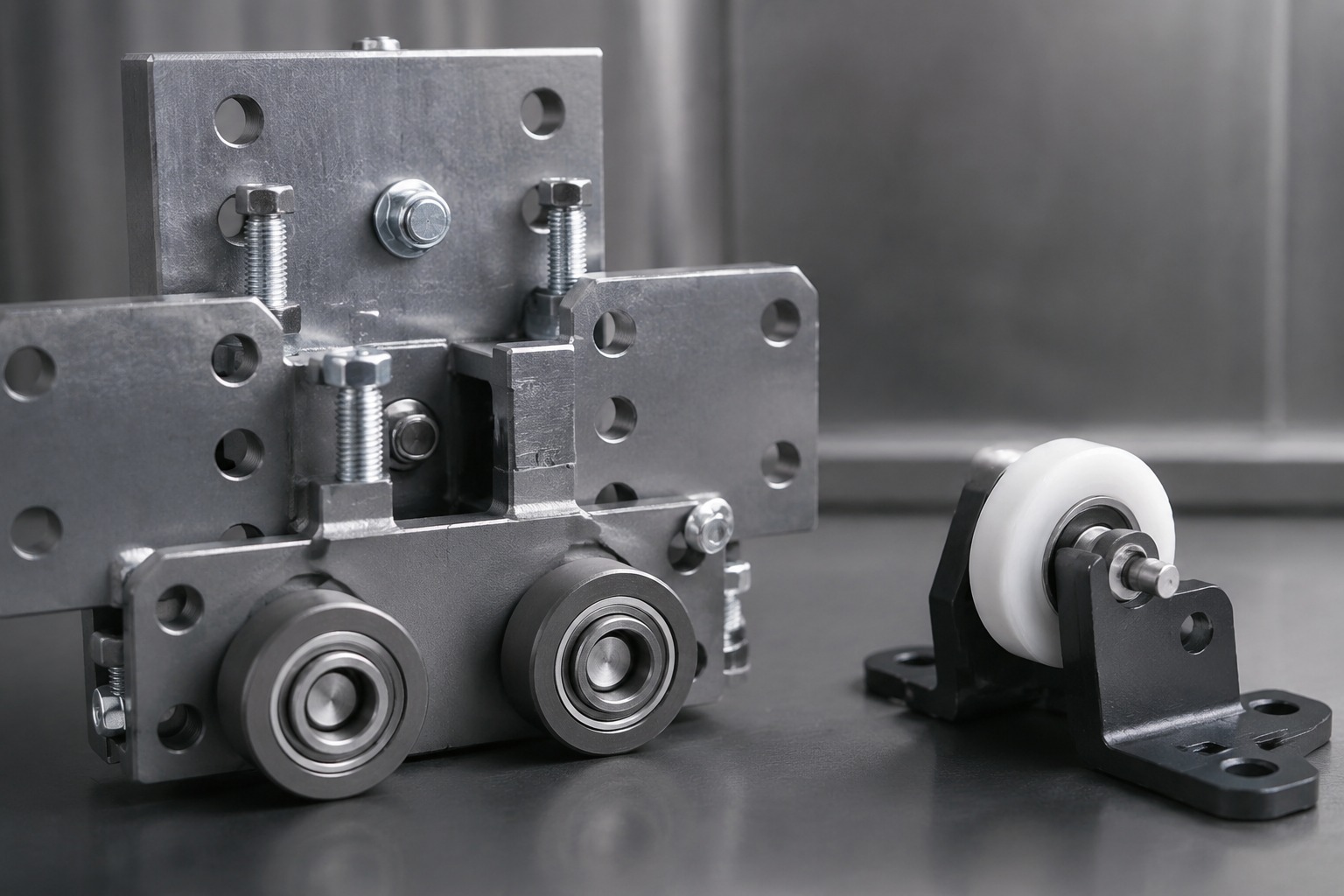
Elevator door performance depends heavily on the quality and condition of the hanging system. In practical terms, a door hanging plate supports the moving door assembly, keeps the rollers positioned on the track, helps the panel travel evenly, and reduces vibration, impact, and abnormal noise. When this part is correctly matched to the elevator model, opening width, and pulley size, doors open and close with less friction, better alignment, and more stable landing accuracy. When it is worn, bent, misaligned, or paired with the wrong roller configuration, the result is usually rattling, dragging, uneven gaps, repeated door faults, and faster wear on locks, guides, and operators.
For building owners, service companies, and modernization contractors in South Africa, door hanging plate selection is not just a small spare-parts issue. It affects uptime in residential towers in Johannesburg, mixed-use buildings in Cape Town, hospitals in Pretoria, logistics facilities near Durban, and hotels across Gqeberha and the Garden Route. In coastal regions, salt air can accelerate corrosion. In high-traffic sites such as malls, transport nodes, and office towers, frequent cycling increases wear on rollers, tracks, and brackets. That is why accurate model matching, robust inspection, and proper installation alignment matter so much.
This guide explains the role of door hanging plates, the difference between car door and hall door assemblies, how opening distance changes the required part, what to look for when checking roller pulley size and wear, and what buyers should know about Hitachi NF configurations. It also covers installation checks, maintenance routines, South African market considerations, common buying mistakes, and practical FAQs.
In the local market, sourcing can be complicated by long lead times, uneven stock quality, and incomplete model information from aging lifts. That is why many buyers prefer a supplier that can verify dimensions carefully, check compatibility before dispatch, and package components properly for transport to sites from Sandton to Bellville and from Midrand to Durban North. For customers replacing worn assemblies, practical options include a hall door hanging plate for 800 to 900 mm openings with a 65 mm pulley, a car door hanging plate for 1000 to 1100 mm openings, and a Hitachi NF door hanging plate for specific replacement requirements.
The core buying principle is simple: do not treat all hanging plates as interchangeable. The exact application, door width, pulley diameter, mounting hole pattern, plate length, offset, and brand-family design all influence whether the door will run quietly and reliably after installation.
What door hanging plates do
A door hanging plate is the structural component that connects the elevator door panel to the roller and track arrangement. Its job is to carry the moving weight of the panel, maintain the roller position, and keep the panel stable during travel. In many elevator systems, especially center-opening and side-opening configurations, the hanging plate works with the door operator, hanger rollers, guide shoes, and landing door interlocks to create smooth, repeatable movement.
From a maintenance point of view, this part has five main functions:
- Support the door panel load without deformation.
- Maintain the correct roller spacing and running geometry.
- Reduce shaking, side play, and metal-to-metal contact.
- Help the door panel stay square to the opening.
- Protect related components by limiting abnormal stress.
If the hanging plate is damaged or mismatched, the elevator may still move the door, but the quality of movement declines quickly. Common symptoms include scraping at the sill, repeated re-opening, vibration at the start or end of travel, noisy operation on upper floors, and frequent door lock errors. In modernization work across South Africa, many technicians discover that the visible problem is a worn roller, but the root cause is often a bent plate, wrong offset, or poor alignment after previous repairs.
The table below shows how this component influences system performance in real service conditions.
| Function | Effect on Operation | Failure Symptom | Risk Level | Typical Site Example | Maintenance Response |
|---|---|---|---|---|---|
| Panel support | Keeps door weight evenly carried | Door sagging | High | Office tower in Johannesburg | Check plate straightness and mounting points |
| Roller positioning | Maintains smooth travel on track | Jerky opening | High | Retail mall in Cape Town | Confirm roller spacing and pulley fit |
| Alignment stability | Helps consistent door gap | Uneven closing gap | Medium | Residential block in Pretoria | Re-align hanger and guide system |
| Noise control | Reduces vibration transfer | Rattling or knocking | Medium | Hotel in Durban | Inspect wear points and fastener torque |
| Load distribution | Prevents local stress on rollers | Rapid roller wear | High | Hospital in Bloemfontein | Replace worn plate and roller set together |
| Operator efficiency | Allows steady opening force | Door motor strain | Medium | Campus building in Stellenbosch | Verify part match to opening width |
In short, the hanging plate is one of the hidden parts that most users never notice, but it directly affects the riding experience. Quiet, accurate door movement usually means the plate, roller, track, and guide assembly are all working together correctly.
Car door versus hall door hanging panels
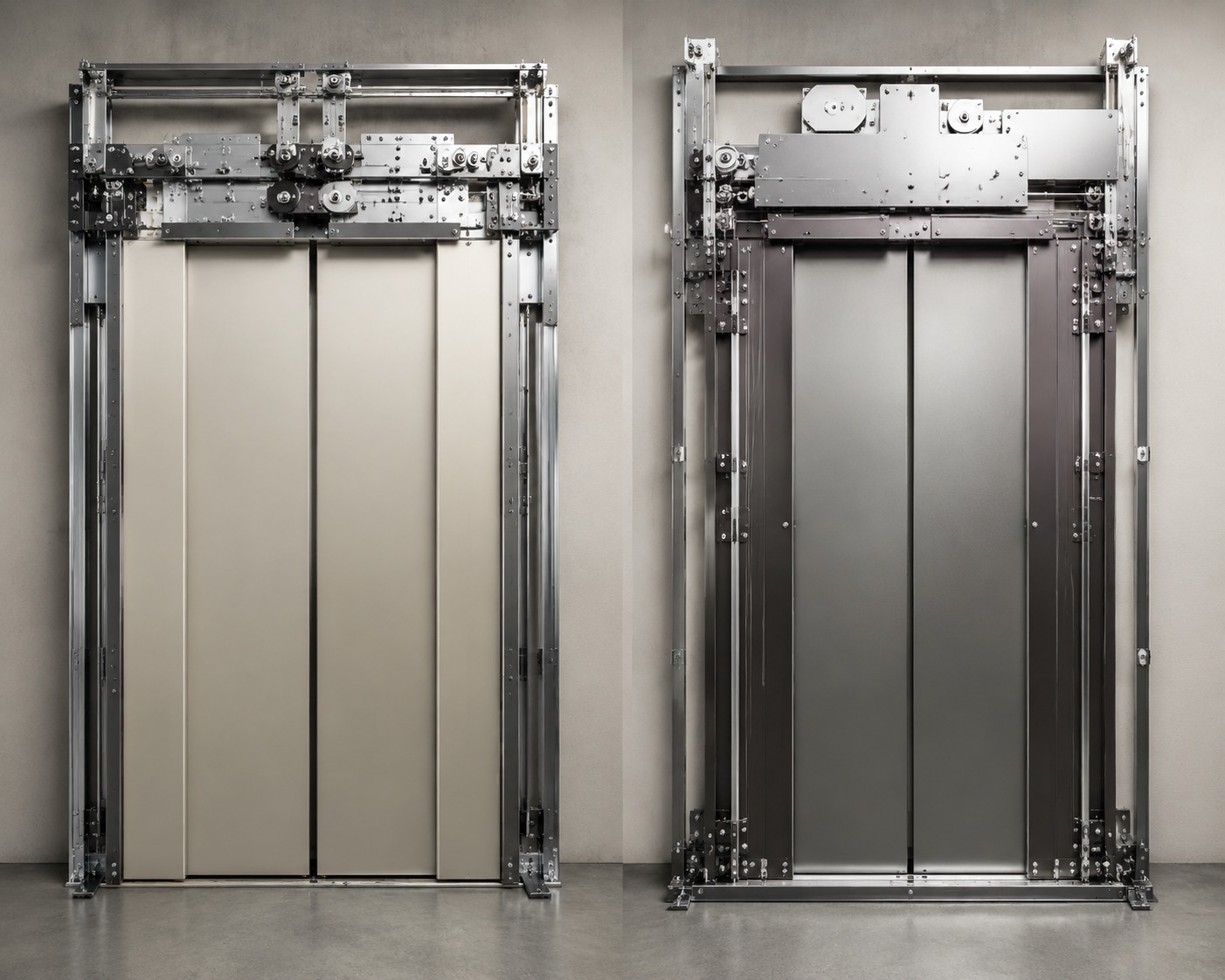
Although people often use the terms loosely, car door hanging plates and hall door hanging plates are not the same. The car door assembly is mounted on the moving elevator car and works directly with the door operator. The hall door assembly is installed at each landing and interacts with the car door through the unlocking and driving arrangement. Because their mounting positions, loads, and movement relationships differ, so do many of their dimensions and design details.
Car door hanging plates are usually selected with strong attention to operator compatibility, panel opening width, and synchronization with the car door mechanism. Hall door hanging plates are chosen based on landing door configuration, lock arrangement, track compatibility, and the specific landing design used by the original manufacturer or modernization package.
For buyers in South Africa, confusion often happens when an old sample is removed from site without complete documentation. A technician may know the brand but not the exact opening type, or know the opening width but not the roller diameter. In those cases, photos, measured drawings, and mounting-hole checks become essential.
| Feature | Car Door Hanging Plate | Hall Door Hanging Plate | Why It Matters | Common Error | Buying Tip |
|---|---|---|---|---|---|
| Mounting location | On elevator car door assembly | At each landing entrance | Different mechanical relationships | Assuming same part fits both | Confirm exact installation position |
| Operator interaction | Directly linked to operator movement | Driven by car door action | Affects force and geometry | Ignoring operator type | Match with door operator layout |
| Wear pattern | Higher cycling stress in busy cars | Can vary by landing traffic | Predicts inspection priority | Replacing only most visible side | Inspect both sides systematically |
| Dimensional emphasis | Opening width and synchronization | Lock and landing track fit | Prevents rework | Measuring only overall length | Record hole centers and offsets |
| Replacement frequency | Often changed with rollers and guides | Sometimes changed per landing | Influences stock planning | Ordering too few units | Plan per bank and floor count |
| Typical application | Modernization or car door repair | Landing door overhaul | Helps scope project accurately | Using generic project codes | Label parts by car and floor |
The distinction also influences logistics. A service contractor maintaining lifts across Gauteng may stock standard roller kits, but hall door hanging plates can vary from one landing arrangement to another, especially in older buildings that have undergone partial upgrades. In coastal properties near Durban or Cape Town, buyers may also prioritize improved surface finish and packaging because corrosion can begin before installation if parts are stored badly.
When comparing product types, technicians should think beyond “left” and “right” or “car” and “hall.” They should also check opening method, clear opening width, panel count, roller size, and whether the plate is part of a matched set with brackets or pulleys.
How opening distance affects part selection
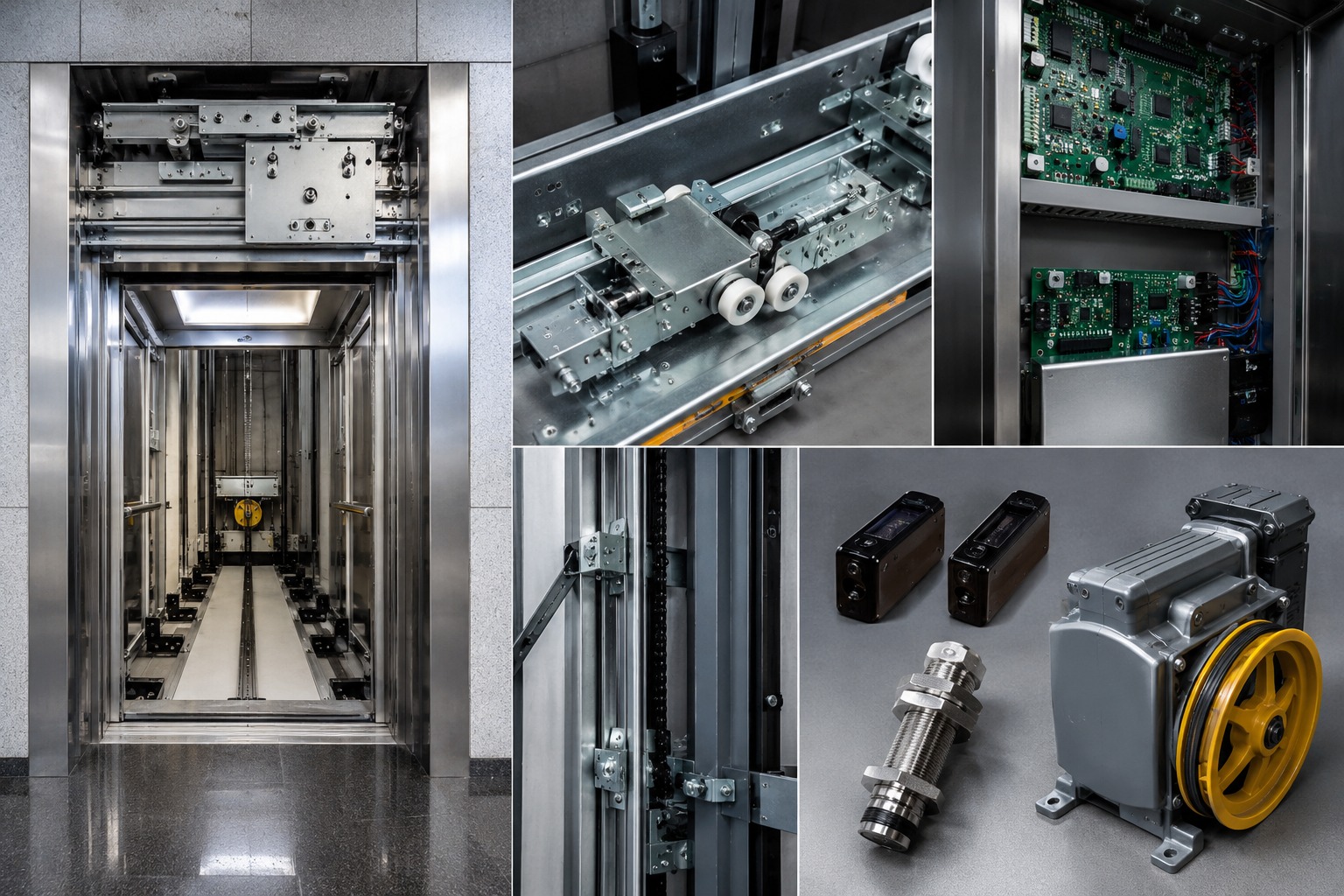
Opening distance is one of the most important selection factors. The width of the door opening determines not only the panel movement range, but also the mechanical geometry of the hanging system. A hanging plate designed for an 800 to 900 mm opening is not automatically suitable for a 1000 to 1100 mm opening, because the roller position, plate length, travel path, and balance conditions may differ.
In practical replacement work, opening distance affects:
- Plate length and offset
- Roller spacing
- Door panel travel geometry
- Operator force distribution
- Final alignment and closing accuracy
- Noise level during start and stop
For example, a hall door application serving an 800 to 900 mm opening may require a different pulley arrangement than a wider car door assembly serving a 1000 to 1100 mm opening. Installing the wrong size can create side loading on rollers, imperfect landing-door engagement, or repeated nudging faults. That is why many buyers choose by measured opening distance first, then confirm pulley and mounting dimensions. A practical example is this hall door hanging plate for 800–900 mm door openings, while wider installations may call for this car door hanging plate for 1000–1100 mm openings.
The table below helps buyers understand how opening width usually changes selection logic.
| Opening Distance | Typical Application | Selection Focus | Likely Risk if Mismatched | Recommended Check | Project Example |
|---|---|---|---|---|---|
| 700–800 mm | Compact residential entrances | Shorter travel geometry | Door drag on edge | Measure panel overlap | Older flats in central Pretoria |
| 800–900 mm | Standard hall doors | Pulley size and bracket spacing | Noise at opening start | Confirm 65 mm pulley where applicable | Commercial buildings in Durban |
| 900–1000 mm | General passenger lifts | Track alignment and load balance | Uneven closing | Check guide and sill wear too | Mixed-use sites in Cape Town |
| 1000–1100 mm | Wider car doors | Plate length and stability | Roller overload | Verify full travel dimensions | Corporate towers in Sandton |
| 1100–1200 mm | Hospital or stretcher lifts | Heavier panel support | Operator strain | Inspect all hanger fasteners | Medical facilities in Johannesburg |
| 1200 mm and above | Freight or special access | Structural strength and duty cycle | Premature bearing wear | Review full assembly load path | Industrial facilities near Gqeberha |
Buyers should remember that opening width alone is still not enough for final confirmation. It narrows the selection, but model matching should include dimensions, photos, plate thickness, offset, and if possible the OEM reference or a verified replacement code. This is especially important in modernization projects where different lift brands or retrofitted operator systems have been mixed over time.
Roller pulley size and wear checks
Roller pulley size has a direct effect on door motion quality. If the pulley diameter is incorrect, the plate may sit improperly on the track, run with the wrong contact geometry, or transfer load unevenly. Even when the plate itself is correct, worn rollers can create symptoms that make the whole assembly seem faulty. This is why experienced technicians inspect the plate and rollers together.
Common wear signs include flattened pulley surfaces, cracked nylon or polymer material, bearing play, seized rotation, uneven groove wear, loosened shafts, and metallic scoring on the track. In high-use South African sites such as shopping centres in Johannesburg South, beachfront hotels in Durban, or student accommodation in Cape Town, these conditions can develop faster than expected because of high cycle counts.
Below is a practical inspection table for roller pulleys and related hanger components.
| Inspection Point | What to Check | Wear Indicator | Operational Effect | Action | Priority |
|---|---|---|---|---|---|
| Pulley diameter | Measure against required specification | Wrong size fitted | Poor track contact | Replace with correct diameter | High |
| Bearing smoothness | Spin test by hand | Grinding or resistance | Jerky movement | Change roller assembly | High |
| Surface condition | Look for flat spots and cracks | Uneven rolling face | Noise and vibration | Replace worn pulley | High |
| Shaft tightness | Check fastening and play | Lateral movement | Door wobble | Retighten or renew shaft parts | Medium |
| Track contact | Observe running line | Skewed contact pattern | Accelerated wear | Realign hanging plate | High |
| Contamination | Dust, grease, corrosion | Build-up on rolling area | Drag and noise | Clean and inspect thoroughly | Medium |
For procurement teams, this means the purchasing decision should not be based only on the visible metal plate. Good practice is to assess whether the replacement scope should include rollers, guide shoes, fasteners, or even the track condition. Replacing one worn plate but leaving heavily damaged pulleys in place often leads to a callback.
In the South African service environment, where technicians may travel long distances between sites, reducing repeat visits is particularly valuable. Proper wear checks before ordering help avoid delays and unnecessary downtime.
Hitachi NF door hanging plate notes
Hitachi NF door hanging plate applications require careful verification because part family naming can look straightforward while actual dimensions differ between production periods and door arrangements. Buyers often refer to “NF” broadly, but a dependable replacement process should include door opening width, mounting details, roller or pulley size, side orientation where relevant, and site photos. A generic label alone is not enough.
For this reason, many customers prefer to review a dedicated Hitachi NF door hanging plate option together with exact measurements before placing the order. This approach is especially helpful in modernization and maintenance projects where original documentation is incomplete.
Several practical notes apply to NF-type replacements:
- Verify whether the part is for the car door or hall door.
- Check the opening width and the track relationship.
- Measure the pulley diameter and center distances.
- Compare mounting hole positions, not just overall length.
- Inspect whether previous repairs altered the bracket arrangement.
- Confirm whether left and right assemblies differ.
In service work around South Africa, NF-related enquiries are common in older commercial properties and buildings that prioritize continued operation rather than full system replacement. Careful matching reduces the risk of ordering a visually similar but functionally incorrect part.
Our technological capability supports this matching process by reviewing photos, dimensions, model references, and application details to improve compatibility accuracy. Instead of relying only on broad brand labels, we help customers narrow the correct door system configuration. This is useful for maintenance companies serving varied portfolios from Johannesburg CBD to industrial estates around Durban and warehousing corridors linked to the Port of Ngqura.
| NF Matching Item | Why It Matters | Common On-Site Issue | Best Verification Method | Downtime Risk if Ignored | Recommended Practice |
|---|---|---|---|---|---|
| Door position | Car and hall parts may differ | Wrong assembly ordered | Photograph installed location | High | Label removed sample clearly |
| Opening width | Controls geometry | Incomplete door travel | Measure clear opening | High | Record width in millimetres |
| Pulley diameter | Affects track contact | Rough running | Use calliper measurement | High | Confirm before shipment |
| Hole spacing | Critical for fitment | Cannot install directly | Measure center-to-center | High | Share drawing or marked photo |
| Plate offset | Maintains panel alignment | Door rubs sill or frame | Check side profile | Medium | Compare old and new depth |
| Repair history | Past modifications affect fit | Unexpected mismatch | Inspect welds or added brackets | Medium | Report site alterations early |
Installation alignment checklist
Even the correct replacement part can perform poorly if installation alignment is neglected. Elevator door systems are mechanical assemblies with tight tolerance relationships. Small errors in level, spacing, side clearance, or roller preload can produce noise, drag, and premature wear. An alignment checklist helps technicians complete the job properly and gives building managers confidence that the repair has addressed the root cause.
Below is a practical checklist that applies to both new installation and replacement work.
| Checklist Item | Target Condition | Why It Matters | Tool or Method | Typical Fault if Missed | Final Verification |
|---|---|---|---|---|---|
| Plate mounting | Secure and square | Prevents shifting under load | Torque check and visual line-up | Rattle or loosening | Recheck after test cycles |
| Roller tracking | Centered on running path | Ensures even movement | Observe during manual travel | Edge wear on track | Confirm smooth travel both ways |
| Panel level | Door sits even across width | Maintains proper gaps | Spirit level or laser | Door sagging | Measure top and side clearances |
| Sill clearance | No rubbing, correct gap | Reduces drag and dust build-up | Feeler gauge and test movement | Scraping on threshold | Inspect under load |
| Lock engagement | Consistent landing alignment | Supports safe operation | Cycle test at floor | Intermittent lock faults | Test multiple openings |
| Noise check | Low vibration and no knocking | Indicates correct mechanical fit | Open-close cycle observation | Customer complaints | Run repeated cycles |
During installation, it is wise to inspect the full door pathway rather than focus on only one replaced part. Track contamination, bent guide shoes, worn sill grooves, loose fasteners, and operator timing all influence final performance. In South African coastal cities, corrosion around fasteners and brackets can alter alignment even when the main plate is still usable.
Our manufacturing capability supports this stage by emphasizing stable dimensions, careful quality inspection, and protective packaging that reduces the risk of transit damage before the part reaches site. For distributors and service teams receiving goods in Durban, Cape Town, or Johannesburg, this matters because even slight deformation in transport can affect installation accuracy.
Maintenance tips for door systems
Preventive maintenance is the most cost-effective way to extend the life of elevator door hanging plates and related parts. Because doors are among the highest-cycle components in a lift, small wear issues grow quickly if they are not caught early. A good maintenance routine should combine visual inspection, measurement, cleaning, and performance observation.
Recommended maintenance tips include:
- Inspect rollers for flat spots, cracks, and free rotation.
- Check hanging plate fasteners for looseness and signs of movement.
- Look for rust, paint damage, or contamination on the plate and track.
- Measure door gaps if users report rubbing or impact noise.
- Inspect sill grooves for dirt and debris accumulation.
- Listen for changes in sound at start, travel, and closing impact.
- Review whether repeated door faults occur only at certain floors.
- Replace worn companion parts together where practical.
A useful strategy for building owners is to classify lifts by duty cycle. A passenger lift in a low-rise apartment building may only need periodic checks, while a hospital lift, student residence lift, or office lift in a high-density tower may need more frequent inspections because the door system cycles many more times each day.
The South African market is also seeing greater interest in planned modernization rather than purely reactive repair. As 2026 approaches, three trends will shape elevator door spare-parts decisions:
- Technology: more data-based maintenance, with controllers and door operators used to identify opening-force abnormalities earlier.
- Policy and compliance: stronger focus on safety records, maintenance traceability, and documented replacement quality.
- Sustainability: preference for durable parts, lower repeat-callout rates, and reduced waste through accurate model matching.
Our service capability is built around these priorities. We support maintenance companies, distributors, building owners, and modernization contractors with responsive communication, model-matching assistance, reliable sourcing, and protective shipment preparation. This helps customers reduce downtime and improve first-time replacement accuracy, especially when managing geographically spread portfolios.
The following chart illustrates a realistic view of South African demand growth for elevator door spare parts, including hanging plates, as maintenance and modernization activity expands.
Demand is not equal across all building types. The next chart compares estimated service demand by major sectors in South Africa.
The trend shift chart below shows the market move from emergency replacement purchasing toward planned maintenance and modernization-oriented procurement.
And this comparison chart highlights the practical difference between low-accuracy sourcing and verified model-matched sourcing for door hanging plate projects.
These market patterns are particularly relevant for local buyers managing assets near South Africa’s major transport and trade corridors. Buildings around OR Tambo-linked business zones, the Port of Durban, Cape Town’s commercial districts, and manufacturing hubs in the Eastern Cape often prefer stock planning and compatibility-focused purchasing because downtime has direct tenant, patient, or operational impact.
FAQ about elevator door hanging plates
1. What is the main purpose of an elevator door hanging plate?
It supports the door panel and roller arrangement so the door can move smoothly along the track with proper alignment and reduced noise.
2. How do I know if a hanging plate is worn out?
Look for bending, corrosion, loosened mounting points, abnormal door vibration, uneven gaps, repeated scraping, or unusually fast roller wear.
3. Can I replace only the roller and keep the old plate?
Sometimes yes, but only if the plate is straight, secure, and dimensionally correct. If the plate is bent or worn, replacing only the roller often gives short-term results.
4. Are car door and hall door hanging plates interchangeable?
Usually not. Their location, geometry, and mounting details are different. Always verify the application before ordering.
5. Why does opening distance matter so much?
Because the door travel geometry changes with the opening width. Wrong sizing can cause drag, noise, lock issues, and premature wear.
6. Is pulley size really critical?
Yes. Incorrect pulley diameter can affect track contact, smoothness, and load distribution, leading to poor operation and faster component wear.
7. What information should I send when requesting a quotation?
Send brand, model if known, car or hall door position, opening width, pulley size, photos of the installed part, hole spacing, and any markings on the old component.
8. What should South African buyers watch for in coastal areas?
Pay close attention to corrosion, storage conditions, and packaging quality. Salt air can damage parts or fasteners before and after installation.
9. Is a Hitachi NF hanging plate easy to match by name only?
No. NF naming helps narrow the search, but exact dimensions and application details should still be confirmed.
10. How can building owners reduce repeat door failures?
Use preventive inspections, replace companion wear parts when needed, keep records by lift and floor, and source from suppliers that support careful model matching and stable quality control.
For South African buyers, the most effective purchasing approach combines technical verification with practical site planning. Start by identifying whether the requirement is for the car door or hall door, confirm the opening width, inspect pulley size and wear, and verify whether related rollers or guides should be replaced at the same time. Then work with a supplier that can support compatibility checking, careful packaging, and responsive communication.
In summary, elevator door hanging plates are small components with a large effect on reliability. They help carry door loads, control movement quality, reduce noise, and protect the wider door system. When selected and installed correctly, they support safer, smoother operation in residential, commercial, healthcare, hospitality, and industrial buildings across South Africa.