
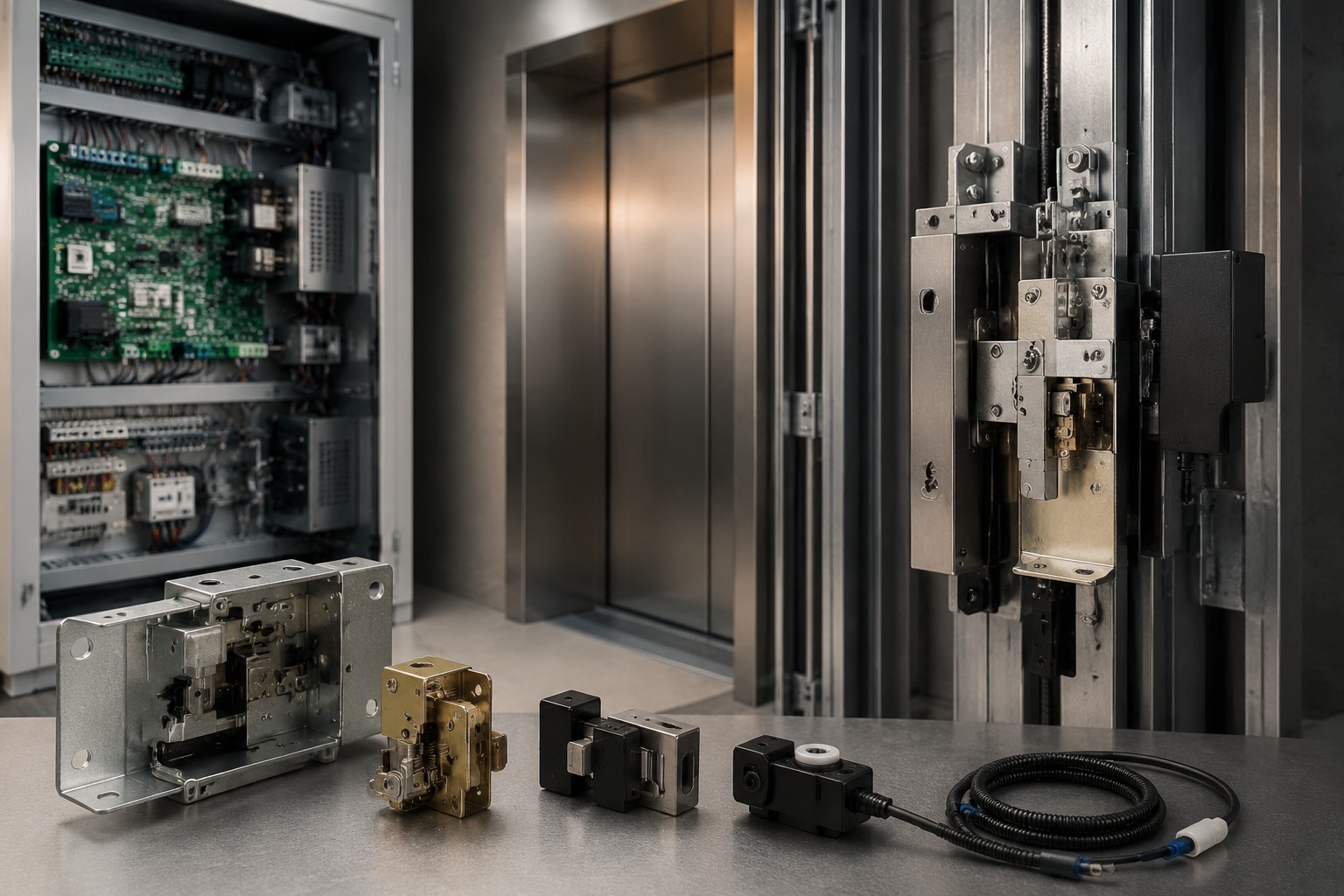
For building owners, lift maintenance firms, distributors, and modernization contractors in South Africa, elevator door lock parts are not small accessories; they are safety-critical components that help prevent landing doors from opening when the car is not correctly positioned. A hall door lock hook, a lock contact switch, and a return spring work together to confirm that the landing door is closed, mechanically locked, and electrically proven before the lift can travel. When any one of these parts wears, drifts out of adjustment, or is replaced with the wrong model, the result can be nuisance shutdowns, intermittent faults, failed inspections, longer downtime, and increased safety risk.
In practical terms, the safest approach is simple: inspect lock hooks for wear and deformation, check springs for fatigue and loss of tension, select freight elevator lock switches based on duty cycle and environment, verify contact reliability after every repair, and source certified, model-matched parts from a supplier that understands compatibility. This is especially important in South African conditions, where coastal corrosion around Durban and Cape Town, dust exposure in inland industrial zones around Johannesburg and Gauteng, and heavy-use freight applications near logistics hubs can accelerate wear.
This guide explains what to look for, what to replace, how to test, and how to plan maintenance so that landing doors remain secure and lift systems stay compliant, dependable, and available for daily use.
South African Market Conditions for Elevator Door Lock Parts
The South African lift market includes commercial towers in Sandton, mixed-use developments in Cape Town, hospitals in Pretoria, hotels in Durban, industrial sites in Gqeberha, warehousing around Ekurhuleni, and port-linked freight buildings near Durban Harbour, Richards Bay, and Cape Town Harbour. Across these different environments, elevator door lock systems face very different stress patterns. Passenger lifts in office buildings may experience high cycle counts during morning and afternoon peaks, while freight elevators in warehouses and factories may deal with vibration, impact, dust, and uneven loading. Residential blocks can see lower traffic but often struggle with deferred maintenance and delayed part replacement.
Because of these conditions, demand in South Africa has been shifting toward replacement parts that offer stable fitment, consistent electrical performance, and better durability under real operating conditions. Building owners increasingly ask maintenance providers for clearer maintenance records, while modernization contractors want compatible parts that reduce installation uncertainty. Distributors also need dependable packaging and model matching so that parts arrive ready for field use.
The chart above reflects a realistic market pattern: steady replacement demand driven by aging lift stock, more preventive maintenance, and gradual modernization. By 2026, growth is likely to be supported by stronger attention to safety records, life-cycle cost control, and sustainability goals that favor component replacement over full system scrap where appropriate.
Why Elevator Door Locks Matter
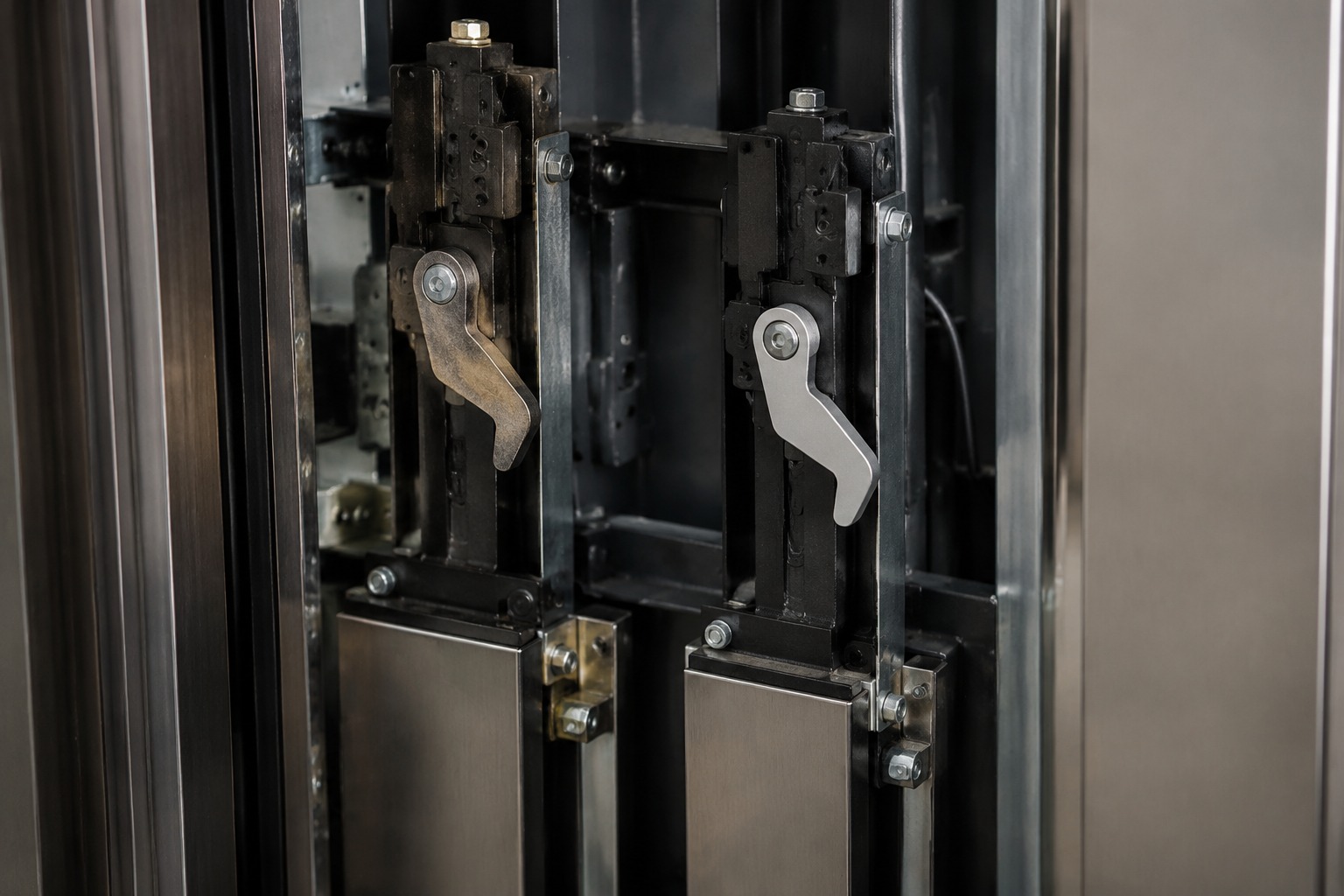
Elevator door locks are critical because they create both a mechanical and electrical barrier against unsafe movement and unauthorized opening. The landing door must remain locked unless the car is at the landing and the unlocking mechanism is correctly engaged. In most systems, the hook secures the lock mechanically, the switch confirms lock status electrically, and the spring ensures proper return action. If the hook is worn or misaligned, the door may not lock positively. If the switch contacts fail intermittently, the controller may see a false or unstable lock signal. If the spring loses force, the mechanism may become sluggish and fail to reset consistently.
In South African buildings with high usage, intermittent lock problems often show up first as callbacks rather than dramatic failures. Tenants report that a lift “sometimes does not answer,” “shows door fault,” or “works after a reset.” Maintenance teams then find that door lock contacts are chattering, hooks are polished thin from repeated friction, or springs are no longer returning the mechanism cleanly. These symptoms are early warnings. Ignoring them increases risk and usually leads to more expensive downtime later.
Door lock reliability also affects compliance and reputation. Hospitals, shopping centres, offices, hotels, and residential towers cannot afford unpredictable outages. A fault on one landing lock can take a unit out of service and create user frustration, especially in busy cities like Johannesburg, Cape Town, and Durban where elevator availability directly affects building operations.
| Door Lock Issue | Typical Field Symptom | Likely Cause | Operational Impact | Safety Concern | Recommended Action |
|---|---|---|---|---|---|
| Worn hook edge | Door fault at specific floors | Long-term friction and misalignment | Intermittent shutdowns | Reduced locking margin | Measure wear and replace if outside tolerance |
| Weak spring tension | Slow return of lock arm | Fatigue, corrosion, age | Inconsistent reset | Incomplete lock engagement | Replace spring and inspect mating parts |
| Contaminated contact switch | Random lock signal loss | Dust, oxidation, moisture | Callbacks and nuisance trips | False status indication | Clean or replace switch, retest continuity |
| Misaligned lock assembly | Door closes but lift does not run | Bracket shift or poor installation | Floor-specific outage | Unreliable proving signal | Realign, tighten, verify engagement depth |
| Broken actuator part | Door cannot unlock normally | Impact or material fatigue | Entrapment risk and downtime | Emergency access complications | Replace damaged component immediately |
| Incorrect replacement part | Recurring faults after repair | Model mismatch | Repeat labor and delays | Unknown lock performance | Verify part number, dimensions, and electrical rating |
This table shows why elevator door locks should be treated as precision safety components, not generic hardware. The same outward symptom can come from different root causes, so proper diagnosis matters.
Signs a Hall Door Lock Hook Needs Replacement
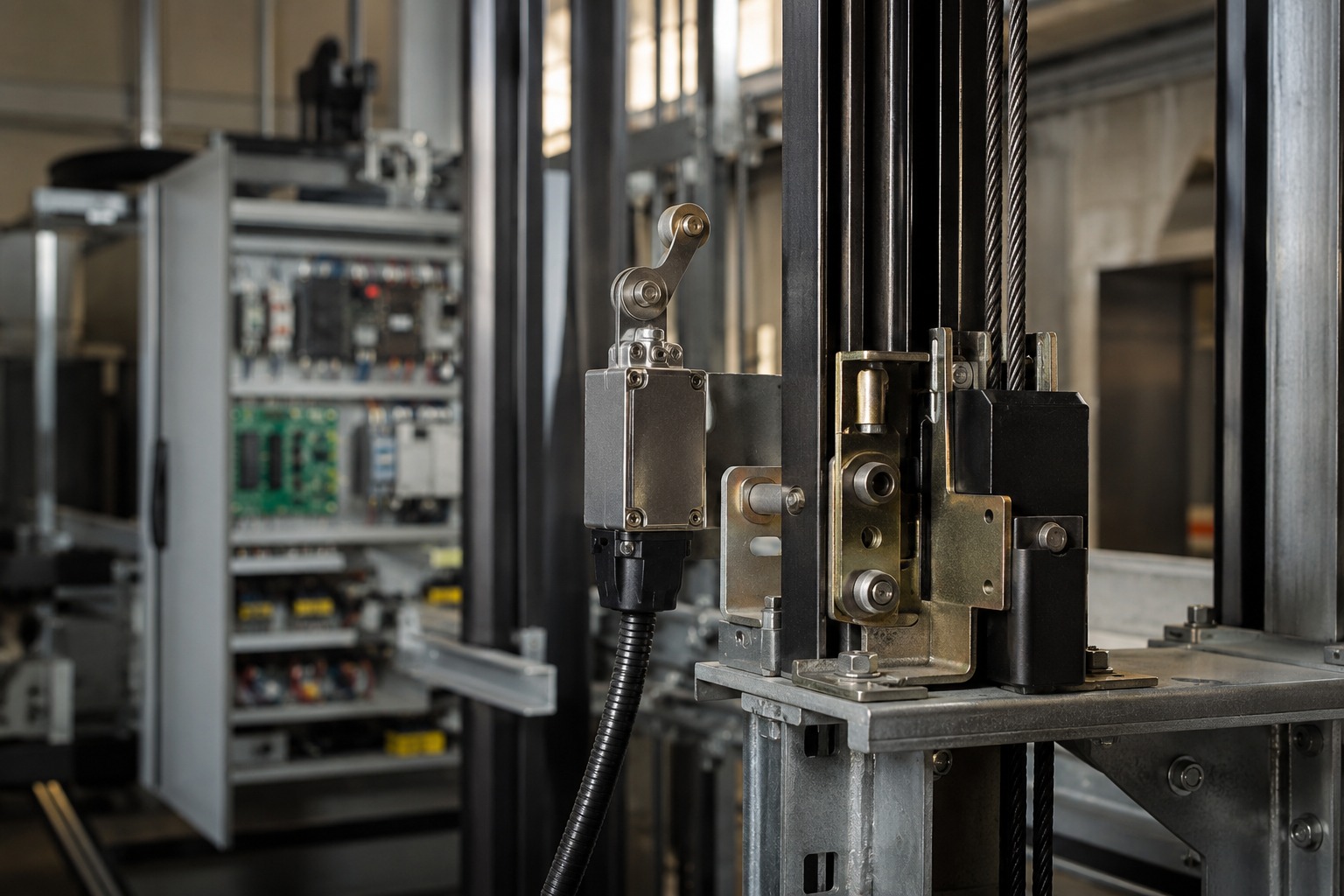
A hall door lock hook is often replaced too late. Technicians may lubricate, adjust, or clean the mechanism repeatedly when the real problem is wear geometry. Once the hook profile changes enough, the locking relationship between mating parts weakens. In a passenger lift this may create intermittent faults; in a freight lift it can become more severe because of heavier door operation and stronger vibration.
The most common replacement signs include a rounded or polished hook edge, visible metal loss at the engagement surface, cracking near stress points, burrs that catch during movement, and evidence that the hook no longer enters or holds the keeper correctly. Another warning sign is repeated adjustment at the same landing. If technicians keep restoring the same lock point but the fault returns, the hook may already be beyond reliable service.
In coastal South African locations such as Durban and Cape Town, corrosion can accelerate this process. Surface rust may appear minor but can change movement, increase friction, and hide pitting. In dusty industrial zones, abrasive particles can gradually wear contact surfaces and pivot points. Buildings with older lift systems from major international brands often need careful model matching, because a similar-looking hook may still differ in offset, hole spacing, hardness, or travel profile.
When planning replacement, it is important to source a hook that matches the original lock design and landing door arrangement. If you need a replacement for a worn landing mechanism, a compatible hall door lock hook for lift applications should be selected only after checking dimensions, mounting method, and brand or mechanism series.
| Inspection Point | What to Look For | Common Measurement or Check | Risk if Ignored | Suitable Site Example | Replacement Priority |
|---|---|---|---|---|---|
| Hook tip profile | Rounded edge or thinning | Compare to new part profile | Reduced secure engagement | Office towers in Sandton | High |
| Body cracking | Hairline cracks near pivot or mounting area | Visual and dye inspection if needed | Sudden mechanical failure | Industrial lifts in Germiston | Immediate |
| Surface corrosion | Pitting or rust scale | Probe and inspect under load | Stiff movement and hidden weakness | Coastal buildings in Durban | High |
| Burr formation | Sharp wear ridges | Finger-safe visual check | Binding and erratic reset | Retail lifts in Cape Town | Medium to high |
| Mounting hole wear | Oval holes or loose fit | Check play at fasteners | Misalignment returns quickly | Residential blocks in Pretoria | High |
| Repeat adjustment history | Same landing fault keeps returning | Review maintenance log | Escalating downtime | Hospitals in Bloemfontein | High |
The main lesson is that hook replacement is not only about visible breakage. Progressive wear changes lock geometry long before total failure occurs.
Choosing a Freight Elevator Door Lock Switch
Freight elevator applications place special demands on the door lock contact switch. Unlike a lightly used passenger landing, freight environments often involve stronger door slam forces, pallet movement, impact vibration, dust, grease, and more frequent manual intervention. The selected switch must therefore be evaluated for electrical rating, mechanical endurance, contact configuration, enclosure suitability, actuation style, and compatibility with the existing lock body.
In South African logistics and industrial settings, a freight elevator lock switch should be chosen with the actual duty profile in mind. A warehouse in Durban serving port-related distribution may have higher cycle frequency and more airborne contamination than a low-rise service lift in a suburban building. A mining-related or manufacturing site in Gauteng may also expose components to dust and vibration that shorten contact life if the wrong switch is fitted.
Key questions include whether the controller requires normally open or normally closed logic, whether dual-contact redundancy is preferred, what voltage and current the proving circuit uses, and whether the switch body resists contamination. It is also wise to ask how the actuator aligns with the lock movement and whether field adjustment is stable over time.
For heavy-duty or goods-lift repairs, many buyers look for a freight elevator door lock contact switch that offers dependable proving performance, clear specification data, and compatibility confirmation before shipping.
| Selection Factor | Why It Matters | Passenger Lift Need | Freight Lift Need | South Africa Site Example | Buying Advice |
|---|---|---|---|---|---|
| Electrical rating | Prevents overheating or contact damage | Moderate duty | Often higher margin needed | Distribution centre in Durban | Match circuit data exactly |
| Mechanical life | Affects replacement interval | High cycles in offices | High stress and impact | Warehouse in Ekurhuleni | Choose proven endurance |
| Contact form | Controller logic compatibility | Standard proving | May need stronger redundancy | Factory in Johannesburg | Check NO/NC arrangement |
| Environmental resistance | Dust and moisture change reliability | Indoor clean spaces | Harsh mixed conditions | Port-side building in Cape Town | Specify suitable enclosure |
| Actuator alignment | Ensures stable switching point | Fine adjustment needed | Must tolerate vibration better | Goods lift in Pretoria | Confirm mechanical travel window |
| Brand/model fit | Prevents repeat callbacks | Important | Critical | Older modernization project in Gqeberha | Verify drawings or photos before order |
In short, switch selection should be engineering-led, not price-led. A cheaper switch that causes one extra shutdown often costs far more in labor, callout charges, and operational disruption.
The bar chart highlights why freight and industrial applications often drive urgent demand: wear intensity is usually higher, and downtime cost is more visible.
Inspecting Wear on Door Lock Springs
A door lock spring may look simple, but its condition strongly affects how consistently the locking mechanism resets. Springs weaken gradually through repeated cycling, temperature variation, corrosion, and contamination. In some cases, technicians only notice a problem when the lock becomes sluggish or does not fully return after door movement. By that stage, the mechanism may already be operating with reduced safety margin.
Spring inspection should include checking for elongation, loss of force, visible corrosion, coil deformation, cracked ends, rubbing marks, and signs that the spring no longer maintains the intended return position. In older lock assemblies, replacing the spring without cleaning pivots and checking the hook and switch may only solve part of the problem. Lock systems wear as a chain, not as isolated pieces.
Where a spring is visibly tired or corrosion has reduced confidence in its performance, replacing it with a compatible hall door lock spring for elevator systems is usually more cost-effective than repeated adjustment. This is particularly true for service routes covering multiple buildings, where preventing repeat visits matters as much as the price of the part.
| Spring Condition | Visual Sign | Functional Sign | Typical Cause | Inspection Method | Action |
|---|---|---|---|---|---|
| Loss of tension | No obvious breakage | Slow or incomplete return | Fatigue from cycling | Compare return action to known-good floor | Replace spring |
| Corrosion | Rust, pitting, discoloration | Jerky movement | Moisture or coastal air | Visual check and movement test | Replace and protect surrounding parts |
| Coil deformation | Uneven spacing | Unstable lock action | Overstretch or poor installation | Check free shape against specification | Replace and review installation method |
| Cracked end loop | Fracture at hook end | Sudden loss of return force | Stress concentration | Close visual inspection | Immediate replacement |
| Rubbing wear | Shiny side marks | Noise and binding | Misalignment | Observe travel path manually | Correct alignment and replace if worn |
| Contamination | Grease mixed with dust | Sticky movement | Poor cleaning practice | Clean and test movement | Clean, then replace if force remains weak |
This table shows that spring wear is not only about breakage. Weakening and contamination often create the same unreliable behavior seen in more obvious failures.
How to Test Contact Reliability After Repair
Replacing a hook, spring, or switch is only half the job. After repair, the contact proving function must be tested carefully. Many recurring lift faults in South Africa come from repairs that appear mechanically correct but were not fully verified electrically under realistic operating conditions.
A sound testing process begins with visual confirmation that the lock assembly is correctly mounted, aligned, and tightened. The technician should then verify that the hook engages positively and that the mechanism returns smoothly through repeated manual operation. After that, electrical continuity should be checked at the switch or proving contact in both locked and unlocked positions, making sure the changeover point is consistent. The next step is repeated cycle testing with the door operating normally. If available, controller diagnostics should be reviewed to see whether lock input remains stable without flicker or dropout.
It is also useful to test across multiple door cycles at the floor where the fault originally occurred. Intermittent problems may only appear after vibration, heat buildup, or slight movement under normal operation. For freight lifts, testing should include operation with realistic door force and, when safe and permitted, under normal service conditions rather than ideal workshop conditions only.
In buildings where uptime is critical, some maintenance teams document before-and-after readings, record switch actuation position, and note whether the repair changed lock timing. This creates stronger maintenance history and helps if another issue appears later.
| Test Step | Purpose | Tool or Method | Pass Indicator | Fail Indicator | Field Note |
|---|---|---|---|---|---|
| Visual assembly check | Confirm correct installation | Inspection by eye and touch | No looseness or misfit | Shift, gaps, wrong orientation | Always compare to adjacent landing if possible |
| Manual engagement test | Verify lock travel | Operate mechanism by hand safely | Smooth positive engagement | Binding or weak return | Useful before energizing system |
| Continuity check | Confirm electrical proving | Multimeter | Stable open/close reading | Fluctuating or inconsistent values | Repeat several times |
| Cycle test | Catch intermittent faults | Run repeated door cycles | No dropped lock signals | Random trips or chatter | Focus on original fault floor |
| Controller input review | See real system response | Diagnostic menu or service tool | Clean stable status change | Delayed or flickering input | Important on modern controllers |
| Final operational release | Validate readiness for service | Normal run observation | Reliable service return | Residual callbacks likely | Record results in maintenance log |
For maintenance companies, this testing discipline reduces repeat callouts and gives clients more confidence in repair quality. For building owners, it means fewer unexplained outages and a clearer basis for future maintenance decisions.
How to Source Certified Elevator Door Lock Parts
Sourcing elevator door lock parts in South Africa should not rely on appearance alone. Certified or properly verified parts help reduce the risk of mismatch in geometry, electrical function, and service life. The right sourcing process starts with complete identification: lift brand, model or series, door type, landing lock arrangement, part number if available, photos, dimensions, mounting details, and the site symptom that prompted replacement. This information helps distinguish between parts that look similar but operate differently.
Good sourcing practice also includes checking whether the supplier can support model matching, confirm key dimensions, provide consistent quality inspection, and package parts to prevent damage during shipping. For buyers serving multiple cities such as Johannesburg, Cape Town, Durban, Pretoria, and Port Elizabeth, packaging matters more than many realize. Bent hooks, contaminated switches, or mixed labels can turn a routine repair into another delay.
There are also practical supply-chain considerations. Some maintenance firms need stock for recurring service routes; others buy only for confirmed jobs. A distributor may need broader cross-brand support, while a modernization contractor may need stable batch supply for a phased replacement project. In each case, certified or quality-verified sourcing is about reducing field uncertainty.
Our role in this market is focused and practical. On the technology side, we support accurate model matching for elevator control and door-related spare parts, helping customers confirm compatibility before shipment so installation risk is lower. On the manufacturing side, we work with stable quality inspection standards, careful material review, and protective packaging for transport to South Africa. On the service side, we respond quickly to part inquiries, help compare old and new configurations, and support buyers who need reliable replacement parts for brands such as Hitachi, Toshiba, KONE, Mitsubishi, and others without unnecessary delay.
| Supplier Evaluation Factor | Why It Matters | Low-Risk Sign | High-Risk Sign | Best for SA Buyers | Decision Impact |
|---|---|---|---|---|---|
| Model matching support | Prevents wrong part orders | Requests photos and dimensions | Sells by appearance only | Essential for mixed installed base | Very high |
| Quality inspection | Improves fit and consistency | Checks parts before dispatch | No inspection process | Important for remote sites | High |
| Packaging quality | Protects shape and contacts | Shock and moisture protection | Loose bulk packing | Critical for long-distance shipping | High |
| Responsiveness | Reduces downtime | Fast quote and confirmation | Slow communication | Important for urgent breakdowns | High |
| Range breadth | Simplifies sourcing | Can supply related door parts too | Only one isolated item | Helpful for contractors | Medium to high |
| Documentation clarity | Supports traceability | Clear labeling and specs | Ambiguous descriptions | Useful for maintenance records | Medium |
For South African buyers, the most effective procurement strategy is usually to choose suppliers that combine compatibility support with dependable delivery discipline, rather than simply chasing the lowest unit cost.
This area chart reflects an important trend in South Africa: buyers are moving from reactive replacement toward preventive sourcing, especially where downtime costs and compliance scrutiny are rising.
Recommended Maintenance Schedules
Maintenance schedules for elevator door locks should be based on traffic, environment, and building function. A hospital or retail centre in a major city may need more frequent inspection than a lightly used residential building. Freight lifts almost always justify a tighter inspection interval because wear accumulates faster and failures can be harder on surrounding components.
A practical schedule typically combines routine visual checks, periodic functional tests, and planned replacement based on wear history rather than waiting for breakdown. It is also wise to tag floors with recurring lock issues and review whether one landing is carrying abnormal door stress because of misalignment, user behavior, or environmental contamination.
By 2026, maintenance planning in South Africa is expected to become more data-driven. More service providers are likely to use digital logs, callback trend analysis, and route planning tied to component history. Policy pressure around safety documentation, together with sustainability goals, will encourage replacing only the right parts at the right time instead of over-ordering or running worn components too long. This supports both cost control and responsible maintenance.
| Building Type | Usage Pattern | Visual Check | Functional Lock Test | Detailed Electrical Test | Replacement Review |
|---|---|---|---|---|---|
| Commercial office | Peak traffic weekdays | Monthly | Quarterly | Every 6 months | Annually or by callback trend |
| Residential tower | Moderate daily use | Monthly | Every 4 months | Every 6 to 12 months | Annually |
| Hospital | Continuous critical use | Monthly | Monthly to quarterly | Quarterly | Every 6 months |
| Retail centre | Weekend and holiday peaks | Monthly | Quarterly | Every 6 months | Every 6 to 12 months |
| Warehouse freight lift | Heavy loads and harsh cycles | Biweekly or monthly | Monthly | Quarterly | Every 6 months or sooner |
| Industrial plant | High vibration, dust exposure | Biweekly or monthly | Monthly | Quarterly | Every 6 months |
This schedule should be adjusted to local realities. Coastal corrosion, dust, poor shaft ventilation, and repeated impact use may justify tighter intervals, especially in freight settings.
Product Types, Industries, and Applications
Door lock parts are used across a broad range of elevator types in South Africa. Passenger lifts need stable lock proving for smooth daily service. Service lifts in hotels and hospitals depend on consistent operation because they support staff logistics. Freight elevators and goods lifts need more robust lock switches and durable hooks because of heavier mechanical stress. Modernization projects often require retrofit-compatible parts where original stock is limited or obsolete.
Common industries include commercial real estate, healthcare, hospitality, manufacturing, retail, logistics, public infrastructure, and residential property management. In each industry, the application may differ, but the maintenance principle remains the same: the landing door lock is a core safety point that must be verified mechanically and electrically.
For distributors and maintenance firms, it is helpful to stock a sensible mix of high-turn items based on installed base and service history. For example, buildings with aging door systems may consume more springs and contact switches, while sites with alignment issues may use hooks more frequently.
The comparison chart illustrates a common buying reality: supplier capability often matters more than headline price when elevators must return to service quickly and safely.
Case Studies from South African Operating Conditions
Consider three realistic examples. In a Cape Town residential tower near the coast, repeated door lock faults were traced to corrosion on a spring and contact instability on a landing lock that looked acceptable at first glance. Replacing the spring, cleaning the mechanism, and confirming contact reliability across repeated cycles eliminated recurring shutdowns. In a Johannesburg office building, one landing produced intermittent “door closed not proven” faults during peak hours. The root cause was a worn hook profile combined with slight misalignment; replacing the hook and rechecking the engagement depth restored stable service. In a Durban warehouse, a freight elevator experienced repeated lock switch failure because a light-duty switch had been used in a heavy-vibration environment. Moving to a more suitable switch specification reduced callbacks significantly.
These cases show why diagnosis, environment, and part selection all matter. The right fix is not always the most obvious component, and the wrong replacement can make a site appear repaired when it is not truly reliable.
Local Buying Advice and Supplier Strategy
South African buyers generally choose between local stockholding, importer channels, and specialized elevator parts suppliers. Local availability can be valuable for urgent failures, but compatibility depth is equally important. If a local source cannot verify the exact fit, the speed advantage may disappear after one failed installation. Specialized suppliers can help bridge this gap by checking photos, dimensions, and original part references before dispatch.
For maintenance companies covering broad territories from Gauteng to KwaZulu-Natal and the Western Cape, standardizing the ordering process helps. Good practice includes taking clear photos of the lock body, switch, and mounting points; recording the brand and any visible part numbers; noting the exact landing; and keeping a repair history by building. This shortens sourcing time and improves first-time repair success.
Our Capabilities for the South African Market
We support South African customers with a practical parts-supply approach built around three capabilities. First, our technological capability focuses on model matching and compatibility review across elevator control and door-related spare parts, helping customers reduce the risk of ordering the wrong component for brands such as Hitachi, Toshiba, KONE, Mitsubishi, and others. Second, our manufacturing capability centers on stable quality inspection, careful sourcing control, and protective packaging so hooks, springs, switches, sensors, and related parts arrive in field-ready condition. Third, our service capability is designed for responsiveness: we help maintenance companies, distributors, building owners, and modernization contractors identify suitable replacement parts quickly so they can cut downtime and keep lift systems operating safely.
Beyond door locks, customers often value a broader source that can also support control boards, inverter and frequency converter parts, door operator components, light curtains, guide shoes, oil cups, sensors, encoders, power supplies, buttons, COP panels, intercom parts, and related lift accessories. This wider range can simplify procurement when a door lock issue is part of a larger service need.
Frequently Asked Questions About Elevator Door Locks
How often should elevator door locks be inspected?
At minimum, monthly visual checks are advisable for most buildings, with more frequent attention for freight, hospital, industrial, or coastal sites. Functional and electrical testing should be scheduled according to usage and risk.
Can a worn hook be repaired instead of replaced?
If wear affects geometry, crack resistance, or secure engagement, replacement is normally the safer choice. Temporary reshaping may not restore original locking reliability and can create uncertainty in service.
Why does a lift keep showing a door lock fault after a new switch is installed?
The root cause may be elsewhere: hook wear, poor alignment, weak spring return, loose mounting, contamination, or the wrong switch type. Post-repair contact testing is essential.
Are freight elevator lock switches different from passenger lift switches?
They can be. Freight applications often need stronger mechanical endurance, better environmental tolerance, and more suitable actuation performance for vibration and heavier door use.
What is the biggest mistake when sourcing door lock parts?
Ordering by appearance only. Similar-looking parts may differ in dimensions, contact form, mounting pattern, or operating travel. Always verify model details and measurements.
Do coastal buildings in South Africa need a different maintenance approach?
Yes. Corrosion risk is higher in coastal environments such as Durban and Cape Town, so inspection intervals should be tighter and metal parts should be checked carefully for pitting, stiffness, and loss of performance.
What trends will shape elevator door lock maintenance by 2026?
Expect more digital maintenance records, stronger emphasis on preventive replacement, greater demand for traceable and certified parts, and growing interest in sustainability through smarter life-cycle management instead of purely reactive replacement.
What should building owners ask their maintenance provider?
Ask for lock inspection records, callback history by landing, confirmation of model-matched replacement parts, and documented contact reliability testing after repairs. These details show whether safety-critical maintenance is being managed properly.
Elevator door lock safety depends on details that are easy to underestimate. In South Africa’s varied operating environments, the combination of correct diagnosis, compatible replacement parts, careful testing, and disciplined maintenance scheduling is what keeps landing doors secure and lifts available for daily use. Whether you manage passenger lifts in Sandton, freight elevators in Durban, hospitals in Pretoria, or mixed-use towers in Cape Town, investing in the right hooks, springs, and contact switches is one of the clearest ways to reduce risk and improve reliability.