
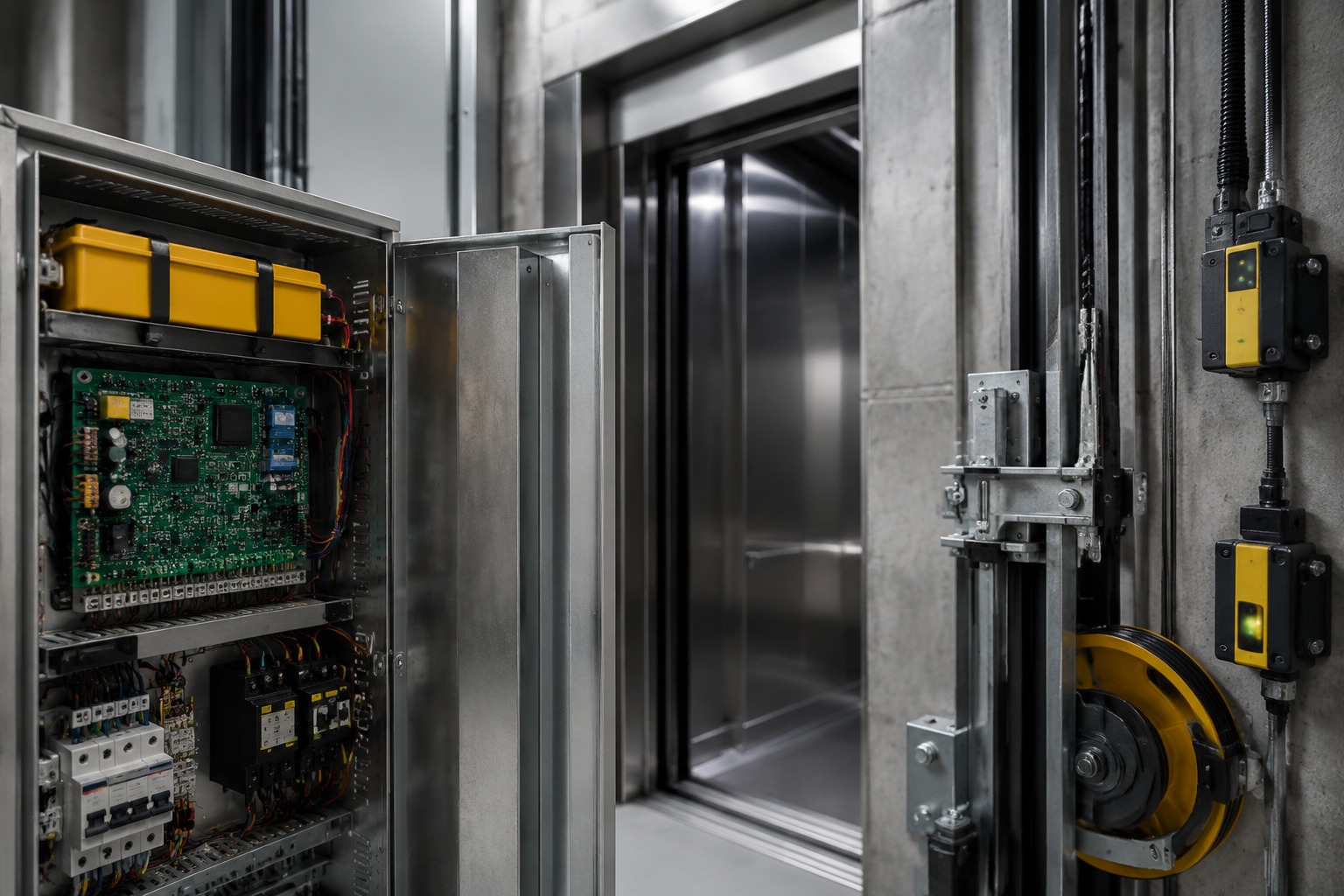
Power interruptions are a practical reality in South Africa, and for lift owners, facility managers, and maintenance contractors, emergency power is not a luxury item. It is a passenger safety function. In simple terms, an elevator emergency power supply helps the lift complete a controlled response during a mains failure: emergency lighting stays on, communication devices may remain active, and in some systems the car can move to a landing for safe passenger release. In commercial buildings in Johannesburg, residential towers in Cape Town, hotels in Durban, hospitals in Pretoria, and industrial sites near Gqeberha and the logistics corridors linked to the ports of Durban and Cape Town, the correct backup solution reduces entrapment risk, shortens downtime, and supports compliance-oriented maintenance practice.
The right choice depends on the lift brand, the rescue strategy, the battery condition, the connected load, and whether the unit is intended only for cabin lighting or also for automatic rescue operation. For buyers in South Africa, this means the question is not only “Do we need emergency power?” but also “Which emergency power function is required for this specific elevator system?” A lighting-only supply, a DC brake supply, and a rescue-oriented backup unit serve different roles. For example, where a building needs reliable cabin illumination during outages, an emergency lighting power supply for lifts may be appropriate. Where a Hitachi lift system requires model-specific replacement, a Hitachi elevator emergency power supply or a UAX 48V brake power supply for Hitachi elevators may be part of the maintenance plan, subject to exact model matching.
South Africa’s lift market is also shaped by modernization. Many older buildings in Sandton, Midrand, Centurion, and the CBD zones of major cities are updating controllers, door systems, and safety-related electrical accessories. In that environment, emergency power selection must balance compatibility, replacement lead time, electrical performance, and documentation. Buyers who source only on appearance or nominal voltage often face avoidable return visits, wiring mismatch, alarm faults, or incomplete rescue sequences after installation. A structured approach is more effective: identify the lift model, verify the original power supply function, confirm voltage and battery requirements, assess rescue logic, and carry out full post-installation testing under realistic outage conditions.
This guide explains what elevator emergency power supplies do, how to choose emergency lighting backup, what to note for Hitachi applications, how to check battery condition and voltage, how rescue operation compatibility should be assessed, what testing is required after installation, when maintenance records indicate replacement timing, and the most common questions from the South African market. It is written for maintenance companies, distributors, building owners, and modernization contractors who need practical information rather than generic advice.
How Emergency Power Supplies Work in Passenger Safety
An elevator emergency power supply bridges a critical gap between normal operation and a safe response during a power failure. Its purpose depends on system design. In some lifts, the backup unit powers only the cabin light and alarm so passengers are not left in darkness. In others, the backup function supports an automatic rescue sequence, allowing the car to travel at low speed to the nearest floor, open the doors, and release passengers. Some systems also maintain brake-related circuits or communication equipment long enough for safe action.
For South African buildings affected by load-shedding, utility instability, generator transfer delays, or local distribution faults, this functionality has everyday relevance. Passengers trapped in a dark car become distressed quickly. If a system can keep lighting active, alarm circuits available, and rescue logic functional, the safety outcome improves significantly. However, it is important to distinguish between three common categories:
| Emergency Power Type | Main Function | Typical Connected Load | Rescue Capability | Common Use Case | Important Check |
|---|---|---|---|---|---|
| Cabin lighting backup | Keeps car light on during outage | Lighting circuit, sometimes alarm | No car movement | Basic passenger reassurance | Battery runtime |
| Alarm and communication backup | Maintains alarm or intercom | Alarm, voice link, indicators | No car movement | Residential and older systems | Signal continuity |
| Automatic rescue power | Supports car travel to landing | Controller logic, drive interface, brake circuits | Yes, if system design allows | Commercial and higher traffic lifts | Brand compatibility |
| Brake-related DC supply | Provides stable DC for brake function | Brake circuit | Indirect, system dependent | Specific controller designs | Correct output voltage |
| UPS-integrated control backup | Supports selected control components | PCB, logic, communication modules | Sometimes partial | Modernization projects | Load calculation |
| Generator-assisted transfer logic | Coordinates temporary backup until mains return | Depends on building setup | Possible in integrated systems | Hospitals, offices, hotels | Transfer timing |
The table above shows why emergency power cannot be treated as a single generic part category. A building owner in Durban may only need dependable lighting backup for a low-rise residential block, while a hospital in Pretoria may require rescue-oriented compatibility because rapid passenger release is operationally important. In mining-adjacent industrial facilities or logistics properties around port regions, vibration, dust, and maintenance intervals may further influence selection.
Demand has grown in South Africa because building operators now place more value on resilient vertical transport. Passengers expect elevators to respond safely even when utility conditions are unstable. The market is also influenced by insurance expectations, tenant satisfaction, and the modernization of aging stock.
The growth trend above reflects a realistic increase in demand driven by power reliability concerns, modernization activity, and more disciplined maintenance procurement. The key message for buyers is simple: emergency power should be specified by function, not by appearance alone.
Selecting the Right Backup for Emergency Lift Lighting
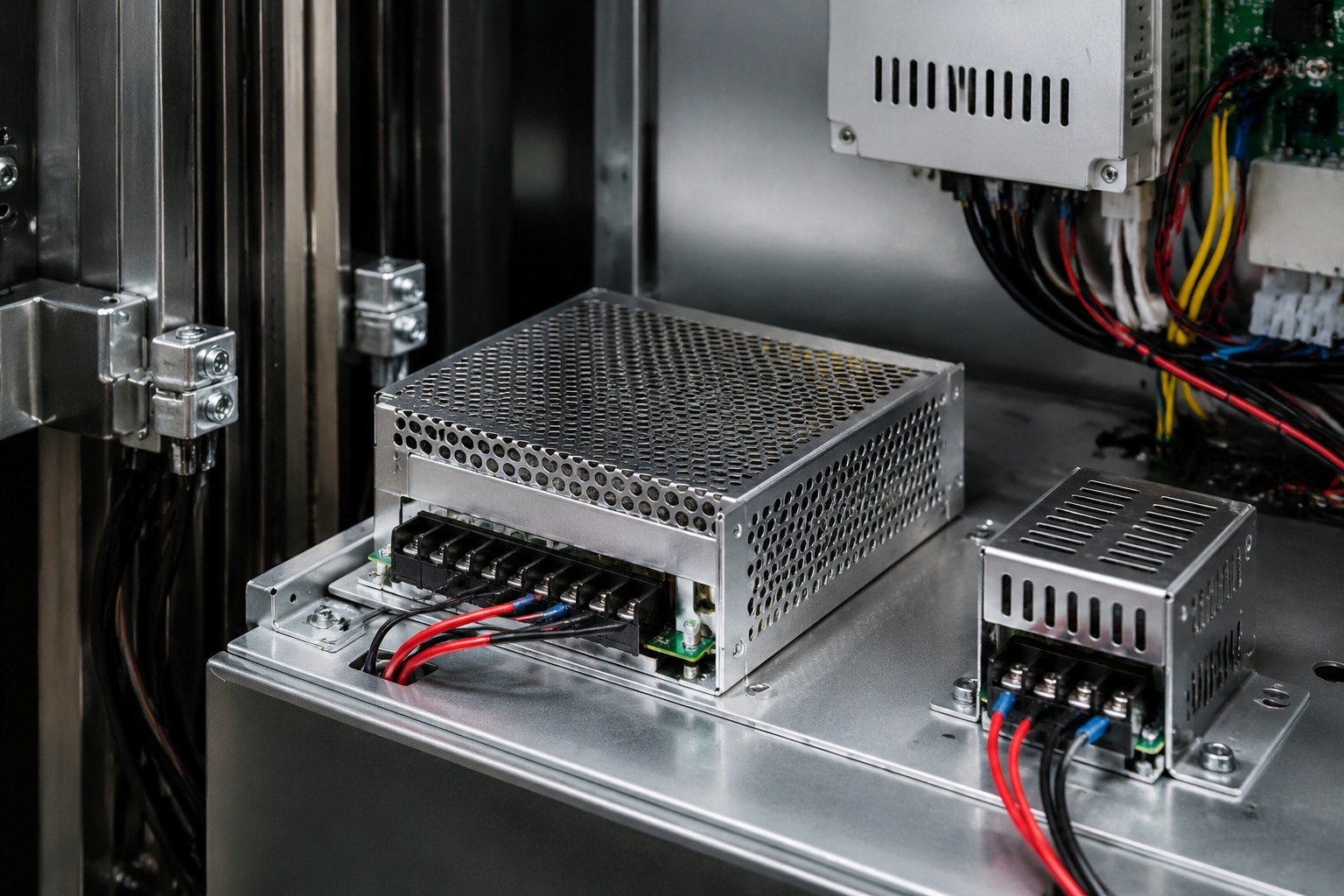
Emergency lighting power supply selection starts with one practical question: how much load must the unit support, and for how long? Lift cabin lighting has changed considerably in recent years. Older cars may still use fluorescent or higher-load fixtures, while many modernized elevators use LED lighting with lower current draw. If the replacement unit is undersized, the cabin may go dark before technicians arrive or before passengers are rescued. If it is oversized without proper matching, unnecessary cost and installation issues can follow.
For South African buyers, environmental and operating conditions also matter. In coastal regions such as Durban, Umhlanga, or Cape Town, humidity and corrosion exposure can affect enclosures and terminals. In inland cities such as Johannesburg and Bloemfontein, temperature cycles and dust in service areas should be considered. Building owners should also ask whether the emergency lighting supply is intended only for the cabin lamp, or whether it also supports car fan, alarm, or communication circuits.
| Selection Factor | Why It Matters | Typical Risk if Ignored | Who Should Verify | Preferred Check Method | South Africa Note |
|---|---|---|---|---|---|
| Output voltage | Must match lighting circuit requirements | Light fails or components overheat | Technician | Compare label and wiring diagram | Important in mixed-brand stock |
| Battery capacity | Determines backup runtime | Insufficient lighting duration | Maintenance company | Runtime test under load | Long outage periods increase importance |
| Charging profile | Protects battery life | Early battery failure | Installer | Measure float and charge voltage | Useful where maintenance visits are spread out |
| Mounting dimensions | Ensures fit in control cabinet or car top zone | Delayed installation | Procurement and site team | Physical measurement | Older machine rooms often have tight space |
| Terminal configuration | Affects wiring accuracy and speed | Miswiring or rework | Electrician | Photo and pin verification | Critical in urgent breakdown jobs |
| Load type | LED and legacy lighting behave differently | Flicker or unstable output | Service engineer | Measure real connected load | Modernized lifts often mix old and new parts |
The table highlights why cabin emergency lighting should not be treated as a generic battery box. A careful buyer will verify the actual lighting load, expected autonomy time, charger behavior, and physical fit before ordering. This is especially important for distributors serving multiple maintenance contractors across Gauteng, KwaZulu-Natal, and the Western Cape, where mixed lift populations create frequent model variation.
Another point often missed is whether the emergency lighting unit forms part of a broader passenger confidence strategy. In offices, hotels, and premium residential towers, users judge the building by how calmly systems behave during an outage. A car that remains illuminated, with a functioning alarm or intercom, creates a much more controlled passenger experience than one that immediately goes dark.
The industry demand comparison shows that healthcare, office, and residential sectors are currently the strongest users of emergency lift power solutions in South Africa. Hospitals and clinics place a premium on release speed and continuity, while offices and residential buildings experience regular user pressure to improve outage response.
Key Considerations for Hitachi Emergency Power Supplies
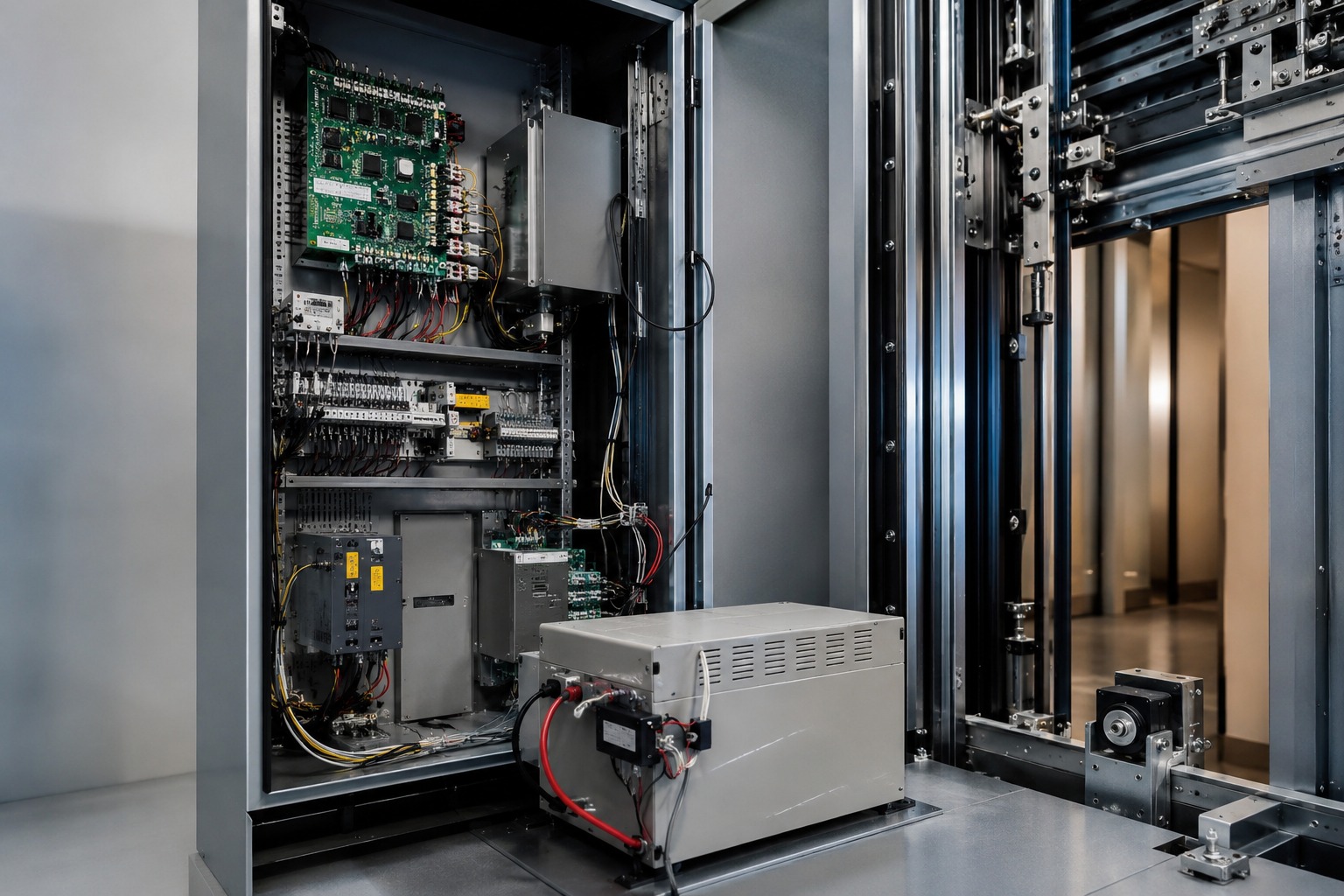
Hitachi elevator systems are common enough in many markets that maintenance teams frequently request matching power modules, brake supplies, and rescue-related components by old part number. For Hitachi applications, emergency power selection requires extra discipline because similar-looking units may not be electrically or functionally identical. A technician should always confirm the exact model designation, output requirements, wiring arrangement, installation position, and interaction with the control system.
In practice, this means buyers should provide photographs of labels, cabinet location, terminal markings, and the related controller when requesting a quotation. If the application involves a rescue sequence or brake circuit, the site team should also explain the observed fault: no emergency lighting, failed battery charging, inability to release passengers during outage, or brake-related abnormality. For some repairs, a model-specific replacement such as a Hitachi emergency power supply unit is the correct route. For other cases, the requirement may relate more specifically to a DC48V brake power supply used in Hitachi lift systems.
Technological capability matters here. An experienced parts supplier does more than send a catalog picture. The useful service lies in matching old and new references, checking electrical data, and reviewing application photos to reduce compatibility risk before shipment. This model-matching approach is particularly valuable for South African maintenance firms serving multiple cities, because repeat site visits are costly when travel, access scheduling, and emergency callouts are involved.
| Hitachi Check Point | What to Confirm | Reason | Typical Fault if Wrong | Recommended Evidence | Buyer Action |
|---|---|---|---|---|---|
| Part number | Exact original code and revision | Different revisions may differ internally | Startup failure | Clear label photo | Send full image before ordering |
| Output rating | Voltage and current | Must match load and circuit design | Underpower or overvoltage | Nameplate and meter reading | Compare with service manual if available |
| Function type | Lighting, brake, rescue, or control backup | Each type serves a different purpose | Wrong part category supplied | Cabinet location photo | Describe system behavior during outage |
| Connector style | Plug, terminal, harness orientation | Affects installation fit | Rewiring delays | Close-up of terminals | Confirm pin arrangement |
| Cabinet space | Size and mounting points | Necessary for direct replacement | Physical mismatch | Measurement and overview image | Check before dispatch |
| Battery interface | Battery voltage and charge control | Impacts runtime and battery life | Charging fault alarms | Battery label and test data | Replace aged batteries if needed |
Manufacturing capability also supports reliability in this area. Buyers generally benefit from suppliers that apply stable quality inspection, protective packaging, and part verification before shipment, especially when shipping into South Africa through busy trade routes and warehouse networks. Sensitive electrical parts can be damaged by poor packing, and rushed substitution increases the chance of a second breakdown. Good sourcing discipline reduces that risk.
Checking Battery Condition and Verifying Voltage
The battery is often the weak link in an emergency power system. Even if the power supply electronics remain functional, an aged or sulphated battery may deliver poor runtime or collapse under load. In South Africa, where lifts may face repeated outage cycles, battery aging can be accelerated if charging is unstable or if the unit spends too much time in elevated temperatures. That is why battery testing should be part of routine maintenance, not an afterthought after passenger entrapment.
The most useful checks include visual inspection, open-circuit voltage measurement, float voltage verification at the charger, and a practical load test. Swelling, leakage, corroded terminals, and heat damage are warning signs. A battery that measures acceptable voltage at rest can still fail once the emergency circuit draws current. For this reason, a load-based test is more informative than a simple static reading.
| Test Item | Normal Goal | Warning Sign | What It Suggests | Recommended Action | Record in Log |
|---|---|---|---|---|---|
| Visual casing check | Clean, stable, no swelling | Bulging or cracks | Battery deterioration | Replace promptly | Yes |
| Terminal condition | Clean and tight | Corrosion or looseness | Resistance and poor charging | Clean, retighten, retest | Yes |
| Open-circuit voltage | Within expected range | Low resting voltage | Discharge or aging | Charge and retest | Yes |
| Charger float voltage | Stable manufacturer range | Too high or too low | Charger issue or wrong setting | Inspect power supply circuit | Yes |
| Load test runtime | Supports required time | Rapid voltage drop | Loss of capacity | Replace battery set | Yes |
| Temperature reading | Normal operating warmth | Overheating | Charging fault or battery stress | Investigate immediately | Yes |
The explanation behind the table is straightforward: voltage alone is not enough. The battery must hold up under the actual emergency load. Maintenance teams in cities with heavy service demand, such as Johannesburg and Cape Town, often reduce callback risk by replacing batteries proactively once test trends show capacity decline rather than waiting for a complete failure.
Service capability becomes especially important here. A responsive supplier that can help confirm replacement specifications, recommend equivalent battery-related parameters, and dispatch compatible parts with protective packaging helps maintenance companies restore service faster. This support matters when building owners need minimal downtime and clear technical answers.
The area trend indicates a broader industry shift toward scheduled battery monitoring and planned replacement. This is likely to continue through 2026 as maintenance contracts increasingly focus on resilience, audit trails, and fewer entrapment incidents.
Ensuring Compatibility with Rescue Operation Functions
Compatibility with rescue operation is one of the most misunderstood aspects of elevator emergency power. A backup unit may fit physically and provide the correct nominal voltage, yet still fail to support the rescue sequence because the controller logic, inverter interface, brake release timing, or door operation requirements do not align. This is especially important in modernized systems, where original and replacement components may come from different generations.
For South African installations, rescue compatibility should be reviewed carefully in high-rise residential towers, medical facilities, retirement villages, hotels, and office buildings where passenger release speed directly affects operational quality. The site team should ask the following: Does the lift perform automatic rescue during total mains loss? Does it require battery-backed control logic only, or actual drive support to move the car? Is brake power involved? Does the system need door opening power after landing? Are there brand-specific signals that must be maintained?
A practical case can illustrate the point. Consider a mixed-use building in Sandton with two passenger lifts. One car had reliable emergency lighting but still trapped passengers during transfer delays because the rescue logic was not supported by the installed backup arrangement. After proper system review, the maintenance contractor replaced the relevant power module, tested battery capacity, verified control responses, and simulated a mains failure. The result was not just lighting continuity, but complete release to the nearest floor. The difference was compatibility, not merely battery presence.
| Compatibility Item | Question to Ask | Why It Matters | Common Problem | Verification Method | Best Time to Check |
|---|---|---|---|---|---|
| Controller logic support | Will rescue commands remain active? | Without logic, rescue cannot begin | Lift stops and stays trapped | Schematic review and live test | Before purchase |
| Drive or motor support | Is movement to landing required? | Some rescue systems need motion capability | Lighting works but no car travel | Controller documentation | Design stage |
| Brake circuit supply | Does the brake require dedicated DC power? | Brake release may be essential to rescue | Car cannot move off position | Voltage measurement under test | Commissioning |
| Door opening power | Can doors open after landing? | Passenger release depends on this step | Car reaches floor but remains closed | Simulated outage test | After installation |
| Battery runtime margin | Is there enough reserve for full sequence? | Low capacity can interrupt rescue mid-cycle | Incomplete rescue attempt | Load test with timing | Routine maintenance |
| Brand-specific signaling | Are interface signals compatible? | Protects correct sequence logic | Fault codes or no response | Model matching and diagrams | Procurement stage |
The explanation is clear: rescue compatibility is system-level, not part-level only. Procurement teams should therefore avoid ordering replacement units solely from old photographs when the lift’s function during outages is safety-critical.
Testing Requirements After Installation
Once an emergency power supply is installed, the job is only half complete. A safe outcome depends on proper testing. In South Africa, where backup systems are often purchased specifically because outages are expected, installation without functional verification creates false confidence. Testing should confirm that charging is correct, battery polarity is correct, output is stable, lighting or rescue loads are carried as intended, and no abnormal alarms appear on the controller.
A complete post-installation test should include both static and dynamic checks. Static checks cover voltage, current, polarity, charger status, wiring security, and enclosure integrity. Dynamic checks involve simulating power failure and observing actual system response. If the application is lighting-only, confirm illumination duration. If the system is rescue-enabled, confirm the full sequence from mains loss to landing and door release. Repeatability also matters; a one-time successful test is useful, but consistency across multiple attempts is better evidence of reliability.
Documentation is another essential part of testing. Record meter readings, battery date, installed model number, serial number if available, test duration, and any controller observations. This creates a service history that protects both contractor and building owner.
Maintenance Records and Knowing When to Replace
Maintenance records turn isolated repairs into a predictable asset strategy. In the context of elevator emergency power, records help answer three questions: Is performance stable? Is the battery aging? Is replacement becoming more economical than repeated troubleshooting? Building owners in South Africa often manage multiple lifts across one property or several sites, so trend-based maintenance provides much better visibility than reactive decisions.
Useful records should include installation date, brand and model, battery replacement date, measured voltages, load-test runtime, fault codes, rescue test results, and technician observations. If the same unit repeatedly shows low float voltage, shortened runtime, or charging instability, replacement planning should begin before a failure causes entrapment. A clean log also helps modernization contractors identify which lifts need broader electrical upgrades rather than simple part swaps.
| Record Field | Why Keep It | Trend to Watch | Risk Signal | Suggested Response | Owner Benefit |
|---|---|---|---|---|---|
| Installation date | Shows service age | Approaching expected life | Older unit with rising faults | Budget for replacement | Better planning |
| Battery replacement date | Tracks battery cycle life | Repeated short intervals | Charging issue suspected | Inspect charger and environment | Lower repeat spend |
| Float voltage reading | Measures charging health | Drift over time | Undercharge or overcharge | Troubleshoot power supply | Prevents surprise failure |
| Runtime result | Confirms real performance | Gradual decline | Capacity loss | Replace battery or unit | Improves safety readiness |
| Fault history | Shows recurring behavior | Repeated alarm reset calls | Component instability | Escalate to replacement | Less downtime |
| Rescue test record | Proves operational function | Inconsistent sequence | Compatibility or battery weakness | Retest and review system logic | Audit-ready evidence |
The practical explanation is that records reveal patterns before passengers experience failure. In many South African facilities, especially where multiple buildings are managed from one FM team, this data supports capital planning and reduces emergency callouts.
Looking ahead to 2026, three trends are likely to shape replacement timing. First, more building owners will adopt sustainability-minded maintenance, preferring planned replacement over wasteful breakdown cycles. Second, policy and safety expectations are likely to increase the value of documented functional testing. Third, technology will continue shifting toward smarter diagnostics, better battery monitoring, and more efficient low-load lighting systems. As these changes spread, buyers will increasingly expect not just parts, but verified compatibility and maintenance insight.
The supplier comparison chart reflects what South African buyers increasingly prioritize: accurate model matching, consistent inspection, good packaging for electrical components, and responsive technical communication. These factors often matter more than a low headline price because the real cost of the wrong part includes downtime, labour, tenant complaints, and repeat travel.
Our role in this market is built around those priorities. On the technology side, we support careful model matching for elevator control boards, inverter and frequency converter parts, door operator components, door locks, light curtains, guide shoes, oil cups, sensors, encoders, power supplies, buttons, COP panels, intercom parts, and related lift accessories across brands such as Hitachi, Toshiba, KONE, Mitsubishi, and others. On the manufacturing and sourcing side, we focus on stable quality inspection and protective packing suited to sensitive lift components. On the service side, we respond quickly to part identification requests so maintenance companies, distributors, building owners, and modernization contractors can reduce downtime and source compatible replacements with greater confidence.
Frequently Asked Questions About Elevator Emergency Power
Does every emergency power supply allow the lift to move to a floor?
No. Many units only support cabin lighting or alarm functions. Automatic rescue movement requires a compatible system design and the right backup function.
Can a lighting backup unit be used instead of a rescue power supply?
Usually not. Lighting backup and rescue operation support are different functions. Always confirm the actual application before ordering.
How often should batteries be checked?
They should be checked during routine maintenance, with recorded voltage and periodic runtime testing. Sites with frequent outages may require closer monitoring.
What are the first signs that replacement is needed?
Reduced runtime, low float voltage, swollen battery casing, repeated charging faults, or failed rescue tests are common warning signs.
Why is exact model matching important for Hitachi lifts?
Because similar-looking parts may differ in function, output, terminal layout, or controller interaction. Exact reference checking reduces compatibility risk.
Is emergency lighting enough for high-rise residential buildings in South Africa?
Not always. For buildings with frequent power disruptions or difficult rescue access, owners should assess whether rescue-capable backup is more appropriate.
Can older lifts in Johannesburg or Cape Town be upgraded with better backup systems?
Often yes, but the feasibility depends on controller design, available space, wiring, and modernization scope. A technical review is recommended.
What documents should a buyer send when asking for a quotation?
Provide clear part label photos, wiring terminal photos, cabinet overview images, voltage details, lift brand and model, and a short fault description.
How important is post-installation testing?
It is essential. Without simulated outage testing, there is no proof that the lighting or rescue function will work when needed.
How do local market conditions affect buying decisions in South Africa?
Frequent power events, travel distances between sites, mixed-brand installed bases, and the cost of repeat technician visits all make accurate part selection more important.
In summary, elevator emergency power in South Africa should be chosen by safety function, compatibility, and tested performance. Whether the need is cabin lighting continuity, brand-specific Hitachi replacement, battery-backed brake support, or rescue operation readiness, the best results come from disciplined model matching, battery and voltage verification, proper installation testing, and clear maintenance records. For buyers who want fewer callbacks and safer lift behavior during outages, those steps make the difference between a part change and a genuine reliability improvement.