
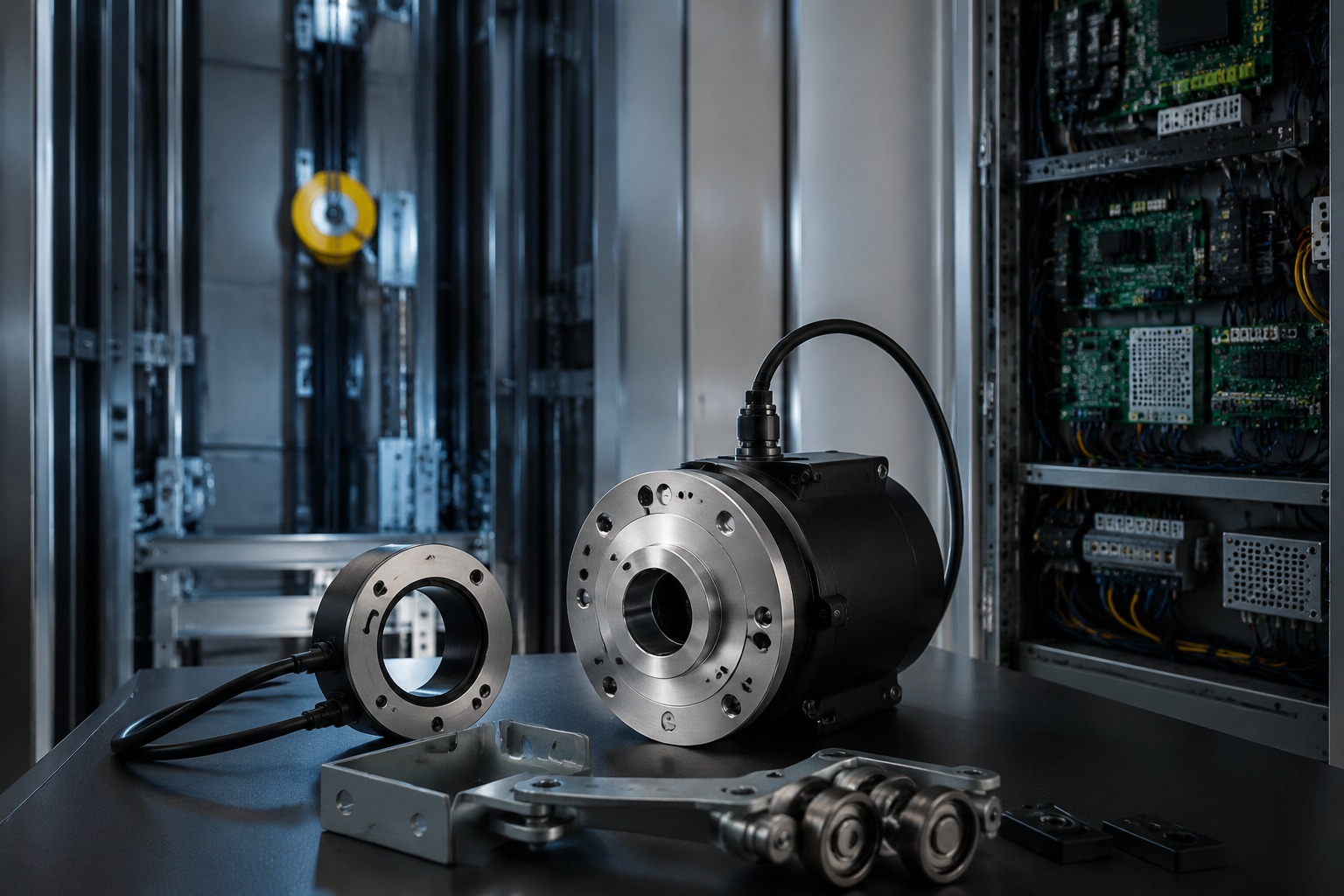
For lift owners, maintenance companies, and modernization contractors in South Africa, an elevator encoder is not a small accessory that can be chosen by guesswork. It is a core speed feedback device that helps the control system understand how fast the traction machine is rotating, which direction it is moving, and whether the car is leveling accurately at each landing. When an encoder is matched correctly, the lift can start smoothly, run steadily, stop accurately, and maintain safe traction control. When it is mismatched or failing, the result can be nuisance faults, rough travel, floor leveling errors, and avoidable downtime.
This guide explains how to choose an elevator encoder for practical field use in South Africa, including commercial towers in Johannesburg and Sandton, residential developments in Pretoria, hospitals in Durban, hotels in Cape Town, industrial facilities near Gqeberha, and mixed-use buildings connected to busy service hubs and ports. We cover function, failure symptoms, pulse and shaft matching, Hitachi UAX selection notes, installation checks, replacement testing, stocking strategy for urgent repairs, and common questions from buyers.
If you are sourcing a replacement for a specific lift system, it helps to compare actual labels, pulse counts, shaft dimensions, connector style, and mounting details rather than relying only on machine brand or visual similarity. For example, some buyers start from a known model family such as the Hitachi UAX elevator encoder, while others need a broader comparison across compact feedback units like this lift encoder spare part, a similar elevator encoder replacement option, or another compatible encoder for lift maintenance. In every case, correct matching matters more than appearance alone.
Direct answer: how to buy the right encoder
The fastest way to buy the right elevator encoder is to confirm seven points before ordering: brand and model reference, pulse output, output signal type, shaft diameter and shaft style, mounting form, supply voltage, and connector or cable arrangement. If the original part label is damaged, the next best sources are the controller parameters, inverter manual, traction machine documentation, and a clear photo of the old encoder from multiple angles. Buyers in South Africa often need quick decisions because buildings cannot wait for long import cycles, especially where passenger flow is heavy in CBD office towers, shopping centres, and hospitals. A verified model match prevents repeat visits and second failures caused by incompatible feedback.
| Selection point | Why it matters | Typical field check | Risk if ignored | Recommended action | Buyer note |
|---|---|---|---|---|---|
| Pulse output | Controller expects a specific resolution | Read encoder label or inverter parameter | Speed error or fault trips | Match original pulse count exactly where possible | Do not estimate from size alone |
| Signal format | Must match control input requirements | Check A/B/Z, differential, open collector, or line driver | No feedback recognition | Confirm with machine or drive manual | Wrong signal type can mimic total failure |
| Shaft diameter | Mechanical fit determines alignment | Measure with caliper | Loose fit, wobble, or impossible installation | Verify exact mm size | Include keyway details if present |
| Shaft style | Solid, hollow, clamp, or coupling type affects mounting | Inspect old part and machine end | Misalignment and premature wear | Match original mounting concept | Photos are very helpful |
| Voltage | Incorrect supply may damage encoder | Read rating plate | Unstable output or burnout | Confirm VDC requirement before power-on | Never assume all units are the same |
| Connector and cable | Determines practical installation | Compare plug shape and pinout | Wiring errors and noise problems | Check pin assignment carefully | Cable length can also matter |
The table above shows why buyers should treat encoder replacement as a combined electrical and mechanical decision. Many emergency breakdown cases start with a good intention to replace a “similar” part quickly, but the wrong pulse count or shaft fit creates a second service call. In high-traffic South African sites, avoiding that repeat call is a major operational advantage.
South Africa market context for elevator encoder sourcing
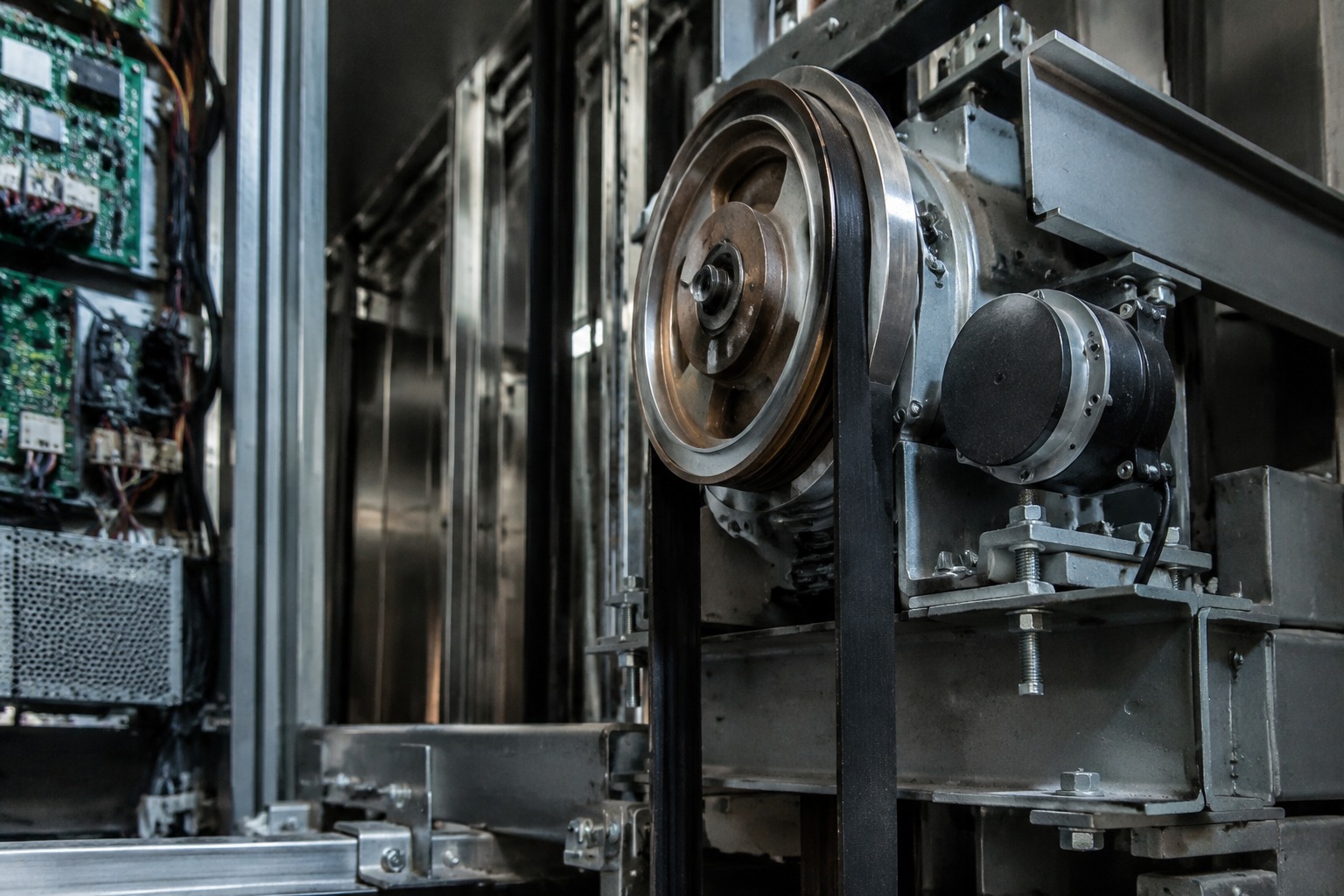
Elevator maintenance demand in South Africa is shaped by a mix of modernization needs, imported equipment diversity, urban commercial density, and practical spare-parts logistics. Buildings in Johannesburg, Cape Town, Durban, and Pretoria often operate lifts from multiple international brands installed over different decades. That means a maintenance contractor may need to source an encoder not only for one modern machine-room-less unit, but also for an older traction system using a legacy feedback device that is no longer easy to find through standard local retail channels.
Lead time is therefore a commercial issue as much as a technical one. Parts moving through Durban port or regional freight channels can affect building downtime, contractor response times, and tenant satisfaction. For hospitals, hotels, student accommodation, and retail centres, an extended out-of-service period creates both safety concerns and reputational cost. This is why many South African buyers increasingly prefer suppliers who can verify model details quickly, package encoders protectively, and support urgent dispatch for time-sensitive repairs.
The line chart illustrates a realistic growth pattern in replacement and modernization demand, driven by aging lift fleets, urban refurbishment, and the need for more predictable spare-part availability. Looking toward 2026, the market trend points to stronger demand for accurately matched feedback components, especially where digital drives and stricter maintenance expectations require more stable speed control.
What an elevator encoder does
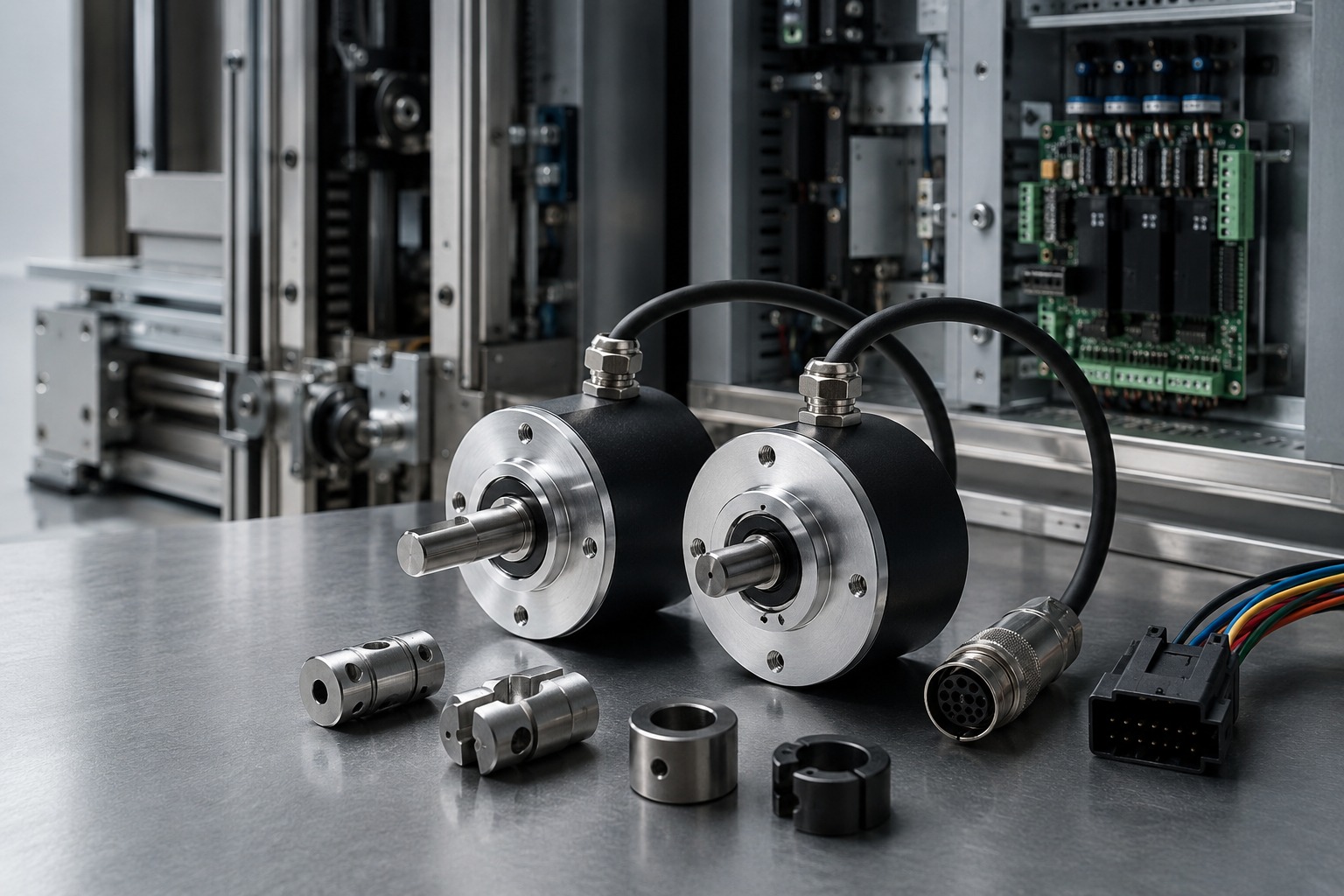
An elevator encoder converts rotational movement into electrical signals that the lift control system can interpret. In practical terms, it tells the drive or controller how the motor or machine is moving. That information is used for acceleration, deceleration, speed regulation, direction confirmation, and floor leveling. In traction lifts, this feedback is essential because the controller must know the real motor response, not just the command it issued.
For passengers, the encoder’s job is felt rather than seen. A healthy encoder supports smooth starts without jerks, stable travel without hunting, and accurate stopping at the landing sill. For technicians, it is a key element in closed-loop control. If the controller loses clean speed feedback, it may switch to fault mode, reduce performance, or stop the lift entirely to avoid unsafe operation.
| Encoder function | Operational role | Impact on ride quality | Impact on safety logic | Typical symptom if weak | Service importance |
|---|---|---|---|---|---|
| Speed feedback | Measures rotational speed | Stable acceleration and deceleration | Helps prevent overspeed logic conflicts | Uneven travel speed | Critical |
| Direction detection | Confirms travel direction | Prevents hesitation at start | Supports correct command execution | Direction fault alarms | High |
| Position reference | Assists accurate stopping and leveling | Smooth floor alignment | Reduces landing error risk | Car stops above or below floor | Critical |
| Motor synchronization | Supports inverter control tuning | Less vibration and noise | Improves controlled braking | Shuddering at low speed | High |
| Fault monitoring | Provides feedback consistency | Prevents unstable ride behavior | Allows controller to detect anomalies | Intermittent shutdowns | High |
| Leveling precision | Fine control near floor stop | Better boarding comfort | Supports accessibility and safe entry | Re-leveling too often | Very high |
The explanation above matters because some buyers think of encoders as generic rotation sensors. In lifts, they are more than that. They contribute directly to traction control quality and landing precision, which are fundamental to passenger confidence and service reliability.
Symptoms of encoder failure
Encoder failure does not always mean a completely dead unit. In many elevators, the first signs are intermittent. A lift may run normally for hours and then trip during deceleration. It may level poorly only when loaded. It may produce speed deviation faults only in hot machine-room conditions. For this reason, encoder diagnosis should include both the device itself and the surrounding wiring, connector integrity, alignment, and contamination level.
Common symptoms include jerky starts, car vibration, inconsistent travel speed, repeated inverter faults, abnormal re-leveling, rough stopping, direction errors, and unexplained shutdowns after rain or humidity exposure. In coastal regions such as Durban and Cape Town, moisture and corrosion can accelerate connector problems. In dusty industrial environments near logistics corridors or manufacturing sites, contamination and vibration can affect both cable strain and mounting stability.
| Observed symptom | Likely encoder-related cause | Other possible cause | Quick field check | Severity | Recommended next step |
|---|---|---|---|---|---|
| Lift stops short of floor | Pulse loss or unstable feedback | Brake timing or leveling parameter issue | Review fault history and inspect waveform | High | Test encoder output consistency |
| Jerky start | Weak signal during low-speed control | Drive tuning problem | Inspect coupling and alignment | Medium to high | Check encoder mounting and parameters |
| Random inverter trips | Intermittent cable or connector fault | Power quality issue | Wiggle test and continuity check | High | Inspect cable shield and pin contact |
| Repeated re-leveling | Inaccurate position feedback | Door zone sensor issue | Compare floor stop variance | Medium | Check pulse stability near stop |
| No movement after start command | No valid feedback to drive | Controller or safety circuit issue | Confirm encoder supply voltage | Critical | Measure power and output signals |
| Noise or vibration at speed change | Misalignment or shaft slip | Machine bearing issue | Inspect mechanical fit | Medium | Re-seat or replace encoder |
The table above shows that symptoms are shared with other lift issues, so replacing an encoder without confirmation is not always best practice. However, where evidence points strongly to unstable feedback, timely replacement prevents secondary problems such as repeated emergency callouts and prolonged building downtime.
How to match pulse output and shaft type
Matching pulse output and shaft type is the heart of correct encoder selection. Pulse output determines how many electrical counts the control system receives for a given amount of rotation. If this is too low, resolution can be insufficient for precise control. If it is different from the original design, the controller may interpret speed and position incorrectly unless parameters are changed and the system is designed to accept the alternative.
Shaft type matters just as much. Common configurations include solid shaft with coupling, hollow shaft, clamp mounting, and keyed shaft arrangements. A mismatch can create runout, slippage, side load, or installation stress. Even if the electrical signal is correct, a poor mechanical fit may cause unstable output over time. In lift applications, the safest approach is to match both electrical specification and physical geometry as closely as possible to the original component.
| Matching item | What to verify | Typical measurement method | Why it affects operation | Common mistake | Best practice |
|---|---|---|---|---|---|
| Pulse count | PPR or equivalent resolution | Label photo or manual check | Influences speed and leveling accuracy | Using a “close enough” count | Match original exactly if possible |
| Output channels | A, B, Z and signal phase | Datasheet review | Needed for direction and reference | Ignoring index channel requirement | Confirm controller expectation |
| Shaft diameter | Exact mm size | Caliper measurement | Determines fit and concentricity | Rounding dimensions | Measure carefully before ordering |
| Shaft form | Solid, hollow, keyed, clamp | Visual inspection and photos | Affects installation method | Assuming all hollow shafts are equal | Check depth and fastening style |
| Mounting face | Flange pattern and body size | Measure hole spacing | Controls alignment stability | Overlooking bracket dimensions | Send front and side photos |
| Cable exit | Axial or radial direction | Visual inspection | Impacts routing and strain relief | Ignoring machine-room space limits | Match installation space |
In South African field conditions, a proper match is especially important when technicians need to restore service quickly in busy buildings. A well-documented request with clear photos, dimensions, part code, and application details makes sourcing far more reliable than simply asking for “an elevator encoder for a Hitachi” or “a similar lift speed sensor.”
Hitachi UAX encoder selection notes
Hitachi lift systems are common in many commercial and residential buildings, so replacement demand for UAX-related encoder models is practical and ongoing. When selecting a Hitachi UAX encoder, buyers should not assume that every UAX-labeled unit shares identical output or mounting details. Variations can exist across machine configurations, production periods, and modernization histories.
The best selection process is to confirm the complete part code, label data, connector arrangement, and machine application. A useful starting point can be the Hitachi UAX encoder product page, but final selection should still be based on the old part details or verified machine documentation. If the label is unreadable, clear photos of the body, shaft side, cable side, and mounting face usually help narrow the match.
Technically, our work in this area focuses on careful model matching and compatibility review. Instead of treating lift spare parts as generic stock, we compare markings, pulse output information, shaft dimensions, and installation form to reduce mismatch risk. That technical capability is especially useful for buyers managing mixed-brand portfolios across South Africa, where one contractor may maintain Hitachi, Toshiba, KONE, Mitsubishi, and other systems within the same service network.
From a manufacturing and supply perspective, quality inspection and protective handling matter because encoders are precision parts. Housing condition, shaft integrity, connector protection, and packaging stability all affect whether the part arrives ready for installation after transport to Johannesburg, Cape Town, Durban, Bloemfontein, or regional mining and industrial areas. Good packaging is not a minor issue when lead time and machine-room access are already under pressure.
Service capability also matters. Fast response, practical confirmation support, and experience with urgent repair situations help buyers reduce downtime. When a maintenance team sends part photos and machine data, responsive review can shorten the time between fault report and dispatch decision. That is often the difference between a same-day procurement move and a delayed building recovery.
This bar chart reflects where urgent replacement demand commonly appears: dense office buildings, residential towers, and healthcare sites where lift uptime is mission-critical. The implication for buyers is clear: stocked compatibility knowledge and fast model confirmation are just as important as price.
Installation alignment and cable checks
Even a correct encoder can fail early if installation is poor. Alignment is essential because eccentric mounting, shaft side load, or coupling stress can distort the signal and shorten bearing life. Cable routing is equally important. Inverter noise, poor shielding, sharp bends, loose plugs, and weak strain relief can create intermittent faults that look like encoder failure even when the encoder body itself is healthy.
Before fitting a replacement, inspect the mounting bracket, coupling, shaft seat, and surrounding machine area. Remove oil contamination, dust buildup, and corrosion. Check whether the old failure was caused by vibration, water ingress, cable chafing, or connector looseness. If the root cause is not corrected, the new part may fail in the same way.
| Installation check | What to inspect | Why it matters | Common field issue | Corrective action | Expected result |
|---|---|---|---|---|---|
| Bracket alignment | Flatness and mounting stability | Prevents mechanical stress | Bracket bent during prior repair | Realign or replace bracket | Cleaner rotation signal |
| Coupling condition | Wear, cracks, or looseness | Maintains consistent rotation transfer | Slip under load | Replace coupling if doubtful | Stable speed feedback |
| Shaft seating | Concentric fit and fastening torque | Reduces wobble and pulse irregularity | Improper set screw tension | Tighten to specification | Less vibration |
| Cable shield | Continuity and grounding path | Protects against electrical noise | Shield cut or floating | Restore proper shield termination | Fewer false faults |
| Connector pins | Corrosion and pin retention | Ensures signal continuity | Oxidation in coastal regions | Clean or replace connector | Reliable communication |
| Cable routing | Bend radius and strain relief | Avoids long-term conductor damage | Cable rubbing on frame | Secure and re-route cable | Improved durability |
The explanation behind this table is simple: many so-called bad encoders are actually victims of bad installation conditions. Thorough alignment and cable checks protect the replacement investment and reduce repeat breakdowns.
Testing speed feedback after replacement
After installing a new encoder, the job is not complete until speed feedback has been tested under real operating conditions. Static continuity checks are useful, but they do not confirm stable performance through acceleration, full-speed travel, deceleration, and leveling. A proper post-replacement test should include no-load and load conditions where practical, multiple starts and stops, and review of any controller or inverter diagnostics related to feedback integrity.
First, confirm supply voltage and signal presence. Then observe whether the drive recognizes direction correctly and whether the motor starts smoothly. During a travel test, monitor for speed deviation alarms, vibration, and floor-stop accuracy. In systems where diagnostic tools are available, compare actual speed feedback to command speed across the run profile. A good replacement will show stable response without erratic spikes or dropouts.
For maintenance firms in South Africa serving high-rise offices and residential towers, a standardized replacement checklist is valuable. It reduces technician variation and makes service quality more predictable across teams working in different cities or provinces.
The area chart highlights a change already visible in the market: buyers are moving away from reactive, purely visual replacement and toward documented model verification, signal confirmation, and planned stocking. By 2026, this trend is likely to strengthen further as building owners expect better uptime and maintenance reporting.
Stocking encoders for urgent repair
Not every encoder should be stocked, but some should. The best stock strategy is based on service history, building criticality, installed base, and lead-time risk. A hospital, large hotel, student residence, or premium office complex usually justifies faster spare availability than a low-traffic site with redundant lift capacity. Contractors with a significant installed base of certain brands can reduce downtime by pre-positioning the most failure-prone or hardest-to-source encoder types.
For South Africa, stock planning should also consider logistics disruptions, port delays, regional freight timing, and distance to customer sites. An encoder that is easy to source globally can still cause long downtime locally if it is not available when needed. Strategic stock does not mean overbuying. It means carrying the right models with reliable traceability, protected storage, and clear application notes.
Our supply approach in this area combines sourcing reliability, stable quality inspection, and packaging that protects sensitive parts during storage and transport. This manufacturing and handling discipline is important because urgent repair stock is only useful if the part is clean, identifiable, and ready for installation when a breakdown occurs. Service capability then completes the chain: quick confirmation, responsive communication, and efficient dispatch help convert stock into real uptime recovery.
| Site type | Need for spare stock | Reason | Suggested stock level | Review frequency | Practical note |
|---|---|---|---|---|---|
| Hospital | Very high | Patient movement cannot tolerate long downtime | 1 to 2 per common machine type | Quarterly | Prioritize proven model matching |
| High-rise office | High | Peak traffic and tenant sensitivity | 1 per major installed type | Quarterly | Useful for Johannesburg CBD and Sandton sites |
| Hotel | High | Guest service reputation | 1 per critical group | Every 6 months | Good for Cape Town and Durban hospitality assets |
| Residential tower | Medium to high | Daily dependence and after-hours calls | Shared stock by service portfolio | Every 6 months | Review older modernization projects |
| Retail centre | Medium | Public traffic and trading hours | Portfolio-level stock | Every 6 months | Include escalator spares separately |
| Industrial facility | Selective | Depends on process criticality | Risk-based stock | Annually | Check environmental sealing needs |
This table shows that stock decisions should follow operational impact, not just part price. A well-chosen spare can save many times its cost in avoided downtime, emergency labour, and tenant complaints.
Applications and industries using encoder-based lift feedback
Encoders are used wherever traction lifts depend on accurate closed-loop speed control. The largest application groups in South Africa include office towers, apartment blocks, public buildings, hospitals, retail complexes, transport-linked developments, and modernization projects where older systems are being upgraded for better ride quality and safer operation. In each case, accurate feedback helps the controller maintain predictable movement and landing performance.
For modernization contractors, encoder choice can be especially important because hybrid systems may combine an existing machine with a newer inverter or control architecture. In those cases, compatibility review becomes a technical exercise rather than a simple replacement order. This is where deep product matching capability adds value.
This comparison chart highlights what buyers usually value most in real procurement situations: accurate matching, consistent inspection, careful packaging, broad brand support, and fast service response. These factors are often more important than the lowest unit price because the true cost of a wrong part is downtime.
Case example: urgent replacement in a commercial building
A typical case involves a multi-lift office building in Johannesburg experiencing intermittent speed feedback faults during morning traffic. The maintenance team notices rough stopping on one car and occasional inverter alarms on another. Initial checks show no obvious brake issue, but the encoder cable on one machine has shield damage and the second machine has unstable output from an aging unit with a worn coupling. Because the building cannot accept extended disruption, the contractor needs verified replacement parts quickly.
In this kind of situation, the most effective process is to document the old encoder labels, capture connector and shaft details, compare pulse output requirements, inspect cable integrity, and order matched replacements instead of trial parts. Once installed, both cars are tested through repeated travel cycles at different loads. The result is smoother leveling, elimination of random trips, and reduced callback risk. This example shows why proper diagnosis and accurate sourcing work together.
2026 trends: technology, policy, and sustainability
By 2026, the elevator encoder market in South Africa is likely to be shaped by three major forces. First is technology: more modernization projects will use smarter drives, better diagnostics, and stronger emphasis on data-backed maintenance decisions. Technicians will increasingly rely on fault histories, waveform checks, and parameter review instead of replacing parts on suspicion alone.
Second is policy and asset governance. Building owners are under growing pressure to document maintenance quality, reduce service interruptions, and improve accessibility and safety performance. Accurate speed feedback components support those goals because they contribute directly to reliable stopping and smoother travel. As maintenance standards become more formalized, traceable part selection and tested replacement procedures will matter more.
Third is sustainability. Replacing the correct encoder promptly can help keep existing lift systems running efficiently, extend component life elsewhere in the drivetrain, and reduce waste caused by unnecessary part swapping. Better packaging, longer-lasting replacements, and more precise compatibility checks all support a more sustainable service model. This is especially relevant in a market where imported parts, transport costs, and carbon-conscious procurement are becoming more visible considerations.
FAQ about elevator encoders
What is the main job of an elevator encoder?
Its main job is to provide accurate speed and rotational feedback to the lift control system so that the elevator can accelerate, run, decelerate, and level correctly.
Can an elevator run with a faulty encoder?
Some systems may move briefly or enter limited operation, but a faulty encoder usually causes unstable control or protective faults. Continued operation is not advisable because ride quality and stopping accuracy can be affected.
Do I need the exact same pulse output?
In most replacement cases, yes. Matching the original pulse output is the safest choice unless the controller and inverter are specifically designed and reconfigured for a different compatible feedback specification.
Is the shaft size really that important?
Yes. Even a small mismatch can create poor fit, vibration, signal instability, or early mechanical wear. Always verify shaft diameter and shaft style carefully.
How do I choose a Hitachi UAX encoder correctly?
Use the complete part code if available, and confirm pulse count, voltage, connector, shaft details, and mounting form. If in doubt, send clear photos and machine information for verification before purchase.
What should be checked before declaring the encoder failed?
Check supply voltage, connector condition, cable shield, continuity, alignment, coupling condition, and machine-side vibration. Many intermittent faults come from wiring or mounting issues rather than the encoder body alone.
How should a new encoder be tested after replacement?
Test voltage and signals first, then run the lift through multiple cycles and check for smooth starts, stable speed, accurate floor leveling, and absence of speed-related faults.
Should maintenance companies in South Africa keep spare encoders in stock?
Yes, for common installed models and critical sites. Strategic stock can greatly reduce downtime in hospitals, offices, hotels, and residential towers where waiting for imports is costly.
What type of supplier is best for urgent encoder repair needs?
The best supplier is one that can verify models carefully, support multiple elevator brands, inspect quality consistently, package parts securely, and respond quickly to technical and shipping requests.
Final buying advice for South African lift professionals
If you need a replacement elevator encoder in South Africa, do not start with price alone. Start with accuracy. Confirm electrical specification, shaft form, mounting details, and cable arrangement. Inspect the old installation for root-cause issues such as misalignment, damaged shielding, or connector corrosion. Choose a supplier that can support technical matching, stable quality inspection, protective packaging, and responsive service for urgent breakdowns.
That approach is the most practical way to keep lifts in Johannesburg, Durban, Cape Town, Pretoria, Gqeberha, and other service hubs running safely and smoothly. A correctly matched encoder supports safe traction control, smoother passenger comfort, and better leveling performance. In real building operations, that means fewer callbacks, less downtime, and greater confidence in every run.