
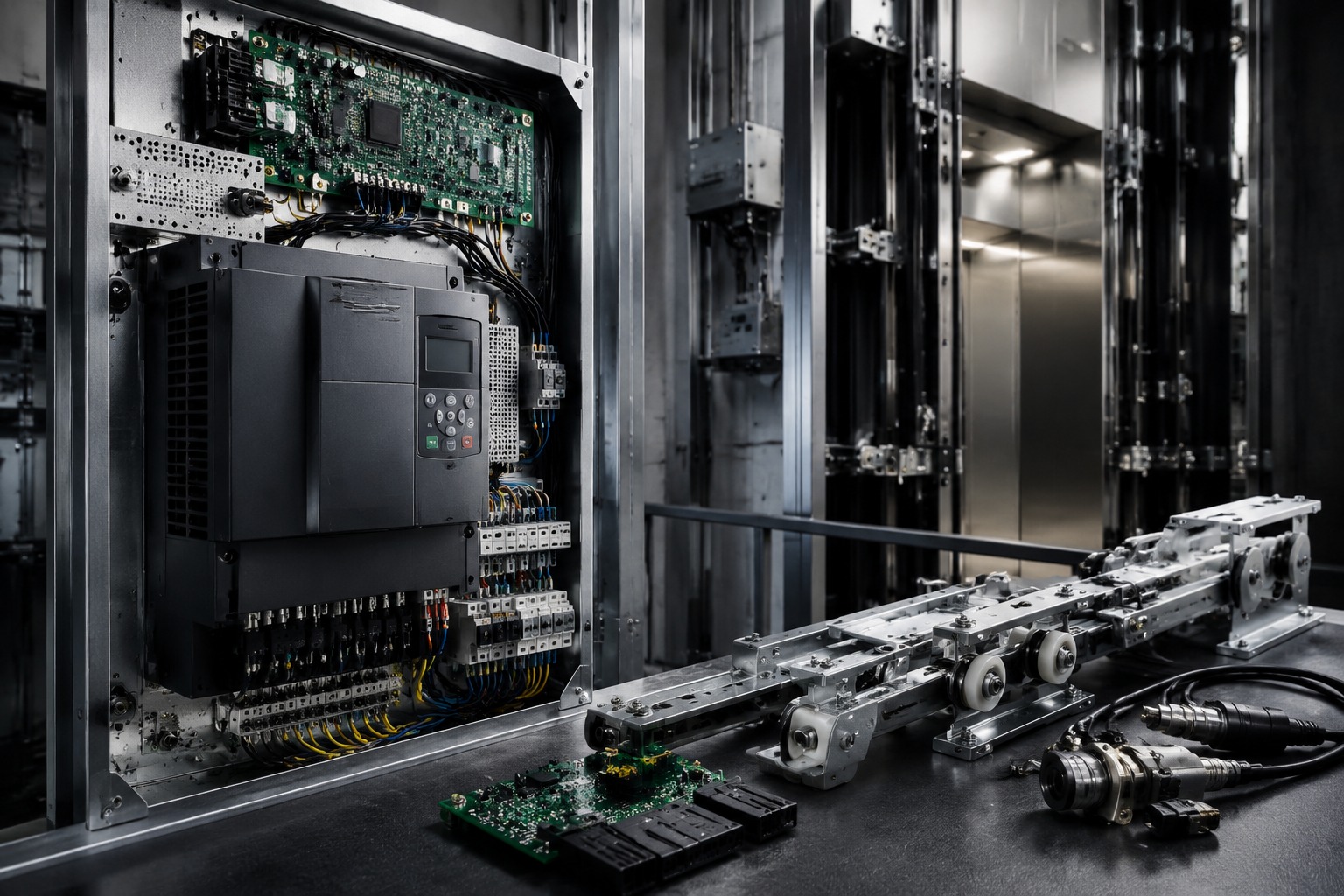
In modern lift systems, a frequency converter improves motor control by adjusting voltage and frequency with precision, allowing smoother starts, steadier leveling, lower mechanical shock, and better energy performance. For building owners and elevator maintenance teams in South Africa, this matters even more because lifts often operate under demanding traffic patterns, high ambient temperatures, dusty plant rooms, and periodic power quality issues. A well-matched elevator drive can reduce nuisance trips, protect motors and brakes, and shorten passenger waiting time.
Across Johannesburg, Cape Town, Durban, Pretoria, Midrand, Gqeberha, and fast-growing mixed-use developments near major trade routes such as Durban Port and Richards Bay, property managers are increasingly evaluating whether to repair or replace existing lift frequency converters. In older buildings, modernization projects typically focus on door systems, control boards, encoders, and the drive because these parts have the greatest effect on ride comfort and reliability. The right choice depends on motor data, shaft travel, traffic density, load class, cabinet ventilation, and the availability of compatible spare parts.
This guide is written for maintenance companies, distributors, modernization contractors, and building owners who need practical buying and service advice. It covers the difference between a frequency converter and an inverter, how to choose 15KW and 22KW models, when fault codes indicate a component issue versus a full replacement trigger, how braking and motor matching affect safety, and what technicians should check during commissioning. It also explains cooling design and preventive maintenance so lifts can stay available for hospitals, offices, shopping centres, hotels, residential towers, universities, logistics sites, and public transport buildings throughout South Africa.
Where model matching is critical, many buyers prefer to compare by application and compatibility rather than brand name alone. For example, a 22KW elevator frequency converter for lift systems is often chosen for higher-load or higher-duty lifts, while a 15KW lift frequency converter may suit mid-range passenger applications. In some modernization cases, an elevator inverter replacement option is used where the existing control philosophy and motor characteristics support that configuration.
Frequency Converter vs Inverter for Elevators
In day-to-day elevator conversations, the terms frequency converter and inverter are often used as if they mean exactly the same thing. In practice, they overlap, but for lift applications the frequency converter is better understood as the complete variable speed drive unit that converts incoming power and then supplies controlled output frequency and voltage to the motor. The inverter stage is part of that process. For procurement, maintenance, and modernization work, the distinction matters because buyers are usually sourcing a complete elevator drive assembly rather than only a power conversion stage.
In lift systems, the frequency converter controls acceleration, deceleration, torque response, speed curves, leveling accuracy, and braking coordination. It also communicates with the elevator controller, safety chain logic, door timing, and encoder feedback where closed-loop control is used. A basic industrial inverter may run a motor, but an elevator-grade frequency converter is designed around passenger comfort, low-speed torque stability, and repeated start-stop duty. That is why maintenance teams in high-rise buildings in Sandton or busy coastal hotels in Cape Town should evaluate elevator-specific functions before accepting a substitution.
| Term | Meaning in Lift Use | Main Function | Typical Elevator Relevance | Risk if Misunderstood | Buying Advice |
|---|---|---|---|---|---|
| Frequency converter | Complete drive unit for speed control | Adjusts output frequency and voltage | Core part of motor control and ride quality | Wrong model may not support lift logic | Confirm full elevator application compatibility |
| Inverter | Power conversion stage or commonly used shorthand | Creates variable AC output | Important but not always the whole drive package | Buyer may receive incomplete solution | Ask whether it includes elevator firmware and interfaces |
| VVVF drive | Variable voltage variable frequency drive | Smooth motor regulation | Standard term in elevator modernization | Overlooking encoder or brake logic needs | Check VVVF parameters against control system |
| Open-loop drive | Control without encoder feedback | Basic speed control | Used in some simpler lift systems | May reduce leveling precision | Suitable only if motor and controller allow it |
| Closed-loop drive | Drive with encoder feedback | High precision speed and torque control | Better comfort and low-speed stability | Encoder mismatch can cause faults | Match encoder type, pulses, and voltage |
| Regenerative drive | Drive that returns energy to the grid | Energy saving in suitable duty cycles | Useful in high-traffic buildings | Wrong site expectations on savings | Review traffic profile and power conditions first |
The table above shows why terminology affects real purchasing decisions. In South Africa, some building owners ask only for an “inverter” when the actual need is a complete elevator frequency converter with brake control, inspection speed handling, communication settings, and matching motor data. Clarifying this at the quoting stage reduces delays and return shipping.
From an energy perspective, frequency converters improve performance by avoiding harsh direct-on-line starts and by optimizing speed profiles. In a commercial building in Johannesburg CBD, for instance, morning up-peak and evening down-peak traffic put constant strain on the drive and motor. A properly tuned elevator drive reduces current spikes and mechanical wear, which can lower the total cost of ownership even when electricity tariffs and supply conditions fluctuate.
The chart above reflects a realistic upward trend in modernization demand. The growth is supported by aging installed equipment, higher expectations for ride comfort, replacement of obsolete parts, and the need for efficient building operations in urban centres.
Choosing 15KW and 22KW Elevator Drive Models
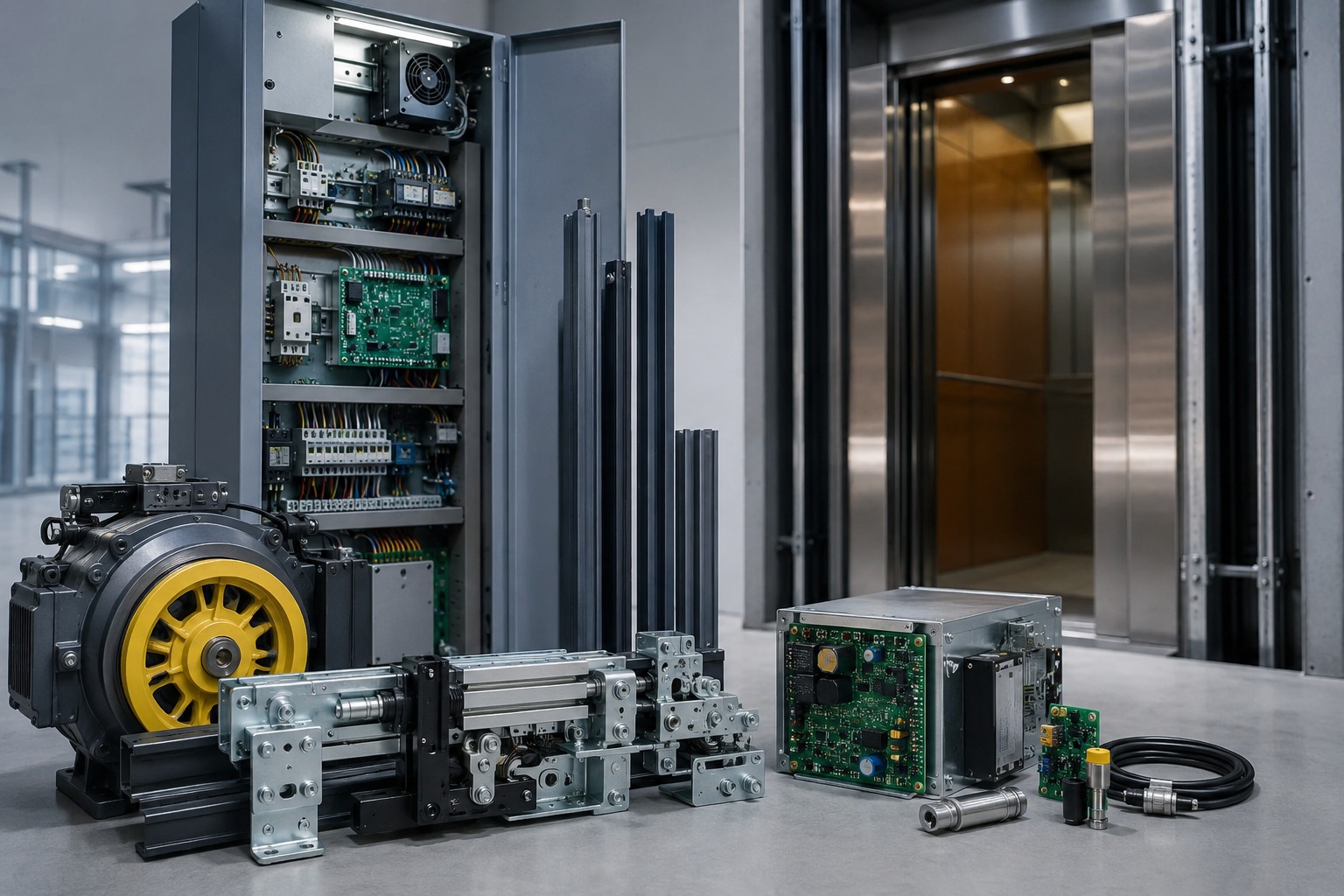
Selecting between 15KW and 22KW models should never be based on power rating alone. The rated motor power is only the starting point. A drive must also be matched to supply voltage, motor current, starting torque requirement, lift speed, travel height, cabin load, gearbox or gearless design, braking resistor arrangement, controller interface, and the duty cycle of the building. A mid-rise residential lift in Pretoria and a commercial passenger lift in Durban may both appear to fit within a similar power range, yet one may need a larger drive because of acceleration requirements, poor ventilation, or heavier peak traffic.
In practical sourcing, 15KW models are commonly considered for medium passenger lifts where the motor and current values remain comfortably inside the drive capacity. A 22KW model is more appropriate when the motor power is higher, when torque reserve is required, or when the application has more demanding traffic and thermal conditions. Engineers should review the motor nameplate first, then confirm full load current, overload capacity, and encoder arrangement. It is also wise to consider local realities such as cabinet room temperature and dust exposure, especially in inland sites with warm machine rooms or coastal sites with corrosive air.
| Selection Factor | 15KW Model Suitability | 22KW Model Suitability | Why It Matters | Common Mistake | Recommended Check |
|---|---|---|---|---|---|
| Motor rated power | Best for lower power range within drive margin | Better for higher motor power | Undersizing causes trips and heat | Choosing by old label only | Verify actual motor nameplate and current |
| Full load current | Acceptable if current stays safely below rated output | Useful where current demand is higher | Current capacity often matters more than kW | Ignoring current derating | Review datasheet and ambient temperature |
| Passenger traffic | Moderate traffic buildings | High traffic or heavy usage buildings | Duty cycle raises thermal stress | Using residential logic in commercial sites | Assess trips per hour |
| Acceleration and ride comfort | Suitable for standard curves | Better when higher torque reserve is needed | Smooth starts require stable control margin | Not considering load peaks | Check acceleration profile and load percentage |
| Machine room temperature | Good if ventilation is adequate | Safer margin in hotter environments | Heat reduces drive life and output | No derating for hot cabinets | Measure actual cabinet temperature |
| Future modernization scope | Works if system remains unchanged | More flexible for upgrades and heavier duty | Later changes can outgrow small drives | Buying only for current minimum need | Consider future traffic and control upgrades |
| Braking energy handling | Suitable with correct resistor setup | Often preferred where braking loads are higher | Stopping energy must be controlled safely | Ignoring deceleration energy | Review resistor sizing and duty |
The table gives a practical way to compare the two common ratings. In modernization projects, choosing the next higher class can sometimes reduce stress and improve long-term stability, but oversizing without proper parameter tuning is not automatically beneficial. The correct answer comes from the whole system, not one number.
As a buying rule, request these details before placing an order: motor power, rated current, rated voltage, rated frequency, motor speed, gearbox or gearless type, encoder model, lift load, lift speed, existing controller brand, old drive model, brake coil voltage, installation cabinet dimensions, and photos of the nameplates. This model matching approach helps reduce downtime, especially when parts must reach sites quickly in Johannesburg, Durban, Cape Town, or regional service teams operating further inland.
For buyers comparing products, a 22KW replacement can be a sound option in heavy-use commercial or modernization work where extra thermal margin is desirable. A 15KW unit often remains the economical and technically correct choice for many standard passenger lifts. The key is accurate application matching rather than buying the highest rating available.
This demand pattern is realistic for the South African market, where office parks, retail centres, and hospitals often prioritize uptime because passenger flow and service continuity directly affect tenant satisfaction and revenue.
Common Fault Codes and When Replacement Is Necessary
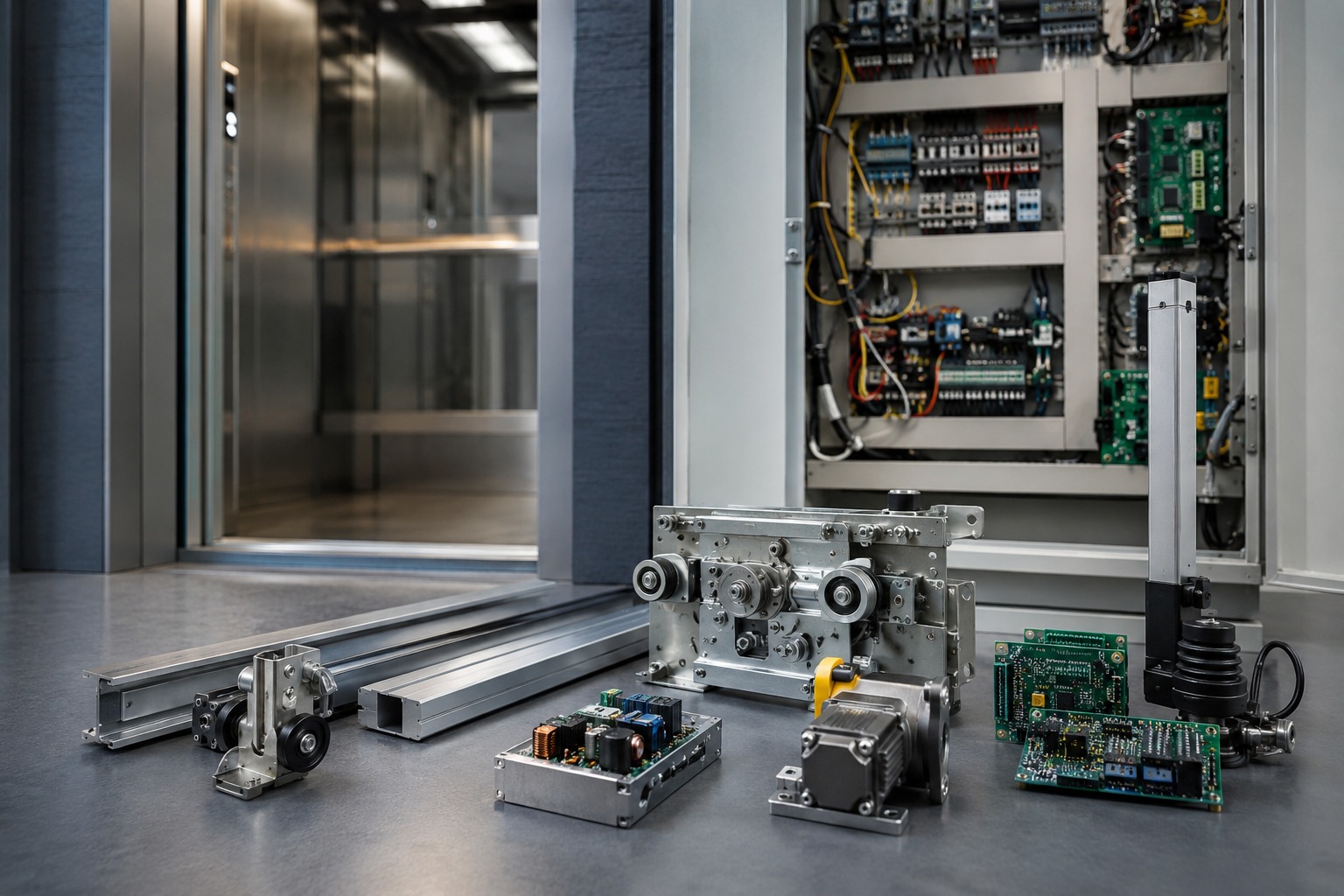
Fault codes do not always mean the drive itself has failed. Some alarms are caused by external conditions such as low incoming voltage, poor encoder feedback, brake problems, grounding issues, cooling failure, or controller communication loss. Technicians should always separate a parameter issue from a hardware issue before replacing an elevator frequency converter. However, repeated trips under normal operating conditions can indicate aging power modules, capacitor degradation, failing fans, damaged gate circuits, or insulation breakdown.
In South Africa, unstable supply conditions and generator changeovers can contribute to under-voltage, over-voltage, and DC bus related alarms. Coastal corrosion may affect terminals and boards, while dust accumulation in inland machine rooms can block cooling paths. A good diagnosis therefore combines code reading, visual inspection, current measurement, insulation checks, and event history review.
| Typical Fault Code Category | Usual Meaning | Likely Root Cause | Can It Be Repaired? | Replacement Trigger | Technician Action |
|---|---|---|---|---|---|
| Over-current | Output current exceeds safe limit | Motor issue, short circuit, bad tuning, power stage damage | Sometimes | Repeated trip after motor and cable checks | Check motor winding, cable insulation, acceleration settings |
| Over-voltage | DC bus voltage too high | Braking resistor failure, regeneration issue, unstable supply | Often | Damaged braking circuit or DC bus components | Test resistor, deceleration time, incoming line condition |
| Under-voltage | Input or DC bus voltage too low | Poor mains supply, loose terminals, weak rectifier section | Often | Persistent low bus despite healthy supply | Measure supply phase balance and terminal tightness |
| Overheat | Drive temperature above limit | Blocked airflow, failed fan, hot cabinet, overload | Usually | Heat damage to power module or control board | Inspect fans, filters, heatsink, cabinet ventilation |
| Encoder fault | Feedback signal abnormal or missing | Encoder damage, wiring issue, wrong parameter | Usually | Drive input stage damaged or repeated runaway risk | Check encoder voltage, pulse output, cable shielding |
| Brake fault | Brake release or monitoring issue | Brake coil failure, relay issue, timing mismatch | Often | Drive brake control output failure | Measure brake voltage and release sequence |
| Communication fault | Controller and drive not exchanging data properly | Cable issue, parameter mismatch, control board problem | Usually | Main communication port damaged | Confirm protocol, baud rate, terminals, grounding |
Replacement is usually justified when one or more of the following are present: recurring faults after correct troubleshooting, visible board damage, burnt IGBT modules, swollen capacitors, obsolete firmware with no reliable support path, unavailable key spare components, or an installation environment that has already shortened the old unit’s life beyond economical repair. It is also sensible to replace the drive when modernization includes a controller upgrade and the old unit cannot communicate reliably with the new control platform.
A practical case from a mixed-use building near Umhlanga illustrates this. The lift showed intermittent over-voltage trips during down travel with heavy loads. The root cause was not the motor but a deteriorated braking resistor assembly combined with poor cabinet ventilation. Because the drive had already suffered repeated thermal stress and the DC bus components tested weak, the owner chose to replace the unit during planned downtime instead of waiting for a total failure during peak season.
Motor Compatibility and Braking Requirements
Motor compatibility is one of the most important parts of elevator drive selection. Even if the mechanical installation looks straightforward, the frequency converter must be suitable for the motor type, current demand, encoder format, and operating mode. Elevator motors may be geared or gearless, induction or permanent magnet, open-loop or closed-loop, and each arrangement places different requirements on the drive. A mismatch can lead to poor leveling, jerky starts, brake timing problems, overspeed alarms, or unnecessary heating.
Braking needs are equally critical. During deceleration, the lift system returns energy that must be managed safely. Depending on the application, this energy is dissipated through a braking resistor or handled through regenerative technology. In high-duty commercial sites, braking events are frequent, so resistor sizing and thermal placement cannot be treated as minor details. A replacement drive that is electrically compatible but poorly matched on braking performance may still cause unreliable service.
| Compatibility Item | What to Check | Why It Is Important | Problem If Wrong | Best Practice | Notes for South Africa |
|---|---|---|---|---|---|
| Motor type | Induction or permanent magnet | Different control algorithms are required | Unstable torque and poor ride | Confirm exact motor technology | Old buildings often have incomplete records |
| Rated current | Motor full load current | Drive sizing depends heavily on current | Overload and nuisance trips | Use nameplate and measured values | Check after supply restoration events |
| Encoder type | Incremental, sinusoidal, resolver, or none | Feedback affects leveling and torque control | Position loss or encoder alarms | Match connector, voltage, and pulse count | Keep spare encoder cables for remote sites |
| Brake control | Brake voltage and release timing | Safe start and stop depend on it | Rollback or rough landing | Verify sequence during commissioning | Important in hospital and hotel lifts |
| Braking resistor | Resistance value and duty cycle | Controls deceleration energy safely | Over-voltage trips or resistor overheating | Use rated component with proper clearance | Heat build-up is common in small machine rooms |
| Control interface | Signal and communication method | Drive must respond to controller commands | No run, erratic movement, or faults | Check I/O mapping and protocol parameters | Common in mixed-brand modernization projects |
| Supply voltage | Site mains specification | Electrical mismatch can damage drive | Immediate failure or unstable operation | Measure line conditions under load | Generator and load shedding planning matters |
The table highlights why motor and brake matching should be completed before shipment where possible. For service providers, requesting photographs of the old drive, controller, resistor, motor plate, and encoder helps avoid delays. This is especially useful when parts are moving through trade hubs such as Durban and Cape Town and downtime costs are high.
By 2026, more modernization projects in South Africa are expected to include regenerative solutions, improved harmonic management, and smarter monitoring for motor temperature and brake wear. Sustainability targets, electricity cost pressure, and pressure to reduce downtime in premium buildings will continue to push the market toward better-integrated drive systems.
The area chart shows the likely transition from basic replacement demand to broader adoption of smarter and more energy-aware drive solutions. This aligns with modernization cycles in office towers, hospitals, and premium residential developments.
Heat Dissipation and Cabinet Fan Planning
Heat is one of the biggest enemies of elevator frequency converters. Capacitors, power semiconductors, fans, and control boards all age faster when cabinet temperatures remain high. In many South African installations, this risk is underestimated. A drive may be correctly sized on paper but still fail early if the machine room lacks ventilation, if cabinet airflow is blocked, or if fan maintenance is ignored. High summer temperatures, dust, and cramped modernization spaces make thermal planning essential.
Cabinet fan planning should start with the actual heat load of the drive, resistor arrangement, ambient room temperature, and the enclosure size. Fresh air path, filter maintenance, separation of hot components, and correct fan direction all matter. It is not enough to place a fan on the cabinet door and hope for cooling. The goal is controlled airflow across the heatsink and away from sensitive electronics. If braking resistors are mounted inside a small cabinet, additional extraction may be required.
| Cooling Factor | Recommended Approach | Reason | Common Problem | Inspection Method | Result if Ignored |
|---|---|---|---|---|---|
| Ambient temperature | Measure real operating temperature, not only room rating | Drive output may need derating | Hot rooms above expected design | Use temperature logger during peak hours | Thermal trips and short component life |
| Cabinet fan capacity | Size airflow to enclosure and heat load | Insufficient airflow causes hotspots | Small fan used for large drive | Check airflow specification and placement | Repeated overheat alarms |
| Filter cleanliness | Clean or replace regularly | Blocked filters reduce air volume | Dust build-up in machine rooms | Visual inspection and pressure drop check | Drive fan overload and board contamination |
| Heatsink clearance | Maintain manufacturer spacing | Allows proper cooling around drive | Cabinet too crowded after retrofit | Measure side and top clearance | Localized heat damage |
| Braking resistor location | Keep away from sensitive electronics | Resistor radiates significant heat | Mounted too close to boards | Infrared temperature check | Accelerated cabinet heating |
| Airflow direction | Use clear intake and exhaust path | Prevents recirculation of hot air | Fans fighting each other | Smoke test or airflow strip test | Ineffective cooling despite many fans |
| Fan health | Replace noisy or slow fans early | Weak fans often fail under load | Fan spins but moves little air | Check RPM, noise, and current draw | Sudden overheat shutdowns |
For machine rooms in Durban or other humid coastal zones, corrosion-resistant hardware and regular cleaning are sensible. For drier inland sites such as Gauteng, dust control is often the bigger issue. Technicians should also remember that a drive cabinet mounted near a roof slab or sun-exposed wall may operate much hotter than expected even when the room itself seems acceptable.
When planning replacements, our technical capability is built around careful model matching for elevator-specific applications. That means checking not only power data but also enclosure constraints, cooling needs, resistor arrangement, and interface requirements so the selected drive can perform reliably in the real cabinet environment. This reduces the chance of premature trips after installation.
Commissioning Checks for Elevator Technicians
Commissioning is where correct selection becomes reliable operation. Even a suitable frequency converter can perform badly if the parameter set, wiring checks, brake sequence, and encoder verification are incomplete. Lift technicians should use a structured checklist rather than relying on memory. This is especially important in modernization jobs where old wiring, undocumented changes, and mixed-brand control equipment are common.
Before first power-up, verify insulation integrity, cable routing, grounding, terminal tightness, brake circuit condition, fan operation, resistor value, and controller I/O mapping. After basic power checks, enter motor nameplate data accurately, confirm encoder settings where used, and load the correct elevator application parameters. Initial tests should be done without passengers and under controlled conditions. Low-speed inspection operation, direction check, brake release timing, leveling, and current observation should come before full-speed runs.
| Commissioning Step | What to Verify | Tool Needed | Acceptable Outcome | Common Error | Risk if Skipped |
|---|---|---|---|---|---|
| Visual inspection | Drive, terminals, fans, resistor, signs of damage | Flashlight and checklist | Clean, secure installation | Ignoring transit or cabinet damage | Early failure after energizing |
| Power supply check | Voltage level and phase balance | Multimeter or power analyzer | Stable supply within rating | Not checking under load | Under-voltage or rectifier stress |
| Motor parameter entry | Power, current, voltage, frequency, speed | Nameplate and keypad | Accurate data stored | Using old values from another site | Poor torque and trips |
| Encoder verification | Wiring, pulse count, direction, shielding | Meter and diagnostic screen | Stable feedback signal | Reversed channels or wrong voltage | Leveling problems and faults |
| Brake sequence test | Brake release and pickup timing | Meter and observation | Smooth start with no rollback | Timing not adjusted after replacement | Harsh starts or safety concern |
| Low-speed run | Direction, current, vibration, noise | Clamp meter and observation | Stable operation at inspection speed | Jumping to full speed too early | Damage or uncontrolled movement |
| Full-speed test | Acceleration, deceleration, leveling | Ride quality check and current logging | Smooth travel within expected current | No-load test only | Hidden issues under passenger load |
| Safety function review | Controller interface and fault response | Functional test plan | Predictable alarm and stop behavior | Not verifying interlocks | Unsafe or unreliable operation |
The explanation behind this checklist is simple: elevator drives do not work alone. They interact with the controller, motor, brake, encoder, doors, and site power supply. A disciplined commissioning process is therefore the fastest way to prevent callbacks. In large metro areas such as Johannesburg and Cape Town, reducing repeat visits can save substantial labour time and improve service reputation.
On the manufacturing side, dependable supply depends on stable production control, careful incoming inspection, model verification, and protective packing. For elevator spare parts, that discipline matters because electronic components can be damaged by impact, moisture, or electrostatic handling long before they reach the site. Strong packing and correct labelling support smoother installation and fewer avoidable failures.
Maintenance Tips for Longer Service Life
Preventive maintenance extends the life of both the frequency converter and the motor system. Many failures that appear sudden are actually the result of months of rising temperature, dust build-up, loose terminals, noisy fans, aging capacitors, or drifting parameters. For busy lifts in malls, hospitals, and offices, maintenance should be based on usage as well as calendar intervals. A lightly used residential lift and a heavily used hospital lift should not be treated the same.
At minimum, technicians should inspect cooling fans, air filters, terminal tightness, grounding, signs of moisture, resistor condition, and event logs. They should listen for fan noise, check for discolouration around terminals, review over-current or over-voltage history, and confirm that the cabinet remains clean. Where possible, thermal scans and DC bus trend monitoring provide early warning of failure. Capacitor aging should also be considered in older drives, especially in warm cabinets.
| Maintenance Task | Suggested Interval | Purpose | Warning Sign | Action | Benefit |
|---|---|---|---|---|---|
| Clean cabinet and filters | Monthly or quarterly depending on dust | Protect airflow and electronics | Dust layer or blocked mesh | Vacuum and replace filters | Lower operating temperature |
| Check cooling fans | Quarterly | Maintain heatsink airflow | Noise, slow rotation, vibration | Replace weak fans | Prevents overheating |
| Tighten power terminals | Every 6 to 12 months | Reduce resistance heating | Discolouration or smell | Retorque to specification | Improves electrical stability |
| Review fault history | Monthly | Spot patterns early | Repeated same alarm | Investigate cause before failure | Reduces unplanned downtime |
| Inspect braking resistor | Every 6 months | Ensure safe energy dissipation | Burn marks or loose wiring | Test resistance and mounting | Prevents over-voltage trips |
| Verify encoder and signal cables | Every 6 months | Maintain closed-loop accuracy | Intermittent leveling issues | Inspect shielding and connectors | Better ride quality |
| Assess capacitor age | According to operating hours and age | Plan before failure | Bus instability or swelling | Schedule replacement or modernization | Avoids sudden shutdowns |
The maintenance table is useful because it links each routine task to a measurable benefit. In many sites, improving cleanliness and fan replacement alone can significantly extend drive life. This matters for remote properties where emergency service access is slower and downtime is more expensive.
Service capability is just as important as the hardware itself. Fast response, accurate model confirmation, and support for compatible replacement parts help maintenance teams keep lifts running safely. For elevator parts supply, responsive service means understanding old and new model cross-checking, confirming the right accessories, packaging the parts well, and helping customers minimize downtime during repair or modernization planning.
Another useful practice is to keep a record of parameter backups, firmware versions, and photos of wiring before any replacement. This speeds up future maintenance and helps if another technician attends the site later. Building owners should also avoid delaying replacement when repeated faults are already affecting passenger confidence. A drive that trips only once in a while can still damage the service image of a premium property.
The comparison chart reflects practical supplier selection criteria in the market. Buyers usually place the highest value on accurate model matching and downtime reduction because an incorrect shipment or delayed clarification can keep a lift out of service for too long.
Frequently Asked Questions About Elevator Frequency Converters
What is the main job of an elevator frequency converter?
It controls the motor speed and torque by adjusting output frequency and voltage. In a lift, this creates smoother starts and stops, more accurate leveling, better ride comfort, and lower mechanical stress.
Is a frequency converter the same as an inverter?
They are related terms, and many people use them interchangeably. For elevator procurement, the frequency converter usually refers to the complete drive package used in the lift system, while inverter can describe the conversion stage or a general shorthand term.
How do I choose between a 15KW and a 22KW model?
Start with motor current, not only motor power. Then review lift load, speed, duty cycle, cabinet temperature, braking demand, and controller compatibility. A 15KW model may be enough for many standard passenger lifts, while a 22KW model may be better for heavier or higher-duty applications.
Can I replace an old drive with any brand that has the same power rating?
No. Power rating alone is not enough. The replacement must match motor type, control method, encoder, brake logic, communication signals, and site voltage. Elevator-specific functionality is critical.
What fault codes usually indicate replacement instead of repair?
Repeated over-current, persistent over-voltage after resistor checks, hardware overheat with visible damage, failed communication ports, burnt power modules, or severe capacitor aging are common replacement triggers, especially when spare subcomponents are no longer practical to source.
Why do drives fail early in some buildings?
The most common causes are heat, dust, poor ventilation, loose terminals, unstable supply, neglected fan maintenance, braking issues, and incorrect parameter settings after previous repairs.
Do cabinet fans really matter that much?
Yes. Poor airflow dramatically shortens the life of power electronics. In hot or dusty machine rooms, cabinet ventilation is often the difference between stable service and repeated thermal trips.
Are regenerative drives worth considering in South Africa?
In high-traffic buildings, they can be attractive for energy performance and heat reduction. Their value depends on traffic profile, installation design, and power quality. They are becoming more relevant as modernization planning moves toward 2026 sustainability goals.
What should a technician record before replacing a drive?
Motor nameplate, old drive model, controller brand, encoder details, resistor value, brake voltage, terminal photos, parameter backup if available, and supply measurements. These details greatly improve matching accuracy.
Which sectors most often replace elevator frequency converters?
Office towers, shopping centres, hospitals, hotels, residential complexes, and public facilities are the most common. Any building where uptime and ride quality affect daily operations will prioritize drive reliability.
How can building owners reduce downtime during replacement?
Prepare complete nameplate data, approve planned shutdown windows, replace related cooling or braking components where necessary, and source from a supplier that focuses on compatibility checking, stable quality inspection, and responsive support.
What should buyers in South Africa consider for 2026?
Look at energy efficiency, heat management, smart diagnostics, spare parts support, sustainability goals, and resilience against power quality issues. Policy pressure around efficient buildings and practical operating cost control will likely make smarter drive selection more important.
In summary, frequency converters improve elevator motor control by making movement smoother, safer, and more efficient. For South African buyers, the best results come from matching the drive to the actual lift application, not simply replacing by brand or power label. Whether the requirement is a 15KW or 22KW unit, the decision should include motor data, current capacity, braking needs, cooling design, commissioning quality, and long-term maintenance planning. When those factors are addressed together, modernization projects deliver better ride comfort, fewer faults, and longer service life.