
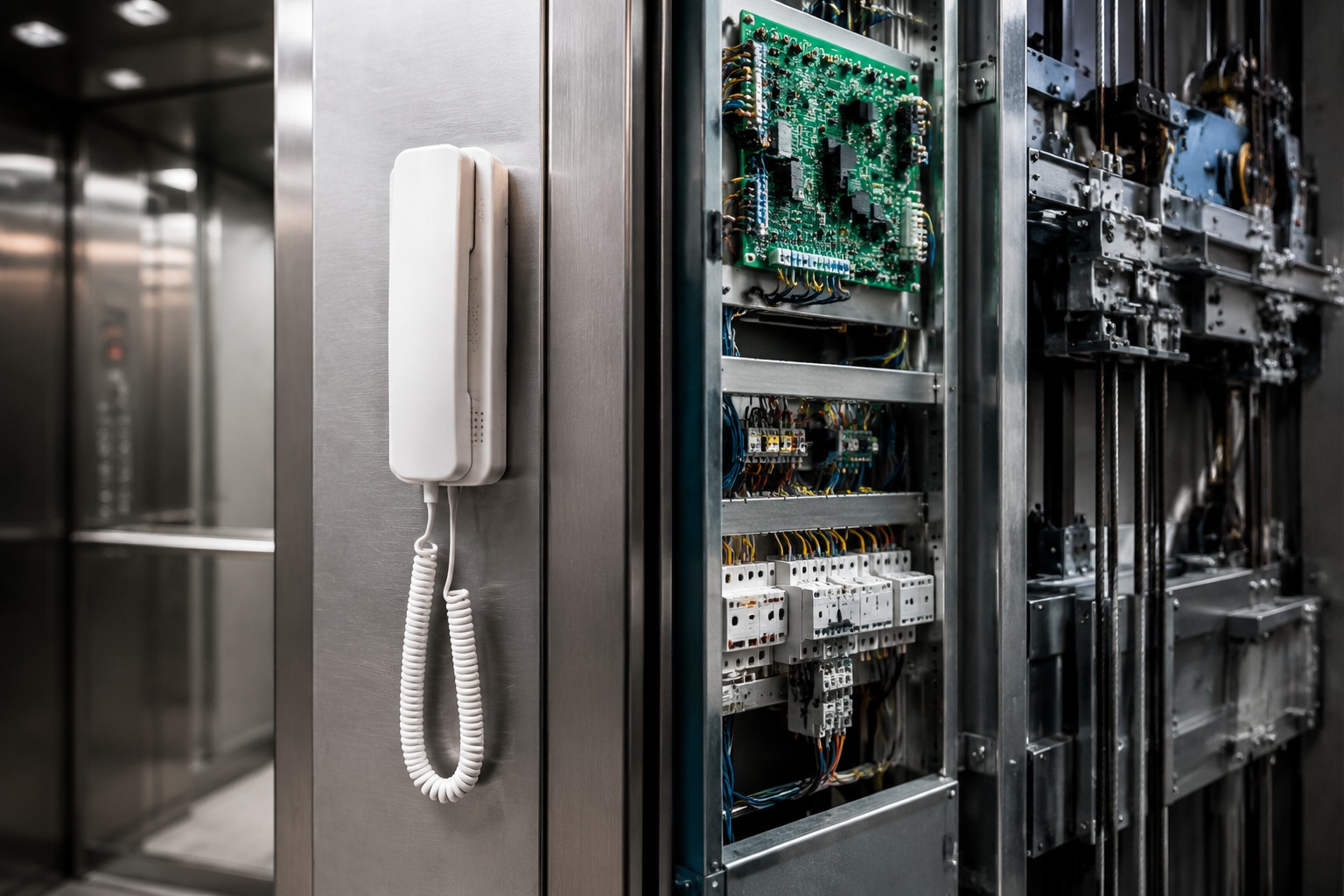
Elevator intercom phones are a critical part of passenger safety because they create a direct communication path when a lift stops unexpectedly, when passengers need assistance, or when building staff must verify conditions inside the car. In South Africa, where high-rise residential towers, hospitals, hotels, office parks, mines, mixed-use developments, and retail centres depend on reliable lift operation, the condition of the intercom system matters just as much as the condition of the controller, inverter, door operator, or safety circuit. A well-matched elevator intercom supports emergency response, improves user confidence, reduces service delays, and helps building teams maintain code-conscious communication capability.
For building managers in Johannesburg, Cape Town, Durban, Pretoria, Gqeberha, Bloemfontein, and fast-growing logistics and industrial corridors linked to hubs such as the Port of Durban, Cape Town Port, Coega, and OR Tambo distribution routes, one recurring issue is not whether an intercom is needed, but whether the replacement part is the correct one. Many older lifts use brand-specific handsets, car stations, or terminals with different voltage ranges, mounting patterns, wiring pinouts, and audio sensitivity. This is especially important when sourcing components for legacy or modernization projects involving Hitachi systems or mixed-brand sites.
This guide explains how intercom systems support emergency calls and code compliance, what separates a car intercom from an intercom terminal, how to approach Hitachi intercom phone sourcing, and how to reduce risk when replacing older parts. It also covers practical buying advice, local market conditions, industry applications, maintenance routines, and future 2026 trends in reliability, sustainability, and modernization.
For buyers already comparing models, it is useful to review actual product categories rather than assuming every handset is interchangeable. Examples include a Hitachi elevator intercom phone, an intercom system phone for Hitachi lifts, an intercom terminal for elevator communication systems, and a car intercom with 24V and 6V options. The right choice depends on the installed system architecture, not only on the lift brand shown on the machine room door.
Why Elevator Intercoms Are Important
An elevator intercom is important because it is the most direct way for a trapped passenger to reach help when a lift stops between floors, loses normal hall communication, or experiences a fault condition. In practical terms, the intercom reduces panic, shortens diagnostic time, and enables the rescue process to begin with better information. Building operators often focus on mechanical uptime, but communication quality during a stoppage can strongly influence the safety experience for passengers.
In South Africa, this has extra significance in residential high-rises with elderly occupants, medical facilities handling vulnerable patients, hospitality properties serving international visitors, and commercial towers where business continuity is essential. During load shedding events, voltage instability, or control resets, passengers may be more anxious if voice communication is weak or intermittent. A reliable intercom system helps reassure occupants that the building team is aware of the incident and is responding appropriately.
Intercoms also support site management beyond emergencies. Technicians can use them during testing, staff can confirm whether passengers hear instructions clearly, and security teams can verify suspicious reports without forcing a door opening or unnecessary lift shutdown. On larger campuses, from Sandton office complexes to university buildings in Pretoria or healthcare sites in Durban, that operational visibility matters.
| Reason | Operational Benefit | Passenger Benefit | Risk If Missing | Typical South African Site | Priority Level |
|---|---|---|---|---|---|
| Emergency communication | Speeds incident response | Reduces panic | Delayed rescue coordination | Apartment towers | Very high |
| Fault confirmation | Helps staff identify real issues | Clear instructions to occupants | Unnecessary downtime | Office buildings | High |
| Code-conscious communication support | Supports documented safety routines | Improves trust in building systems | Compliance gaps | Hospitals | Very high |
| Technician testing | Enables audio and call-path checks | Better long-term reliability | Undetected audio faults | Hotels | Medium |
| Security integration | Supports site monitoring | Faster assistance | Slower verification | Retail centres | High |
| Modernization compatibility | Simplifies upgrades | Consistent service quality | System mismatch | Mixed-use towers | High |
The table above shows that intercoms are not just accessories. They are part of a broader passenger communication chain. In modernization projects, buyers sometimes replace control boards or landing fixtures but leave old intercom parts in place. That often creates weak links, especially when handset aging, brittle cable insulation, oxidized terminals, or mismatched supply voltage begin affecting speech clarity.
The market trend shown above reflects a realistic rise in communication-part replacement demand as older buildings in South Africa move from reactive repairs to preventive modernization. Growth is driven by aging installed bases, higher tenant expectations, and increased awareness that emergency communication quality should not be treated as a minor component issue.
Car Intercom and Intercom Terminal Differences
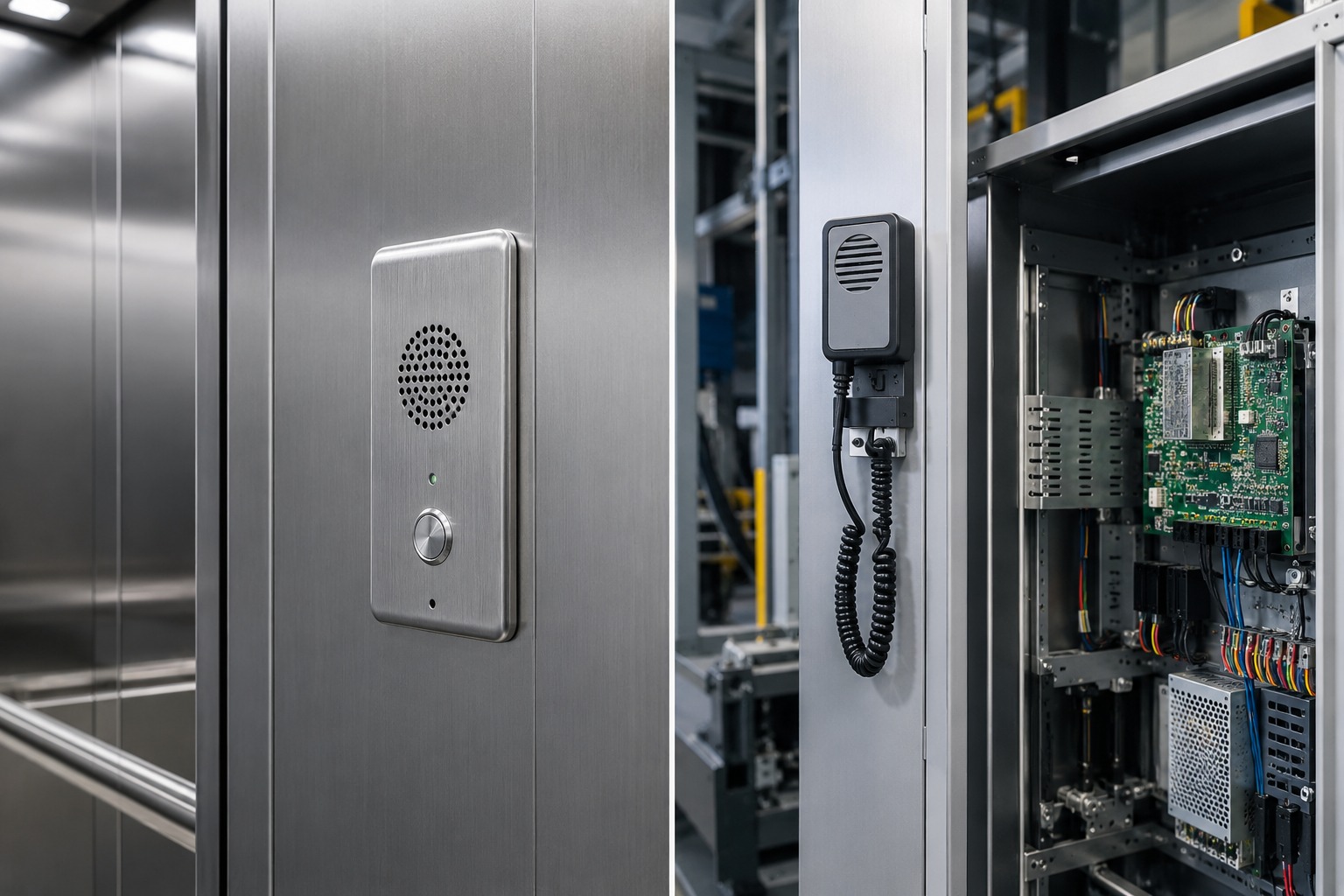
One of the most common sourcing mistakes is confusing a car intercom with an intercom terminal. Although the names sound similar, they usually perform different functions within the elevator communication chain. A car intercom is typically the in-car voice unit, handset, speaker station, or communication module installed inside the lift car. It is the passenger-facing device used during routine or emergency contact. An intercom terminal, by contrast, is often a system-side communication endpoint, interface board, control-side station, or connection module that receives, routes, or manages the audio signal.
On some systems, the terminal is located in the machine room, controller area, security desk, guard room, or management office. On others, it may be integrated into a communication backplane or a remote station enclosure. This distinction matters because the mounting style, connector format, power requirement, and line characteristics can differ significantly. Replacing a car station with a terminal-like part, or vice versa, may result in no audio, low volume, feedback, or call failure.
Hitachi configurations in older installations can include dedicated in-car handsets, push-to-talk units, or integrated communication assemblies linked to a terminal or central switch point. Modernized buildings may also combine original voice modules with newer monitoring hardware, which makes model matching more critical.
| Feature | Car Intercom | Intercom Terminal | Typical Mounting Area | Common Buyer Mistake | Check Before Ordering |
|---|---|---|---|---|---|
| Main user | Passenger or technician in car | Security, control room, or system | Car operating panel or car wall | Assuming both are identical | Application role |
| Primary function | Voice input/output in lift car | Signal receiving or routing | Machine room or service area | Wrong functional type | System diagram |
| Power requirement | May be 6V, 12V, or 24V | May differ from car station | Depends on controller setup | Ignoring voltage label | Nameplate data |
| Wiring style | Short in-car harness or plug | Terminal block or interface connector | Separate route from car cable | Wrong connector type | Pin count and wiring photo |
| Physical design | Compact front-facing unit | Box, board, or station module | Panel or enclosure | Ordering by photo only | Dimensions and hole spacing |
| Replacement trigger | Weak audio, broken handset, no call | No route, no response, line fault | Varies by architecture | Replacing wrong side first | Functional testing |
The comparison above shows why accurate identification is essential. Before buying, ask four direct questions: where is the faulty part installed, who uses it, what voltage is marked, and how many wires or pins connect to it? Those four details resolve many sourcing errors before the first quotation is even issued.
For mixed fleets in Gauteng or the Western Cape, maintenance companies often keep generic communication spares on hand. That can help for some modern systems, but older branded units may still require precise matching. If a site uses a dedicated elevator intercom terminal paired with a branded car station, both sides should be checked together during troubleshooting.
Hitachi Intercom Phone Sourcing Notes
When sourcing Hitachi intercom phones, the first priority is model matching based on the installed system rather than relying on broad brand naming. Hitachi lifts in South Africa may have been supplied in different project generations, imported through different channels, or modernized with partial component changes over the years. That means the same building brand label does not guarantee identical communication hardware across all units.
Good sourcing practice starts with collecting detailed field information: clear photos of the front and rear of the part, any part number label, the lift serial or controller identification, rated voltage, connector type, wire colors, dimensions, mounting hole spacing, and a brief fault description. For example, “call button lights but no voice,” “audio only one way,” “handset cord broken,” or “terminal not receiving signal” can help distinguish whether the issue is mechanical, electrical, or system-side.
Professional sourcing also means verifying compatibility carefully before dispatch. That is especially useful for maintenance firms working under tight downtime windows in Johannesburg CBD towers, Cape Town hospitality properties, or Durban logistics facilities where waiting for a second shipment can disrupt tenant schedules. Reliable suppliers reduce this risk by checking model references, reviewing field photos, and confirming whether a part is original specification, equivalent replacement, or a compatible alternative for modernization.
From a technology standpoint, experienced parts suppliers support intercom sourcing by comparing connector layouts, voltage tolerances, body dimensions, call-circuit compatibility, and known brand-specific interfaces. From a manufacturing standpoint, quality inspection of communication parts should include visual checks, contact condition review, basic continuity verification, packing protection, and labeling accuracy before shipment. From a service standpoint, responsive quotation support, pre-shipment confirmation, and structured follow-up after delivery are often what save the job when the site team is dealing with an urgent passenger communication fault.
| Information Item | Why It Matters | Where to Find It | Effect on Compatibility | Priority | Buyer Tip |
|---|---|---|---|---|---|
| Part number | Fastest matching reference | Sticker, rear shell, PCB label | Very high | Critical | Photograph clearly |
| Rated voltage | Prevents damage and no-power faults | Nameplate or service manual | Very high | Critical | Do not assume 24V |
| Connector and pin count | Ensures physical connection | Rear side or harness | High | High | Count pins, not just plug size |
| Dimensions | Ensures fit in panel opening | Measure removed part | High | High | Include mounting centers |
| Fault description | Helps identify whether part is truly defective | Technician report | Medium | High | Note one-way or two-way audio |
| Lift model or controller family | Links to system generation | Controller plate or site records | High | High | Share overall system data |
The table highlights a simple rule: the more complete the field data, the lower the risk of mismatch. In practice, buyers who provide photos, labels, voltage, and connector details usually receive more accurate offers and faster shipping advice.
For South African buyers dealing with imported spare parts, protective packaging is also important. Intercom handsets, terminals, and light electronic assemblies can suffer from transit shock, moisture exposure, or connector deformation if not packed correctly. This is particularly relevant for shipments moving through Durban and Cape Town freight routes or by road to inland destinations.
Voltage and Wiring Compatibility
Voltage and wiring compatibility are the most important technical checks before replacing an elevator intercom phone. Even when a unit looks physically similar, the wrong voltage can prevent operation or damage the component. Some car intercoms for older systems are 6V, while others are 24V, and some integrated assemblies have specific line-level expectations that do not tolerate substitution without confirmation.
Wiring compatibility goes beyond simply counting wires. Buyers should confirm connector shape, pin order, polarity, line function, shield or ground arrangement, and whether the circuit supports handset audio, speaker audio, microphone return, or call trigger lines separately. In modernized sites, wiring may have been altered during previous repairs, so the current field condition can differ from the original schematic.
South African service teams working on older residential blocks or public-sector buildings often encounter three common issues: replacement with a visually similar but electrically incompatible unit, loose or oxidized terminals causing intermittent audio, and voltage sag from aged power supplies affecting call quality. This is why an intercom fault should never be diagnosed only from the front appearance of the handset.
| Check Item | What to Verify | Common Fault If Ignored | Test Method | Required Tool | Action if Unclear |
|---|---|---|---|---|---|
| Voltage rating | 6V, 12V, 24V, or system-specific value | No power or component failure | Read label and meter test | Multimeter | Pause order and confirm |
| Polarity | Positive and negative orientation | No operation or damage | Trace wiring and measure | Multimeter | Use wiring photo |
| Pin count | Total contacts on plug or block | Cannot connect physically | Visual inspection | Camera | Send close-up images |
| Signal function | Audio, call trigger, ground, return line | One-way audio or no call | Schematic review | Service records | Map each wire |
| Harness condition | Breaks, corrosion, loose fit | Intermittent sound | Physical inspection | Flashlight | Repair harness first |
| Power stability | Live voltage under operation | Weak or distorted audio | Load test during call | Meter and helper | Check supply module |
The practical message from this table is simple: matching the part number is helpful, but matching electrical conditions is essential. This is particularly true when ordering a car intercom available in 24V or 6V versions. The correct version must be selected according to the site’s actual supply and communication circuit design.
The trend above reflects a healthy industry shift. As more building owners face the hidden costs of repeat call-outs, there is growing emphasis on verifying voltage and wiring first, instead of swapping parts by guesswork.
Audio Testing and Call Quality Checks
Good intercom performance is not limited to the system making a connection. The audio must also be intelligible, stable, and strong enough to work during stress conditions. A passenger in a stopped lift may speak softly, panic, or be affected by fan noise, machine vibration, or echo from a metal cabin. That means call quality checks are a necessary part of maintenance, commissioning, and post-replacement verification.
Basic testing should include call initiation, answer confirmation, two-way voice clarity, background noise assessment, volume level, microphone sensitivity, speaker output, and continuity of communication over a practical conversation period. Technicians should test with the lift car at different positions where possible, because cable movement and traveling cable wear can affect performance intermittently.
In high-traffic South African sites such as shopping centres in Johannesburg, beachfront hotels in Durban, and corporate towers in Cape Town, ambient noise can expose weak intercom systems quickly. A unit that sounds acceptable during a quiet service visit may be hard to use during a busy daytime incident. That is why testing should be realistic, not purely theoretical.
| Test Step | Purpose | Pass Indicator | Common Failure Sign | Likely Cause | Next Action |
|---|---|---|---|---|---|
| Call initiation | Verify call path starts correctly | Immediate response signal | No call trigger | Button, line, or terminal fault | Check trigger circuit |
| Answer confirmation | Confirm receiving side works | Operator can answer consistently | Random connection failure | Terminal issue | Inspect receiving unit |
| Car-to-station voice | Check microphone transmission | Speech clear and natural | Muffled or weak voice | Mic aging or low voltage | Measure supply and replace if needed |
| Station-to-car voice | Check speaker output | Passenger hears clearly | Low volume or distortion | Speaker wear or amplifier fault | Inspect car unit |
| Noise assessment | Identify interference | Minimal hiss or hum | Buzzing or crackle | Grounding or cable issue | Check shielding and terminals |
| Duration test | Check stability over time | Continuous clear call | Audio drops after minutes | Heat, loose contact, cable break | Repeat while moving car if safe |
This routine helps separate a true intercom-phone fault from a system fault elsewhere. For example, if the handset seems weak but the root problem is a degraded power supply, replacing only the handset may not solve the issue. Similarly, clear audio in one direction but not the other often points to a microphone path, speaker path, or dedicated wiring problem rather than total unit failure.
The bar chart suggests that residential and commercial buildings represent the largest demand for intercom replacement in South Africa, mainly because of high installed numbers and aging mid-rise and high-rise stock. Healthcare also remains significant because communication reliability is more sensitive in patient and staff transport environments.
When to Replace Old Intercom Parts
Old intercom parts should be replaced when they no longer provide dependable, intelligible communication, when faults repeat despite repair attempts, or when supporting components have become too degraded to trust during an emergency. Replacement timing should be based on condition, criticality, spare availability, and the broader modernization plan for the lift.
Typical warning signs include one-way audio, intermittent operation, cracked handset casing, broken coiled cord, failing call button, oxidation at terminals, low output volume, distorted sound, unstable mounting, obsolete connectors, or no available replacement subcomponents. In many buildings, especially older apartment blocks and office towers, intercom deterioration happens gradually, so users adapt to poor performance without realizing how bad it has become until an actual entrapment occurs.
There is also a business case for timely replacement. Repeat site visits, passenger complaints, emergency call uncertainty, and longer fault diagnosis all increase operating cost. For building owners in busy metro areas such as Sandton, Century City, Umhlanga, or Pretoria East, the cost of service disruption can exceed the cost of a correctly sourced replacement part.
| Condition | What It Looks Like | Operational Impact | Repair Viability | Replacement Urgency | Recommended Decision |
|---|---|---|---|---|---|
| Intermittent audio | Works sometimes only | Unreliable emergency use | Possible if wiring fault | High | Test and replace if part-related |
| One-way communication | Only one side hears | Poor rescue coordination | Depends on root cause | High | Trace path; replace defective side |
| Broken handset or button | Physical damage visible | Cannot place or maintain call | Often limited | Very high | Replace immediately |
| Low or distorted volume | Speech unclear | Passenger misunderstanding | Sometimes repairable | High | Verify supply and swap if aged |
| Obsolete model | No reliable spare support | Long downtime risk | Low | Medium to high | Plan proactive replacement |
| Repeated service calls | Same issue returns | Rising maintenance cost | Poor economics | High | Replace and document change |
As the table shows, replacement should not wait until complete failure. If a site already records repeat communication faults, especially in critical applications like hospitals or senior living facilities, a planned part change is often the more responsible decision.
For buyers evaluating options, a Hitachi intercom system phone or a standard Hitachi elevator communication handset may be appropriate depending on where the failure sits in the call chain. A supplier that understands both original matching and compatible replacements can help reduce trial-and-error purchasing.
Maintenance Tips for Building Managers
Building managers do not need to perform technical repairs themselves, but they should manage intercom reliability systematically. The best results come from including passenger communication checks in monthly lift reviews, annual audits, and modernization planning. Too often, intercoms are ignored until a tenant complaint or trapped-passenger event forces action.
Start by ensuring each lift has a documented communication test history. This should record whether the call button works, whether audio is clear in both directions, and whether the receiving station is staffed or monitored as intended. If the property has multiple lifts, identify which units use original branded intercoms and which have already been partially upgraded. Mixed configurations can complicate spare planning.
Second, ask your maintenance provider to note voltage rating, connector type, and part references during routine service. Creating a spare-parts register is especially useful in large properties, portfolios, campuses, and hospitals. Third, treat communication issues as safety-critical, not cosmetic. Weak audio is not a minor inconvenience if passengers cannot understand rescue instructions. Fourth, avoid generic substitutions without compatibility checks. Fifth, budget for phased replacement if your building still relies on obsolete communication hardware.
For properties near major logistics routes in Gauteng, KwaZulu-Natal, and the Western Cape, parts lead time can vary depending on stock, shipping mode, and verification needs. Planning ahead reduces downtime. Building owners also benefit from working with suppliers that can support careful model matching, stable quality inspection, protective packing, and responsive communication during urgent cases.
In terms of company capability, strong technical support means reviewing field photos, confirming likely matches, and advising on voltage and wiring questions before shipment. Strong manufacturing and quality capability means screened components, consistent assembly standards where applicable, and packaging that protects terminals, shells, and electronic boards during transport. Strong service capability means clear quotations, practical lead-time updates, and post-delivery follow-up that helps maintenance teams install the correct part faster.
The comparison chart illustrates a practical buying reality in South Africa: supplier quality matters as much as product price. Communication parts are rarely the place for guess-based purchasing because a mismatch can cost another technician visit, another delivery, and another period of unreliable passenger service.
Useful maintenance actions for building managers include keeping one tested spare for critical sites, checking traveler cable condition during major service intervals, replacing damaged handsets before total failure, and aligning communication upgrades with broader lift refurbishment. Where building portfolios include multiple brands such as Hitachi, Toshiba, KONE, or Mitsubishi, a structured spare strategy is even more valuable.
FAQ About Elevator Intercom Phones
1. What is the main purpose of an elevator intercom phone?
Its main purpose is to allow passengers or technicians inside the lift car to communicate with building staff, security, or a designated response point during faults, stoppages, or emergencies. It also supports testing and maintenance communication.
2. Are all elevator intercom phones interchangeable?
No. Intercom phones can vary by voltage, connector type, mounting size, wiring arrangement, audio circuit design, and system compatibility. A visually similar part may still be wrong for the lift.
3. What is the difference between a car intercom and an intercom terminal?
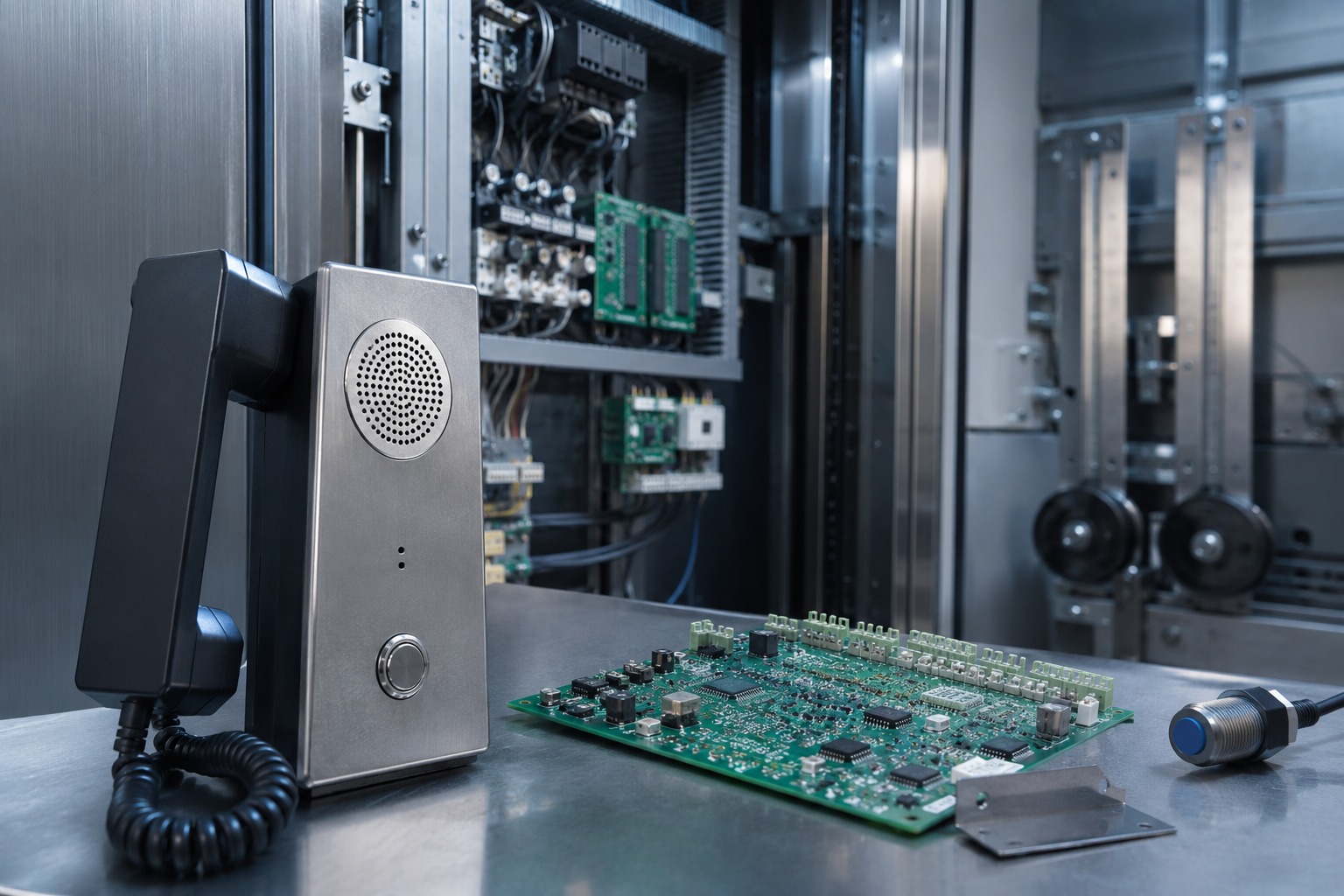
A car intercom is usually the passenger-side unit in the lift car, while an intercom terminal is often the receiving or system-side communication device or interface. They serve different positions in the communication chain.
4. Why is voltage matching so important?
Because using the wrong voltage version can cause non-operation, weak performance, or component damage. Some systems use 6V units, while others use 24V or different communication arrangements.
5. What information should I send when asking for a replacement quote?
Send part number photos, front and rear photos, voltage label, connector details, dimensions, lift brand and model if available, and a short fault description. This improves match accuracy and reduces ordering mistakes.
6. How do I know if poor audio is caused by the phone itself?
You should test both directions of communication, check supply voltage under load, inspect wiring and terminal condition, and verify whether the fault appears only at certain car positions. Poor audio can come from the handset, speaker, microphone, cable, terminal, or power supply.
7. When should an old intercom be replaced instead of repaired?
Replace it when faults repeat, audio remains unreliable, the housing or cord is damaged, spares are obsolete, or repair time and call-out cost are becoming uneconomical compared with a correct replacement.
8. Are elevator intercom phones relevant during modernization?
Yes. Modernization projects often improve controllers, door systems, and COP panels, but communication should be upgraded or at least checked for compatibility so the safety chain remains dependable.
9. Which industries in South Africa most often need these parts?
Residential towers, commercial office buildings, hotels, hospitals, public buildings, industrial facilities, and mixed-use developments all regularly need intercom assessment or replacement, especially where lift equipment is aging.
10. What trends are shaping the market into 2026?
Three key trends stand out. First, more modernization projects will integrate communication checks with controller and COP upgrades rather than treating intercoms as separate minor items. Second, building owners will pay closer attention to policy and documentation around emergency passenger communication, particularly in premium residential, healthcare, and hospitality environments. Third, sustainability will influence buying decisions, with greater interest in durable compatible replacements, lower waste from repeat mismatch orders, and longer service life through better preventive maintenance.
Looking toward 2026, South Africa’s elevator parts market is expected to reward suppliers and maintenance teams that combine technical accuracy with practical logistics. As buildings in major metros continue to age and tenant expectations rise, demand will grow for compatible intercom phones, system terminals, and communication accessories that can be sourced quickly and matched correctly the first time.
For building owners, facility managers, distributors, and lift maintenance contractors, the smartest approach is straightforward: document installed parts carefully, verify voltage and wiring before ordering, test call quality realistically, and replace aging communication hardware before it becomes a liability. That approach helps reduce downtime, improves passenger confidence, and keeps lift systems operating more safely across South Africa.