
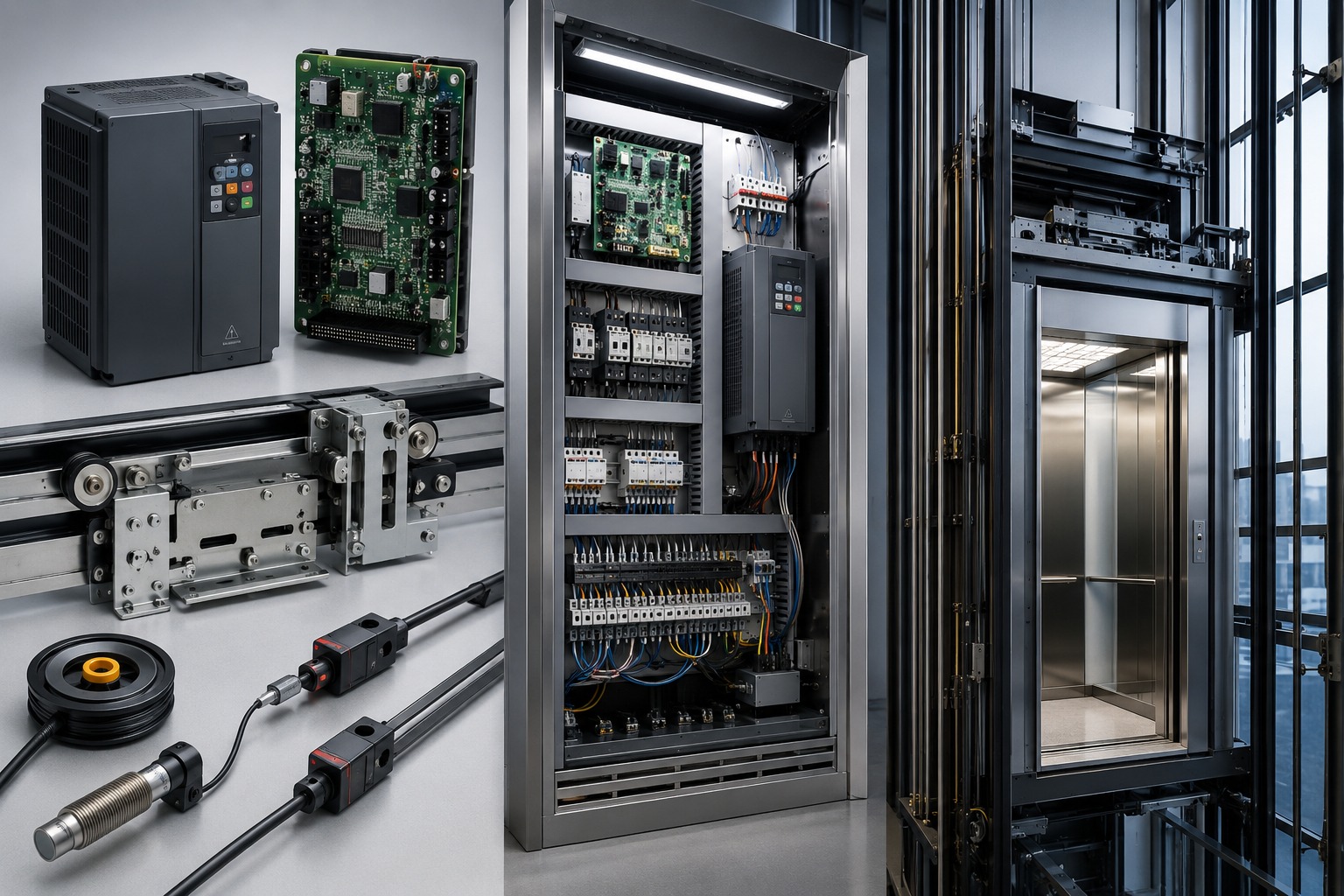
An elevator inverter, also called a lift frequency converter or variable frequency drive, controls the speed, torque, acceleration, deceleration, and stopping accuracy of the elevator motor. In practical terms, it is one of the main parts that determines whether passengers experience a smooth ride or a jerky one, whether a building wastes electricity or manages it well, and whether maintenance teams spend their time solving recurring faults or running predictable service schedules. For building owners, maintenance companies, distributors, and modernization contractors across South Africa, choosing the right inverter is not just about replacing a failed drive. It is about matching motor data, control logic, load profile, site power conditions, and brand compatibility so the complete lift system stays reliable.
In Johannesburg, Cape Town, Durban, Pretoria, Gqeberha, and fast-growing mixed-use areas around Sandton, Midrand, and Centurion, elevators work under demanding conditions. Commercial towers face high traffic peaks. Coastal sites near Durban and Cape Town may see higher humidity and salt exposure. Hospitals, hotels, mines, and logistics facilities often need stable lift operation even during difficult power conditions. That is why inverter buying decisions in South Africa should consider not only price, but also ride quality, harmonic performance, replacement lead time, packaging protection during transport, and the supplier’s ability to confirm exact model matching.
This guide explains what an elevator inverter does, signs an inverter needs replacement, how to select capacity and compatibility, specific buying considerations for KONE and Hitachi elevator inverters, installation and commissioning checks, maintenance tips, and the main questions buyers ask before ordering. It also looks ahead to 2026 trends in modernization, energy efficiency, and policy-driven sustainability.
South Africa elevator inverter market overview
The South African lift market is shaped by urban renewal, commercial refurbishments, hospital upgrades, residential high-rise development, and modernization of older buildings whose original drives are nearing end of life. Many maintenance teams now prefer replacing only the failed inverter or frequency converter rather than completing a full system overhaul, especially when a good compatibility match can extend the service life of the controller and motor. This creates demand for reliable aftermarket sourcing, careful cross-checking of part numbers, and stable quality inspection.
In major trade corridors linked to Durban Port, Cape Town Port, and inland distribution hubs in Gauteng, timing matters. A delayed inverter replacement can mean tenant complaints, access disruptions, and revenue losses. As a result, buyers increasingly value suppliers that can identify exact elevator spare parts quickly, protect electronics with secure packaging, and support model verification before shipment. This is particularly important when sourcing parts for legacy installations from brands such as KONE, Hitachi, Toshiba, Mitsubishi, and others.
The chart above reflects a realistic upward trend driven by aging lift fleets, power efficiency goals, and modernization budgets. Much of this demand comes from commercial properties, residential towers, public buildings, and industrial sites where reliable vertical transport is operationally essential.
What an elevator inverter does
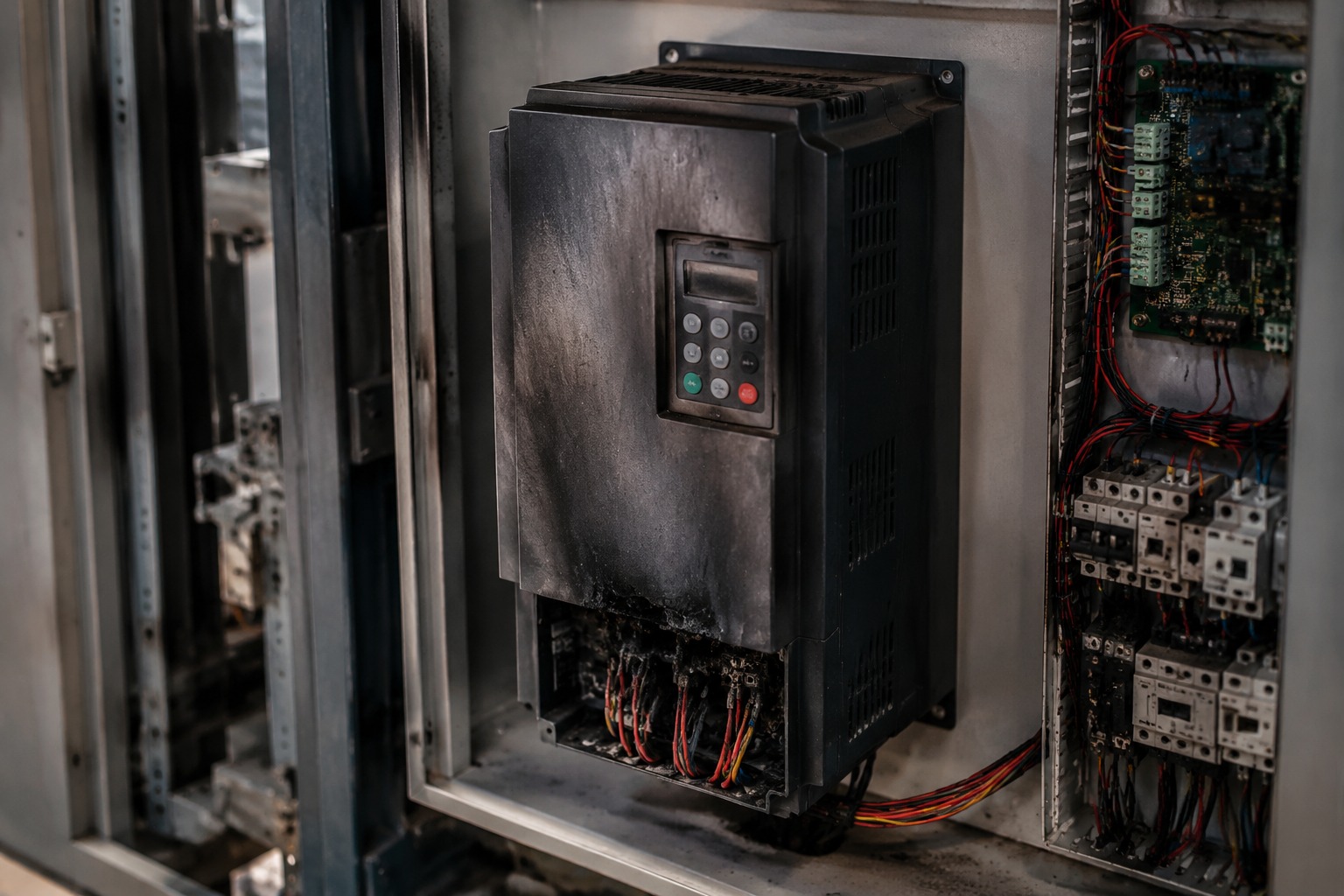
An elevator inverter converts incoming electrical power into a controlled output frequency and voltage for the lift motor. By doing that, it allows the motor to start gradually, accelerate smoothly, run at controlled speed, and slow down accurately before landing. Without this control, elevator travel would be harsher, stopping accuracy would be poorer, and mechanical wear on motors, brakes, gearboxes, ropes, and couplings would generally increase.
Modern elevator inverters also support energy management. Instead of running the motor in a crude on-off pattern, the inverter optimizes output based on load and travel demand. In regenerative or energy-conscious systems, this can help reduce overall power consumption, which is especially valuable in South Africa where electricity cost pressure continues to affect property operating budgets.
Another key role is protection. A properly configured frequency converter can detect overcurrent, undervoltage, overvoltage, overheating, and phase issues. In the right system architecture, it works together with the main lift controller, encoder, brake circuit, contactors, and safety logic to maintain stable operation. If the inverter output becomes unstable, ride comfort drops first, but repeated instability can lead to nuisance shutdowns, controller alarms, door timing disruption, and higher callout frequency.
| Inverter function | What it controls | Operational benefit | Passenger impact | Maintenance impact | Typical site relevance |
|---|---|---|---|---|---|
| Soft starting | Initial motor ramp-up | Reduces current surge | Smoother departure | Less stress on motor and brake | High-rise offices |
| Speed regulation | Running frequency | Stable travel speed | Consistent ride | Fewer drive complaints | Residential towers |
| Torque control | Load response | Better pull and balance | Less shudder under load | Improves leveling stability | Hospitals and hotels |
| Controlled deceleration | Braking profile | Accurate slowing before floor | Comfortable arrival | Reduced mechanical wear | Retail buildings |
| Floor leveling support | Low-speed approach | Improves stop accuracy | Safer entry and exit | Fewer leveling faults | Healthcare sites |
| Protective monitoring | Voltage, current, heat | Fault detection | Less unexpected shutdown risk | Quicker diagnosis | All building types |
This table shows why the inverter is central to both passenger comfort and maintenance planning. Buyers who focus only on kilowatt rating often miss the wider value of proper speed control, protective functions, and system compatibility.
Signs an elevator inverter needs replacement
Elevator inverters do not usually fail without warning. In many cases, the symptoms appear gradually. Ride quality may become inconsistent, fault codes may become more frequent, or the unit may overheat during normal operation. When an older inverter starts causing repeated service interruptions, replacement is often more economical than repeated temporary repairs, especially if key electronic components have aged or original parts are no longer available.
Maintenance technicians in South Africa often see inverter issues after voltage fluctuation events, long service life, poor ventilation in machine rooms, dust contamination, damaged cooling fans, deteriorated capacitors, or incorrect parameter settings after previous interventions. Coastal environments can also accelerate corrosion risk if enclosure protection and storage practices are poor.
| Warning sign | What technicians may observe | Likely cause | Short-term risk | Replacement urgency | Recommended action |
|---|---|---|---|---|---|
| Jerky acceleration | Rough start from landing | Output instability or tuning drift | Passenger complaints | Medium to high | Check parameters, motor data, encoder feedback |
| Poor leveling | Stops above or below floor | Drive response or feedback issue | Trip hazard | High | Inspect inverter, encoder, brake timing |
| Frequent trip alarms | Overcurrent or overvoltage faults | Aging power section or unstable supply | Unplanned shutdowns | High | Review logs and consider replacement |
| Overheating | Thermal alarms, hot enclosure | Fan failure, clogged heatsink, overloaded drive | Premature failure | High | Clean, test cooling, verify capacity |
| Unusual noise | Buzzing or electrical noise | Component wear or switching issue | Escalating damage | Medium | Inspect power board and output stage |
| Burn marks or odor | Visible damage inside drive | Capacitor or board failure | Complete breakdown | Immediate | Replace and inspect surrounding circuits |
If several of these signs appear at once, delaying replacement can increase downtime and may put connected components at risk. A good supplier should help confirm whether the problem is truly the inverter or whether related components such as the encoder, control board, power supply, or braking resistor are contributing to the fault pattern.
The bar chart shows why maintenance priorities vary by sector. Office buildings and retail centres tend to emphasize uptime and passenger flow, while hospitals often prioritize precise leveling and smooth transport for beds, equipment, and vulnerable passengers.
How to choose inverter capacity and compatibility
Choosing the correct elevator inverter starts with technical matching, not brand labels alone. The first step is to verify the motor rating, including kilowatts, voltage, current, rated speed, frequency, and whether the system is geared or gearless. Then check the controller communication method, encoder type, braking arrangement, installation space, cooling method, and parameter requirements. A frequency converter that looks similar physically can still be incompatible if the control logic, I/O structure, or motor feedback interface does not match.
Capacity selection should also reflect actual operating conditions. A lift in a low-rise residential block with moderate usage may have very different thermal and load demands from a busy commercial elevator in central Johannesburg or a hospital lift in Pretoria. South African sites with unstable incoming power may also benefit from careful review of voltage tolerance and protective features.
When buyers ask whether they can simply “go one size up,” the answer is not always yes. Oversizing can create tuning problems, increase cost, and in some cases complicate control performance. Undersizing is a more obvious risk because it can cause overheating, trip faults, and shortened service life. The safest approach is model matching based on the original data plate, controller information, motor details, and the specific fault history of the lift.
| Selection factor | What to verify | Why it matters | Common buying mistake | Impact if ignored | Best practice |
|---|---|---|---|---|---|
| Motor power | kW and current rating | Defines drive load capacity | Matching only by appearance | Trips or overheating | Use motor and inverter nameplate data |
| Input voltage | Three-phase supply range | Ensures safe operation | Ignoring site power variation | Frequent faults | Confirm supply conditions on site |
| Control method | VVVF, vector, closed loop | Affects ride quality and tuning | Assuming all drives behave the same | Poor comfort or unstable stopping | Match original control strategy |
| Encoder interface | Type and signal compatibility | Critical for speed feedback | Not checking encoder format | Leveling errors | Verify encoder model and connector |
| Brake coordination | Output timing and relay logic | Prevents rollback and harsh stops | Focusing only on motor output | Safety and comfort issues | Review controller and brake sequence |
| Physical fit | Dimensions and cooling clearance | Needed for installation | Ignoring cabinet space | Heat build-up or retrofit delay | Check layout before ordering |
For buyers looking at replacement units, it is useful to compare application range as well. A dedicated lift inverter may offer more suitable torque control and ride tuning than a general-purpose industrial drive, even if the power rating appears similar. If you need a replacement option for modernization or specific power requirements, a 22kW frequency converter for elevator applications or an HGE 15kW elevator frequency converter may fit certain projects, but final selection should always be confirmed against the exact lift system data.
| Building type | Typical traffic level | Common motor/inverter demand | Key buying priority | Preferred spare strategy | Notes for South Africa |
|---|---|---|---|---|---|
| Low-rise residential | Moderate | Small to medium capacity | Cost-effective reliability | Single replacement unit | Check power fluctuation tolerance |
| High-rise residential | High peak periods | Medium to high capacity | Ride comfort and cooling | Spare board and fan stock | Common in Gauteng growth areas |
| Office tower | Very high | High duty cycle | Fast response and uptime | Critical spares on hand | Sandton and Cape Town CBD focus |
| Hospital | High, sensitive use | Stable torque control | Leveling accuracy | Verified compatible replacement | Downtime tolerance is low |
| Hotel | Variable but frequent | Smooth control needed | Quiet ride quality | Quick dispatch spare | Guest experience matters |
| Industrial facility | Load-dependent | Robust thermal design | Durability under harsh conditions | Protected packaging and inspection | Dust and heat can be critical |
This table underlines why capacity selection cannot be separated from application. A technically correct inverter for one site may still be the wrong commercial choice for another if lead time, environmental protection, or support level do not suit the building’s operational risk.
Technological capabilities that help buyers reduce mismatch risk
For elevator spare parts sourcing, strong technical support matters as much as stock access. A capable supplier should be able to review photos of nameplates, controller labels, connector layouts, and fault details to reduce ordering errors. In practice, that means helping customers cross-check inverter models with related parts such as elevator control boards, encoders, sensors, power supplies, and COP interfaces. This technical matching process is especially useful in modernization jobs where original documentation may be incomplete.
KONE elevator inverter buying considerations
KONE elevators are widely installed in commercial and residential buildings, and KONE drive replacement often requires careful attention to generation differences, controller compatibility, and communication details. Buyers should not assume that all KONE-branded inverter units are directly interchangeable. Even when the drive family appears similar, software revision, interface type, motor pairing, and cabinet arrangement can differ.
For KONE projects, ask for the elevator model, original inverter code, motor details, controller information, and fault description. If the site has experienced repeated overcurrent or leveling issues, also review encoder condition and brake timing. In some cases, the inverter is not the only failing component. Ordering a replacement drive without checking related feedback parts can delay final restoration.
When planning a KONE replacement, many South African buyers also consider lead time because service contracts often penalize prolonged downtime. If you are comparing options, review available KONE elevator inverter replacement options with attention to exact model matching, testing status, protective packaging, and post-sale communication support.
| KONE buying checkpoint | What to collect | Why it matters | Risk if skipped | Best buyer question | Expected result |
|---|---|---|---|---|---|
| Original drive code | Part number photo | Confirms exact series | Wrong replacement | Can you verify this code? | Correct model shortlist |
| Controller pairing | Control cabinet details | Ensures communication fit | Commissioning failure | Is this compatible with my controller? | Reduced integration risk |
| Motor data | Nameplate values | Supports parameter setup | Poor performance | Do you need the motor plate? | Better tuning accuracy |
| Encoder details | Type and connector | Required for feedback | Leveling faults | Should encoder type be checked too? | Stable running |
| Physical dimensions | Cabinet space and mounting | Avoids retrofit problems | Installation delay | Does it match the original footprint? | Faster replacement |
| Test and packaging status | Inspection method and packing | Protects electronics in transport | Transit damage or hidden defects | How is the unit checked before dispatch? | Lower arrival risk |
KONE buyers should also think beyond the inverter alone. If an elevator has long service life and multiple aging electrical parts, a broader spare strategy may reduce repeat callouts. That can include door operator parts, light curtains, sensors, guide shoes, intercom parts, and power supply units that often age alongside the drive.
Hitachi inverter sourcing notes
Hitachi elevator systems are known for solid engineering, but as installations age, sourcing the correct replacement inverter becomes more detail-sensitive. Hitachi buyers commonly need support with exact model identification, especially when serial labels are worn, old cabinets have been modified, or previous repairs introduced mixed components. The best sourcing approach is to provide as much original data as possible, including inverter markings, lift controller model, motor plate, and any fault code history.
Another important point with Hitachi is to distinguish between a complete inverter assembly and individual inverter-related spare parts. Some customers need a full drive, while others may need supporting components such as fans, boards, power modules, or compatible accessories. If you are reviewing available options, you can check Hitachi elevator inverter parts and lift accessories and then confirm exact application data before ordering.
In South Africa, Hitachi sourcing often benefits from a supplier that understands export packing, careful handling of electronics, and responsive communication for maintenance teams working under pressure. That is particularly useful for regional buyers outside the main metros, where a wrong part can add several days to recovery time.
| Hitachi sourcing point | Buyer should provide | Why it helps | Common obstacle | Practical solution | Outcome |
|---|---|---|---|---|---|
| Clear nameplate photos | Drive label images | Speeds identification | Faded or damaged labels | Send cabinet and board photos too | Better cross-reference accuracy |
| Fault history | Alarm codes and symptoms | Separates drive fault from system fault | Incomplete technician notes | Share service report summary | Smarter buying decision |
| Motor and encoder data | Nameplate and feedback type | Supports compatibility review | Missing documentation | Collect data during site visit | Lower commissioning risk |
| Required scope | Whole inverter or part only | Avoids overbuying | Assuming complete unit is needed | Inspect failed stage first | Better cost control |
| Shipping destination | City and urgency | Determines packing and dispatch plan | Transit handling concerns | Use reinforced protective packaging | Safer delivery |
| After-sales communication | Installer contact details | Helps resolve setup questions | Delayed technical exchange | Assign one project contact | Faster commissioning support |
For modernization contractors, Hitachi projects often involve a balance between budget control and operational confidence. When the building cannot tolerate long downtime, exact matching and pre-dispatch review become more valuable than chasing the lowest advertised price.
Manufacturing capabilities that support stable quality
Reliable elevator parts supply depends on more than trading access. Buyers benefit when the supplier has disciplined inspection and manufacturing coordination for electronics and related lift accessories. That includes checking model labels, connector condition, board appearance, protective treatment, and packaging suitability before shipment. For projects that combine inverter replacement with broader lift repairs, it also helps to work with a source that can coordinate components such as door locks, buttons, light curtains, oil cups, sensors, and guide shoes in one controlled shipment. This reduces mismatch risk and simplifies site planning.
Installation and commissioning checks
Even a correct inverter can fail to perform well if installation and commissioning are rushed. Before energizing the new drive, technicians should verify input power condition, grounding, insulation condition, motor wiring, brake circuit integrity, control wiring accuracy, and encoder connection. The surrounding cabinet should also be checked for dust buildup, cooling obstruction, and signs of heat damage from the previous failure.
Commissioning should include parameter confirmation against the motor and controller requirements, no-load and loaded test runs, acceleration and deceleration review, leveling accuracy checks, brake timing verification, fault log review, and ride quality observation. In busy South African buildings, a short test is often not enough. A proper monitoring period helps catch intermittent issues that only appear under repeated use or during voltage fluctuation.
| Installation or commissioning check | What to inspect | Purpose | Typical mistake | Risk | Good practice |
|---|---|---|---|---|---|
| Incoming power test | Voltage balance and stability | Protects new inverter | Skipping pre-check after power issues | Immediate faults | Measure before connection |
| Grounding verification | Earth continuity | Safety and noise control | Loose or corroded earth point | Electrical instability | Clean and tighten all ground points |
| Motor wiring review | Phase sequence and insulation | Ensures correct drive output path | Reusing damaged cable ends | Trip faults or overheating | Inspect and remake where needed |
| Encoder connection | Signal wiring and type match | Supports accurate feedback | Wrong pin assignment | Unstable leveling | Check against exact diagram |
| Parameter setup | Motor and speed settings | Defines drive behavior | Using generic defaults | Poor ride comfort | Load verified parameter set |
| Loaded trial runs | Performance under real conditions | Confirms final stability | Testing empty car only | Hidden faults remain | Test multiple cycles with load |
After installation, it is sensible to document all final settings, fault history, and replaced part numbers. This makes future troubleshooting faster and supports consistency when multiple lifts in the same building share similar equipment.
The area chart reflects a broader maintenance trend in South Africa: more buyers are moving from emergency-only replacement toward planned modernization and preventive spare strategies. This shift is driven by pressure to reduce downtime, improve energy efficiency, and manage life-cycle cost more professionally.
Maintenance tips for frequency converters
Good maintenance extends inverter life and lowers the risk of sudden shutdown. The most basic tasks are often the most valuable: keeping the cabinet clean, ensuring airflow remains unobstructed, checking fan operation, tightening terminals during scheduled shutdowns, and reviewing fault logs instead of simply resetting alarms. Where buildings experience repeated power disturbances, extra attention should be paid to surge history, DC bus condition, and signs of heat stress.
In coastal cities and industrial zones, environmental control matters. Moisture, salt-laden air, and dust can degrade electronics over time. Clean machine rooms, good cabinet sealing, and proper storage for spare units help avoid hidden failures. Maintenance teams should also inspect related components such as encoders, power supplies, contactors, door systems, and sensors, because a stable inverter can still be undermined by weak supporting parts.
A practical approach is to classify maintenance into monthly visual checks, quarterly thermal and cleaning reviews, semi-annual terminal and fan inspection, and annual performance verification under realistic traffic conditions. For critical sites like hospitals, premium office towers, and hotels, keeping at least one verified compatible spare inverter or key inverter-related components can significantly reduce downtime.
| Maintenance task | Suggested interval | Main purpose | What to look for | If neglected | Benefit |
|---|---|---|---|---|---|
| Visual condition check | Monthly | Early fault detection | Dust, discoloration, loose connectors | Hidden deterioration | Fewer surprise failures |
| Fan operation test | Quarterly | Cooling assurance | Noise, slow rotation, stoppage | Overheating | Longer component life |
| Heatsink cleaning | Quarterly | Heat dissipation | Dust blockage | Thermal trips | Stable running temperature |
| Terminal tightening | Semi-annually | Electrical integrity | Loose power or control wiring | Arcing and faults | Improved reliability |
| Fault log review | Monthly or after alarms | Trend analysis | Recurring trip codes | Repeated breakdowns | Better predictive maintenance |
| Performance retest | Annually | Ride and leveling confirmation | Shudder, slow response, drift | Comfort complaints escalate | Verified long-term performance |
This maintenance schedule is useful because inverter failures are often progressive rather than sudden. The more consistently a building tracks heat, alarms, and ride quality, the earlier it can replace weakening components before tenants notice serious disruption.
Industries and applications where inverter choice matters most
Not all elevator environments place the same demand on the inverter. In South Africa, office towers in Johannesburg and Cape Town often require precise acceleration profiles to handle heavy morning and evening traffic. Hospitals need stable leveling, smooth travel, and predictable performance for patient transfer. Hotels depend on quiet operation because passengers judge service quality partly through ride feel. Residential towers need long-term dependability with manageable maintenance cost. Industrial facilities may expose lift systems to dust, vibration, and temperature stress, making protection and cooling especially important.
For freight lifts and service elevators, the inverter must handle different load behavior from passenger lifts. Torque response under changing loads becomes more important, and commissioning should confirm how the drive behaves under realistic carrying conditions. In mixed-use developments, modernization contractors often prioritize replacement solutions that can fit into existing cabinets without large structural changes.
The comparison chart highlights what many professional buyers already know: the best supplier is not simply the one with the lowest unit price. Accurate matching, stable quality checks, broad brand support, and responsive service often deliver greater value by reducing site downtime and repeated ordering mistakes.
Buying advice for South African importers, maintenance companies, and building owners
Before requesting a quotation, collect as much verified data as possible: original inverter photos, part number labels, motor plate details, controller information, encoder type, elevator brand, and a short description of the fault. This saves time and helps the supplier recommend a compatible option rather than a guess. If the site is in Durban, Cape Town, Johannesburg, Pretoria, or another major centre, also mention delivery urgency and whether the building can tolerate any commissioning delay.
For distributors and maintenance firms, it can make sense to stock selected high-turn items, especially fan kits, common inverter-related boards, and frequently used frequency converter models for large installed bases. For building owners, the smarter approach is usually to keep documentation complete and work with a supplier that can respond quickly when a drive fails. In both cases, model verification should remain the first priority.
Service capabilities that support fast recovery
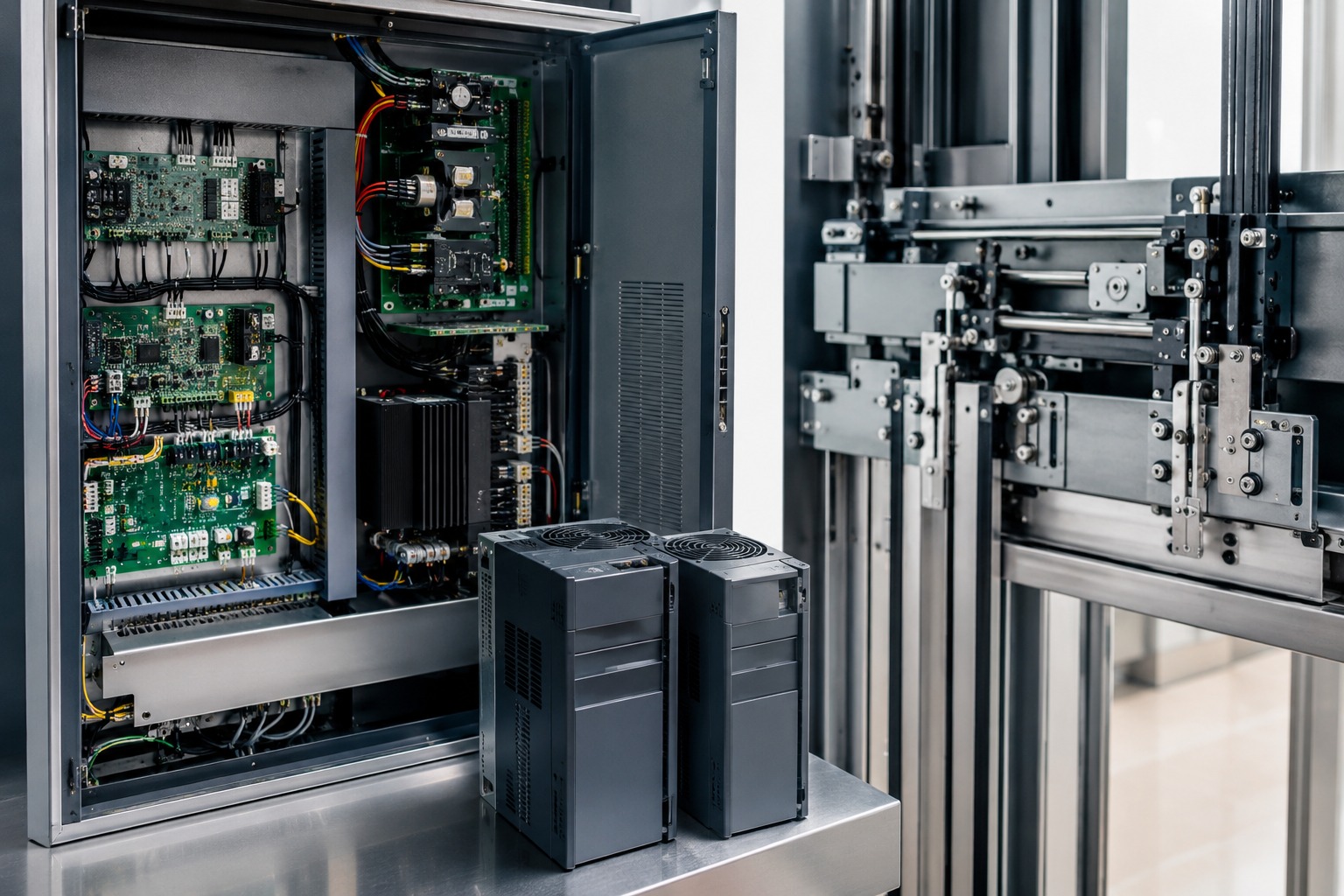
When a lift is down, communication speed matters. Buyers benefit from a service-focused spare parts partner that answers model-matching questions quickly, confirms compatibility carefully, protects electronics for transit, and remains responsive during installation and commissioning. This type of support is valuable for maintenance companies, distributors, and modernization contractors who need fewer surprises and faster handover. It is especially important when sourcing across brands such as Hitachi, Toshiba, KONE, Mitsubishi, and others, where part identification can be more complex than it first appears.
Case-based examples from the South African market
Consider a mid-rise office building in Sandton where one passenger lift began showing overcurrent trips during morning traffic peaks. The maintenance team first suspected the controller, but fault pattern review, heat evidence, and declining ride smoothness pointed to an aging inverter. After exact model matching and proper commissioning, the replacement restored stable acceleration and reduced nuisance shutdowns. The result was not only fewer complaints but also lower maintenance callout pressure during high-demand periods.
In a coastal hotel near Durban, a lift suffered intermittent thermal alarms. The replacement process showed that poor ventilation and environmental stress had contributed to inverter deterioration. The new unit was installed with improved cabinet cleaning and airflow review, and the maintenance plan added more frequent fan and heatsink checks. In this case, the inverter replacement solved the immediate problem, but the lasting improvement came from changing maintenance practice as well.
In a hospital project in Pretoria, accurate leveling mattered more than anything else. The team gathered inverter data, motor details, and encoder information before ordering. Because the compatibility work was done carefully upfront, commissioning proceeded smoothly and the hospital avoided prolonged service interruption. This is a good example of how technical preparation lowers total project risk.
2026 trends for elevator inverters in South Africa
Looking toward 2026, several trends are likely to shape elevator inverter buying decisions in South Africa. First, modernization demand should continue rising as installed lift fleets age and property owners postpone full replacements in favor of targeted upgrades. Second, energy efficiency will become a stronger purchasing factor, especially as commercial buildings seek better operating cost control and more sustainable performance. Inverters with improved control efficiency, smarter diagnostics, and stronger ride optimization will gain attention.
Third, policy and sustainability expectations are likely to influence procurement. Building managers increasingly look for components that support lower energy use, better reliability, and reduced waste through compatible retrofits rather than unnecessary whole-system replacement. Fourth, digital service habits will continue to expand. Buyers want faster remote identification, clearer photo-based model verification, and more predictable spare logistics through major ports and inland trade routes.
Finally, resilience to power quality issues will stay relevant. In a market where electrical conditions can be challenging, the value of robust protective features, stable component quality, and correct installation practice will remain high. For South African buyers, the future is not just about smarter inverters. It is about smarter matching, smarter maintenance, and smarter sourcing.
FAQ about elevator inverters
What is the main job of an elevator inverter?
Its main job is to control motor speed and torque so the elevator starts, runs, slows, and stops smoothly and accurately.
How do I know if my elevator inverter needs replacement?
Common signs include jerky travel, poor floor leveling, frequent drive alarms, overheating, burning smell, repeated reset requirements, or visible damage inside the unit.
Can I replace an elevator inverter with any drive of the same kilowatt rating?
No. Power rating is only one factor. You also need to match voltage, control method, encoder interface, communication logic, motor behavior, and physical installation requirements.
Is it better to repair or replace a faulty lift frequency converter?
That depends on age, failure type, parts availability, and downtime risk. If the unit has repeated faults, aged capacitors, burned sections, or obsolete components, replacement is often the safer long-term choice.
What should I send to a supplier before ordering?
Send clear photos of the inverter label, motor plate, controller details, encoder information, the elevator brand, and the fault description. This improves compatibility checking.
Are KONE and Hitachi elevator inverters easy to interchange?
Not usually. Each brand may have generation-specific control requirements, so model matching must be verified carefully.
Why does ride comfort change when the inverter is failing?
Because the inverter directly controls acceleration, deceleration, and speed stability. As components age or output becomes unstable, passengers feel jerkiness, vibration, or inconsistent stopping.
How important is commissioning after replacement?
It is essential. Incorrect parameters or wiring can make a good inverter perform badly or trip immediately. Proper commissioning checks confirm safety, comfort, and reliability.
What spare parts are often ordered together with an inverter?
Common related items include control boards, encoders, power supplies, door operator components, sensors, buttons, intercom parts, and light curtains, depending on the lift condition.
What matters most when buying in South Africa?
Exact compatibility, realistic lead time, protection during transport, technical matching support, and supplier responsiveness are usually more important than unit price alone.
For South African maintenance companies, distributors, building owners, and modernization contractors, the best elevator inverter buying decision is a balanced one: correct technical fit, reliable sourcing, stable quality checks, and service that helps keep lifts operating safely with less downtime. When those factors come together, the replacement is not just a purchase. It becomes a practical improvement in ride comfort, energy use, and building reliability.