
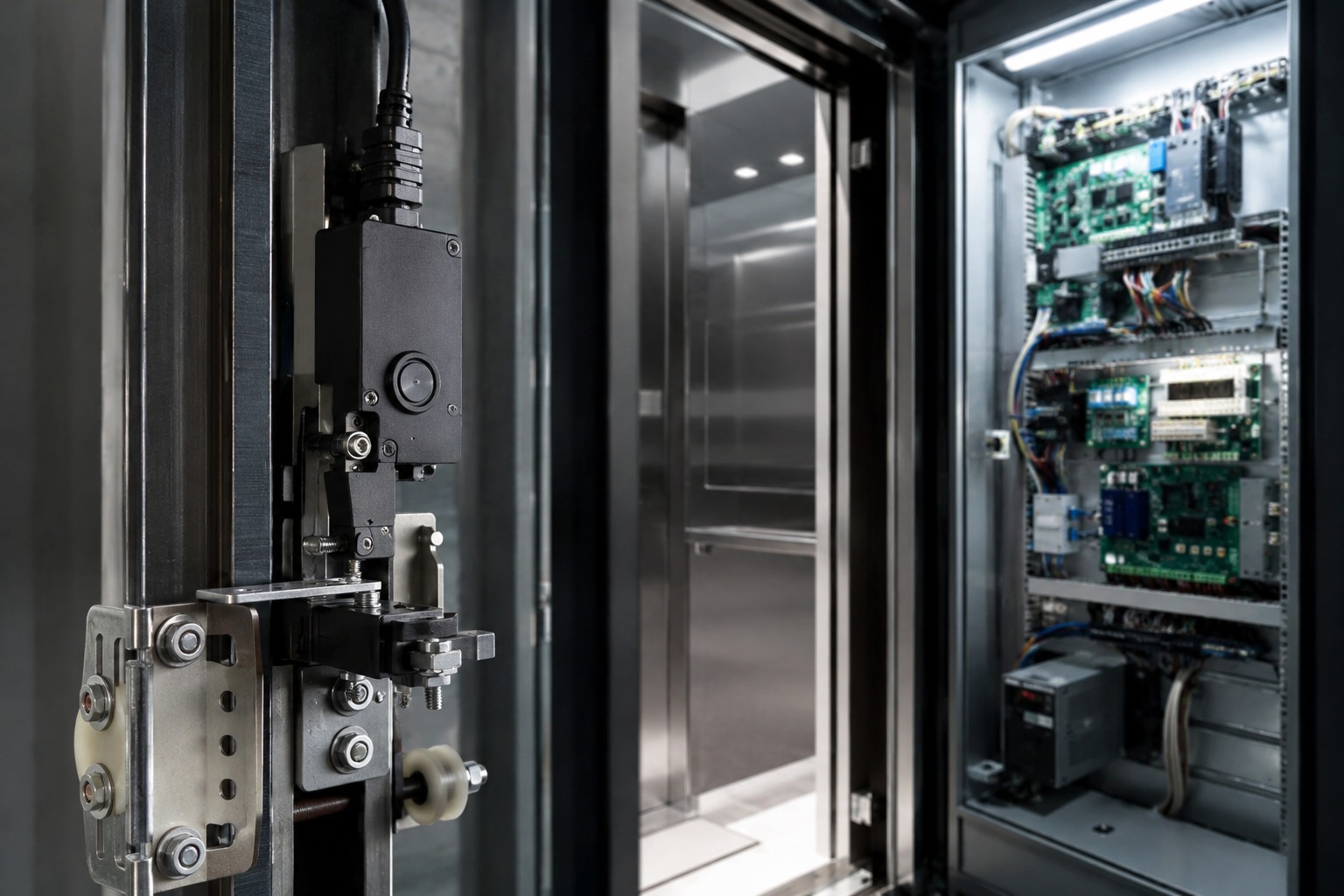
Elevator leveling sensors are critical components that help a lift stop flush with the landing sill. When they work correctly, passengers can enter and exit safely, ride comfort improves, and the elevator controller can complete floor-to-floor operation with fewer faults. When they drift, misread, or fail, the car may stop too high or too low, creating a trip hazard, increasing callback rates, and placing extra stress on doors and control logic. For maintenance companies, building owners, and modernization contractors in South Africa, proper selection, installation, and testing of leveling sensors is one of the most practical ways to reduce downtime.
In busy commercial buildings in Johannesburg, residential towers in Cape Town, hospitals in Durban, and mixed-use developments around Pretoria and Gqeberha, elevator traffic is heavy and user expectations are high. Accurate leveling is not only a comfort issue. It affects accessibility, passenger confidence, and service reliability. In coastal environments linked to Durban Port and Cape Town Port, humidity and contamination can also influence sensor performance over time, making correct replacement sourcing and preventive maintenance even more important.
This guide explains the role of elevator leveling sensors, the most common failure signs, the difference between photoelectric and magnetic detection, what buyers should check when sourcing GLS 326 and similar models, how installation position affects performance, and how to verify floor leveling after replacement. It also covers market demand in South Africa, common applications by building type, practical buying advice, and answers to frequent technical questions from maintenance teams and distributors.
The line chart above shows a realistic demand trend for replacement leveling sensors in South Africa. Growth is driven by modernization in aging buildings, increased preventive maintenance awareness, and the need to keep installed elevator fleets operating without long part lead times.
Why elevator leveling accuracy matters
Leveling accuracy matters because a small stopping error can quickly become a visible service problem. If the elevator car stops even a few millimetres out of tolerance, users may notice a bump underfoot. In higher traffic buildings, repeated misleveling increases passenger complaints and can lead to more urgent service calls. In sites serving elderly passengers, wheelchair users, hospital trolleys, hotel luggage carts, or warehouse hand trucks, the safety and operational impact becomes even greater.
At a system level, accurate leveling supports smooth door opening and closing sequences. The controller expects the car to be in the correct position before door release logic completes. If the landing position signal is unstable, the controller may hesitate, retry, or register a fault. This can slow handling capacity in office buildings and worsen waiting times during morning and afternoon traffic peaks.
For South African property managers balancing uptime and budget, leveling accuracy has a direct cost impact. A lift that frequently re-levels or generates landing zone faults can consume extra technician hours, increase occupant dissatisfaction, and delay service in buildings where elevator availability is essential. In hospitals, retirement facilities, and premium residential developments, even short disruptions can trigger complaints and reputational damage.
There is also a compliance and risk management angle. While exact maintenance practices vary by building type and contractor, safe boarding conditions are a baseline expectation everywhere from Sandton office towers to student housing in Stellenbosch. Good leveling performance reduces trip hazards, supports accessibility, and helps maintenance teams document that the system is operating within expected parameters after repairs.
| Benefit area | What accurate leveling achieves | Typical risk when inaccurate | Common building impact | Maintenance effect | Priority level |
|---|---|---|---|---|---|
| Passenger safety | Reduces step up or step down at landing | Trip and stumble incidents | Complaints and risk exposure | More urgent callback visits | Very high |
| Ride quality | Smoother arrival and departure | Noticeable floor mismatch | Poor user experience | Repeated adjustment requests | High |
| Door performance | Stable landing zone confirmation | Door hesitation or retry | Longer passenger waiting time | Extra checks on door and control circuits | High |
| Accessibility | Improves access for wheelchairs and trolleys | Difficult entry and exit | Operational inconvenience | Higher service sensitivity | Very high |
| System reliability | Cleaner stop logic and fewer nuisance faults | Frequent re-leveling events | Reduced confidence in equipment | More diagnostic time | High |
| Lifecycle cost | Lower callback frequency | Repeat site visits | Higher service cost | Increased spare usage | High |
The table shows that leveling accuracy is not an isolated sensor issue. It influences the full passenger experience and the total maintenance burden across the life of the elevator.
Common signs of leveling sensor failure
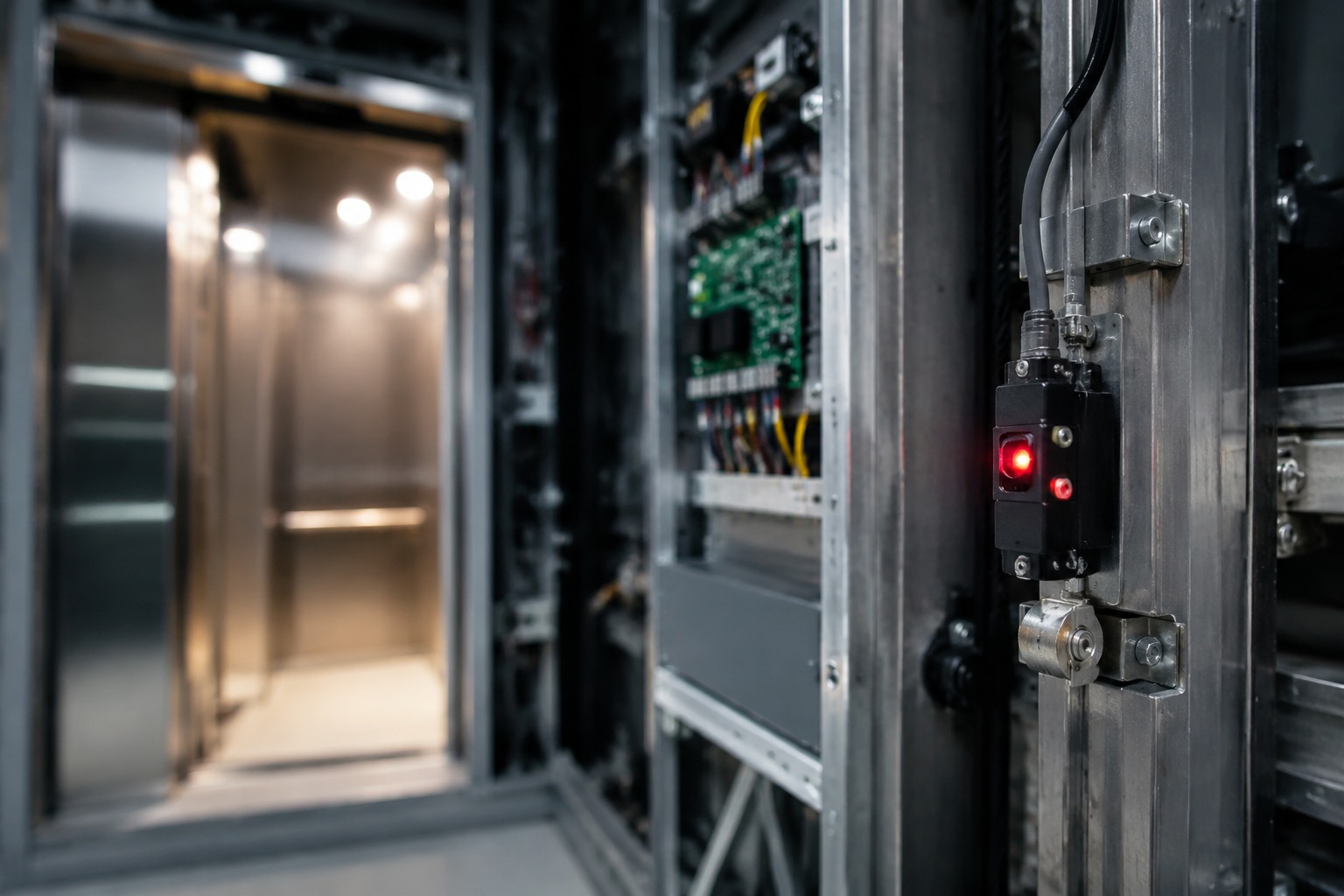
A faulty leveling sensor does not always fail completely. In many cases it becomes intermittent, temperature-sensitive, dirty, misaligned, or electrically unstable. This is why technicians should assess both the sensor and the surrounding mechanical and electrical environment before replacing parts.
The most common field symptom is inconsistent floor stopping. The elevator may level correctly on one landing but stop slightly high on another. It may also arrive correctly, then drift or re-level after passengers step in or out. In some cases, the car may overshoot, correct, and then open doors after a short pause. A controller event log may show landing zone, door zone, or position detection errors depending on system architecture.
Another sign is repeat callbacks after brake checks, door work, or drive tuning. If other subsystems have been inspected and the complaint persists, the leveling sensor circuit should be reviewed. Wiring fatigue, loose connectors, contamination on the sensing face, damaged brackets, and incorrect gap setting can all create sensor-related faults that look like drive or control problems.
In South Africa, environmental factors can accelerate wear. Dust in inland industrial areas, salt-laden air in coastal cities, vibration in high-use commercial buildings, and inconsistent power conditions can all affect long-term reliability if the sensor, cable, and mounting arrangement are not well protected.
| Observed symptom | Possible sensor issue | Other related causes | What to inspect first | Urgency | Expected service effect |
|---|---|---|---|---|---|
| Car stops above floor level | Weak or shifted detection point | Bracket movement, vane wear | Sensor position and gap | High | Trip hazard at landing |
| Car stops below floor level | Signal delay or misalignment | Controller setting drift | Sensor output timing | High | Poor accessibility |
| Intermittent re-leveling | Unstable sensing or contamination | Brake slip, load shift | Sensing face cleanliness | Medium to high | Passenger concern |
| Door opening delay | Landing zone signal not confirmed | Door lock circuit issue | Input status at controller | Medium | Longer dwell cycle |
| Fault only at one floor | Localized vane or magnet issue | Rail or sill movement | Floor-specific target condition | Medium | Selective landing complaint |
| Random fault after vibration | Loose connector or cable damage | Cabling rub points | Harness, plug, strain relief | High | Unpredictable downtime |
This table helps separate direct sensor faults from nearby causes. A good maintenance process avoids replacing parts blindly and instead confirms whether the issue is sensing, mounting, target position, wiring, or controller interpretation.
Photoelectric sensor versus magnetic detection
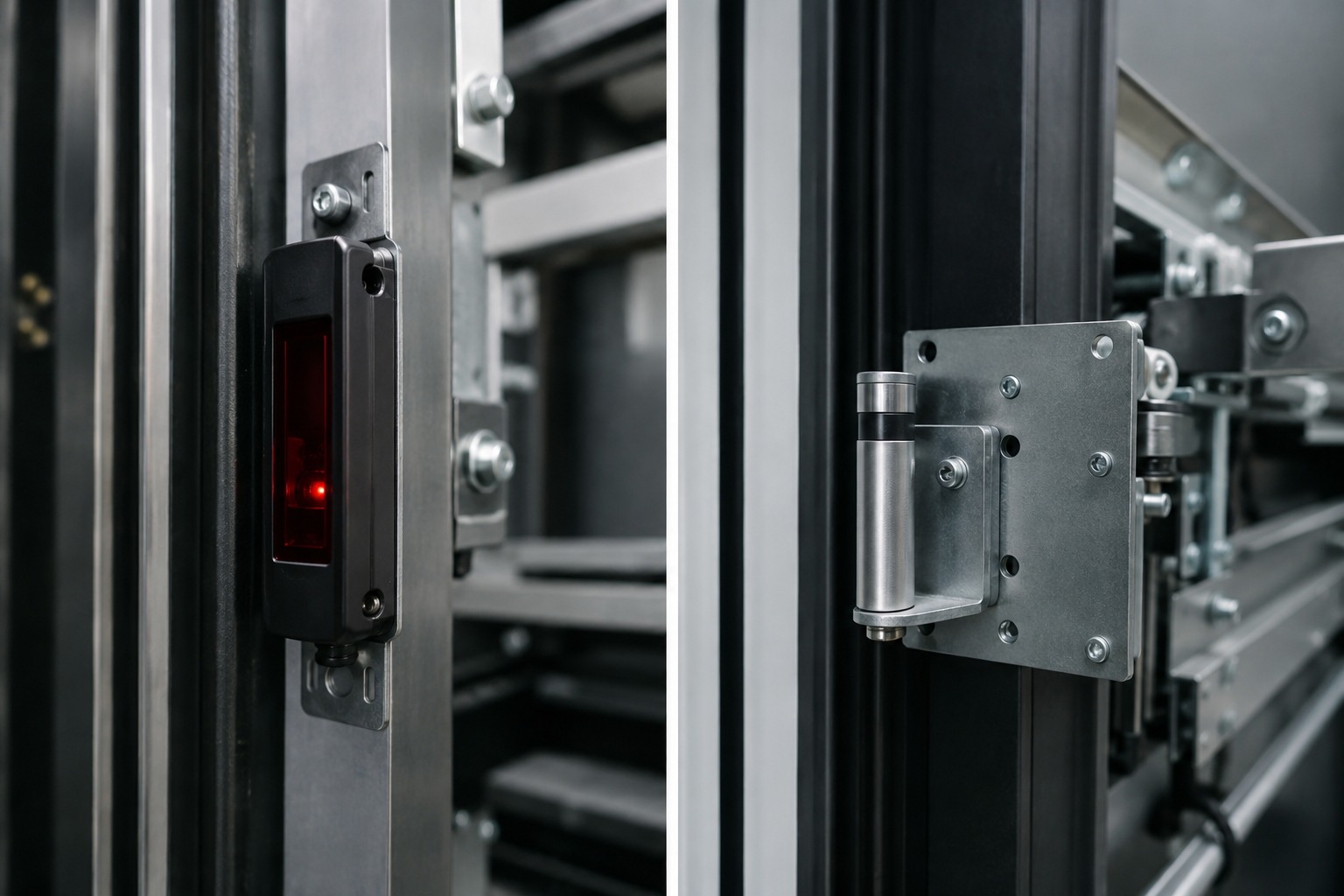
Two common approaches are used for elevator leveling and position detection: photoelectric sensing and magnetic detection. Both can perform well when correctly matched to the system, but they differ in operating principle, installation sensitivity, environmental tolerance, and replacement considerations.
Photoelectric sensors typically detect a target or interruption using light. They can offer precise switching and are often used where the original design expects a specific optical response and mounting geometry. They may be more sensitive to contamination, dust buildup, oil mist, or lens obstruction if not protected and cleaned regularly. Correct alignment and sensing distance are important.
Magnetic detection relies on the presence of magnets and a sensor designed to respond to magnetic fields. In some applications, magnetic systems can be robust against visible dirt and may be preferred where optical contamination is a frequent issue. However, magnet strength, spacing, polarity, mounting position, and the exact response curve of the sensor all matter. Replacing only one part without checking the magnet arrangement can lead to inconsistent results.
For service companies in South Africa, the practical question is not which technology is universally better, but which one is correct for the installed elevator design and duty environment. Original equipment expectations, controller input requirements, bracket dimensions, cable specifications, and landing target arrangements should guide the decision. A compatible replacement must match not only the model reference but also the functional behavior required by the lift system.
| Comparison point | Photoelectric sensor | Magnetic detection | Best use context | Main caution | Buyer note |
|---|---|---|---|---|---|
| Detection principle | Light beam or optical response | Magnetic field sensing | Depends on original design | Do not cross-substitute casually | Check controller compatibility |
| Contamination sensitivity | Can be affected by dust or lens dirt | Usually less affected by visible dirt | Harsh dusty sites may prefer magnetic systems if designed for it | Magnet condition still matters | Inspect environment before choosing |
| Alignment need | Often precise | Important but different setup logic | Both require careful positioning | Poor alignment causes false readings | Measure original mounting |
| Response stability | Good when clean and properly set | Good when magnet pattern is correct | High-traffic sites need stable repeatability | Do not ignore field testing | Validate on multiple floors |
| Replacement complexity | Model and sensing range must match | Sensor and magnet system must match | Modernization projects often need extra review | Equivalent part claims require verification | Request photos and nameplate data |
| Typical sourcing focus | Optical specs, connector, dimensions | Field polarity, switching threshold, bracket fit | Use exact or proven compatible part | Improper substitutions raise callback risk | Source from a supplier that checks model details |
The table shows why sourcing should be based on actual elevator configuration rather than generic category labels. If a site uses a photoelectric design, replacing it with a magnetic concept without engineering review is risky.
The bar chart reflects how replacement demand is often strongest in commercial offices, residential towers, and retail environments, where daily usage and customer expectations amplify the impact of leveling performance.
GLS 326 sensor sourcing notes
When sourcing a GLS 326 or similar elevator leveling sensor, buyers should confirm much more than the label on the old part. In the field, different revisions, cable lengths, mounting brackets, and connector styles can exist under similar naming conventions. The goal is to secure a part that installs correctly, communicates reliably with the controller, and performs consistently under actual site conditions.
For teams looking for a relevant product reference, this GLS 326 elevator leveling sensor can be used as a starting point when comparing model details, dimensions, and application suitability. For broader replacements across multiple systems, it is also helpful to review a wider category of elevator leveling sensor parts and, where the project involves position feedback beyond landing zone detection, a compatible position detection sensor for elevators.
Buyers in South Africa should collect the old sensor label, elevator brand, control system details, photos of the mounting position, cable exit direction, and the target arrangement near the hoistway or car frame. This information reduces the risk of purchasing a part that is electrically similar but mechanically unsuitable. It also helps the supplier verify whether the requested part is exact-match, compatible replacement, or better handled as a modernization component.
Lead time and packaging also matter. Sensors are precision components. Protective packaging reduces transit damage, especially for shipments moving through trade routes linked to Johannesburg distribution hubs, Durban logistics corridors, and Cape Town import channels. A supplier with stable quality inspection can help screen issues before dispatch, lowering the risk of site delays.
| Item to confirm | Why it matters | How to verify | Common sourcing mistake | Impact if ignored | Recommended action |
|---|---|---|---|---|---|
| Exact model reference | Avoids mismatch with controller expectations | Read nameplate and compare photos | Ordering from memory only | Wrong switching behavior | Send clear label images |
| Electrical specifications | Ensures correct voltage and output type | Check technical sheet or old part marking | Assuming all sensors are universal | Non-functional installation | Match input requirements exactly |
| Mounting dimensions | Determines bracket fit and alignment | Measure hole spacing and body size | Ignoring bracket geometry | Time-consuming adaptation | Share dimension photos |
| Cable length and connector | Supports clean installation | Measure cable and inspect plug type | Connector mismatch | Rework or harness changes | Verify termination style before shipping |
| Application environment | Affects long-term reliability | Review dust, humidity, vibration level | Choosing only by price | Shorter service life | Select proven quality level |
| Supplier verification support | Reduces selection errors | Ask for model matching process | No technical confirmation | Higher callback risk | Work with responsive parts specialists |
This sourcing table shows that accurate replacement begins before purchase. Good documentation and supplier communication often save more time than rush ordering.
Installation position and adjustment checks
Even the correct replacement sensor can perform poorly if installation position is wrong. The sensing gap, bracket stiffness, target alignment, mounting height, and cable routing all influence signal consistency. After replacing a leveling sensor, technicians should never assume the original bracket remained perfect. Small distortion from vibration, prior repairs, or accidental impact can shift the switching point enough to create visible landing errors.
Start by cleaning the installation area and checking the target surface, vane, or magnet arrangement. Inspect for bent metal, loose fasteners, rust, contamination, and witness marks that suggest contact or vibration. Confirm that the sensor face is parallel to the target and that the intended gap matches the application requirements. A secure bracket is essential because movement under travel vibration can produce intermittent signals that are difficult to diagnose.
Cable routing deserves equal attention. A properly mounted sensor can still fail in service if the cable is stretched, rubbed, pinched, or exposed to repeated flexing. In older South African installations, especially those that have undergone partial modernization, cable paths may have been altered over time. Check clamps, grommets, and strain relief. If the connector is not original, verify contact quality and insulation integrity.
Controller input monitoring is useful during adjustment. If the elevator control system allows live input observation, technicians can confirm precisely when the sensor changes state relative to the landing zone. This reduces guesswork and helps identify whether the issue is mechanical positioning or electrical signal quality.
| Checkpoint | What to inspect | Why it affects leveling | Typical fault found | Correction method | Verification step |
|---|---|---|---|---|---|
| Bracket condition | Rigidity, cracks, fastener tightness | Movement shifts switching point | Loose or bent support | Repair or replace bracket | Recheck stability during travel |
| Sensing gap | Distance between sensor and target | Incorrect gap causes missed signals | Gap too wide or uneven | Adjust to specification | Test at multiple landings |
| Sensor orientation | Face alignment and angle | Skew affects repeatability | Sensor tilted off-axis | Realign body and bracket | Observe stable input switching |
| Target condition | Vane, magnet, or marker cleanliness and position | Defines detection moment | Contaminated or shifted target | Clean or reposition target | Confirm consistent stops |
| Cable and connector | Damage, strain, contact quality | Intermittent wiring mimics sensor failure | Broken core or loose plug | Repair harness or replace connector | Wiggle-test and monitor input |
| Controller response | Input recognition timing | Signal must be interpreted correctly | Input delay or wrong terminal use | Verify wiring and parameters | Complete full travel test |
The checklist above is useful for both new replacements and repeat fault investigations. In many cases, the real problem is mechanical drift around the sensor rather than the sensor alone.
Testing leveling after replacement
Testing should be systematic and documented. A quick successful stop at one floor is not enough to confirm a reliable repair. The elevator should be tested under no-load and loaded conditions where practical, in both travel directions, and across several floors. Buildings in high-traffic zones such as Sandton, Umhlanga, and the Cape Town CBD often expose weak adjustments quickly because frequent starts and stops reveal inconsistency.
Begin by running the car to all served floors and checking whether the sill is flush at each landing. Repeat the test in the opposite direction because some errors show only on ascent or descent. Next, observe door opening timing and any re-leveling behaviour after passenger movement or simulated load change. Where available, review controller diagnostics for clean, repeatable input transitions with no nuisance faults.
If the building allows it, conduct peak-cycle testing with repeated journeys. A sensor that performs correctly on a cool first run may become unstable as components warm up or as vibration accumulates. This is especially relevant for older systems in mixed-use buildings where duty cycles are inconsistent throughout the day.
Technicians should record landing accuracy, any floors that differ from the rest, and whether mechanical brake or drive conditions could be contributing. Replacement success depends on the total system, not just the new part. Good service records also help future troubleshooting if a problem returns months later.
The area chart highlights a clear industry trend: maintenance strategies are gradually moving from reactive replacement toward more proactive and data-informed inspection routines.
Preventive maintenance recommendations
Preventive maintenance is the best way to extend sensor service life and reduce emergency calls. A practical program includes cleaning, mounting inspection, cable inspection, landing accuracy checks, and review of recurring faults. This does not need to be complex, but it should be consistent and adapted to the building environment.
In inland cities such as Johannesburg and Bloemfontein, dust control may be a priority. In coastal areas such as Durban and Cape Town, corrosion prevention and connector protection become more important. In industrial buildings near logistics hubs or manufacturing zones, vibration and airborne contaminants can accelerate bracket loosening and sensor face contamination.
A good preventive plan also supports better procurement. When maintenance teams track which sensor models fail most often, under what conditions, and after what service interval, they can stock the right spares and avoid overbuying slow-moving items. This matters for distributors and building owners who want reliable availability without excessive inventory cost.
From a 2026 trend perspective, three shifts are becoming more important in South Africa: smarter diagnostics, tighter attention to lifecycle efficiency, and sustainability-led modernization. Smarter diagnostics means more service teams will use controller logs and digital records to identify early drift before a full failure occurs. Lifecycle efficiency means buyers will prefer parts with stable quality and model-matching support rather than simply choosing the cheapest item. Sustainability means extending equipment life through targeted replacement of sensors, boards, and door components instead of full system disposal where safe modernization is viable.
Policy and building management trends also point toward stronger accountability for uptime, accessibility, and energy-efficient operation. While leveling sensors are small components, they contribute to smooth traffic handling and reduce wasteful repeat visits. A well-maintained sensor system supports both safe operation and better resource use.
The comparison chart shows what serious buyers often value most when evaluating parts suppliers: correct model matching, dependable quality control, and consistent sourcing support.
FAQ about elevator leveling sensors
What does a leveling sensor do in an elevator?
It tells the controller when the car is in the correct landing zone or position so the elevator can stop accurately and allow doors to open safely.
Can a leveling problem be caused by something other than the sensor?
Yes. Brake condition, drive tuning, target misalignment, loose brackets, damaged cables, and controller parameter issues can all produce similar symptoms.
How do I know whether I need a photoelectric or magnetic replacement?
Use the original system design as the starting point. Confirm the old part number, electrical characteristics, mounting style, and target arrangement before ordering.
Is GLS 326 the only option for replacement?
Not always. Some systems require the exact model, while others may accept a proven compatible part. Proper model matching is essential before substitution.
How should we buy replacement sensors for multiple buildings?
Create a site-by-site list of elevator brands, control systems, installed sensor models, and mounting differences. This reduces procurement errors and helps standardize stock.
What industries most often need leveling sensor replacements?
Commercial offices, residential high-rises, healthcare facilities, hotels, retail centres, and industrial buildings with passenger or service lifts all generate regular demand.
How often should leveling sensors be checked?
They should be reviewed during routine maintenance visits, especially in high-use buildings or environments with dust, moisture, vibration, or repeated callback history.
What should be included in a replacement request to a supplier?
Send the old part label, elevator brand, clear photos, dimensions, connector type, cable length, and a short description of the fault and installation environment.
| Market segment | Main cities | Typical lift profile | Why sensor demand is rising | Preferred buyer focus | Outlook to 2026 |
|---|---|---|---|---|---|
| Commercial offices | Johannesburg, Pretoria, Cape Town | High-traffic passenger lifts | Callback reduction and tenant expectations | Fast matching and reliable quality | Strong |
| Residential towers | Cape Town, Durban, Umhlanga | Daily resident use | Comfort and accessibility complaints | Stable replacements with low downtime | Strong |
| Hospitals | Durban, Johannesburg, Gqeberha | Critical service and bed lifts | Precise stopping for trolleys and patient movement | Reliability and documentation | Very strong |
| Retail centres | Johannesburg, Cape Town, Polokwane | Passenger and service lifts | High foot traffic and user visibility | Quick part availability | Strong |
| Hotels | Cape Town, Durban, Sun City routes | Guest-facing passenger lifts | Service reputation and ride quality | Quiet, smooth operation support | Moderate to strong |
| Industrial and logistics | Durban corridor, East Rand, Nelson Mandela Bay | Service lifts and goods lifts | Harsh environments and aging fleets | Durability and packaging protection | Moderate |
The South African market table shows that demand is shaped not only by the number of elevators, but also by how visible service quality is to tenants, patients, guests, and facility managers.
Product types, buying advice, industries, and applications
Leveling sensor products in the market generally fall into several practical groups: photoelectric leveling sensors, magnetic detection sensors, multi-point position sensors, door zone sensors, and broader position detection devices used within elevator control architecture. Each category serves a slightly different purpose, and buyers should be careful not to confuse leveling confirmation with complete shaft position tracking.
For buying advice, the best approach is to prioritize fit, functional compatibility, and supply reliability. Price matters, but a cheaper part that causes a repeat visit is rarely the true low-cost option. Maintenance firms handling multiple brands such as Hitachi, Toshiba, KONE, Mitsubishi, and others should maintain a documented cross-reference process rather than relying on memory or visual similarity alone.
Industries using these sensors include commercial real estate, residential property management, public-sector facilities, hospitals, hotels, education campuses, logistics centres, and manufacturing plants. Applications range from standard passenger lifts and service lifts to bed lifts and modernization projects where selected components are updated to extend system life.
Case studies from the South African market often follow familiar patterns. In one office tower, repeated floor-stop complaints were traced not to the drive, but to a bracket that allowed an optical sensor to shift under vibration. In a coastal residential block, intermittent leveling faults were linked to connector corrosion and inconsistent signal quality. In a hospital environment, proactive replacement during planned maintenance avoided later disruption to patient transport. These examples show why correct diagnosis and sourcing matter more than rushing into a part swap.
Local suppliers and what buyers should expect
Local buyers often compare nearby stockists, general electrical traders, and specialized elevator parts suppliers. A local source can be useful when the exact part is in stock, but buyers should still expect technical confirmation, not only commercial availability. The most reliable suppliers ask for photos, labels, dimensions, and application details before finalizing the order.
For companies supporting sites across Gauteng, KwaZulu-Natal, and the Western Cape, nationwide coordination is often more valuable than simply buying from the closest seller. A supplier with experience in elevator spare parts can help reduce mismatch risk, especially for harder-to-identify sensors used in older installations or imported systems.
Strong suppliers normally stand out in three practical areas. In technological capabilities, they understand model matching, compatibility checking, and product category differences between leveling sensors, position detection devices, and related control components. In manufacturing capabilities, they work with stable quality inspection, careful component verification, and protective packaging suited to sensitive elevator parts. In service capabilities, they respond quickly to identification requests, support maintenance companies and distributors with clear communication, and help customers reduce downtime by organizing reliable sourcing for compatible replacements.
Those capabilities are especially important in South Africa, where project timelines can be affected by import cycles, transport distance between provinces, and the need to keep buildings operational while waiting for the correct part.
Our company and how we support South Africa buyers
We support elevator maintenance companies, distributors, building owners, and modernization contractors with focused spare parts sourcing for lift systems. Rather than treating leveling sensors as generic electrical items, we review actual application needs and help buyers confirm model details before supply. This technical approach is useful when identifying replacement parts for mixed elevator portfolios across South Africa.
From a technology perspective, we emphasize careful model matching for elevator control boards, inverter and frequency converter parts, door operator components, door locks, light curtains, guide shoes, oil cups, sensors, encoders, power supplies, buttons, COP panels, intercom parts, and related accessories. This helps customers compare not just part names, but also installation logic and compatibility.
From a manufacturing and quality perspective, we focus on stable sourcing channels, inspection consistency, and protective packaging so sensitive components arrive in good condition. This is important for replacement sensors and position devices that must perform accurately after installation. From a service perspective, we work to provide responsive communication and practical support for maintenance planning, helping customers reduce downtime and source suitable replacement parts for brands including Hitachi, Toshiba, KONE, Mitsubishi, and more.
For South African customers handling urgent repair needs or planned modernization, the goal is simple: shorten identification time, lower mismatch risk, and improve confidence that the replacement part will support safe, stable operation.