
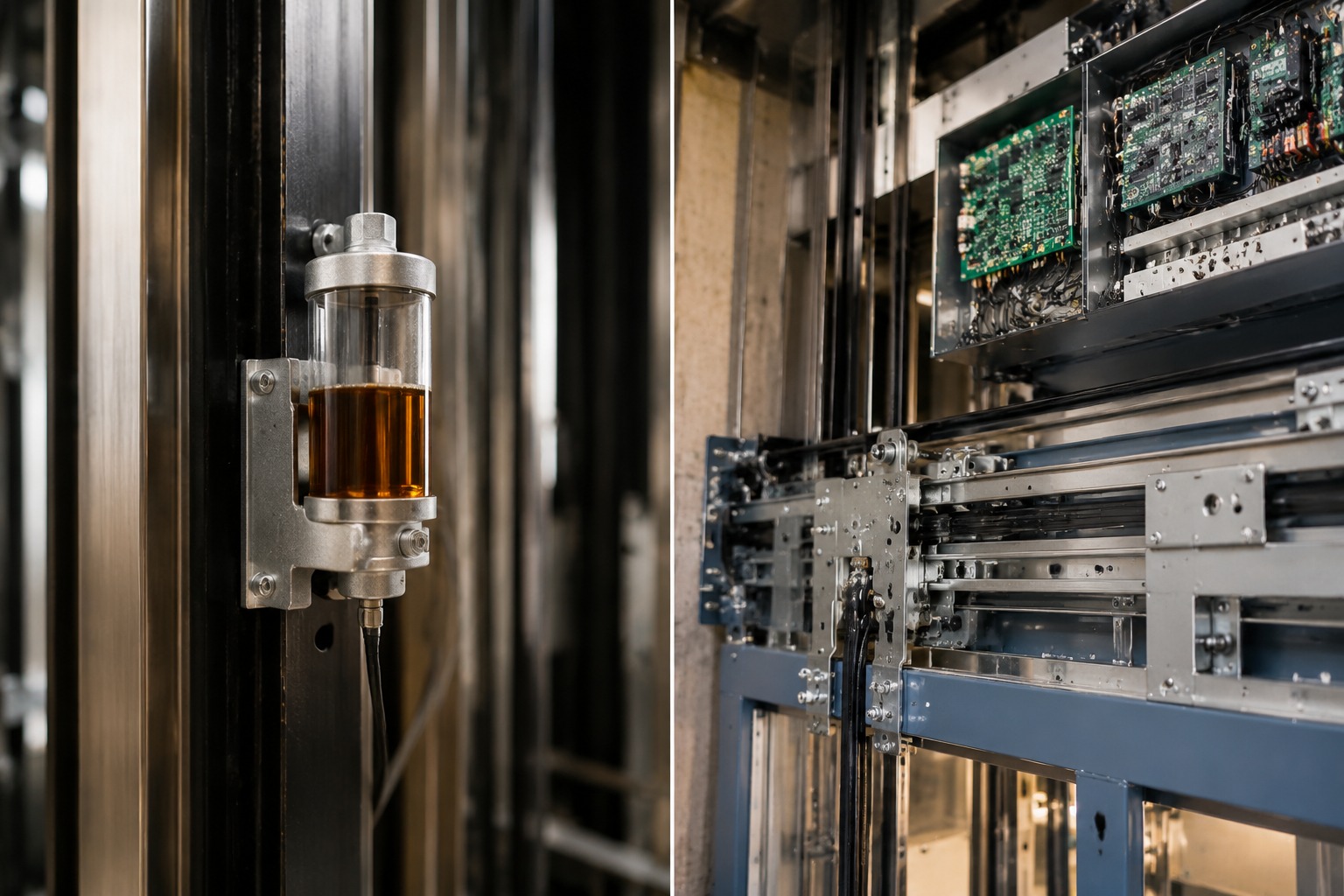
Guide rail lubrication is not a minor maintenance detail. In passenger lifts, goods lifts, hospital elevators, and modernization projects across South Africa, correct rail oiling helps reduce shoe wear, noise, vibration, rail scoring, and premature replacement costs. Oil cups, felt pads, and bottom pit oil collection boxes work together as a simple but important system: the oil cup stores lubricant, the felt pad meters it onto the rail surface, and the oil box captures excess oil before it contaminates the pit area.
For maintenance companies in Johannesburg, Cape Town, Durban, Pretoria, Gqeberha, and mining or logistics sites near major trade routes, a well-matched lubrication setup improves service intervals and supports safer operation. This is especially relevant where lifts face dust, humidity, coastal air, or frequent stop-start cycles. If you are sourcing replacement parts, model matching matters as much as material quality. A square cup, small MRL cup, or felt insert that looks similar can still perform differently depending on mounting dimensions, felt density, and oil release rate.
For buyers who need parts quickly, common product categories include standard lift oil cups, machine-room-less compact oil cups, replacement felt pads, and bottom pit oil collection boxes. You can review a general range of elevator oil cup lift accessories when comparing sizes and applications. In many service cases, the most practical solution is not just replacing the empty cup, but renewing the felt and checking whether excess oil is pooling below the car or counterweight.
Why guide rail lubrication matters
Guide rails provide the vertical path for the car and counterweight. Even though the rail is a static steel component, the contact interface between the guide shoe liner or roller guide assembly and the rail is dynamic. Without the right lubrication regime, friction increases, heat builds up at the contact surface, and wear becomes uneven. Over time this can lead to rough travel, black residue, squealing noise, rail scratches, and in severe cases, the need for regrinding or rail replacement.
In South Africa, operating conditions vary widely. Coastal buildings in Durban or Cape Town may face salt-laden air and higher corrosion risk. Inland commercial towers in Johannesburg and Sandton often run heavy traffic cycles during peak office hours. Residential blocks in Pretoria or student accommodation in Bloemfontein may show intermittent use patterns, where oil can dry out or migrate unevenly if inspection intervals are too long. Warehousing and freight installations near logistics hubs may also expose components to dust and vibration, increasing the need for consistent felt performance.
Good lubrication supports:
- Stable car travel and improved ride comfort
- Reduced wear on guide shoes and rail surfaces
- Lower noise during acceleration and deceleration
- Cleaner maintenance outcomes when oil flow is controlled
- Longer life for compatible rail-contact components
- Less unplanned downtime from avoidable rail-related issues
Another reason lubrication matters is compliance with practical maintenance discipline. Although oil cups are small and low-cost parts, they influence larger service outcomes. A neglected felt pad can over-oil the rail and create contamination in the pit, while an over-packed felt can starve the rail of lubricant. In both cases, a cheap part causes a costly maintenance problem.
| Operating condition | Lubrication challenge | Likely symptom | Effect on components | Recommended response | Priority level |
|---|---|---|---|---|---|
| High passenger traffic office tower | Fast oil depletion | Rail noise at peak periods | Accelerated felt and shoe wear | Shorten refill and inspection interval | High |
| Coastal residential building | Moisture and corrosion exposure | Dirty oil film or surface oxidation | Inconsistent rail contact | Use clean compatible oil and inspect more often | High |
| Dusty industrial site | Contaminants trapped in felt | Grinding sound or dark streaks | Rail scoring risk | Replace felt and clean mounting area | High |
| Low-use building | Oil drying or poor distribution | Jerky first runs after idle periods | Uneven lubrication film | Check oil condition and felt saturation | Medium |
| MRL modernization project | Restricted installation space | Incorrect cup fitment | Leakage or poor oil delivery | Select compact cup matched to layout | High |
| Aging lift with unknown service history | Mixed parts and inconsistent oiling | Variable performance floor to floor | Cumulative wear issues | Audit cup, felt, rail, and collection box together | High |
The table above shows that lubrication issues are rarely isolated. They usually connect with traffic level, environment, installation layout, and service history. For this reason, oil cups should be viewed as part of a system rather than a standalone consumable.
This market growth line chart reflects a realistic trend: demand for lubrication-related elevator parts tends to rise with modernization work, denser urban use, and higher expectations for preventive maintenance. Through 2026, buyers are increasingly moving from reactive replacement to planned inspection and consumable management.
Types of elevator oil cups
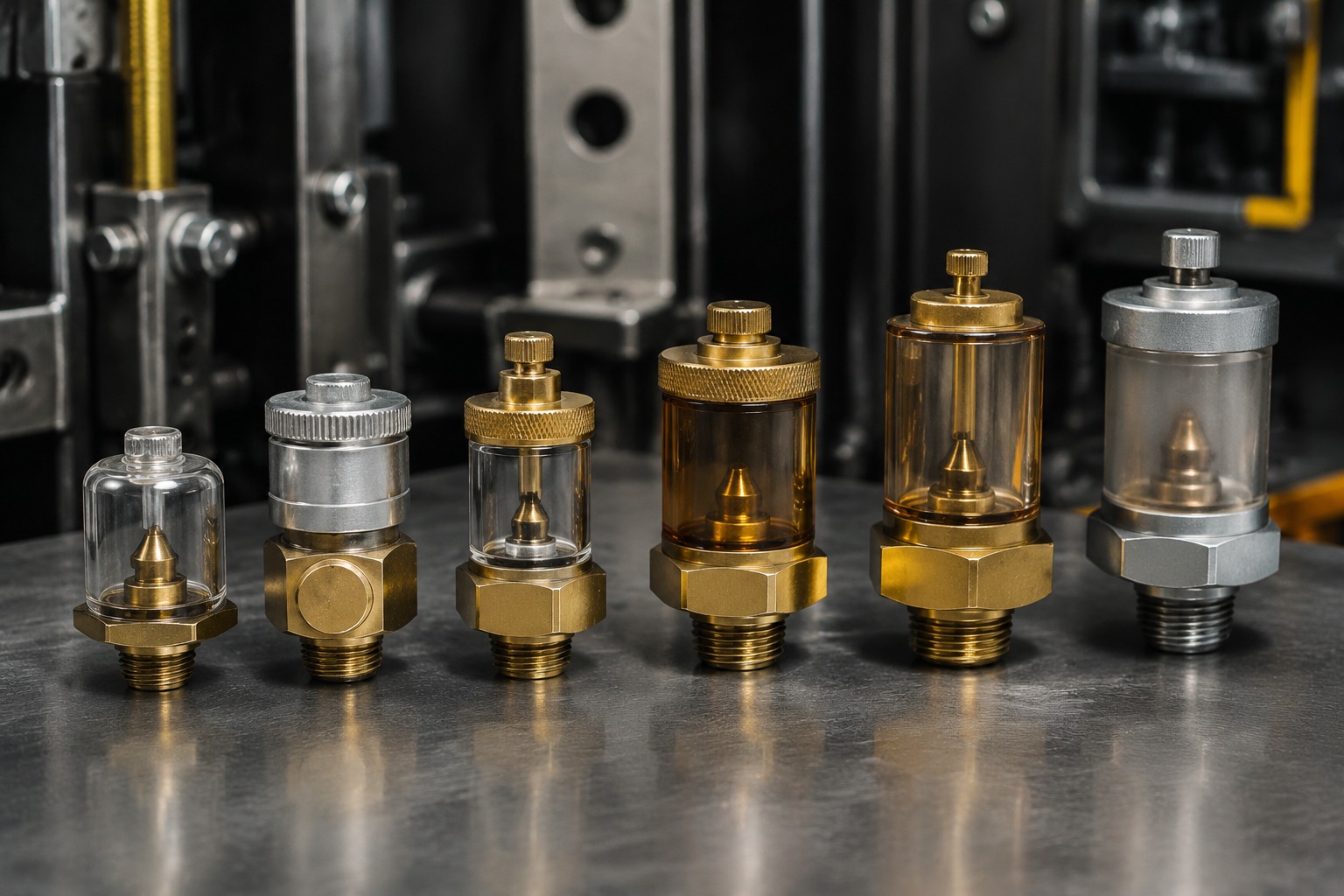
Elevator oil cups are available in several formats, and choosing the right one depends on the lift design, mounting method, available space, felt pad size, and expected oil flow. The most common styles used in the field are round cups, square cups, compact cups for machine-room-less systems, and application-specific variants used with different guide shoe layouts.
A standard square or rectangular cup is often selected for general passenger lift applications because it offers straightforward mounting and enough oil volume for routine service intervals. Compact designs are more useful where access is tight or where equipment arrangement leaves little clearance around the guide assembly.
When comparing products, buyers should review material finish, wall thickness, cap or opening design, felt retention, mounting position, and compatibility with the existing guide shoe or lubrication bracket. For general replacement demand, many contractors first compare standard oil cup options for lifts, then narrow selection by dimensions and installation style.
| Oil cup type | Typical application | Main advantage | Possible limitation | Best for | Selection note |
|---|---|---|---|---|---|
| Standard square oil cup | Conventional passenger elevators | Balanced oil capacity and easy mounting | May be too large for compact spaces | Routine replacements | Check bracket size and felt shape |
| Round oil cup | Legacy systems and mixed-brand maintenance | Simple structure | Less common in some modernization jobs | Older installations | Confirm neck diameter and fixing points |
| Small square MRL oil cup | Machine-room-less lifts | Fits restricted layouts | Lower oil capacity | Space-sensitive equipment | Inspect refill access after installation |
| High-retention oil cup | Higher traffic installations | Supports steadier supply | Needs correct felt pairing | Commercial buildings | Use only with suitable viscosity |
| Counterweight-side oil cup | Counterweight guide rail lubrication | Application-specific fit | Less interchangeable | Targeted maintenance | Review side-specific dimensions |
| Custom matched replacement cup | Modernization and difficult sourcing cases | Improved fit accuracy | Requires careful model verification | Mixed fleets | Share photos and measurements before purchase |
The comparison above helps explain why visual similarity is not enough. Two square cups can differ in width, mounting hole spacing, felt depth, and actual oil release behavior. In the South African aftermarket, where buildings often contain mixed brands from different installation periods, accurate identification reduces repeat service calls and installation delays.
For compact systems, especially in retrofit work where shaft space is limited, a small square oil cup for machine-room-less elevators can be the better option. It is particularly useful where technicians need a low-profile part that still allows controlled lubrication without interfering with nearby components.
The industry demand chart shows where replacement demand is strongest. Office towers and public buildings often lead due to higher usage cycles, while hospitals and hotels require smoother ride quality and lower noise, making lubrication control especially important.
How felt pads control oil flow
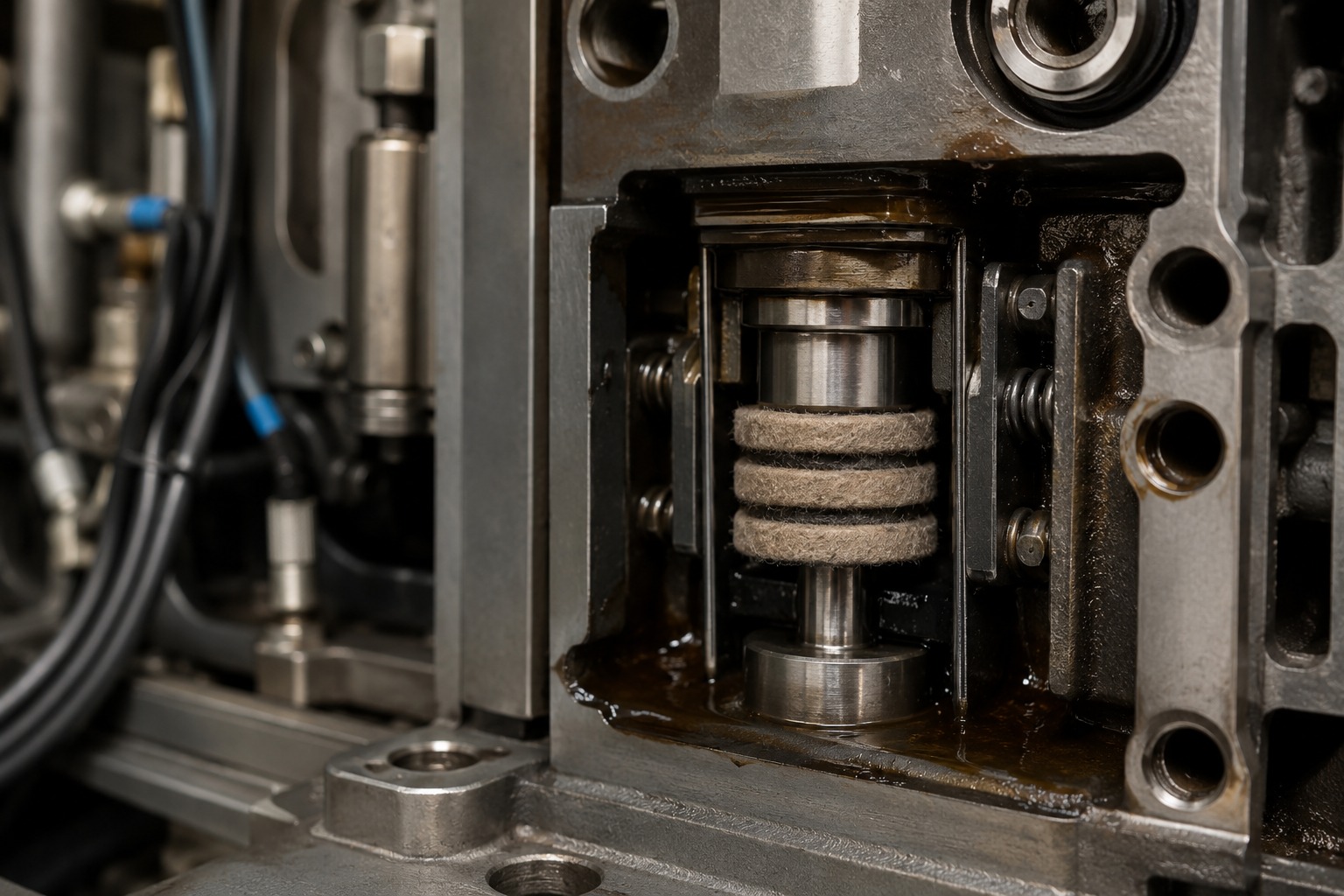
The felt pad is the regulating element in the lubrication system. Its job is not merely to hold oil, but to meter the oil gradually onto the guide rail contact surface. A good felt pad releases enough lubricant to maintain a thin, even film without flooding the rail. If the felt density is too loose, oil may drip excessively and create a messy pit environment. If it is too dense, the rail may remain under-lubricated despite a full oil cup.
Material quality matters here. Cotton felt and similar absorbent pads are widely used because they can retain lubricant while still allowing controlled transfer through contact pressure and capillary action. Correct trimming, thickness, compression, and placement all affect real performance.
During maintenance, technicians should check whether the felt is:
- Evenly saturated rather than dry at one edge and soaked at the other
- Free from embedded dirt, rust particles, or hardened deposits
- Still making proper contact with the rail or transfer point
- Correctly seated in the cup without folding or collapse
- Suitable for the oil viscosity being used
When replacing the pad, it is wise to use a compatible part rather than generic felt cut from unrelated stock. The right elevator oil cup felt pad helps ensure stable oil release and better service consistency. In buildings with heavy daily cycles, felt quality often makes a bigger difference than buyers expect.
| Felt condition | What it indicates | Likely effect on rail | Visual sign | Corrective action | Replacement urgency |
|---|---|---|---|---|---|
| Dry and hard | Old material or poor saturation | Under-lubrication | Light contact streaks | Replace felt and refill oil | Immediate |
| Over-soaked and dripping | Loose density or excess filling | Oil waste and pit contamination | Visible drips below assembly | Fit correct felt and reduce fill level | High |
| Dirty with black residue | Dust and wear particle buildup | Abrasive contact risk | Dark smearing on rail | Clean area and replace felt | High |
| Uneven compression | Poor fitment or misalignment | Irregular oil film | One-sided wear pattern | Reinstall correctly or change size | Medium |
| Loose in cup | Wrong dimensions | Unstable oil transfer | Movement during inspection | Use matched replacement felt | High |
| Intact and evenly saturated | Good condition | Consistent lubrication | Thin clean oil film | Continue routine inspection | Low |
The practical message from the table is simple: the felt pad is the control valve of a passive lubrication system. Because it has no electronics or moving mechanism, it is often overlooked. Yet it is exactly the component that determines whether oil application is clean and steady.
This area chart illustrates a broader maintenance trend through 2026: more owners and service companies are budgeting for planned consumable replacement rather than waiting for noise, wear, or oil leakage complaints. Sustainability goals also support this shift, because controlled oil flow reduces waste and helps keep pits cleaner.
Machine room less oil cup selection
Machine-room-less elevators present a different lubrication challenge because space is restricted and service access can be tighter. A standard oil cup may be too bulky, may interfere with neighboring components, or may be awkward to refill safely during maintenance. That is why compact MRL oil cups are often chosen for newer buildings and modernization projects where equipment has been integrated into the hoistway structure.
Selection should focus on five points: mounting geometry, available clearance, felt dimensions, refill convenience, and operating traffic. In South African cities where MRL systems are common in apartment developments, hotels, and mixed-use buildings, using the wrong cup size can create avoidable rework during servicing.
A compact MRL small square oil cup is often appropriate when installers need a neat fit and predictable oil delivery. However, smaller size also means smaller oil reserve, so high-traffic sites may need a shorter refill cycle. Buyers should balance convenience of fit with practical servicing frequency.
| Selection factor | Why it matters in MRL lifts | Risk if ignored | Inspection method | Best practice | Impact on maintenance |
|---|---|---|---|---|---|
| Overall dimensions | Space is limited | Physical interference | Measure bracket and surrounding area | Use compact matched design | Reduces installation issues |
| Oil capacity | Smaller cups hold less oil | Frequent dry running | Check traffic intensity | Adjust service interval accordingly | Improves reliability |
| Refill access | Access may be awkward | Skipped maintenance | Simulate servicing reach | Select service-friendly orientation | Saves technician time |
| Felt retention | Compact layouts can dislodge inserts | Uneven lubrication | Verify pad seating | Use proper felt dimensions | Stabilizes oil flow |
| Mounting strength | Vibration and movement matter | Leaks or misalignment | Inspect fixings and bracket condition | Replace worn supports if needed | Prevents repeat failures |
| Brand compatibility | Mixed fleets need exact matching | Wrong part fitment | Compare drawings, photos, dimensions | Confirm before purchase | Reduces downtime |
The table highlights a common procurement mistake: buying an MRL cup based on appearance alone. On-site service teams benefit when purchasing staff provide photos, measurements, and equipment details in advance. This leads to faster model matching and fewer emergency return visits.
Bottom pit oil collection box use cases
An oil collection box in the bottom pit is designed to catch excess lubricant before it spreads across the pit floor, attracts dust, or creates a slippery maintenance area. This is especially useful when older systems release more oil than expected, when felt pads have become over-saturated, or when the installation design naturally allows drips from the rail lubrication point.
In busy maintenance environments, the collection box also provides a visible indicator. If technicians see sudden oil accumulation in the box, that may point to overfilling, worn felt, misalignment, or inappropriate oil viscosity. In this way, the box is not just a tray but a simple diagnostic aid.
Typical use cases include passenger lifts in commercial towers, freight lifts with heavy travel cycles, residential blocks with recurring drip complaints, and modernization projects where cleaner pit conditions are part of the upgrade goal. A bottom pit oil collection box for elevators can be a practical addition where housekeeping and safety are priorities.
| Use case | Why collection box helps | Main symptom addressed | Typical site type | Service benefit | Decision note |
|---|---|---|---|---|---|
| Older lift with visible oil drips | Captures recurring overflow | Pit floor contamination | Aging residential building | Cleaner maintenance area | Also inspect felt and cup condition |
| High-traffic commercial lift | Monitors oil waste over time | Frequent excess runoff | Office tower | Supports preventive adjustment | Track refill versus collected volume |
| Freight elevator | Contains mess in harsher conditions | Dusty oily buildup | Warehouse or plant | Easier cleaning | Use with strict inspection routine |
| Modernization project | Improves pit housekeeping | Legacy leakage concerns | Mixed-use redevelopment | Better long-term presentation | Good add-on during component renewal |
| Hospital or hotel lift | Supports cleaner operation standards | Service complaints about odor or mess | Sensitive public building | Reduces visible maintenance issues | Pair with quality felt pads |
| Coastal site with dirty residue | Limits spread of contaminated oil | Rust-tinted drips | Port city building | Simplifies monitoring | Check rail and cup condition too |
This table shows that oil collection boxes are most valuable when they are used as part of a wider maintenance response. They should not be treated as a way to ignore the root cause of excessive oil loss.
Inspection and replacement schedule
The correct inspection schedule depends on traffic, environment, shaft condition, and component type. There is no one interval that fits every lift in South Africa. A lightly used residential installation in an inland suburb will not behave the same way as a hospital lift in Durban or a commercial tower in Sandton.
Still, a structured schedule is essential. Good practice includes visual inspection during routine service visits, felt condition checks, oil level checks, verification of rail film quality, and review of any oil collected in the bottom pit box. Where patterns of over-oiling or dryness repeat, the schedule should be revised rather than simply topping up the cup each time.
| Component or task | Low-use building | Medium-use building | High-use building | What to check | Action trigger |
|---|---|---|---|---|---|
| Oil level in cup | Monthly | Every 2 to 4 weeks | Weekly to biweekly | Reserve level and cleanliness | Refill or investigate rapid loss |
| Felt pad condition | Quarterly | Every 2 months | Monthly | Saturation, dirt, hardness | Replace if dry, dirty, loose, or deformed |
| Rail oil film | Quarterly | Monthly | Monthly | Even thin lubrication layer | Adjust oiling method if streaky |
| Oil cup mounting | Biannually | Quarterly | Quarterly | Fit, alignment, leakage | Tighten or replace if unstable |
| Bottom pit collection box | Quarterly | Monthly | Monthly | Oil volume and residue type | Clean and trace source if increasing |
| System review after part replacement | After 1 service cycle | After 1 service cycle | After 1 service cycle | Oil flow and performance stability | Reconfirm compatibility if issues continue |
The schedule above is a practical starting framework. A replacement program works best when service teams record oil condition, pad state, and collected residue over time. Trend tracking can reveal whether a site has a lubrication problem, an environmental contamination problem, or a wrong-part problem.
Through 2026, digital maintenance reporting is likely to play a bigger role. More service providers are adding photo records and condition scoring to routine visits. This makes it easier for building owners to approve preventive replacement before rail wear becomes expensive. Sustainability considerations are also becoming more visible, as cleaner lubrication practices help reduce wasted oil and support safer pit conditions.
Common lubrication mistakes
Most lubrication failures come from a few repeat mistakes. The first is using the wrong oil quantity. Overfilling is often just as harmful as underfilling because it causes uncontrolled dripping and contamination. The second is reusing a dirty or hardened felt pad simply because it still looks physically intact. The third is installing a cup that fits roughly, but not correctly, leading to poor contact or leakage.
Other common mistakes include mixing incompatible oils, skipping pit inspections, ignoring changes in rail noise, and replacing only the cup while leaving the old felt pad in place. In many cases, the service report says “oil added,” but no one checks whether the oil is actually transferring properly to the rail surface.
The comparison chart shows how routine mistakes cluster around simple service habits rather than complex engineering faults. Preventing these issues requires training, correct parts, and consistent site records more than expensive tooling.
Buying advice for South African maintenance teams is straightforward:
- Match by dimensions, application, and brand compatibility, not by appearance alone
- Replace felt pads proactively in dirty or high-traffic environments
- Consider collection boxes where oil drips have a history
- Use compact cups for MRL layouts where standard cups are awkward
- Keep a small stock of common consumables to reduce downtime
Local supply planning also matters. Cities such as Johannesburg and Durban often support faster logistics, while remote mining, hospitality, or public infrastructure sites may benefit from holding backup stock. For buildings near ports and transport corridors, environmental exposure can justify more frequent inspection even if ride counts are moderate.
FAQ about elevator oil cups
How do I know if an oil cup needs replacement?
Replace it if it leaks from the body, fits loosely, no longer holds the felt correctly, or shows corrosion or distortion that affects oil delivery.
Should I replace the felt pad whenever I replace the cup?
Yes, in most cases. A new cup with an old contaminated felt pad may still perform poorly, so changing both together is usually the best maintenance decision.
Are MRL oil cups different from standard lift oil cups?
Often yes. MRL designs are usually more compact and must suit tighter installation spaces, so dimensions and access requirements are more critical.
What does excess oil in the bottom pit mean?
It can indicate overfilling, worn or loose felt, poor alignment, or unsuitable oil behavior. The collection box helps reveal the symptom, but the root cause still needs inspection.
Can any felt be used as a replacement?
No. Generic felt may absorb too much or too little oil, fit poorly, or release oil unevenly. A purpose-matched replacement felt is safer and more consistent.
Which industries need closer lubrication control?
Office towers, hospitals, hotels, warehouses, public transport buildings, and coastal residential developments often need tighter monitoring because of traffic, environment, or cleanliness expectations.
What should buyers send when asking for quotation?
Provide lift brand, part photos, dimensions, installation position, and if possible the old part code. This helps avoid mismatched replacements.
What are the main 2026 trends for these parts?
The key trends are cleaner lubrication control, more preventive replacement, better compatibility verification, sustainability attention around oil waste, and stronger documentation through digital maintenance reporting.
South Africa market, applications, and supplier considerations
The South African market includes a broad mix of older conventional elevators, modern MRL systems, and partially modernized installations. This creates strong ongoing demand for compatible aftermarket lubrication parts. In commercial districts around Johannesburg, Sandton, and Pretoria, service contractors often manage mixed fleets with different rail lubrication arrangements. In Cape Town and Durban, environmental conditions can add extra pressure on cleaning and corrosion monitoring. Industrial and logistics facilities near Durban Port, Richards Bay, and inland freight routes may require more frequent felt replacement because airborne dust can accumulate quickly.
Application sectors include offices, apartments, hospitals, hotels, retail centres, universities, warehousing, municipal buildings, and mining support facilities. Each of these sectors values different outcomes: office sites focus on uptime and noise control, residential buildings on ride comfort and housekeeping, hospitals on reliability and cleanliness, and logistics sites on durability.
When evaluating suppliers, buyers should compare more than price. Product consistency, protective packaging, model confirmation support, and response speed all affect downtime. A supplier who can help verify whether a square oil cup, compact MRL cup, felt pad, or oil collection box matches the field condition will usually save more money than the lowest listed unit cost.
Our company capabilities for elevator lubrication parts
Technological capabilities: We support model matching for a wide range of lift accessories used in maintenance and modernization work, including oil cups, felt pads, guide-related consumables, and many other elevator spare parts. For customers managing brands such as Hitachi, Toshiba, KONE, Mitsubishi, and other common systems, careful specification review helps reduce compatibility errors and unnecessary repeat orders. This matters when dealing with mixed building portfolios across South Africa.
Manufacturing capabilities: Our sourcing and quality control approach focuses on stable dimensions, practical fit accuracy, and protective packaging for transport. For small parts like oil cups and felt inserts, consistency in sizing and material performance is essential. Reliable packaging also helps prevent deformation or contamination before installation, especially for shipments moving through major hubs such as Johannesburg, Durban, or Cape Town.
Service capabilities: We work with maintenance companies, distributors, building owners, and modernization contractors that need responsive communication and dependable replacement support. The goal is to help customers reduce downtime, source compatible parts faster, and keep lift systems operating safely. Where buyers provide photos, measurements, and old samples, matching becomes faster and field installation becomes smoother.
Case examples from common service scenarios
Case 1: Sandton office tower. A multi-car office installation experienced intermittent rail noise during morning traffic peaks. The issue was not low oil alone, but hardened felt pads that released lubricant unevenly. After replacing the felt pads, cleaning the rails locally, and standardizing refill intervals, the noise complaint rate dropped substantially within one maintenance cycle.
Case 2: Durban coastal apartment block. A residential building reported oily residue in the pit despite regular servicing. Inspection showed over-saturated felt and excessive top-up volume. The solution combined new felt pads, corrected filling practice, and a bottom pit oil collection box to monitor future runoff. This improved housekeeping and made trend checks easier.
Case 3: Pretoria MRL modernization. During a retrofit, the original lubrication assembly had insufficient clearance after adjacent components were updated. A compact small square MRL oil cup allowed proper fitment and easier access, avoiding repeated disassembly during routine service.
Case 4: Warehouse lift near a logistics corridor. Dust contamination was embedding into the felt and marking the rail. Instead of only topping up oil, the service team moved to more frequent felt replacement and regular collection box cleaning. This reduced abrasive buildup and stabilized rail contact quality.
These examples show that lubrication performance is shaped by environment, traffic, and fit accuracy. The right consumable package often includes more than one item.