
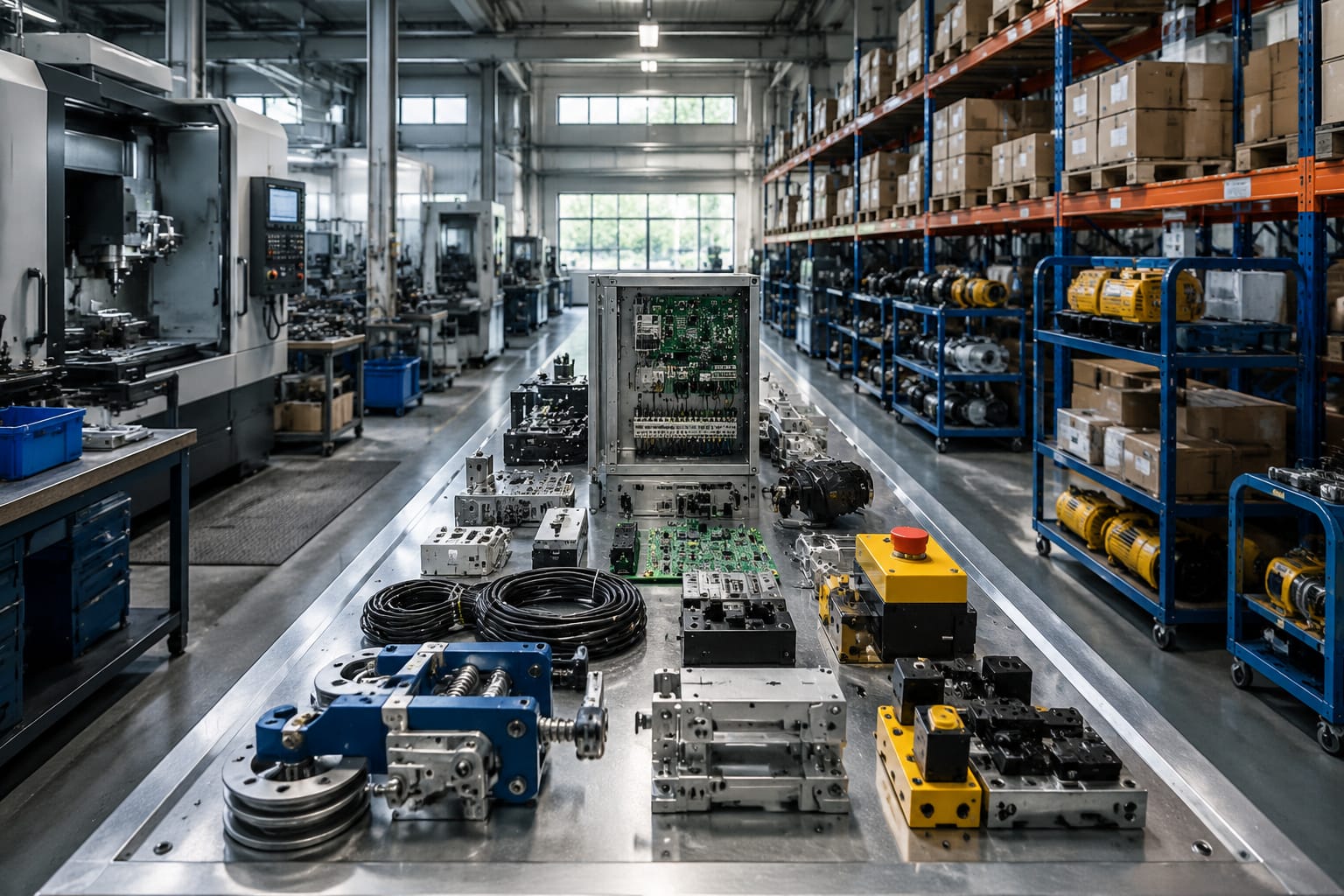
An elevator parts manufacturer makes components, while an elevator parts supplier sources, holds or distributes components made by one or more manufacturers. For South African maintenance and modernisation teams, the right route depends less on the label and more on the part required, compatibility evidence, quantity, delivery requirement and level of technical support needed.
Buy directly from an elevator parts manufacturer when a project needs a designed-to-order item, a consistent production run or engineering input. Use a multi-brand supplier when the priority is finding a compatible replacement across brands, especially for routine repairs, discontinued equipment or mixed portfolios. In many cases, the most practical sourcing strategy uses both.
Manufacturer and supplier roles explained
An elevator parts manufacturer designs, produces and controls the production of particular components or product families. This may include electronics, door-system parts, controllers, safety devices, fixtures, traction components or purpose-made mechanical items. The manufacturer is generally closest to the product design, technical changes and production process.
An elevator parts supplier obtains parts from manufacturers and makes them available to buyers. A supplier may represent one brand, distribute selected product lines or source from a broader network of original, aftermarket and compatible-part producers. Its value is usually in availability, multi-brand access, consolidated ordering and helping buyers identify the correct replacement.
The distinction can become blurred. A manufacturer may sell directly and also appoint distributors. A supplier may commission an item from a factory or offer its own branded range. Rather than assuming the commercial role tells you everything, ask these practical questions:
- Who produced this exact item?
- Is it original equipment, an aftermarket equivalent or a compatible replacement?
- What evidence confirms compatibility with the installed lift?
- Who is responsible for technical queries and returns?
- Is the item made to order, held in stock or sourced after the order is placed?
For a contractor maintaining several makes of lift, a supplier can reduce the number of purchase orders and contacts involved. For an OEM buyer developing a product range or a modernisation company replacing a bespoke control arrangement, direct manufacturer access can be more appropriate.
Product range and multi-brand access
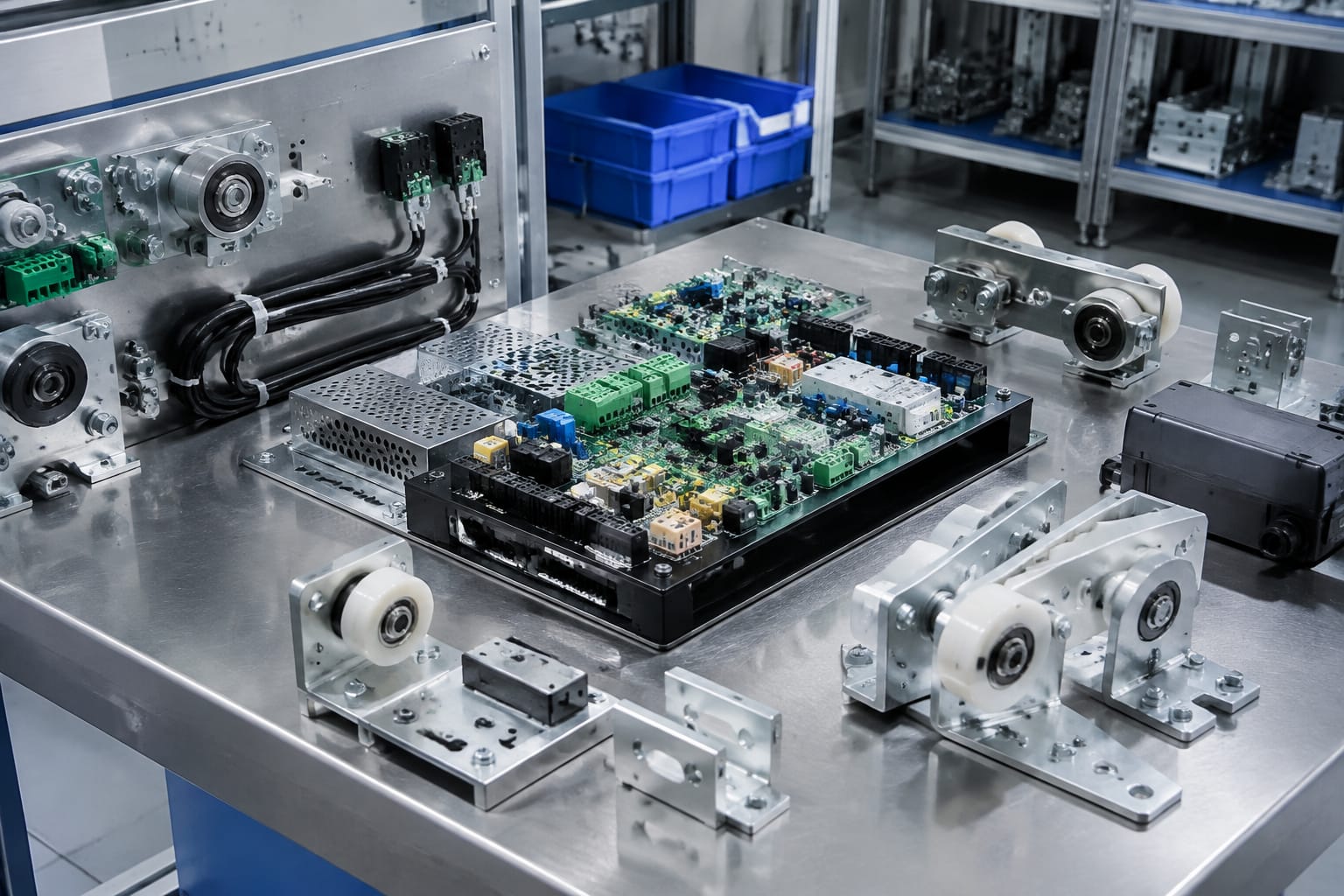
Manufacturers usually offer depth within their own range. They may provide variants, revisions and accessories related to a particular product platform, but they are unlikely to offer a direct alternative for every other brand installed in a building.
Suppliers generally offer breadth. This matters in South Africa, where maintenance portfolios can contain equipment from different installation periods, brands and import channels. A single site may have a newer controller in one lift, an older door operator in another and different safety-chain arrangements across the group.
| Sourcing route | Typical strength | Best suited to | Main limitation |
|---|---|---|---|
| Direct manufacturer | Product-specific knowledge and production control | Custom items, volume requirements, current product ranges | Limited to that manufacturer’s range |
| Single-brand distributor | Clear channel for a defined brand | Planned replacement of known brand-specific parts | Less useful for mixed-brand sites |
| Multi-brand supplier | Broader choice and consolidated sourcing | Service stock, repairs, legacy and mixed portfolios | Compatibility must be checked carefully |
| Specialist remanufacturer or engineering workshop | Repair or reproduction capability | Obsolete or difficult-to-source components | Scope, quality controls and turnaround vary |
A broader catalogue does not remove the need for verification. Two parts may look similar yet use different supply voltages, connector pin-outs, software versions, mounting dimensions or safety functions. A multi-brand supplier should be given sufficient information to identify the correct part, rather than being asked to match an image alone.
For example, a controller-related order may need the controller model, serial number, firmware or board revision, supply details and the existing wiring arrangement. When evaluating a Monarch 3000 integrated machine lift controller, the buyer should still confirm that the selected configuration is suitable for the particular lift system and project requirements.
Customisation and engineering support
Direct manufacturer engagement is usually stronger when a component must be altered, developed or consistently reproduced. This could involve a non-standard mounting plate, an enclosure change, a revised harness, an interface requirement or a batch of components for a repeated modernisation programme.
However, “custom” should be defined precisely. It can mean anything from changing a label or cable length to designing a new electronic assembly. Before requesting a quotation, provide a clear technical brief covering:
- The function of the existing part and why replacement is required.
- Part numbers, drawings, photographs and dimensions.
- Electrical ratings, connection details and interface requirements.
- Required quantity and whether repeat orders are expected.
- Installation environment, including machine-room or shaft conditions where relevant.
- Acceptance criteria, documentation requirements and any required approvals.
A supplier can still be useful for engineered work. It may coordinate with a manufacturer, locate an equivalent product or consolidate associated parts such as connectors, harnesses and accessories. The supplier should be transparent about whether it is providing a standard item, arranging a modification or commissioning a new production item.
Do not treat a custom component as interchangeable with an off-the-shelf replacement. Confirm ownership of drawings where relevant, revision control, samples or first-article approval, minimum order quantities and what happens if the design changes after production begins.
Availability for legacy equipment
Legacy equipment is where the difference between a manufacturer and a supplier is often most important. The original manufacturer may no longer make the item, may have replaced it with a new platform or may only support a limited current range. A supplier with multi-brand access may locate old stock, compatible replacements or an alternative that can be integrated into a modernisation scope.
That does not mean every obsolete part has a safe drop-in replacement. Legacy lifts often contain undocumented modifications made during past repairs. Components may have been superseded several times, and a later revision can require wiring, configuration or mechanical changes.
For legacy sourcing, collect the following before seeking a replacement:
- Record the full part number, revision, serial number and any markings.
- Photograph the item in place, including terminals, plugs, labels and mounting points.
- Note the lift manufacturer, controller type, door operator and year of any known modernisation.
- Capture electrical information: input supply, outputs, fuses, relay contacts and connected devices.
- Identify the failed function and the circumstances of failure.
- Check whether a replacement affects safety circuits, door protection, communication or rescue operation.
Door protection devices illustrate why this detail matters. A light curtain for lift-door protection must be assessed against the existing door arrangement, mounting space, supply and control interface. The length and beam configuration alone are not enough to establish suitability.
For an unavailable board or controller, repair, remanufacture and replacement are separate choices. Repair may preserve the existing system but depends on the condition of the unit and the availability of components. A compatible replacement may restore service more reliably but can require wiring and commissioning work. A full modernisation may be justified where failures are recurrent or the remaining system cannot be supported sensibly.
Quality assurance and documentation
Quality assurance is not simply a question of whether a part arrives undamaged. The buyer needs confidence that the delivered item is the specified item, can be traced to a source and is suitable for its intended function.
Manufacturers can often provide product-specific documentation because they control the design and production. Suppliers may provide manufacturer documentation, their own inspection records or commercial traceability records, depending on the product and supply chain. What is available varies significantly, so request it before placing an order where it is important.
The documentation needed should match the risk of the part. A non-safety cosmetic item does not call for the same evidence as a component connected to door protection, emergency operation or a safety circuit.
Useful items to confirm include:
- Exact part number, version and revision.
- Manufacturer identity and country of origin where procurement policy requires it.
- Product data sheet and installation instructions.
- Electrical ratings and connection diagrams.
- Certificates or declarations that are genuinely applicable to the item.
- Batch, serial or order traceability where required.
- Return, inspection and fault-reporting process.
Avoid asking generally whether a part is “certified”. Ask which standard, certificate or declaration applies, to which product version, and whether it covers the specific use proposed. Documentation can support a procurement decision, but it does not replace correct installation, testing and compliance with the requirements applying to the lift and site.
For critical replacements, inspect the received part before installation. Check the label, revision, connectors, physical condition and supplied documentation against the order. This is far cheaper than discovering a mismatch after a technician has travelled to site.
Minimum orders and lead times
Minimum order quantities and lead times tend to follow the supply model. A manufacturer may require a minimum quantity for a production run, especially for custom parts, older designs or components involving dedicated set-up. The factory lead time may also be only one part of the total timeline: technical approval, production scheduling, testing, packing, freight, customs clearance and local delivery can all affect the result.
A supplier may be able to supply one unit from stock, combine different items in one shipment or offer an available equivalent. On the other hand, a supplier may need to procure the item after receiving the order, meaning the actual availability still depends on the manufacturer or upstream distributor.
Do not interpret “lead time” without defining its starting point and endpoint. Confirm:
- Whether availability means physically in stock or available to order.
- Whether the quoted period starts after payment, technical approval or factory confirmation.
- Whether the period covers dispatch only or delivery to the required location.
- Whether freight, import formalities and local transport are included.
- Whether partial deliveries are possible.
- Whether an alternative item is available if the first option changes.
For planned maintenance, holding a controlled list of high-failure or long-lead components can reduce downtime risk. The stock list should be based on the actual installed base, failure history, criticality and storage life, not simply on low unit price.
Urgent failures need a different process. Send complete identification details immediately, state what is known about the fault and ask for confirmation of the part’s availability and compatibility. Ordering a quickly available but incorrect part can extend the outage.
Technical support after purchase
Technical support is often the deciding factor when a replacement is not a straightforward like-for-like swap. A manufacturer may offer detailed knowledge of its design, configuration tools and product revisions. A supplier may offer practical cross-brand experience, part identification support and help sourcing associated items.
The right question is not “Do you provide support?” but “What support is available for this exact product and at what stage?” Clarify whether support includes:
- Pre-order part identification and compatibility review.
- Data sheets, diagrams and installation instructions.
- Configuration, programming or commissioning guidance.
- Fault investigation after installation.
- Support for a replacement where the original part has been discontinued.
- Returns handling for an incorrectly supplied or potentially faulty item.
Support boundaries matter. A parts supplier may reasonably assist with product information but cannot replace the responsibility of the competent contractor installing, testing and placing the lift back into service. The buyer should ensure that the installation team has the required skills, access to documentation and authority to make changes to the system.
Emergency-power equipment deserves particular care because compatibility can depend on the controller, load arrangement, batteries, charging circuit and rescue sequence. Before choosing an emergency power supply box for Mitsubishi lift parts, verify the exact lift application and the technical requirements of the installed system rather than relying on the brand name alone.
Choosing the right sourcing route
Use the part’s function and procurement risk to select the route. The following framework helps prevent a decision based only on headline price or a familiar supplier relationship.
Choose a manufacturer when
A manufacturer is usually the stronger choice when you need:
- A bespoke part or a controlled design modification.
- A defined production batch for an OEM or repeated modernisation programme.
- Detailed design-level information for a current product.
- Consistent revisions and formal change control.
- Direct discussion of a technically complex integration.
This route may involve longer commercial and technical discussions. It is worthwhile when the cost of ambiguity, redesign or inconsistent supply is high.
Choose a supplier when
A supplier is often the more efficient option when you need:
- A standard replacement for a repair or planned maintenance visit.
- Components across several lift brands in one order.
- Help identifying an older or superseded part.
- Lower-quantity purchasing than a manufacturer will accept.
- A practical choice between original and compatible alternatives.
Kelevator supplies multi-brand elevator spare parts to B2B importers, distributors, maintenance contractors and OEM buyers. For buyers sourcing across a varied installed base, that model can be useful where multi-brand access and part identification are more important than direct factory engagement for one product line.
Use a combined route when
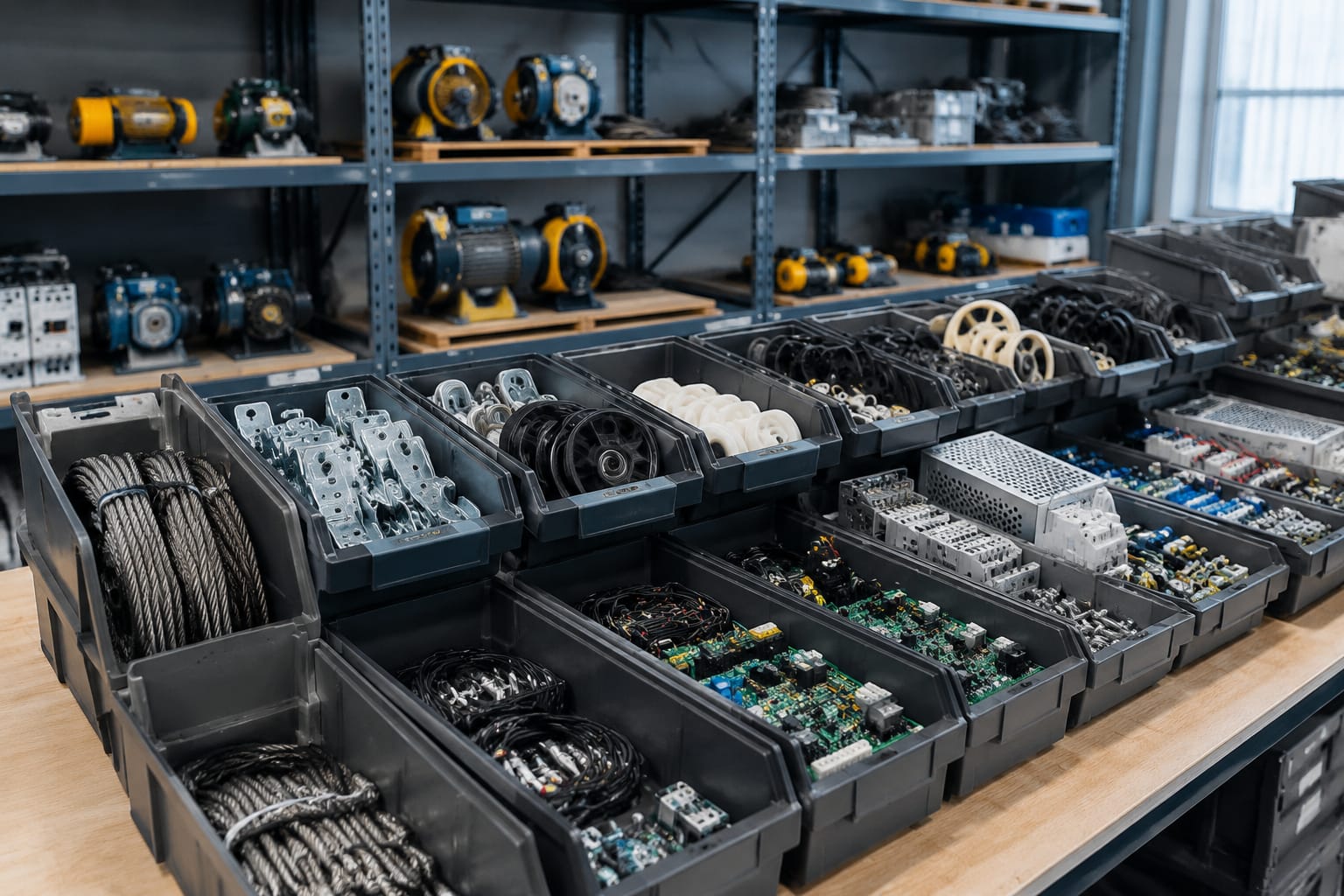
Many projects need both. A contractor may purchase standard components from a supplier while working directly with a manufacturer on a custom controller interface or a high-volume item. A distributor may use a manufacturer for a core range and a multi-brand supplier to fill gaps in legacy demand.
Before issuing a purchase order, use this final checklist:
- Confirm the exact part number, revision and intended function.
- Establish whether the item is original, aftermarket or a compatible replacement.
- Check mechanical, electrical, software and interface compatibility.
- Identify whether safety-related functions are affected.
- Confirm what documentation will be supplied.
- Confirm quantity, stock status, lead-time definition and delivery terms.
- Establish the return process before the item is installed.
- Ensure a competent team can install, configure and test the replacement.
The lowest unit price is rarely the lowest overall cost where a mismatch causes repeat site visits, lift downtime or an incomplete modernisation. A well-supported compatible option may be the right purchase; equally, a direct manufacturer order may be essential where design control cannot be compromised.
Frequently asked questions
Is a supplier always more expensive than buying from a manufacturer?
Not necessarily. Direct purchasing can reduce a distribution layer, but it may involve minimum orders, international logistics, customs administration or longer lead times. A supplier may offer lower total procurement effort for small orders, mixed-brand requirements or stock-held items. Compare the delivered, usable cost rather than the unit price alone.
Can an aftermarket elevator part replace an original part?
Sometimes, but only after compatibility has been confirmed. The replacement must match the required electrical, mechanical, functional and safety characteristics for the installed system. A visual match or a similar product description is not sufficient evidence.
What should be included in an elevator spare-parts enquiry?
Include the lift and component make, exact part number, revision, photographs, quantity, fault description, required delivery date and relevant electrical or mechanical details. For a controller, board or safety-related item, include connection information and the installed system configuration where possible.
Should a contractor buy parts before diagnosing the fault?
Generally, no. A suspected failed component should be diagnosed as far as practical before ordering. Intermittent faults, damaged wiring, incorrect settings or peripheral devices can produce symptoms that resemble a failed board, sensor or power supply.
For each order, begin with the installed part’s full identification and the function it performs. Then select a manufacturer route for controlled engineering requirements, or a supplier route for practical multi-brand and replacement sourcing. This approach gives procurement teams a clearer basis for comparing options and helps maintenance contractors avoid costly compatibility errors.
Related product references
For practical catalog examples related to this topic, review [Monarch Elevator frequency converter 3000+ integrated machine Lift Controller](/products/monarch-elevator-frequency-converter-3000-integrated-machine-lift-controller/), [light curtain lift accessories elevator spare parts](/products/light-curtain-lift-accessories-elevator-spare-parts-6/), and [Elevator emergency power supply box Mitsubishi lift parts](/products/elevator-emergency-power-supply-box-mitsubishi-lift-parts/). Confirm the exact model, dimensions, ratings, and connectors before ordering.