
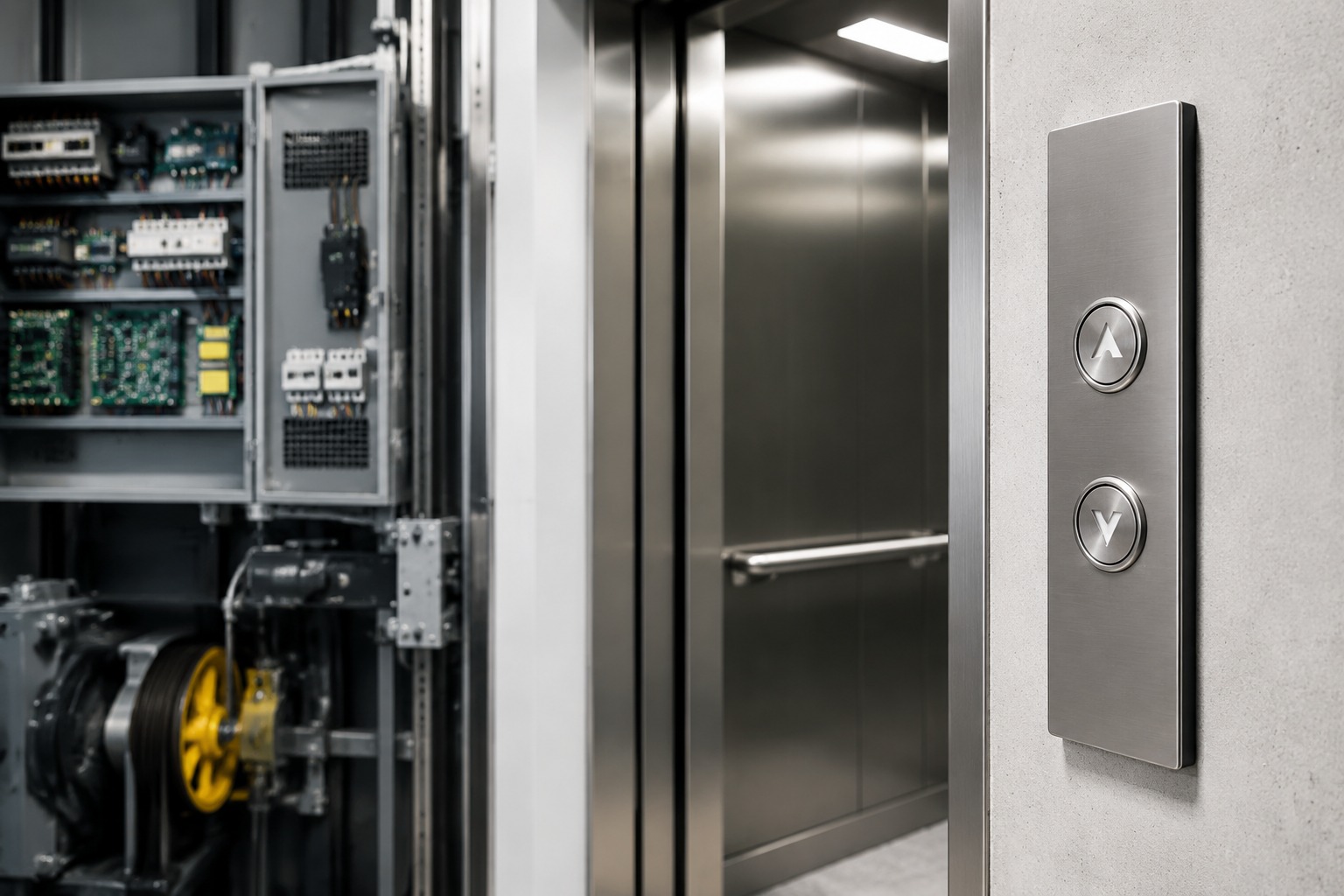
Elevator button panels are small components with a large impact. In daily operation, they influence how quickly passengers place a call, how confidently technicians diagnose faults, and how well a building presents itself to tenants, visitors, and regulators. In South Africa, where elevators operate in office towers in Sandton, hospitals in Pretoria, hotels in Cape Town, logistics sites near Durban, and residential buildings in Johannesburg, choosing the right push button and outbound call panel matters for uptime, safety, and maintenance cost.
The direct answer is simple: the best elevator button panel is the one that matches the controller logic, mounting dimensions, electrical ratings, and traffic demands of the building while also meeting accessibility expectations and long-term durability needs. A panel that looks similar but does not match the bottom box, faceplate, lamp voltage, terminal layout, or hall call communication method can create repeat faults, nuisance callbacks, and unnecessary downtime.
For maintenance companies, distributors, building owners, and modernization contractors, a reliable replacement process starts with accurate model matching. That includes checking button diameter, panel material, legend style, illumination color, switch travel, mounting depth, connector type, and brand-specific details. In practice, many service teams only discover hidden differences after opening the hall station or COP panel. That is why careful identification before ordering is more efficient than trial-and-error replacement.
Across the South African market, demand for replacement elevator parts is shaped by mixed building ages, imported equipment from multiple global brands, and a strong need to reduce service interruptions. Busy commercial districts such as Rosebank, Umhlanga, Century City, and the Cape Town CBD often need fast replacement of worn call stations and damaged buttons because passenger expectations are high and downtime affects tenant satisfaction. At the same time, public buildings, healthcare sites, and campuses require robust, easy-to-read interfaces that perform well over years of heavy use.
This guide explains common elevator button panel types, practical notes for replacing round push buttons, how to choose outbound call panels, compatibility checks for bottom boxes and faceplates, wiring and indicator verification, accessibility and durability factors, post-installation testing, and answers to frequent questions. It also reflects the realities of sourcing parts for South Africa, including logistics through Durban and Cape Town ports, modernization work in aging buildings, and the importance of responsive technical support.
Common elevator button panel types
Elevator button panels can be grouped by location, function, mounting style, and signaling method. The most familiar categories are car operating panels, hall call panels, destination input interfaces, and service or special-function panels. Each category may use round push buttons, square buttons, capacitive touch interfaces, or integrated displays, but in many installations conventional mechanical buttons remain the preferred choice because they are easy to diagnose and replace.
In South Africa, the most common field replacement requests involve hall call stations and car buttons. Hall stations are exposed to weather shifts, vandalism, cleaning chemicals, and frequent use. Car buttons are used continuously in offices, residential towers, hospitals, and hotels, so legends can fade, lenses crack, lamps fail, or the switch mechanism can lose responsiveness. A technician may only need a single button, but if the faceplate is dented or the panel opening is enlarged, a full panel assembly may be the better solution.
Another important distinction is between simple dry-contact call stations and communication-based panels linked to a controller or serial board. A panel that seems mechanically compatible may still fail electrically if the signaling protocol is different. This is especially relevant in modernized buildings where some subsystems are newer than others. Before replacement, technicians should determine whether the panel uses independent call contacts, matrix wiring, PCB-based communication, or integrated indicator logic.
| Panel type | Main location | Primary function | Common material | Typical failure points | Replacement priority |
|---|---|---|---|---|---|
| Car operating panel button module | Inside the elevator car | Floor selection and auxiliary commands | Stainless steel with plastic lens | Worn switch, failed lamp, damaged legend | High |
| Hall up/down call panel | Landing entrance | Passenger call registration | Brushed stainless steel | Sticky button, cracked lens, vandal damage | High |
| Destination entry panel | Main lobby or sky lobby | Assigns cars by destination control | Metal faceplate with electronics | Display faults, PCB issues, key failure | Medium to high |
| Fire service and priority panel | Car or control area | Emergency and special operations | Metal enclosure | Switch wear, label damage, key switch faults | Critical |
| Access control panel | Lobby or inside car | Card or permission-based floor access | Metal and electronic module | Reader failure, communication mismatch | Medium |
| Outdoor or semi-exposed call station | Parking structures and service areas | Weather-resistant hall calls | Sealed stainless housing | Moisture ingress, corrosion, UV ageing | High |
The table above shows why the term “elevator button panel” covers several very different products. In procurement, this means a photo alone is rarely enough. Good replacement decisions require dimensions, wiring details, and the operating context. For example, a parking garage in Durban may need higher corrosion resistance than an interior office landing in Bloemfontein. A hospital lift in Pretoria may prioritize visibility and tactile clarity, while a premium hotel in Cape Town may prioritize finish consistency and illumination aesthetics.
The line chart reflects a realistic pattern seen in many maintenance markets: replacement demand for button panels tends to rise steadily as buildings age, modernization projects increase, and owners focus more on tenant experience. For South Africa, this is supported by ongoing service needs in mixed-use developments, hospitals, transport hubs, and commercial towers where quick replacement of user-facing components is often more economical than repeated repairs.
Round push button replacement notes
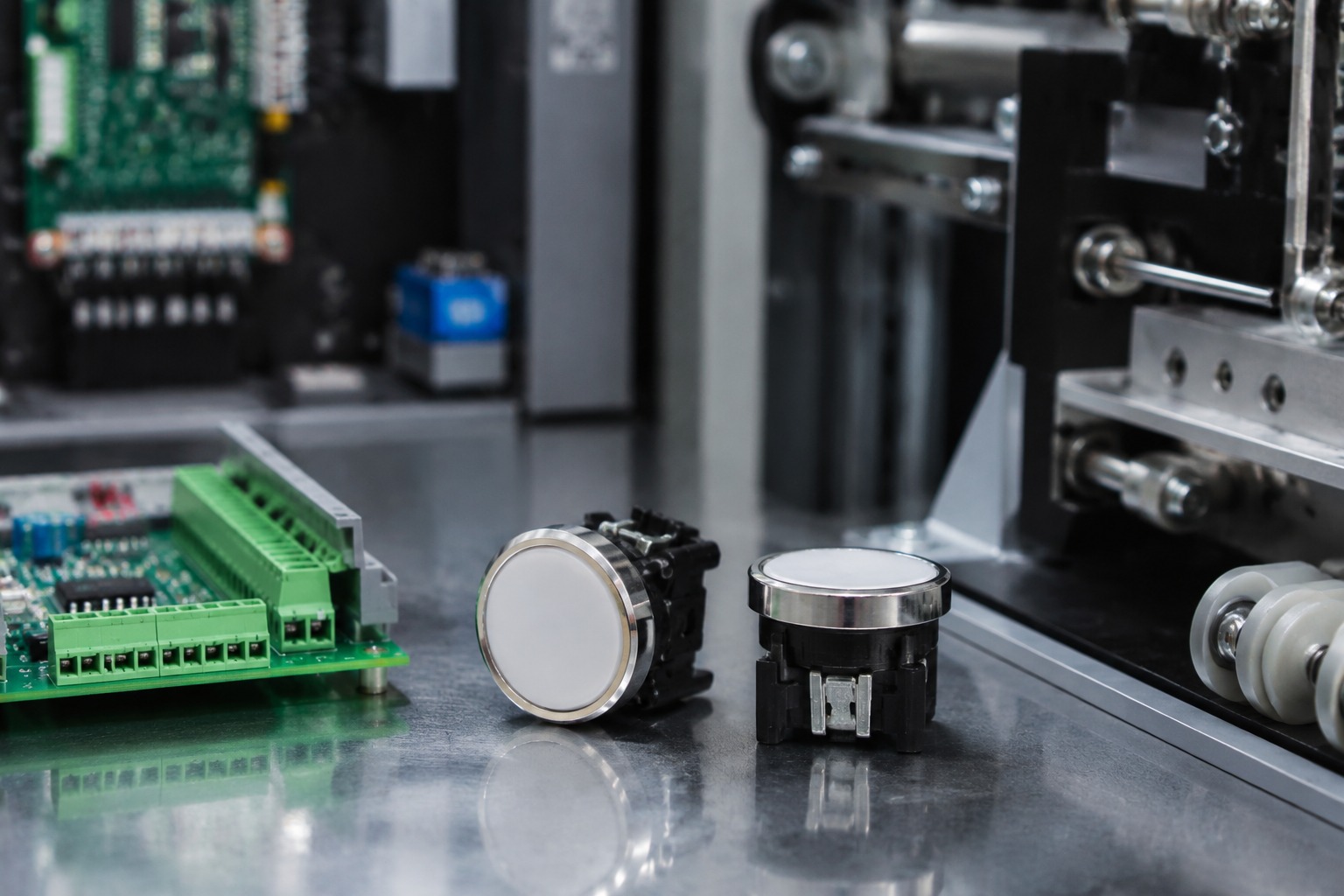
Round push buttons remain one of the most commonly replaced elevator parts because they are compact, visible, and subject to high usage. However, replacing a round button is not just about matching the diameter. The technician should verify the bezel size, panel cut-out, total mounting depth, terminal arrangement, contact type, LED or lamp voltage, legend insert style, and whether the assembly includes the microswitch, lens, holder, and retaining hardware.
Many field issues come from partial compatibility. A new round button may fit the faceplate opening but interfere with the rear bracket, or it may illuminate at the wrong brightness because the voltage rating differs. In some older lifts, one button may have been changed years earlier using a non-original substitute, which can mislead future maintenance work. Comparing the failed part against the actual circuit and panel mounting is therefore essential.
When a building uses a known model, a direct replacement can save labor time. For example, if you need a compatible round button for a Hitachi application, it is practical to review a matching product such as this round elevator push button solution and compare the dimensions, lamp style, and mounting details with the removed part. This approach reduces the risk of ordering by appearance only.
| Checkpoint | Why it matters | Common mistake | Field impact | How to verify | Best practice |
|---|---|---|---|---|---|
| Front diameter | Must match visible opening and appearance | Only measuring the lens | Poor fit or loose mounting | Use calipers on bezel and cut-out | Record both front and cut-out sizes |
| Mounting depth | Rear clearance is often limited | Ignoring bracket or PCB space | Panel cannot close | Measure depth behind faceplate | Check side profile before ordering |
| Contact arrangement | Affects signal function | Mixing NO and NC contact types | Call does not register correctly | Review wiring diagram | Photograph terminals before removal |
| Indicator voltage | Ensures correct lighting | Using wrong lamp or LED rating | No illumination or premature failure | Check controller output and old lamp | Confirm exact voltage range |
| Legend and symbol style | Maintains usability and consistency | Mismatched arrows or floor marks | User confusion and poor aesthetics | Compare neighboring buttons | Match font, symbol, and color |
| Environmental resistance | Important in exposed or damp areas | Using indoor parts in harsh zones | Corrosion and early wear | Assess site conditions | Select material based on location |
The replacement process is often straightforward when technicians gather the right information from the start: clear front and rear photos, measurements, wiring labels, part markings, and the elevator brand and controller context. This is especially useful in South Africa where buildings may use equipment from Hitachi, Toshiba, KONE, Mitsubishi, and other brands, and where previous maintenance history may involve substituted parts from different sources.
In high-traffic sites, it is also worth considering whether replacing one failed button is enough. If several neighboring buttons have faded legends, weak indicator lamps, or inconsistent tactile feedback, a larger refresh may be more cost-effective. That can improve passenger confidence and reduce repeat visits, particularly in office blocks and residential towers where complaints often arise from visible wear rather than a complete operational failure.
Outbound call panel selection
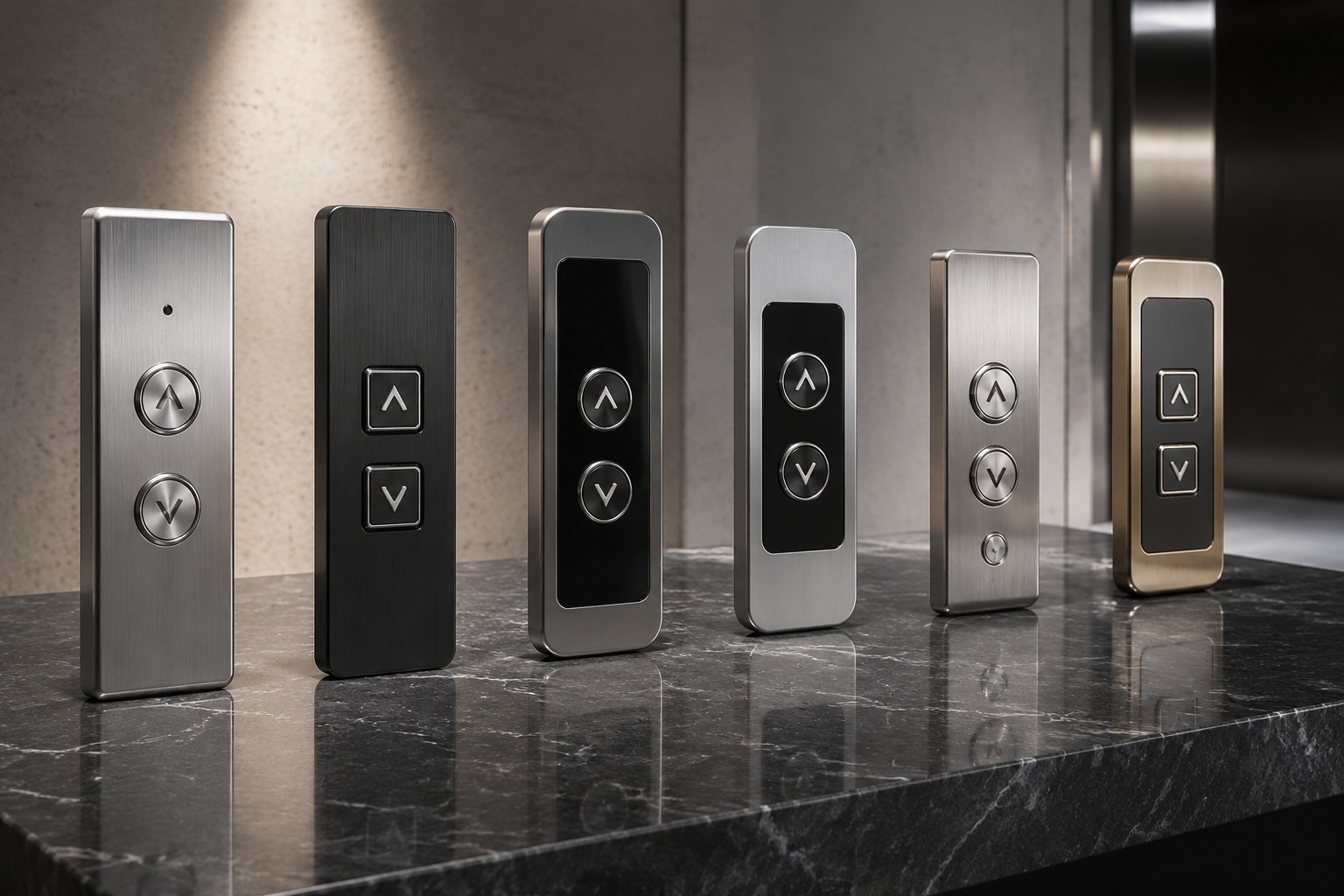
Outbound call panels, often called hall call panels or landing call stations, should be selected by more than finish and shape. They must match the elevator system’s communication method, floor configuration, button arrangement, indicator requirements, and mounting format. In older buildings, the hall panel may be a simple up/down button assembly. In newer or more complex systems, it may include direction arrows, arrival gongs, key switches, braille, floor indicators, or integrated communication boards.
When selecting a replacement, technicians should identify whether the panel is a complete assembly or whether only the button module, PCB, or faceplate needs to be changed. If the original bottom box is in good condition and dimensions are standard, replacing the faceplate and internals may reduce cost. If the box is corroded, warped, or incompatible with the new panel layout, a complete assembly is safer.
For projects requiring a known hall station format, options such as an MCA outbound call panel for elevator applications or a broader outbound call panel replacement option can be useful references during comparison. The important point is not just the visible style, but the electrical and structural match to the existing installation.
In South African commercial and residential projects, owners often ask for a panel that balances quick installation with a clean appearance. Stainless steel faceplates are popular because they suit both premium and practical environments, and they tolerate frequent cleaning. However, heavy-duty use in schools, public facilities, and transport-adjacent buildings may justify thicker plate material and reinforced button mounting.
| Selection factor | Question to ask | Preferred data source | Risk if ignored | Suitable for modernization? | Comment |
|---|---|---|---|---|---|
| Controller compatibility | Does it use direct wiring or serial communication? | Controller schematic and old PCB | Panel will not register calls | Yes | Most critical technical check |
| Button layout | Single button or up/down pair? | Site photo and traffic pattern | Incorrect passenger operation | Yes | Depends on floor position |
| Faceplate dimensions | Will it cover existing wall marks? | Measured opening and old plate | Visible gaps or rework | Yes | Important in refurbishments |
| Indicator features | Need arrows, floor display, or sound? | Building specification | Reduced user clarity | Yes | Often required in premium buildings |
| Material and finish | How demanding is the environment? | Site inspection | Fast wear or corrosion | Yes | Coastal areas may need more protection |
| Accessibility details | Are braille and tactile features required? | Local compliance review | Usability and compliance gaps | Yes | Essential for public-facing properties |
The explanation behind this table is straightforward: outbound call panel selection is both an electrical and architectural decision. In a new office retrofit in Sandton, appearance and system matching may be equally important. In a service lift area near a warehouse in Durban, robustness may take priority. In a hospital in Gqeberha or a public building in Pretoria, readability and reliable feedback are just as important as style.
The bar chart highlights why panel selection varies by sector. Office towers and hospitals often show the highest demand because usage intensity is high and visual consistency matters. Residential buildings follow closely, especially in dense urban areas where multiple cars operate daily. Hotels and retail centres also need attractive, reliable interfaces, while industrial sites often prioritize function and toughness over premium finish.
Bottom box and faceplate compatibility
One of the most overlooked issues in elevator panel replacement is compatibility between the bottom box, wall opening, fixing points, and faceplate. A faceplate may visually match the old panel but still fail at installation because screw spacing differs, the rear box is too shallow, or the wall cut-out is irregular from past repairs. This is common in older buildings where several generations of maintenance work have altered the original mounting arrangement.
The bottom box matters because it governs alignment, cable entry, moisture exposure, and serviceability. If the box is rusted, loose in the wall, or dimensionally inconsistent, simply fitting a new faceplate can create vibration, uneven mounting, or cable strain. In coastal environments such as Cape Town and Durban, corrosion can be more severe, especially in semi-exposed entrances and parking levels.
Faceplate compatibility also affects appearance. A replacement should cover previous fixing marks, maintain a neat perimeter around the wall opening, and align with neighboring fixtures. In premium buildings, misalignment is immediately visible. In practical terms, this means procurement should include front dimensions, fixing hole centres, box depth, cable entry location, and thickness of the plate material.
| Item to inspect | What to measure | Typical issue found on site | Possible result | Repair or replace? | Recommendation |
|---|---|---|---|---|---|
| Wall opening size | Height, width, and depth | Opening enlarged by past work | New plate does not cover edges | Depends | Use a larger custom faceplate if needed |
| Fixing hole centres | Distance between screws | New plate holes do not line up | Cannot mount securely | Usually replace or re-drill | Confirm from drawing or old plate |
| Bottom box depth | Internal rear clearance | Modern PCB or button too deep | Pressure on wiring or components | Often replace | Check side profile carefully |
| Cable entry position | Top, bottom, or rear feed | Harness bends sharply | Premature wire damage | Depends | Match cable routing to old setup |
| Corrosion level | Condition of box and screws | Rust in coastal or damp locations | Weak mounting and poor grounding | Replace | Use corrosion-resistant hardware |
| Plate thickness and rigidity | Material gauge | Thin plate flexes during use | Poor feel and reduced durability | Replace | Select suitable thickness for traffic level |
The practical lesson is that a panel is a system, not just a visible button. Good compatibility reduces installation time and protects reliability after commissioning. For building owners in South Africa, this also limits the need for repeated wall repairs, paint corrections, and follow-up visits, which can become more expensive than the panel itself.
Indicator lighting and wiring checks
Indicator lighting and wiring checks should always be completed before and after replacement. Many apparent button failures are actually caused by loose terminals, damaged harnesses, incorrect lamp voltage, oxidized contacts, or controller output problems. If a new button is installed without diagnosing the underlying electrical issue, the same fault may return quickly.
Lighting checks begin with identifying the indicator type. Some buttons use replaceable lamps, others use built-in LEDs, and some integrate the illumination into a PCB assembly. The technician should confirm supply voltage, polarity where relevant, flashing or steady-state behavior, and whether the controller drives the lamp directly or through an interface board. A mismatch can cause dim lighting, no lighting, or overstress of the component.
Wiring checks should include insulation condition, terminal tightness, color coding, continuity, and evidence of heat damage. This is especially important in older installations, buildings with repeated moisture exposure, or sites that have undergone multiple repairs. In high-use buildings in Johannesburg, Pretoria, and Cape Town, frequent door traffic and vibration can gradually affect terminations and harness positioning.
| Symptom | Likely cause | Quick check | Technical check | Typical solution | Urgency |
|---|---|---|---|---|---|
| Button press works but no light | Failed lamp or LED circuit | Compare with adjacent panel | Measure output voltage | Replace indicator or button assembly | Medium |
| Light stays on permanently | Stuck contact or controller output issue | Inspect switch return | Trace signal on wiring diagram | Replace switch or repair output circuit | High |
| Button feels normal but call not registered | Open circuit or wrong contact type | Check terminal seating | Continuity test across contacts | Rewire or fit correct button type | High |
| Dim or flickering light | Voltage mismatch or loose connection | Inspect lamp holder | Measure voltage under load | Tighten wiring or replace with correct rating | Medium |
| Intermittent response | Contaminated switch or harness strain | Press repeatedly during test | Harness movement test | Replace switch and secure harness | High |
| No power at panel | Broken feed, fuse, or board fault | Check neighboring devices | Trace source from controller side | Repair feed or board issue | Critical |
This table is useful because it separates visible symptoms from actual causes. In service work, replacing a button is easy; diagnosing why the indicator failed is where experience matters. A disciplined check avoids unnecessary part changes and helps maintenance teams reduce callbacks.
The area chart shows a clear industry trend: LED-based indicators continue to replace older lamp-based designs. For South Africa, this trend supports lower maintenance frequency, better energy efficiency, and more consistent visibility. By 2026, many modernization projects are expected to favour LED button assemblies, especially in buildings seeking lower service costs and improved sustainability performance.
Accessibility and durability factors
Accessibility and durability should be considered together because a button panel that is hard to use is not truly durable in real service. Easy-to-read legends, tactile feedback, braille, suitable illumination, and clear contrast help all users, not only those with specific accessibility needs. In hospitals, retirement residences, public buildings, and busy residential complexes, these details directly affect passenger confidence and efficient use of the lift system.
Durability depends on material quality, switch life, lens strength, sealing, resistance to cleaning agents, and mounting stability. Stainless steel remains a strong choice for many South African applications because it resists wear and supports a professional appearance. For coastal cities and semi-exposed installations, corrosion resistance is especially important. In high-use buildings, the switch mechanism should also be rated for repeated actuation without loss of tactile response.
Accessibility should also influence panel height, spacing, and feedback. Buttons that are too close together or poorly illuminated can slow passenger flow and increase accidental presses. In buildings where many users are carrying bags, pushing hospital trolleys, or moving between meetings, responsive buttons with clear confirmation lighting reduce hesitation and confusion.
Looking ahead to 2026, three trends are shaping elevator panel choices in South Africa. First, modernization projects are increasingly choosing energy-efficient indicators and longer-life components. Second, policy and building-specification expectations are becoming more focused on inclusive access and clear user interfaces. Third, sustainability goals are encouraging replacement parts that reduce waste through better durability, careful packaging, and lower repeat-failure rates. These trends are especially relevant in large property portfolios where lifecycle cost matters more than the cheapest initial purchase.
Testing after installation
Testing after installation should never be limited to a simple button press. A proper check confirms mechanical fit, electrical function, indicator behavior, controller response, and cosmetic finish. If the panel is a hall station, testing should include call registration from the landing, lamp response, cancellation after car arrival, and operation in both directions where applicable. If the replacement was made on a car panel, technicians should verify floor selection, door open or close functions where fitted, alarm or intercom-related controls if affected, and overall panel stability.
For buildings under regular service contracts, documenting the result is good practice. Photos of the installed panel, test records, and any noted differences from the previous setup help future maintenance teams. In South Africa, where site access can be limited by building schedules, security procedures, and tenant activity, good documentation reduces repeat visits and speeds up later diagnostics.
| Test step | What to confirm | Method | Pass criteria | Common issue found | Action if failed |
|---|---|---|---|---|---|
| Mechanical fit check | Panel sits flat and secure | Visual and hand pressure test | No movement or flexing | Incorrect screw spacing | Adjust mounting or replace plate |
| Button travel check | Smooth tactile response | Operate each button several times | Consistent feel and return | Binding in faceplate | Realign or replace module |
| Indicator function check | Light activates correctly | Press and observe operation | Correct brightness and timing | Wrong voltage or polarity | Verify wiring and component rating |
| Signal registration check | Controller receives input | Monitor lift response | Call is accepted every time | Wrong contact wiring | Trace and correct terminals |
| Finish and alignment check | Neat appearance and clean edges | Visual inspection at standing height | No gaps, scratches, or tilt | Plate too small for wall opening | Fit suitable faceplate |
| Documentation check | Record part and test results | Service report and photos | Data stored for future reference | Incomplete maintenance history | Update asset records |
The value of this testing sequence is that it covers both the visible result and the underlying function. A panel that looks perfect but is wired incorrectly is still a failed installation. Conversely, a technically working panel that is loose, poorly aligned, or inconsistent with neighboring fixtures can still generate complaints in a commercial building.
South Africa market, industries, and application examples
The South African elevator parts market includes routine maintenance, urgent breakdown support, modernization work, and planned aesthetic upgrades. Demand is concentrated in metropolitan areas such as Johannesburg, Pretoria, Cape Town, Durban, and Gqeberha, but replacement needs also come from regional commercial centres, hospitals, municipal properties, mines, logistics facilities, universities, and hospitality sites.
In office buildings, the main concerns are appearance consistency, reliable hall calls, and quick return to service. In hospitals, usability and feedback are critical because staff often operate lifts under pressure. In residential towers, owners want durable parts that reduce tenant complaints. Hotels care about finish quality and quiet, smooth operation. Industrial and logistics applications may focus on rugged components that can tolerate dust, vibration, and intensive use.
A practical example is a mixed-use building in Sandton where hall call plates had become scratched and some buttons no longer illuminated consistently. Rather than changing isolated lamps one by one, the maintenance team replaced selected panels with compatible assemblies matched to the existing controller logic and wall openings. The result was fewer callbacks and a cleaner lobby appearance. Another example is a coastal residential property near Durban where corrosion around the mounting box required a full panel-and-box refresh instead of a simple button replacement.
Local sourcing speed matters, but technical matching matters more. A nearby supplier may still provide the wrong part if only a front photo is used. For this reason, many professional buyers prefer suppliers that support careful identification, provide stable quality inspection, and package parts properly for domestic distribution or import-based supply chains moving through major ports.
This comparison chart reflects how elevator buyers often evaluate suppliers in practice. Fast shipping is important, but accurate model matching usually ranks higher because the wrong panel wastes more time than a short delivery delay. Quality inspection and packaging also matter because fragile button assemblies can be damaged in transit if they are not protected properly.
Our company approach for South Africa
For customers in South Africa, our role is to help reduce downtime by supporting correct replacement part selection across a wide range of elevator brands and applications. We work with maintenance companies, distributors, building owners, and modernization contractors that need dependable sourcing for buttons, COP panels, hall stations, control-related parts, door components, sensors, encoders, power supplies, and other lift accessories.
Technological capabilities: we focus on careful model matching using part markings, dimensions, photos, wiring references, and application context. This is especially valuable when equipment has undergone earlier repairs or modernization. By reviewing the functional details of buttons, indicators, PCBs, and related assemblies, we help customers avoid common compatibility problems between similar-looking parts.
Manufacturing capabilities: we emphasize stable quality inspection, consistent component sourcing, and protective packaging suited to sensitive elevator parts. For button panels and hall stations, that means attention to finish quality, structural fit, wiring integrity, and transport protection. This approach supports customers who need reliable replacement parts for demanding environments and professional installation outcomes.
Service capabilities: we aim to respond quickly, support practical part identification, and help customers choose compatible replacements that minimize repeat failures. For buyers serving Johannesburg, Cape Town, Durban, Pretoria, and other South African markets, responsive service can make a major difference when downtime affects tenants, patients, guests, or logistics operations.
FAQ about elevator buttons
1. How do I know whether I need only a button or a complete panel?
If the switch alone has failed and the faceplate, wiring, and mounting are still in good condition, a button-only replacement may be enough. If the plate is damaged, the box is corroded, or the electronics are integrated, a complete panel is usually safer.
2. Can I replace a round button with a similar-looking alternative?
Only after checking cut-out size, depth, contact arrangement, indicator voltage, and legend style. Similar appearance does not guarantee electrical or mechanical compatibility.
3. Why does a new button sometimes fail to light even when the call works?
The common causes are incorrect LED or lamp voltage, reversed polarity on certain designs, a controller output issue, or a loose terminal. The switch contact and the indicator circuit may be separate.
4. Are stainless steel faceplates always the best choice?
They are a strong all-round option for many South African buildings because they are durable and look professional. However, the exact grade, thickness, and mounting quality matter, especially in coastal environments.
5. What information should I send when requesting a quotation?
Provide front and rear photos, dimensions, elevator brand, site location, quantity, any visible part numbers, voltage details if known, and whether you need only the button, faceplate, PCB, or full assembly.
6. Do hall call panels differ between top, middle, and bottom floors?
Yes. Terminal floor landings may use only one direction button, while intermediate floors usually use both up and down buttons. The indicator arrangement may also differ.
7. Is it worth upgrading older lamp-based buttons to LED versions?
In many cases yes, especially during modernization or repeated repair cycles. LED indicators usually offer better lifespan, lower maintenance, and more consistent brightness, provided the system compatibility is confirmed.
8. What should be tested after installation?
Check mechanical fit, tactile response, illumination, signal registration, panel alignment, and documentation. On hall stations, also verify proper cancellation after car arrival.
9. How do accessibility needs influence button selection?
Good accessibility means clear legends, tactile markings, suitable contrast, reliable illumination, and practical spacing. These factors improve usability for everyone and are particularly important in public buildings and healthcare facilities.
10. What will matter most in 2026?
The main trends are better energy efficiency, more inclusive interface design, stronger sustainability expectations, and greater preference for durable, correctly matched replacement parts that reduce long-term service interventions.
In summary, elevator button panels affect far more than appearance. They shape user confidence, maintenance efficiency, and system reliability. For South Africa, the smartest buying approach is to combine accurate technical matching with attention to environment, accessibility, durability, and post-installation testing. Whether the job involves a simple round push button, a hall call station, or a full panel assembly, the right replacement supports safer operation, lower downtime, and a better experience for every passenger.