
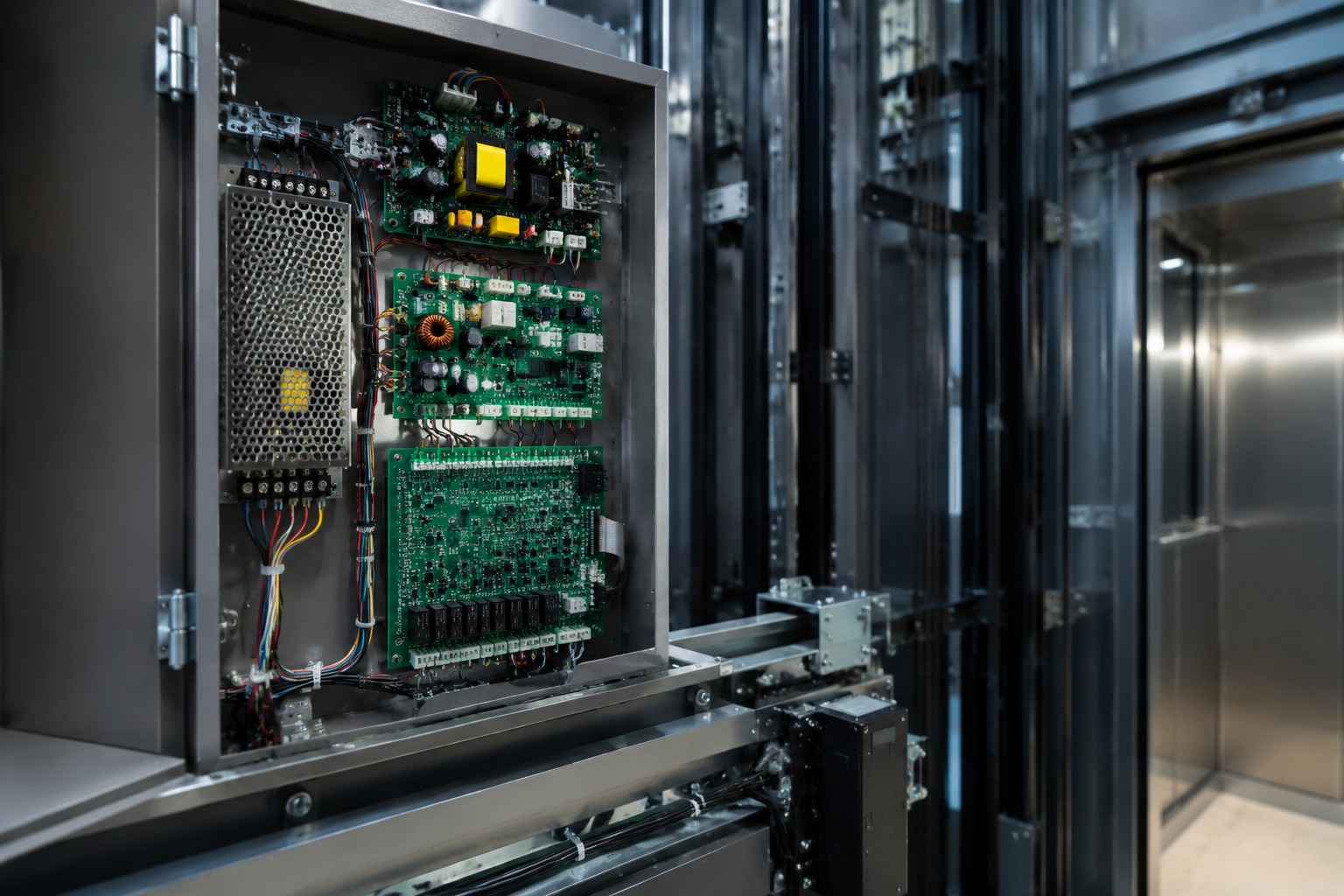
Switching power supply boards are essential in elevator systems because they convert incoming power into stable DC outputs for control circuits, communication modules, door systems, sensors, and safety-related electronics. In South Africa, where lift equipment operates across busy commercial towers in Johannesburg, residential estates in Pretoria, hotels in Cape Town, hospitals in Durban, and logistics facilities near Gqeberha and Port Elizabeth trade routes, stable low-voltage power is critical for reducing nuisance faults and avoiding downtime. A well-matched switching power board helps protect elevator controllers from voltage instability, improves signal reliability, and supports consistent operation under changing building loads.
For maintenance companies, distributors, building owners, and modernization contractors, the practical concern is not only finding a replacement board, but finding the correct model, confirming output voltage, checking connector layout, verifying load capacity, and receiving the part in protective packaging that can handle long-distance transport through South African freight channels. When a board is incorrectly matched, the result may be intermittent faults, relay chatter, door system errors, controller resets, or complete lift shutdown. When it is correctly matched, the replacement can restore stable electronics quickly and shorten service visits.
This guide explains where switching power boards are used, how AVR HGE MCA compatibility should be checked, what output and load tests matter most, what failure symptoms technicians should watch for, how boards should be packed for shipping, and how service teams in South Africa can plan stock more efficiently. If you are sourcing a replacement, it is often useful to compare options such as the AVR HGE MCA switching power supply board, a general elevator switching power supply board, or the AVR power board 24V/51V version depending on the lift model and required output specification.
Where switching power boards are used
In elevator systems, switching power boards are installed wherever stable converted power is needed for low-voltage electronics. Their use goes well beyond a simple “power on” function. These boards support the control environment that allows the elevator to start, stop, communicate, open doors, read landing calls, and respond to safety inputs. In traction and machine-room-less lifts, they may feed controller logic, interface boards, communication circuits, leveling sensors, display modules, and door operator electronics. In hydraulic lifts, they may also stabilize power to control cabinets and auxiliary modules.
South African buildings present a wide variety of operating conditions. Office towers in Sandton may require frequent cycles throughout the day. Residential buildings in Cape Town may see peak morning and evening usage. Hospitals in Durban require dependable lift service for beds, staff, and emergency movement. Warehousing and industrial sites near Ekurhuleni or the port logistics chain may expose equipment to dust, vibration, and varying utility quality. In all these applications, switching boards help maintain clean output voltage despite changes in input conditions and fluctuating loads.
Typical locations of use include the main elevator control cabinet, car top inspection circuits, machine room interface assemblies, rescue power communication modules, and door operator control sections. In some brand-specific systems, the switching board works closely with dedicated AVR circuits to regulate output to multiple downstream boards. This makes the correct model number and connector mapping especially important.
| Elevator Subsystem | Role of Switching Power Board | Typical Output Need | Risk if Unstable | Common Site Type in South Africa | Service Priority |
|---|---|---|---|---|---|
| Main control cabinet | Feeds logic and interface circuits | 24V DC | Controller reset or trip | Commercial offices | Very high |
| Door operator module | Supports control and sensing circuits | 24V DC | Door fault or reopening issue | Residential towers | High |
| Display and COP electronics | Supplies indicators and communication | 12V/24V DC | Blank displays or erratic calls | Hotels and malls | Medium |
| Safety interface board | Stabilizes relay and monitoring signals | 24V DC | Nuisance safety lockouts | Hospitals | Very high |
| Encoder or sensor support circuits | Provides clean low-voltage input | 5V/12V/24V DC | Positioning errors | High-rise buildings | High |
| Communication and intercom units | Powers communication functions | 12V/24V DC | Loss of emergency communication | Public buildings | High |
The table above shows why the same category of power board can have different service impact depending on where it is installed. A controller supply issue can stop the lift entirely, while a display supply issue may not stop operation immediately but still affects user experience and service quality.
The line chart reflects a realistic growth pattern driven by modernization work, increased focus on uptime, and the replacement of aging boards in existing building stock. Demand is especially supported by service activity in Gauteng, Western Cape, and KwaZulu-Natal, where dense building infrastructure requires faster spare-parts access.
AVR HGE MCA board compatibility
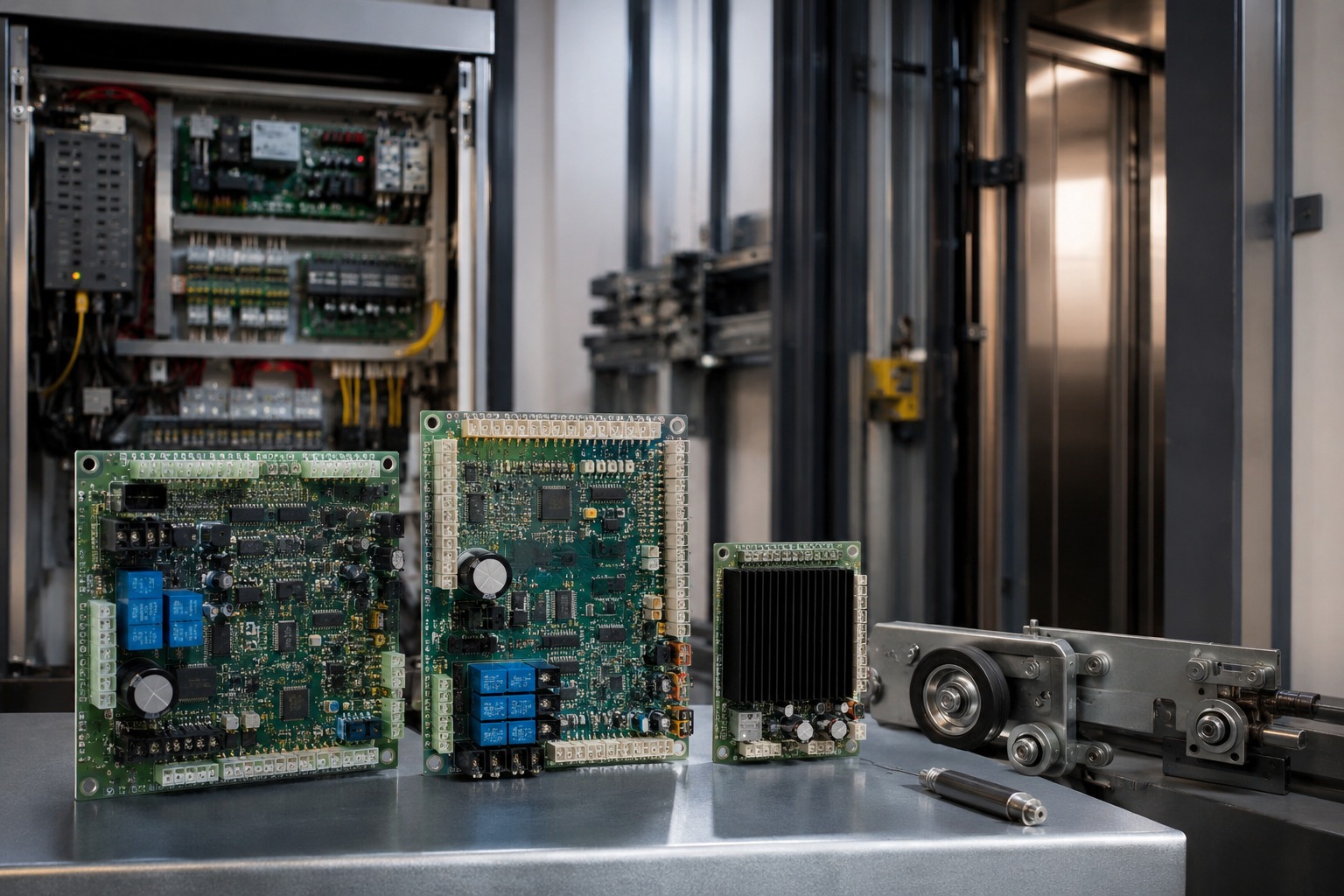
Compatibility is the most important factor when replacing an AVR HGE MCA board. Many technicians first look at the general shape or the mounting holes, but true compatibility depends on multiple points: board code, input voltage range, DC output values, connector positions, load rating, protection design, and integration with the original elevator controller. A board that appears visually similar may still fail because one connector pin assignment is different or because a secondary output rail does not meet the expected voltage under load.
For Hitachi-related elevator applications and similar systems, AVR HGE MCA style boards are often selected because they support specific control circuit requirements. Before ordering, technicians should record the full board number, any revision code, the machine or controller model, all visible connector labels, and any stated output values such as 24V or 51V. If the old board has burn damage, a photo of both sides and the cabinet installation context helps identify the correct replacement. This is especially useful for remote support when the site is in another province, such as a service call from Bloemfontein to a parts desk in Johannesburg.
Compatibility checks should also include the surrounding application. Some buildings have partial modernizations where the original controller remains but door or communication systems have been upgraded. In those mixed environments, the switching board may need to support legacy and newer modules at the same time. That is why experienced sourcing teams focus on model matching, not generic substitution.
| Compatibility Check Item | Why It Matters | How to Verify | If Incorrect | Recommended Action | Priority Level |
|---|---|---|---|---|---|
| Board model code | Confirms exact family and function | Nameplate or PCB print | Wrong board fit | Match original code first | Critical |
| Revision number | Some revisions differ in output or connectors | Sticker or silkscreen | Intermittent faults | Confirm revision with supplier | Critical |
| Input specification | Must suit site power design | Label and manual | No startup or damage | Check voltage/frequency | Critical |
| Output voltage set | Feeds dependent boards correctly | Board markings and measurement | Controller instability | Measure before full use | Critical |
| Connector pinout | Ensures signals route correctly | Compare harness and photos | Miswiring risk | Confirm each connector | High |
| Load capacity | Prevents voltage drop under operation | Technical sheet or test bench | Reset under load | Verify current margin | High |
The table clarifies that compatibility is a full-system verification process, not a visual check. In practice, service companies that collect board photos, cabinet labels, and measured output readings before ordering usually achieve faster replacement success and fewer return visits.
Our technological capabilities are built around this matching process. We help customers compare board references, inspect connector arrangements, review output requirements, and identify compatible replacement options based on model data and field photos. This matters for South African buyers because parts often move over long distances, and the cost of sending the wrong board to a site in Polokwane, Nelspruit, or Kimberley is much higher than resolving matching questions at the quotation stage.
Voltage output and load checks
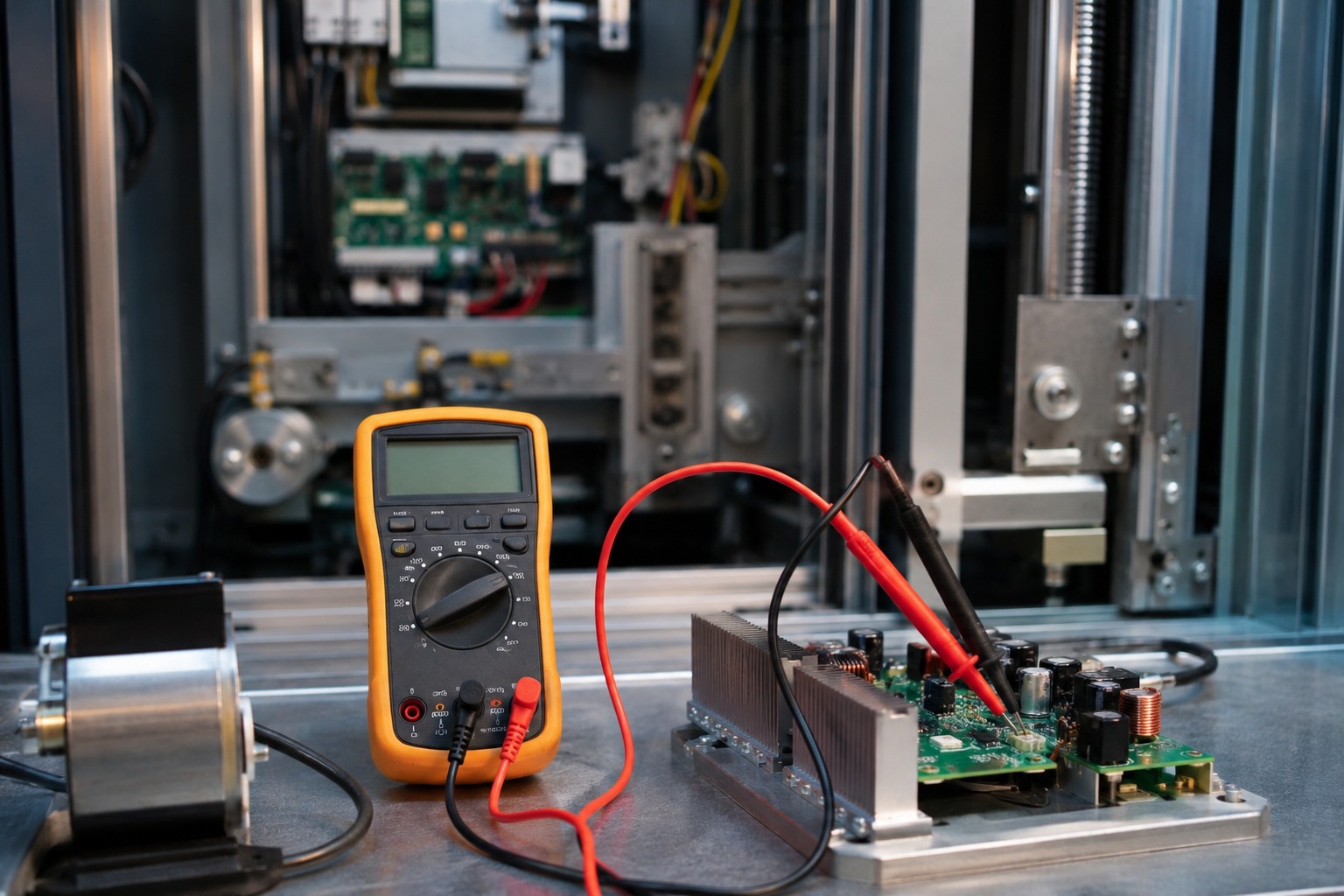
Once the correct board type is identified, voltage output and load checks determine whether the board is healthy and whether it is suitable for installation. The most common mistake is measuring output with no meaningful load and assuming the board is fine. A switching power supply board may show acceptable voltage in idle condition but collapse when the controller, door circuits, or communication modules draw current. For this reason, both no-load and loaded measurements are useful.
Technicians should check the input side first, ensuring that incoming supply is within the expected range and that upstream fuses, terminals, and grounding are sound. The next step is measuring the board’s DC outputs. Common outputs in elevator control environments include 5V, 12V, 24V, and in some applications around 51V. Measurements should be taken with a calibrated multimeter, and if possible, ripple or instability should be reviewed with an oscilloscope when symptoms are intermittent.
Load checks matter because downstream components may introduce variable demand. Door operations, brake release logic, display illumination, and communication bursts can all create short-term changes in current draw. If the board is undersized, aging, or partially damaged, these peaks may trigger voltage sag. In the field, that may look like unexplained resets during movement, door faults during opening, or random loss of landing calls.
| Test Step | What to Measure | Expected Result | Warning Sign | Likely Cause | Next Action |
|---|---|---|---|---|---|
| Input supply test | AC input voltage | Within equipment range | Low or fluctuating input | Building supply issue | Inspect upstream source |
| No-load output test | DC output voltage | Close to rated value | Zero or unstable reading | Board failure | Remove for bench check |
| Loaded output test | DC output under normal operation | Stable within tolerance | Voltage drops during use | Weak components or overload | Check board and connected load |
| Ripple check | Output noise/ripple | Low ripple | High ripple spikes | Aging capacitors | Replace board or rebuild if approved |
| Thermal observation | Board temperature | Normal operating heat | Localized overheating | Short circuit or stressed part | Shut down and inspect |
| Current margin review | Load versus rating | Comfortable spare capacity | Operating near maximum | Design mismatch or added devices | Reassess application |
This test sequence helps distinguish between a failed board, an external overload, and a site power issue. In South Africa, where some older buildings can experience utility-related variations or cabinet aging, this distinction is valuable because replacing the board alone may not solve the underlying problem.
The bar chart shows stronger demand from office, residential, and retail segments, which aligns with higher cycle counts and larger installed elevator populations in major urban areas. Hospitals remain a smaller volume segment but carry a much higher urgency because lift availability directly affects operations.
Common power board failure signs
Power board failure rarely appears as a single obvious symptom. In many cases, the warning signs begin intermittently and become more frequent over time. A technician may first see random controller resets, unstable displays, door reopening events without obstruction, intermittent communication faults, relay chatter, or unexplained stop events. These symptoms can be misleading because they overlap with other problems such as connector oxidation, loose terminals, poor grounding, or failing downstream boards.
Visual inspection is still useful. Burn marks, cracked solder joints, swollen capacitors, darkened resistors, or a smell of overheated components often point to power board distress. However, a board can also fail with no visible damage. Thermal stress, long service life, humidity, dust, vibration, and unstable upstream supply can all degrade switching components over time.
In coastal areas like Durban and Cape Town, moisture and salt-laden air can contribute to corrosion at connectors and terminals, especially if cabinet sealing or maintenance practices are poor. In mining-adjacent or industrial zones, dust contamination can affect cooling and create tracking risks. In busy urban buildings, heavy operation simply accelerates wear on all support electronics.
| Failure Sign | What It Looks Like on Site | Possible Board-Related Cause | Other Cause to Rule Out | Service Impact | Recommended Response |
|---|---|---|---|---|---|
| Controller reset | Lift restarts unexpectedly | Output voltage dip | Loose main control wiring | High | Measure loaded output |
| Door faults | Door reopens or fails to close | Unstable supply to door electronics | Door sensor issue | High | Check door circuit voltage |
| Blank indicators | COP or landing display turns off | Loss of auxiliary DC output | Display board failure | Medium | Verify secondary outputs |
| Relay chatter | Rapid clicking in cabinet | Insufficient holding voltage | Faulty relay coil | High | Test voltage stability |
| Overheating smell | Hot electronics odor | Stressed components | External short circuit | Very high | Power down and inspect |
| Intermittent trips | Random stoppages at different floors | Ripple or thermal failure | Encoder or sensor fault | High | Bench test if needed |
The explanation behind these signs is important. A stable board should maintain output during the elevator’s normal electrical events. If faults appear only during door movement, car start, or heavy traffic periods, that often indicates a load-sensitive weakness rather than total failure. Service teams that record exactly when the fault appears can diagnose more accurately and reduce part swapping.
How to protect boards during shipping
Shipping protection is not a minor detail for elevator electronics. A correctly matched board can still arrive damaged if it is packed poorly. In the South African market, parts may travel by air freight, road freight, or mixed logistics routes through hubs such as Johannesburg, Durban, Cape Town, and Gqeberha. They may also pass through customs handling, warehouse transfers, and last-mile delivery to remote sites. Good packaging must therefore protect against impact, static discharge, moisture, and compression.
The first layer should be anti-static protection. The board should be sealed in an ESD-safe bag, especially if it contains sensitive control components. The second layer should immobilize the board inside a properly sized box with shock-absorbing foam. The third layer should be an outer carton strong enough to resist crushing. Moisture barrier materials and clear labeling also help. Connectors, relays, and heat sinks should not be left exposed to direct movement inside the package.
Our manufacturing capabilities include careful quality inspection before dispatch and protective packaging suited to export and long-distance domestic delivery. This reduces the risk of transit damage for parts moving to service teams in Gauteng, the Western Cape, KwaZulu-Natal, the Free State, Limpopo, and the Eastern Cape. A replacement board should arrive ready for verification, not requiring rework because of broken terminals or bent components caused during freight.
| Packaging Element | Purpose | Minimum Practice | Better Practice | Risk if Missing | Best Use Case |
|---|---|---|---|---|---|
| ESD bag | Protects sensitive electronics | Basic anti-static sleeve | Sealed shielding bag | Static damage | All control boards |
| Foam support | Absorbs shock | Side padding only | Custom foam cradle | Impact cracks | Long-distance transport |
| Rigid inner box | Stops flex and compression | Standard carton | Board-sized reinforced box | Connector damage | Courier shipments |
| Moisture barrier | Reduces humidity exposure | Plastic wrap | Desiccant plus sealed bag | Corrosion risk | Coastal deliveries |
| Clear labeling | Improves handling accuracy | Part code label | Fragile and ESD labels | Mishandling | Multi-stop logistics |
| Inspection checklist | Confirms dispatch condition | Visual check | Photo plus packing record | Dispute risk | High-value boards |
The table shows that packaging is a chain of protections, not one material choice. For service firms trying to reduce failures after transport, the biggest gains usually come from combining ESD handling with rigid support and moisture control.
This area chart illustrates the increasing preference for better packaging and screened suppliers. As modernization budgets rise and downtime costs become more visible, buyers increasingly value secure shipping and documented inspection rather than choosing only on headline price.
Installation testing workflow
A disciplined installation testing workflow reduces repeat faults and avoids damaging a new board. The process should begin before power is applied. Technicians should compare the new board to the old one, confirm connector labels, inspect terminal condition, and check that no external shorts or damaged harnesses remain in the cabinet. If the previous board failed catastrophically, connected loads should be reviewed before fitting the replacement.
After mounting, power should be applied in stages where possible. Initial readings should confirm that outputs are present and within specification before all dependent circuits are fully engaged. The board should then be observed under key operating states: idle, door open, door close, car run, and peak traffic simulation if practical. A short test is not enough in buildings with intermittent faults. In a busy shopping centre in Cape Town or a business building in Rosebank, a lift may need multiple complete cycles before a hidden voltage drop appears.
Technicians should also record final readings and note the board code installed. This creates a service history that supports future troubleshooting and stock planning. If a customer has multiple lifts of the same model, this documentation can guide preventive spare holding.
| Workflow Stage | Main Task | Tool Needed | Pass Criteria | Failure Response | Documentation |
|---|---|---|---|---|---|
| Pre-install inspection | Check board, cabinet, connectors | Visual tools, photos | No visible mismatch or damage | Stop and recheck model | Photo record |
| Isolation check | Rule out short circuits | Meter | No abnormal continuity | Inspect harness and load | Test note |
| Initial power-on | Measure baseline outputs | Multimeter | Rated outputs present | Power down immediately | Voltage log |
| Functional cycle test | Run door and travel cycles | Lift controls, meter | Stable performance | Check load-related drop | Cycle checklist |
| Extended observation | Monitor heat and repeat faults | IR thermometer if available | No abnormal heating | Investigate downstream issue | Thermal note |
| Final sign-off | Record installed part and results | Service form | Lift returned safely to service | Hold lift if unresolved | Full service report |
This workflow is especially valuable for modernization contractors and service teams managing multiple client sites. It creates consistency across technicians and reduces the risk that a board replacement is treated as a quick swap without proper verification.
Stocking power boards for service teams
For service teams, stocking strategy is a balance between cost, response time, and model coverage. Too little stock creates long downtime. Too much stock ties up capital in slow-moving parts. The most effective approach is to classify switching power boards by service urgency, installed base, compatibility range, and lead time. High-use urban portfolios in Johannesburg, Pretoria, Durban, and Cape Town usually justify holding critical power boards locally, while lower-frequency variants can be sourced centrally with fast dispatch.
Technicians should review maintenance history to identify repeat board types across their customer portfolio. If several buildings use the same controller family, then one carefully chosen stock item may support multiple sites. Where exact models vary, it is helpful to hold a small number of the most common units and maintain accurate sourcing pathways for others. Boards with dual output ranges or known use in modernization work often deserve higher stock priority because they can reduce service delays.
Our service capabilities focus on responsive support, stable sourcing, careful model matching, and communication that helps buyers avoid avoidable downtime. For South African customers, this can mean helping a maintenance company decide which boards to keep in Johannesburg for same-day dispatch, which to position in Cape Town for Western Cape coverage, and which to source on demand for lower-frequency projects. This is not only about selling a part; it is about helping service teams restore elevator operation more predictably.
The comparison chart shows why service teams increasingly prefer suppliers that offer model verification, packaging control, and technical communication alongside inventory support. A lower unit price can become expensive if the wrong board is shipped or if poor packaging causes a delay.
Below is a practical stock planning model for elevator service teams:
| Stock Category | Board Type | Who Should Hold It | Suggested Quantity Logic | Reorder Trigger | Reason |
|---|---|---|---|---|---|
| Critical fast-moving | Common 24V control boards | Regional service hub | Based on top 20% installed models | When 50% used | High failure impact |
| Critical model-specific | AVR HGE MCA variants | Central technical stock | Based on known installed sites | After each project use | Matching sensitivity |
| Modernization support | Dual-output or newer revisions | Project warehouse | Per active project pipeline | Monthly review | Project continuity |
| Low-frequency legacy | Older controller boards | Order on demand | Minimal holding | Case-by-case | Avoid dead stock |
| Emergency reserve | High-urgency universal support items | Main metro branch | 1–2 per key family | Immediate replacement | Reduce downtime |
| Training and test stock | Bench-test compatible units | Technical workshop | Separate from sale stock | After damage or use | Supports diagnosis |
The explanation is straightforward: stock should follow field reality. The more lifts a team maintains, the more value there is in data-based stocking rather than ad hoc buying. Service records, fault trends, and installed model concentration should drive purchasing decisions.
Looking toward 2026, several trends will shape elevator switching power board demand in South Africa. Modernization will continue as older building assets require more reliable electronics. Policy and compliance expectations around safe vertical transport will encourage better maintenance documentation and parts traceability. Sustainability will also matter more. Buyers are likely to prefer boards with stable service life, lower failure rates, and packaging that reduces avoidable damage and waste. In addition, digital maintenance practices will make it easier to identify recurring board types across portfolios, improving spare stock planning and reducing emergency shipping.
FAQ about switching power supply boards
What does a switching power supply board do in an elevator?
It converts incoming electrical power into stable low-voltage outputs used by controller circuits, door electronics, sensors, displays, and communication modules. Without stable output, the lift may show intermittent or total control faults.
How do I know if an AVR HGE MCA board is compatible?
Check the full board code, revision, input specification, output voltage values, connector layout, and application context. A photo of the old board and cabinet labels is often the fastest way to confirm compatibility before ordering.
Can I replace a board with a similar-looking generic unit?
Not safely unless all electrical and connector details match. Elevators are control-sensitive systems, and even small differences in output or pin assignment can cause faults or damage.
Which voltage outputs are most commonly checked?
24V DC is very common, but some systems also use 5V, 12V, or around 51V depending on the design. Always measure according to the installed equipment specification.
Why does a board test correctly with no load but fail in service?
Some failures appear only when the board must supply real current to door modules, relays, displays, or controller logic. That is why loaded testing is important.
What are common signs of a failing power board?
Controller resets, relay chatter, blank displays, unstable door operation, overheating smell, or random trips that occur under traffic or movement conditions.
Should service teams in South Africa keep these boards in stock?
Yes, especially for common controller families or buildings where downtime is costly. Johannesburg, Cape Town, and Durban service hubs often benefit from holding critical fast-moving variants locally.
How should boards be packed for shipping?
They should be protected in ESD-safe packaging, cushioned against impact, secured in a rigid box, and guarded from moisture. This is especially important for long domestic routes and imported parts entering through major ports.
What information should I send when requesting a quotation?
Send the board model, revision number, photos of both sides, connector details, measured output values if available, lift brand, controller model, and site application notes.
How can building owners reduce repeat failures?
Use correct model matching, insist on voltage and load verification during installation, maintain clean cabinets, monitor heat and moisture exposure, and source from suppliers that provide quality inspection and protective packaging.
For buyers across South Africa, the best results usually come from combining accurate technical identification, careful logistics, and a practical service plan. Whether the application is a busy mixed-use tower in Sandton, a hospital in Durban, a hotel on the Cape Town waterfront, or a residential block in Pretoria, a correctly selected switching power supply board supports stable elevator control circuits and helps keep lifts available for daily use.