
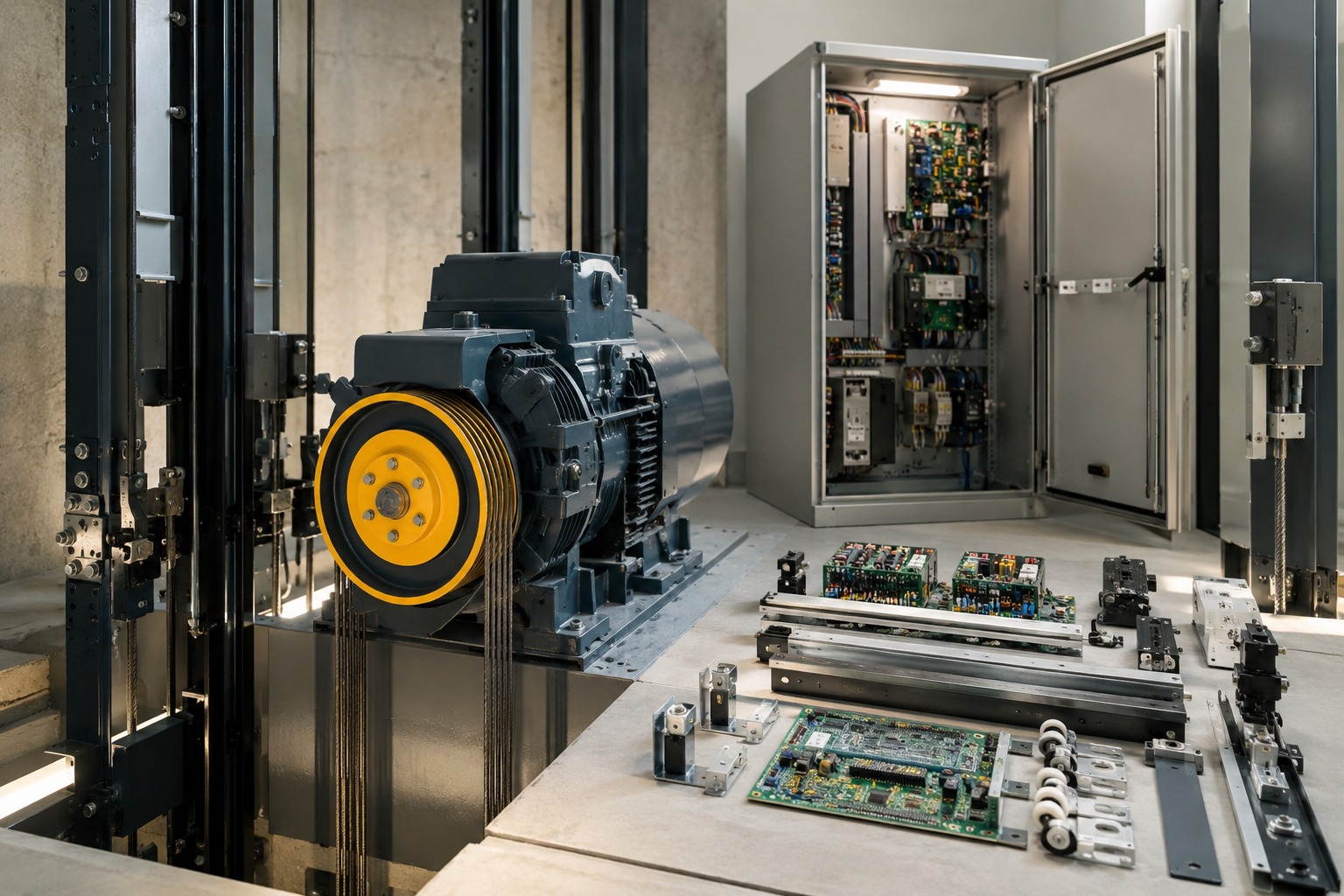
Traction motors sit at the centre of elevator performance. When the motor is correctly selected, matched to the controller, installed with proper alignment, and maintained before wear becomes critical, a lift can deliver smooth starts, stable levelling, lower machine room noise, and better energy use. When the motor is mismatched or aging, the opposite happens: vibration increases, floor accuracy drifts, current draw rises, and passengers notice rough travel long before a full breakdown occurs.
For property owners, maintenance companies, distributors, and modernization contractors in South Africa, traction motor decisions are rarely just about replacing one item with another. The practical question is whether the chosen unit will fit the existing machine base, work with the inverter, support the building duty cycle, and arrive with reliable model verification. This is especially important in busy environments such as office towers in Johannesburg, hotels in Cape Town, residential estates in Pretoria, hospitals in Durban, logistics sites near Gqeberha, and mixed-use developments along the Gauteng corridor.
The direct answer is simple: if you want better lift efficiency, lower operating noise, and improved ride quality, start with motor type, power matching, encoder compatibility, installation precision, and preventive inspection. Modern permanent magnet synchronous designs often outperform older configurations in energy use and compactness, but successful replacement still depends on exact application data. A good sourcing process reduces downtime, avoids return visits, and protects passenger safety.
Across South Africa, modernization activity is influenced by ageing building stock, rising electricity costs, tenant expectations, and pressure to keep lifts available with shorter maintenance windows. Building managers are also paying closer attention to lifecycle cost rather than just purchase price. That shift is making motor replacement a strategic decision, particularly where frequent faults, excessive noise, or poor ride comfort are already affecting user confidence.
Below is a practical guide for buyers and technical teams who need to understand traction motor options, permanent magnet synchronous motor benefits, Hitachi HGP motor sourcing notes, motor power and controller matching, installation checks, maintenance warning signs, and 2026 modernization planning trends for the South African market.
South Africa market overview for lift motor replacement
The local elevator service market includes commercial towers, hospitals, retail centres, student accommodation, public transport nodes, industrial plants, and hospitality properties. Demand is concentrated in major urban hubs such as Johannesburg, Sandton, Pretoria, Cape Town, Durban, and Bloemfontein, while replacement parts also move through trade and logistics channels linked to Durban Port, Cape Town Harbour, and inland warehousing in Gauteng.
In practice, building owners are balancing four pressures at once: uptime, energy cost, tenant comfort, and spare parts availability. Older geared systems are still common, but many upgrades now consider gearless permanent magnet synchronous motor solutions for better efficiency and more compact layouts. For maintenance providers, the challenge is not only finding a motor but securing the right shaft data, brake details, encoder specification, mounting dimensions, and controller compatibility.
Import lead times, exchange-rate sensitivity, and the need for secure packaging also affect project planning in South Africa. That is why buyers often prefer suppliers that can verify models carefully, inspect quality before shipment, and support maintenance teams with responsive communication when on-site checks reveal dimension or wiring questions.
| Driver | What it looks like on site | Risk if ignored | Who usually raises it | Best response | Priority level |
|---|---|---|---|---|---|
| Ageing equipment | Frequent shutdowns on older lifts in offices or flats | Higher downtime and tenant complaints | Maintenance contractor | Audit motor, brake and controller together | High |
| Energy costs | Machines run hot and draw high current | Higher operating expense | Building owner | Compare PM synchronous upgrade options | High |
| Ride quality concerns | Jerky starts, vibration, poor levelling | Passenger dissatisfaction and safety concerns | Facility manager | Check alignment, encoder, controller tuning | High |
| Noise complaints | Machine room or shaft noise audible to occupants | Loss of tenant confidence | Residents or tenants | Inspect bearings, brake, sheave wear and mounting | Medium |
| Spare part discontinuation | Original motor or brake parts are hard to source | Extended outage during failure | Distributor or service team | Plan cross-reference and modernization early | High |
| Capacity changes | Building usage has increased over time | Accelerated wear under heavier duty cycles | Consultant or owner | Review motor power, duty, thermal margin | Medium |
The table above shows why replacement projects are often triggered before total motor failure. In many South African properties, a motor change is part of a broader reliability plan that includes inverter checks, brake servicing, traction sheave inspection, encoder review, and rope condition assessment. This joined-up approach gives better results than replacing the motor alone while leaving the rest of the drive chain untouched.
This market growth line chart reflects a realistic upward trend in replacement and modernization activity. The rise is supported by ageing installations, efficiency targets, and a stronger preference for planned upgrades over reactive shutdown repairs.
Traction motor types explained
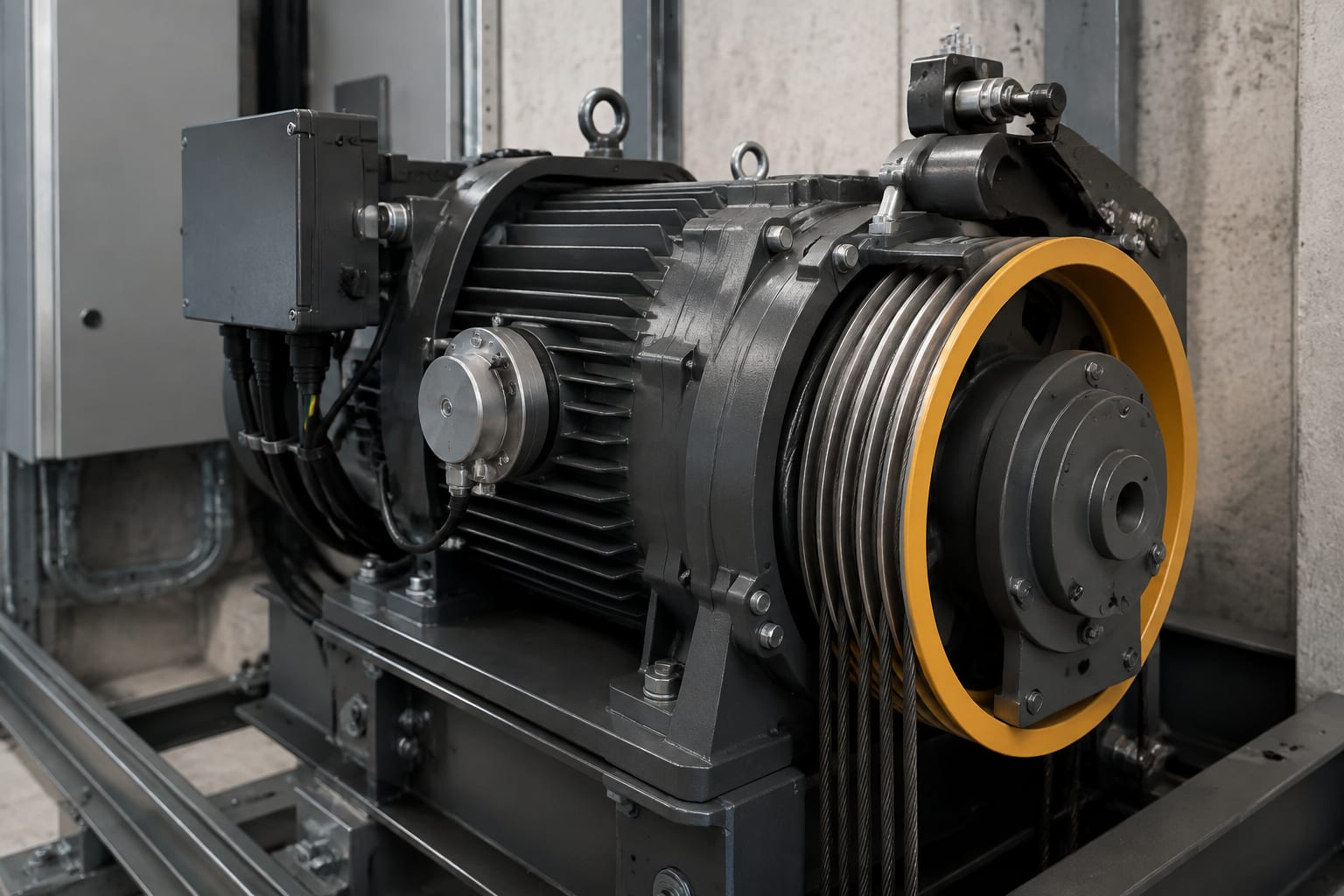
Elevator traction motors can be grouped into several practical categories, and understanding the differences helps buyers choose the right solution for replacement or modernization. The main distinctions are geared versus gearless, induction versus synchronous, and conventional versus permanent magnet designs.
Geared traction motors have historically been common in many mid-rise applications. They use a motor connected through a gearbox to drive the traction sheave. Their advantages include familiar service practices and suitability for certain legacy systems, but they can be noisier, less compact, and less efficient than modern gearless alternatives. Gear wear and lubrication condition also become long-term maintenance factors.
Gearless traction motors drive the sheave directly. In elevator modernization, these motors are often selected for smoother operation, lower noise, and fewer mechanical transmission losses. They are especially attractive where energy savings and ride quality matter. In high-traffic buildings, gearless systems can also support better long-term performance when paired with suitable controllers and feedback devices.
Induction motors remain widely understood and serviceable, but permanent magnet synchronous motors have become increasingly important in new installations and upgrades. They provide strong torque characteristics, compact dimensions, and improved energy efficiency, particularly in gearless elevator applications.
| Motor type | Drive arrangement | Typical strengths | Typical limits | Suitable applications | Service note |
|---|---|---|---|---|---|
| Geared induction motor | Motor plus gearbox | Proven legacy use, familiar maintenance | More noise, lower efficiency, larger footprint | Older commercial and residential lifts | Check gearbox wear and oil condition |
| Gearless induction motor | Direct sheave drive | Smoother than geared systems | Less common in some modern replacements | Selected modernization projects | Controller tuning is important |
| Gearless PM synchronous motor | Direct sheave drive | High efficiency, compact, low noise | Needs correct controller and encoder matching | Modern offices, hotels, premium residential | Confirm electrical and mechanical data carefully |
| Machine-room motor system | Separate machine room layout | Accessible servicing area | Needs dedicated space | Traditional building designs | Check base and mounting alignment |
| Machine-room-less gearless motor | Compact hoistway installation | Space saving and modern layout | Access planning is critical | Space-sensitive projects | Confirm maintenance access before approval |
| Modernization-compatible retrofit motor | Adapted for existing system | Can reduce structural changes | Requires close dimensional review | Occupied buildings with limited shutdown time | Cross-check sheave, brake and frame dimensions |
This comparison makes one point clear: there is no universal best motor. The right choice depends on travel height, load, speed, duty cycle, available space, controller architecture, and the condition of the rest of the lifting system. For a residential block in Durban, the best answer may differ from a hospital installation in Johannesburg where passenger flow is heavier and uptime expectations are stricter.
For buyers looking at modern options, a permanent magnet synchronous elevator motor is often the starting point because it combines efficient drive performance with good ride comfort potential. However, selection still needs exact system data rather than a generic “same power” approach.
Benefits of permanent magnet synchronous motors
Permanent magnet synchronous motors are increasingly preferred in elevator modernization because they help solve three common problems at once: excessive energy use, poor ride quality, and limited installation space. These motors produce torque efficiently and often allow a more compact drive arrangement than older alternatives. In South Africa, where electricity cost and building efficiency both matter, this can provide meaningful operating benefits over the lifecycle of the lift.
One of the most noticeable benefits is smoother acceleration and deceleration when the motor is paired with a properly configured inverter and encoder. Passengers feel less jerk during start-up, and floor-to-floor travel is more stable. This is especially valuable in offices, hospitals, and hotels where lift experience affects daily user satisfaction.
Noise reduction is another major advantage. Because permanent magnet synchronous gearless arrangements eliminate many gearbox-related noise sources and mechanical losses, they can improve acoustic performance in residential and hospitality settings. This matters in high-end apartments in Cape Town, business hotels in Sandton, and mixed-use buildings where lifts are close to occupied spaces.
From a maintenance viewpoint, reduced mechanical complexity can lower some service burdens, although these motors still require disciplined checks of bearings, brakes, feedback devices, and electrical conditions. The key point is not “maintenance free,” but “more efficient and often easier to optimize” when installed correctly.
| Benefit | How it helps the building | Passenger impact | Maintenance impact | Best-fit environment | Buying note |
|---|---|---|---|---|---|
| Higher efficiency | Lower electricity consumption | No direct passenger effect, but better system performance | Less thermal stress when correctly sized | Commercial and residential towers | Check duty cycle and load profile |
| Compact design | Helps in tight machine-room or MRL layouts | Supports modernization where space is limited | Access planning remains important | Urban retrofit projects | Verify mounting and sheave dimensions |
| Low noise | Reduces acoustic complaints | More comfortable travel and nearby occupancy | Can make abnormal sounds easier to detect | Hotels, apartments, offices | Check brake and bearing quality too |
| Smooth torque control | Improves travel consistency | Better ride comfort and levelling | Requires correct inverter setup | Hospitals and premium buildings | Confirm encoder compatibility |
| Lower mechanical losses | Supports long-term efficiency | Indirectly supports stable operation | Fewer transmission components than geared systems | High-cycle applications | Assess total system condition, not motor only |
| Modernization readiness | Can upgrade older lift performance substantially | Improves confidence in older buildings | Needs accurate retrofit engineering | Ageing office blocks and malls | Collect original motor and controller data first |
For projects involving specific brand systems, buyers may also review specialized products such as a Hitachi HGP permanent magnet synchronous motor when model matching and application details support the choice. The benefit is not only the motor technology itself, but the possibility of closer fit to the existing system design.
Hitachi HGP motor sourcing notes
When sourcing a Hitachi HGP motor or a compatible replacement, the most important rule is not to rely on appearance alone. Motors that look similar may differ in power rating, speed range, encoder configuration, brake voltage, shaft dimensions, mounting points, sheave specifications, and wiring interface. A wrong assumption can lead to delays, return freight, site frustration, and extended lift downtime.
The safest sourcing process starts with complete identification data. This usually includes the motor nameplate, original part number, lift model details, controller model, rated load, speed, roping arrangement, brake information, and photos from multiple angles. If possible, include dimensions of shaft, flange or base, sheave diameter, rope grooves, and connector styles. For modernization work, it is also wise to provide site constraints such as machine room size, access route, and whether the building can tolerate long shutdown windows.
For South African buyers, lead time and packaging matter as much as specification accuracy. Motors are heavy precision items, so protective packaging, moisture control, impact protection, and secure documentation are important for transport through Durban, Cape Town, or inland transfer to Gauteng warehouses. It is also helpful to work with a supplier that can respond quickly when technicians ask for confirmation during installation planning.
Where a project also involves door system upgrades or coordinated spare sourcing, some buyers combine drive and door items in one procurement cycle. In those cases, a Hitachi permanent magnet synchronous door motor may be sourced alongside traction system components to reduce fragmented purchasing and improve compatibility review across the package.
| Required item | Why it matters | Common mistake | Result of the mistake | Recommended action | Verification method |
|---|---|---|---|---|---|
| Nameplate photo | Confirms core electrical data | Sending blurry or partial image | Wrong model matching | Provide clear high-resolution photos | Cross-check text line by line |
| Original part number | Supports direct reference | Using internal building shorthand only | Confusion between similar motors | Share all visible numbers | Compare with supplier database |
| Controller model | Affects tuning and interface | Ignoring existing inverter details | Commissioning issues | Record full controller label | Electrical compatibility review |
| Brake data | Brake voltage and torque must match | Assuming brake is standard | Unsafe holding or wiring mismatch | Confirm brake coil and release data | Nameplate plus wiring check |
| Mechanical dimensions | Ensures fit on site | Measuring only external frame size | Mounting failure or rework | Check shaft, base, sheave and bolt pattern | Dimension drawing comparison |
| Encoder specification | Critical for feedback and smooth control | Overlooking connector type or resolution | Faults, hunting or poor levelling | Confirm exact encoder data | Part label and controller manual review |
The sourcing lesson is clear: good technical data saves far more time than fast but incomplete ordering. In an occupied building in Pretoria or a busy retail centre in Durban, every extra day of downtime has cost. Accurate model matching is therefore not a paperwork exercise; it is a risk-control measure.
Motor power and controller matching
Matching motor power to the controller is one of the most common pain points in elevator replacement projects. A motor may have the correct mechanical fit but still perform poorly if the inverter cannot support its current characteristics, control mode, feedback requirements, or braking profile. In elevator systems, stable operation depends on the whole drive package rather than the motor alone.
Power matching starts with rated load, car speed, counterweight balance, roping ratio, and expected traffic pattern. A building with low rise and light residential use may not need the same thermal reserve as a medical facility or office tower with repeated peak cycles. The duty cycle matters because motors that seem acceptable on paper can overheat or lose performance under sustained high-frequency operation.
Controller compatibility includes voltage class, current capacity, vector or closed-loop control capability, encoder interface, braking resistor arrangement where applicable, and parameter range. For permanent magnet synchronous motors, precise commissioning is vital. The wrong motor constants or poor tuning can create torque ripple, audible noise, levelling errors, and nuisance trips.
Good practice is to assess motor, inverter, brake, encoder, and mechanical load together. If one component is modernized while the rest remain old, integration limits must be clearly understood. This matters during retrofits in older South African buildings where the objective is often to improve performance without replacing the entire lift system in one phase.
| Matching factor | Question to ask | Possible symptom if wrong | Site consequence | Technical check | Decision guidance |
|---|---|---|---|---|---|
| Rated power | Is motor output suited to actual lift load and speed? | Slow response or overload trips | Reduced service availability | Compare nameplate and traffic duty | Do not size by old label alone |
| Rated current | Can the inverter supply the motor safely? | Controller overheating or faulting | Repeated shutdowns | Review current curves and margins | Allow reserve for peak demand |
| Voltage class | Do motor and drive share the same electrical platform? | Immediate incompatibility | Commissioning delay | Check full electrical data | Never assume by brand family |
| Encoder type | Can the controller read the feedback correctly? | Unstable speed, poor levelling | Passenger comfort issues | Confirm interface and resolution | Must match exactly or via approved solution |
| Brake control | Is brake release timing and voltage correct? | Rollback, noise, harsh starts | Safety and ride concerns | Review brake circuit and sequence | Test under load after installation |
| Thermal duty | Will the motor handle real traffic patterns? | Heat buildup over busy periods | Premature wear | Evaluate daily use pattern | Use duty data, not guesswork |
In modernization planning, correct matching often reduces the need for repeated site visits. That matters in dispersed service territories, where teams may travel between Johannesburg, Polokwane, Mbombela, Durban, and East London. Better pre-delivery verification translates directly into shorter outage periods and lower contractor cost.
This bar chart shows why hospitals, offices, and retail centres usually prioritize traction motor quality and compatibility. These sectors face stronger uptime pressure and heavier traffic, making accurate matching especially important.
Installation and alignment checks
Even the right motor can underperform if installation quality is poor. Alignment, base rigidity, sheave position, rope tracking, brake setup, and electrical termination all affect lift behaviour. Many vibration and noise complaints that are blamed on the motor actually come from mechanical misalignment or incomplete commissioning.
Before installation, inspect the machine base, mounting holes, shims, anchor condition, and surrounding structure. Any sign of cracking, uneven bearing surfaces, or previous ad-hoc modifications should be reviewed before the new unit is set in place. On retrofit jobs, compare all actual site measurements with approved drawings rather than assuming the old arrangement is dimensionally correct.
During installation, check motor level, shaft alignment, sheave run-out, rope groove condition, rope tension balance, brake air gap where specified, and fastening torque. Electrical teams should verify insulation condition, grounding, phase sequence where relevant, encoder wiring integrity, and separation of power and signal cables where needed. Once the motor is energized, no-load and loaded tests should confirm current draw, brake release timing, acceleration, deceleration, levelling accuracy, and abnormal sound.
In South African modernization sites, practical constraints such as limited access, building occupancy, and intermittent shutdown windows mean installation planning is just as important as installation execution. A hospital in Durban or a CBD office block in Johannesburg may not allow long service interruptions, so pre-staging tools, rigging, packaging disposal, and commissioning steps can save crucial time.
| Check point | What to inspect | Common fault | Operational symptom | Corrective action | When to verify |
|---|---|---|---|---|---|
| Machine base condition | Flatness, cracks, anchor integrity | Uneven support | Vibration and noise | Repair base and re-level | Before mounting |
| Motor alignment | Level, shaft relation, sheave position | Offset installation | Rope tracking issues | Re-align using measured references | During setup |
| Rope condition and tension | Equal tension and groove fit | Uneven tension | Slip, noise, uneven ride | Retension and inspect grooves | After sheave fitment |
| Brake setting | Air gap, release timing, holding force | Incorrect release sequence | Rollback or harsh start | Adjust and retest under load | Commissioning stage |
| Encoder and signal wiring | Connector fit and cable routing | Loose or noisy signal | Levelling errors or trips | Secure routing and verify feedback | Before energizing |
| Load test performance | Current, temperature, ride response | Unverified final setup | Post-handover faults | Record test results and parameters | Final acceptance |
The explanation behind this checklist is simple: installation errors tend to show up as noise, vibration, poor levelling, or recurring drive faults. Catching these issues at commissioning is far cheaper than revisiting the site after passengers have already noticed poor performance.
Maintenance signs to watch before failure
Traction motors rarely fail without warning. In most cases, there are early signs that maintenance teams can detect if inspections are structured and records are consistent. The goal is to identify deterioration before it causes a shutdown or damages related parts such as the brake, sheave, inverter, or ropes.
Listen first. Changes in sound often appear before visible failure. A healthy motor has a familiar operating pattern. If technicians notice growing bearing noise, brake chatter, sheave-related scraping, or a new high-frequency electrical tone, the system needs investigation. Likewise, any increase in vibration should be trended rather than dismissed as “normal for an old lift.”
Heat is another valuable warning sign. A motor that runs hotter than its historical norm may be overloaded, poorly ventilated, electrically stressed, or suffering from mechanical drag. Frequent drive trips, rising current, inconsistent acceleration, and floor levelling drift also point to problems in the motor-drive-feedback chain.
For maintenance companies serving portfolios across South Africa, it helps to classify warning signs into urgent, scheduled, and monitor-only categories. That makes it easier to decide whether a lift in Cape Town can stay in service until a planned window, or whether a building in Pretoria needs immediate intervention to avoid a passenger entrapment event.
| Warning sign | Likely cause | Severity | Short-term risk | Recommended response | Monitoring method |
|---|---|---|---|---|---|
| Increasing bearing noise | Bearing wear or lubrication issue | High | Seizure or heavy vibration | Inspect immediately and plan replacement | Sound trend and vibration readings |
| Brake chatter | Incorrect adjustment or worn brake parts | High | Rollback and harsh starts | Test brake circuit and mechanical condition | Operational observation |
| Rising motor temperature | Overload, ventilation issue, electrical stress | High | Insulation degradation | Check load, current, cooling path and tuning | Thermal readings over time |
| Poor floor levelling | Encoder issue or unstable control | Medium to high | Passenger trip hazard | Inspect feedback device and parameters | Landing accuracy records |
| Frequent inverter trips | Mismatch, electrical fault, overload | High | Repeated shutdowns | Review fault logs and electrical condition | Controller diagnostics |
| Rope slip or unusual groove wear | Sheave wear, alignment problem, tension imbalance | Medium | Reduced traction and ride instability | Inspect sheave and tension distribution | Visual and dimensional check |
The practical value of this table is that it turns vague symptoms into maintenance decisions. Instead of waiting for complete failure, service teams can plan parts, labour, and access in advance. That is particularly useful where imported components require lead time or where high-occupancy buildings cannot accept long outages.
This area chart reflects a growing trend: more owners are moving from emergency motor replacement to scheduled modernization. The shift is driven by cost predictability, better tenant communication, and shorter disruption during implementation.
Modernization planning tips
Modernization works best when it is planned as a building operation strategy rather than a last-minute repair. A traction motor may be the headline item, but the best projects also review the inverter, brake, encoder, guide components, door performance, safety circuits, and user interface parts. This approach reduces the risk that one new component will be held back by ageing supporting hardware.
Start with a technical survey. Capture traffic profile, current fault history, motor temperature trends, ride complaints, energy concerns, and the condition of surrounding components. Then decide whether the project goal is like-for-like replacement, partial upgrade, or full drive modernization. For older systems, partial replacement may solve an immediate problem but still leave limited spare availability in other parts of the system.
In South Africa, shutdown scheduling is often tied to tenant activity, holiday periods, hospital operating requirements, retail peak seasons, and contractor travel logistics. A strong modernization plan therefore includes not only equipment selection, but freight timing, packaging protection, on-site lifting arrangements, electrical isolation planning, and testing windows. Buildings near logistics hubs such as Durban and Johannesburg may have some transport advantages, but site access remains a major factor.
By 2026, modernization planning is also being shaped by sustainability and policy expectations. Owners are increasingly interested in efficient motors, reduced waste from repeat repairs, and upgrades that improve equipment life rather than simply patching failures. While not every project will move immediately to a full smart monitoring platform, there is clear direction toward better condition tracking, energy-conscious design, and stronger lifecycle documentation.
This comparison chart shows what buyers typically value most when selecting a supplier or product source. Exact model matching ranks highest because incorrect supply creates the biggest delay and cost risk during elevator motor projects.
Technological capabilities
A capable supplier should support modernization with careful model matching, cross-checking of electrical and mechanical data, and understanding of multi-brand elevator systems. This includes traction motor applications, controller-related parts, inverter and frequency converter components, encoders, sensors, and related accessories. For South African customers handling diverse portfolios, technical sourcing support reduces the uncertainty that comes with mixed equipment brands and ageing installations.
Manufacturing capabilities
Reliable sourcing is strengthened by stable quality inspection, clear dimensional confirmation, and protective packaging that suits international transport conditions. For heavy and sensitive lift components such as motors, door operators, control boards, power supplies, and related accessories, manufacturing discipline matters because poor finishing, weak packaging, or incomplete inspection can turn a correct product into a site problem before installation even begins.
Service capabilities
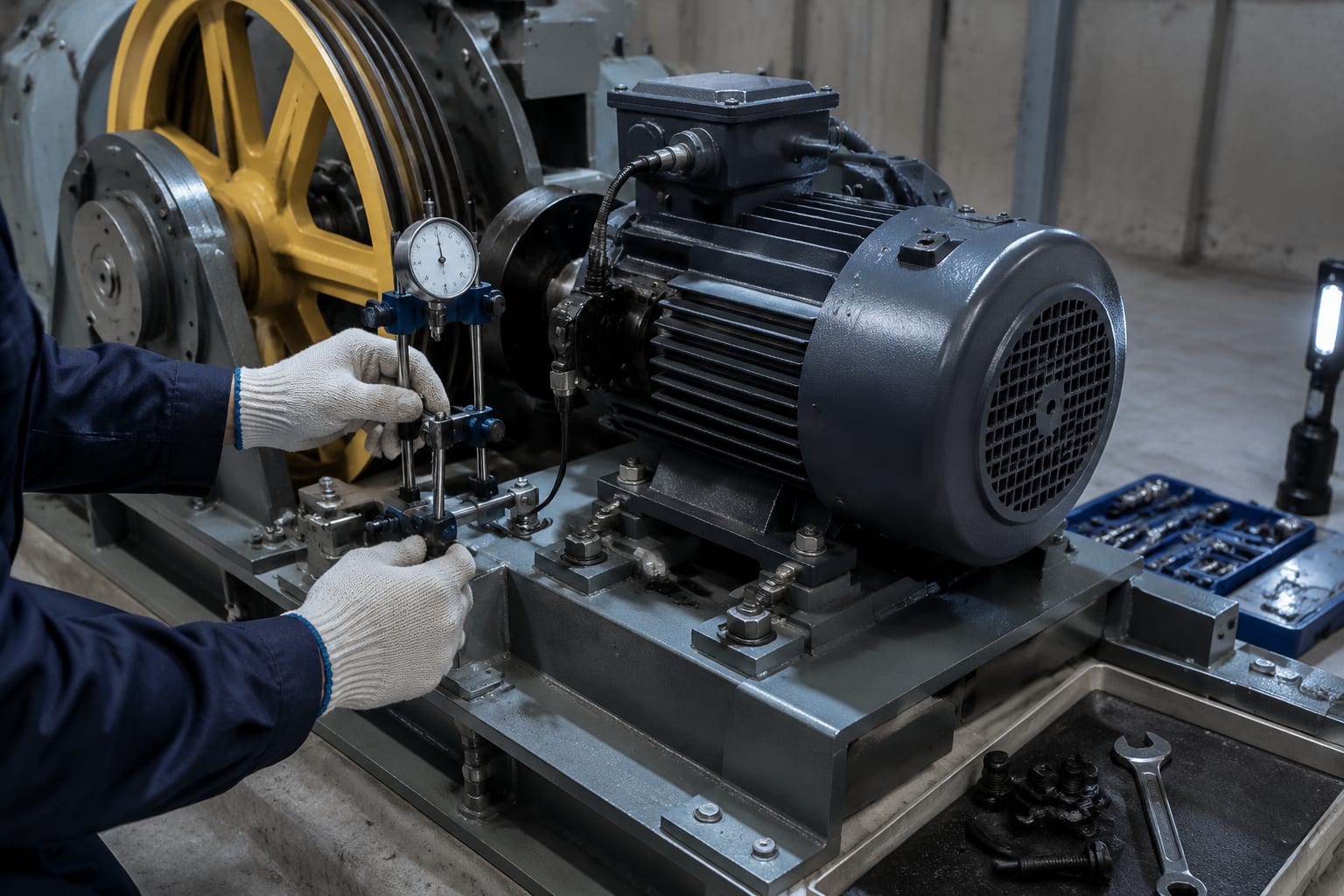
Responsive service is critical when maintenance companies or modernization contractors need fast answers about nameplates, wiring, connectors, compatibility, or shipment status. Good support includes clear communication, practical documentation, and a focus on reducing downtime for building owners and service teams. In the South African market, where timing, freight coordination, and occupied building constraints often intersect, service quality directly affects project success.
These capabilities matter beyond traction motors alone. Many modernization projects combine motors with elevator control boards, door locks, light curtains, guide shoes, oil cups, buttons, COP panels, intercom parts, and other lift accessories across brands such as Hitachi, Toshiba, KONE, Mitsubishi, and more. Working with a supplier that can support this broader scope often simplifies procurement and speeds decision-making.
| Planning step | Main objective | Key participants | Common challenge | Best practice | Expected result |
|---|---|---|---|---|---|
| Site survey | Capture real system condition | Technician, owner, consultant | Incomplete data collection | Use photos, dimensions and fault history | Accurate project scope |
| Replacement strategy | Choose partial or full upgrade | Owner and contractor | Focusing only on purchase cost | Assess lifecycle and downtime cost | Better value decision |
| Compatibility review | Match motor with controller and mechanics | Technical sourcing team | Brand-based assumptions | Verify exact model and interfaces | Lower commissioning risk |
| Logistics planning | Control transport and packaging | Supplier and site team | Damage or delay in transit | Use protective packaging and clear schedules | Safer delivery |
| Installation scheduling | Minimize tenant disruption | Facility manager and contractor | Short shutdown windows | Pre-stage tools and approvals | Faster site execution |
| Post-upgrade validation | Confirm ride, safety and reliability | Commissioning team | Skipping trend records | Document current, temperature and levelling | Stronger long-term maintenance plan |
The explanation here is that modernization succeeds when technical, logistical, and operational planning are handled together. For owners, the real goal is not simply installing a new motor; it is restoring dependable lift service with predictable performance and support.
Industries and applications that drive demand
Different industries in South Africa place different demands on elevator traction motors. In hospitals, reliability and smooth stopping are essential because bed lifts and patient transfers depend on stable motion. In office towers, peak morning and afternoon traffic creates repeated start-stop cycles that place thermal and control demands on the drive system. In hotels, ride comfort and low noise are major priorities because passenger experience affects reviews and brand perception.
Retail centres, student residences, logistics offices, and mixed-use developments all add their own operating patterns. Some need quick acceleration and high cycle endurance, while others prioritize compact modernization in tight shafts or limited machine rooms. Understanding the application environment helps prevent under-specification or expensive over-specification.
| Industry | Traffic profile | Main motor priority | Typical concern | Recommended solution direction | Example South Africa locations |
|---|---|---|---|---|---|
| Hospitals | High and continuous | Smooth control and uptime | Levelling precision | Carefully matched gearless PM system | Johannesburg, Durban, Pretoria |
| Office towers | Peak heavy traffic | Efficiency and cycle endurance | Rush-hour overheating | Duty-appropriate modernization package | Sandton, Cape Town CBD |
| Hotels | Moderate but quality-sensitive | Low noise and ride comfort | Passenger complaints | Low-noise PM synchronous upgrade | Cape Town, Umhlanga |
| Residential blocks | Variable daily use | Reliability and cost balance | Ageing equipment | Targeted replacement with accurate matching | Pretoria, Durban, Gqeberha |
| Retail centres | Heavy weekend and holiday use | Availability and robust operation | Short repair windows | Planned modernization with spare strategy | Johannesburg, Cape Town, Bloemfontein |
| Industrial and logistics offices | Functional traffic | Dependability and parts access | Delayed sourcing | Proactive parts planning and cross-reference | Durban Port, East Rand, Coega area |
This table helps buyers see that application context matters just as much as motor rating. The best motor for a quiet hotel will not always be the best fit for a high-cycle hospital or a cost-sensitive residential block.
Case examples and local supplier perspective
Consider three realistic cases. First, an older office building in Sandton experiences increasing levelling faults, motor noise, and repeated inverter alarms during peak traffic. Investigation shows that the existing motor is still running, but bearing wear, unstable feedback, and heat buildup are increasing service risk. A planned motor replacement combined with controller review avoids a major outage and improves ride quality for tenants.
Second, a hotel in Cape Town receives repeated guest complaints about lift noise near upper-floor rooms. The issue is not solely the motor age, but the combined effect of vibration transmission, alignment drift, and brake chatter. A modernization project using a lower-noise drive arrangement and improved commissioning delivers a noticeable acoustic improvement.
Third, a residential property in Durban struggles with long wait times for discontinued parts. Rather than waiting for a complete failure, the maintenance team plans a replacement strategy around available compatible components, reducing the chance of extended shutdown during holiday occupancy peaks.
These examples show why local support matters. Buyers in South Africa often prefer suppliers who understand that sourcing is not simply shipment of a product, but a process involving model confirmation, stable quality inspection, secure packaging, and timely communication. When a supplier can support maintenance companies, distributors, building owners, and modernization contractors with these basics, project risk falls sharply.
FAQ about elevator traction motors
What is the main job of a traction motor in a lift?
The traction motor drives the sheave that moves the elevator car through the ropes and counterweight system. Its performance directly affects smoothness, speed control, noise, efficiency, and floor levelling.
When should a traction motor be replaced instead of repaired?
Replacement is often the better choice when failure risk is rising, spare parts are hard to obtain, efficiency is poor, or the existing motor no longer matches modernization goals. Repeated overheating, bearing problems, or controller compatibility limits are common reasons.
Are permanent magnet synchronous motors always better?
They offer strong efficiency, compact design, and low-noise advantages, but they are not automatically the correct choice for every site. The full system, including controller, brake, encoder, mounting, and duty cycle, must be reviewed.
Can I replace a motor by matching only the kW rating?
No. Power rating alone is not enough. You must check speed, torque characteristics, current, voltage, encoder type, brake data, shaft and base dimensions, sheave details, and controller compatibility.
Why is accurate model matching so important for Hitachi HGP motors?
Similar-looking motors may differ in key electrical and mechanical details. Incorrect matching can create installation delays, tuning problems, or unsafe brake and feedback mismatches.
What signs suggest a motor is nearing failure?
Rising noise, vibration, temperature, levelling drift, frequent inverter trips, brake chatter, and unusual sheave or rope wear are all warning signs that should be investigated before a shutdown occurs.
How long should a modernization plan look ahead?
Ideally, owners should plan at least 12 to 24 months ahead for critical lifts, especially where imported parts, building access constraints, or phased budgeting are involved. Looking toward 2026, efficiency and sustainability will continue to shape replacement priorities.
What should South African buyers ask from a supplier?
Ask for careful model verification, clear technical communication, quality inspection, protective packaging, realistic lead-time guidance, and support for compatible replacement parts across related elevator systems.
Final buying advice for South Africa
If you are selecting a traction motor for replacement or modernization, focus on five essentials: exact identification, application fit, controller compatibility, installation quality, and long-term serviceability. Do not buy by appearance or nominal power alone. Gather nameplate data, photos, dimensions, and controller details early. Review whether the project should be a like-for-like swap or part of a broader lift upgrade. In many cases, a permanent magnet synchronous motor provides the best path to improved efficiency, lower noise, and better ride comfort, but only when the whole system is matched and commissioned correctly.
For South African building owners and contractors, the most successful projects are those planned before failure. Whether the site is a hospital in Pretoria, a hotel in Cape Town, a retail centre in Johannesburg, or a residential block in Durban, the same principle applies: reliable sourcing and precise technical matching reduce downtime and protect elevator performance over the long term.