
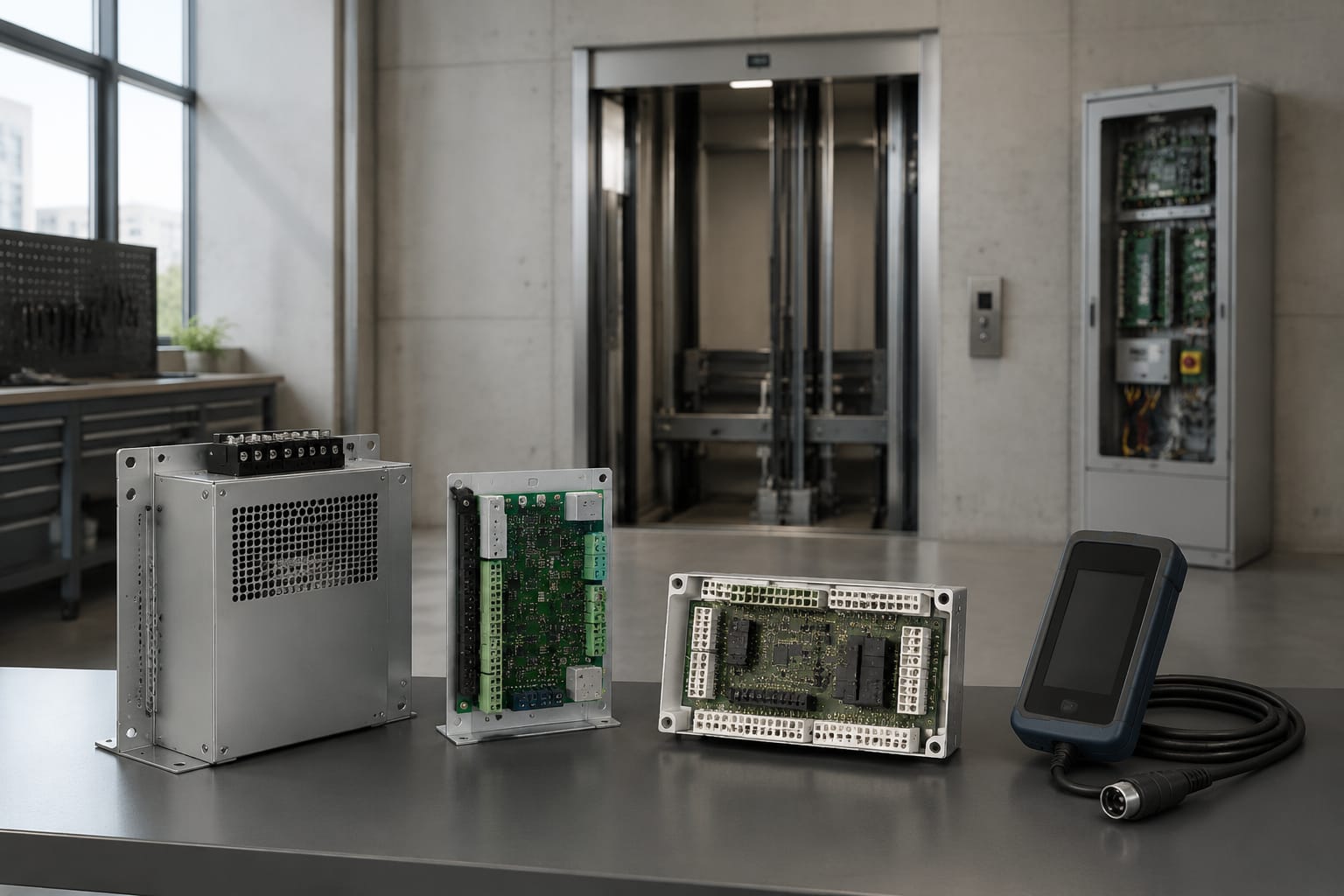
KONE spare parts should be identified from the lift’s actual equipment records and the component itself, not from a photo or a broad product description alone. The most reliable match combines the elevator model, controller or drive information, original part number, board revision, electrical rating and connector arrangement.
For South African maintenance contractors and sourcing teams, this approach reduces the risk of receiving a part that looks correct but cannot be fitted, configured or safely commissioned. It also creates a clear technical record for refurbishment, repair planning and future procurement.
Start with the KONE elevator model
Begin with the lift model and the equipment family installed on site. “KONE elevator” is not enough information to identify a replacement component, because parts may differ between controller generations, drive systems, building applications and production periods.
Record the information from the machine-room equipment, controller cabinet, drive, landing devices or site documentation. Where possible, verify it against the failed component rather than relying solely on a maintenance log.
Useful starting details include:
- Elevator model or product family
- Controller type and controller cabinet identification
- Drive model and motor data where the item relates to motion control
- Equipment serial number
- Installation or modernisation date, if known
- Number of floors, doors and cars where the component is application-specific
- Whether the lift is passenger, goods, hospital, service or another application
- Clear photographs of labels, connectors and the complete assembly
A model name can narrow the search, but it does not prove compatibility. A communication board, power unit or brake-control module may have different variants within the same elevator family. Treat the model as the first filter, then use the exact component data to make the final decision.
Find and record the part number
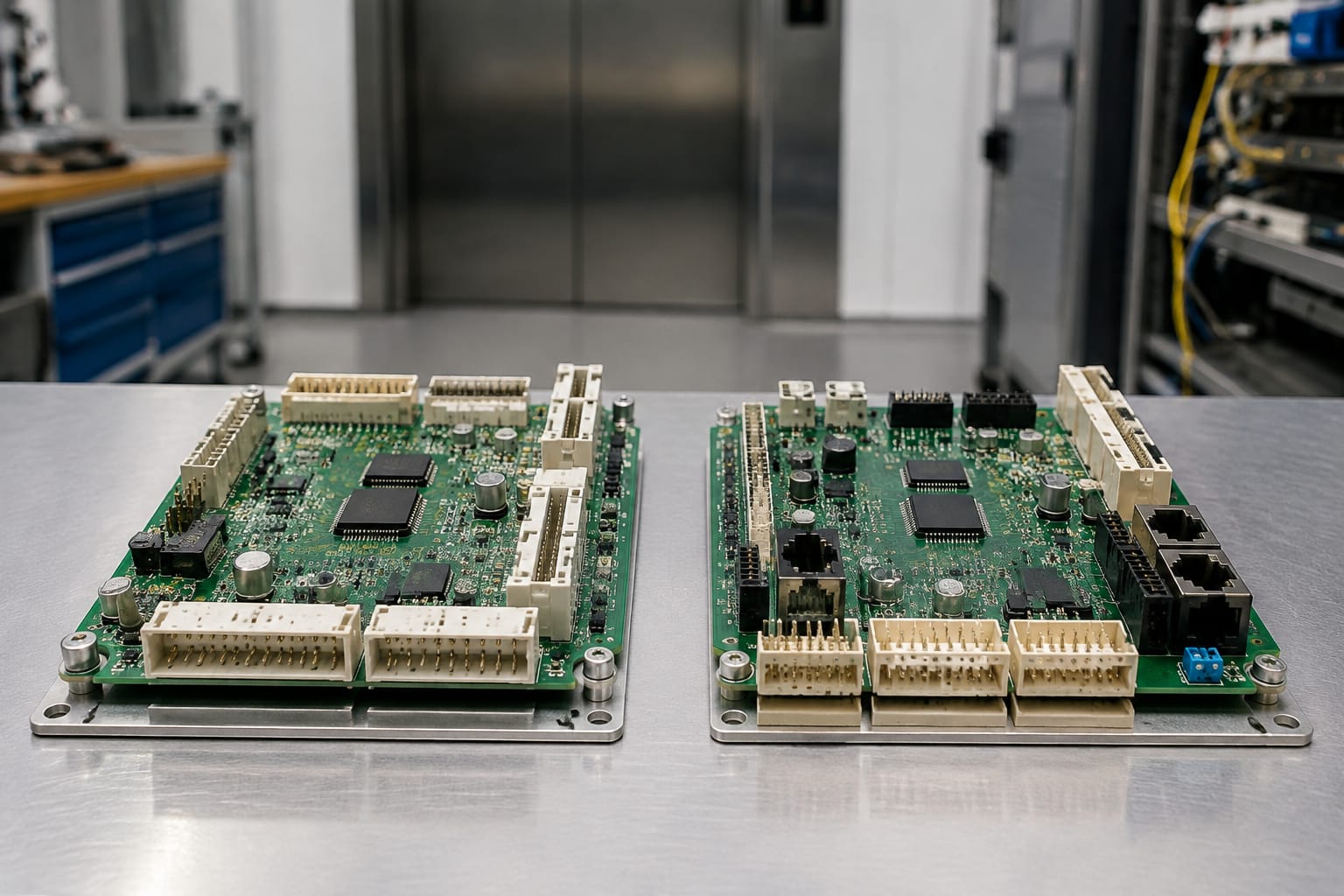
The original KONE part number is normally the strongest identifier for a direct replacement. It may appear as a printed label, barcode label, engraved marking or code on the circuit board. Record every visible code, including suffixes, revision letters and manufacturing references.
Do not shorten a part number when submitting a sourcing request. A missing suffix may identify a different voltage version, firmware generation, board revision or connector layout.
For each item, capture:
| Information to record | Why it matters |
|---|---|
| Full part number | Primary reference for matching the component |
| Revision, issue or version code | May distinguish physically similar but incompatible versions |
| Serial number | Useful for traceability and supplier checks |
| Board code or PCB marking | Helps identify an electronic assembly when the external label is missing |
| Manufacturer and product labels | Confirms whether the part is original equipment or another installed replacement |
| Electrical ratings | Prevents unsuitable voltage, current or frequency matches |
| Connector photos and pin count | Helps confirm physical and electrical interface compatibility |
| Fault description | Assists with assessing whether a replacement is the right remedy |
Photograph the label in focus and take a wider image showing the part in its installed position. For electronic boards, photograph both sides if this can be done safely by an authorised technician. The board code can be valuable where a cabinet label is damaged or a replacement part has an incomplete external reference.
Avoid identifying a component from a web image alone. Product photographs may show another revision, an unpopulated board variant or a generic illustration. A visual resemblance is supporting evidence, not a part-number match.
Common KONE spare-part categories
KONE spare parts range from simple replaceable items to safety- and configuration-sensitive electronic assemblies. The category affects the information a buyer should request and the level of technical verification needed before installation.
Control and communication boards
Controller boards, shaft communication boards, car boards and interface cards often require the most detailed matching. Check the exact board code, revision, connectors, mounting arrangement and communication system. A compatible-looking board can still fail to communicate with the controller or field devices.
For example, a [KONE shaft FCB communication board](/products/shaft-fcb-communication-board-kone-elevator-parts/) should be assessed against the installed board reference and its connection arrangement, rather than selected solely by its category name.
Power supplies and network power equipment
Power supplies, network power boxes and related units must be checked for input rating, output specification, terminal arrangement and system role. A unit with the same enclosure size may have different outputs or monitoring connections.
When evaluating a [KONE network power box](/products/network-power-box-kone-elevator-parts-lift-accessories/), confirm the label data and connection details for the installed unit before treating it as a suitable replacement.
Brake-control and drive-related components
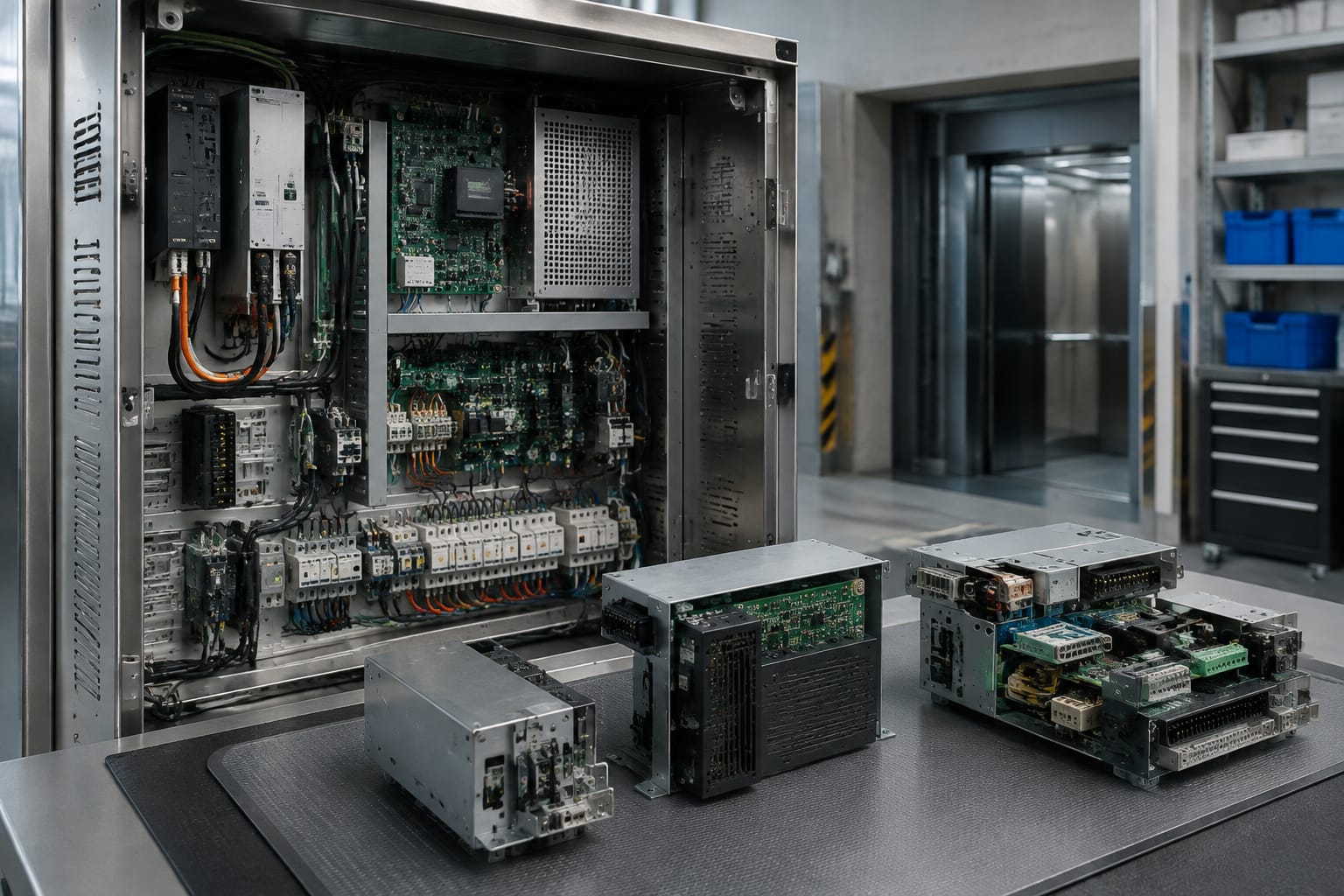
Brake-control modules, rectifiers, contactors and drive-related electronics can affect lift movement and safety circuits. Their suitability depends on the lift configuration, brake-coil requirements, rated voltage, current capacity and control signals.
A [KONE brake-control module power supply box](/products/brake-control-module-power-supply-box-kone-elevator-parts-lift-accessories/) should therefore be matched using its complete reference, ratings and interface details. Installation and commissioning of safety-critical equipment should be carried out by competent personnel using the applicable equipment documentation and site procedures.
Door operator parts
Door operators use motors, belts, rollers, couplers, sensors, boards and mechanical assemblies that can vary by operator type. Confirm the door operator model, handing where relevant, dimensions, pulley or belt specification, sensor type and mounting points.
A door component can be mechanically similar yet unsuitable because of travel limits, signal type or controller interface. For assemblies, photographs of the installed item alongside its labels and fixing positions are particularly useful.
Landing and car fixtures
Buttons, indicators, displays, key switches, speakers and car operating panel components should be checked for physical fit, electrical connection, communication protocol, finish and mounting dimensions. Cosmetic equivalence does not establish functional compatibility.
For visible passenger-facing items, confirm the desired finish and legends as well as the technical reference. A replacement may function correctly but create an inconsistent panel appearance if the finish, illumination colour or symbol layout differs.
Sensors, switches and wiring items
Limit switches, door contacts, levelling sensors, encoders and harnesses require attention to operating characteristics as well as physical form. Check switching type, supply requirements, cable length, connector keying and environmental suitability.
Never bypass a safety device or substitute an unknown sensor merely because its connector fits. The correct component must meet the required function in the installed system.
Compare board revisions and connectors
Electronic KONE spare parts should be compared as assemblies, not simply by their base board number. Revision changes can reflect component substitutions, firmware requirements, changed pin assignments or support for different system configurations.
Compare these points before buying:
- Full board code and all suffixes
- Revision level, issue number or date code
- Number, type and orientation of connectors
- Connector keying, pin count and locking method
- Terminal labels and cable entry positions
- Mounting-hole positions, clips and enclosure format
- Component layout where it affects clearance or fitment
- Presence of jumpers, switches, memory modules or daughterboards
- Any label identifying firmware, software or configuration
A supplier can use good photographs to make an initial comparison, but images should not replace the exact label references. Ask for photographs of the supplied item where the condition or revision is material to the order.
Do not assume a later revision is automatically a drop-in upgrade. It may be approved for a particular controller or require additional changes. Conversely, an earlier revision may no longer be appropriate for the installed configuration. Confirm interchangeability through reliable equipment information or technical support before commissioning.
Check voltage and communication compatibility
Voltage compatibility is essential, but it is only one part of a correct match. Check the rated input and output values on the component label, then compare them with the equipment documentation and the installed item.
For electrical and electronic KONE parts, verify:
- Rated supply voltage and whether it is AC or DC
- Voltage tolerance, where stated
- Frequency for AC equipment
- Output voltage and current for power units
- Load type, such as brake coil, relay, motor or electronic supply
- Polarity for DC connections
- Earthing and terminal requirements
- Fuse rating and protection requirements
- Communication interface or bus system
- Addressing, termination or configuration requirements
- Firmware or software dependency, where applicable
A matching voltage label does not confirm communication compatibility. Networked boards and controller interfaces may require a particular bus, software release or configuration. Similarly, two power units with the same mains input can deliver different outputs or have different fault-monitoring connections.
For imported stock, confirm that the supplied part’s rated input is suitable for the local installation. Do not infer suitability from the country of origin or from a similar-looking label. The equipment’s documented requirements and the component’s declared ratings are the relevant checks.
Verify condition and test information
The condition of a spare part changes what should be requested from the supplier. New, unused, refurbished, repaired, removed and untested items are not interchangeable descriptions. Each can be suitable in the right procurement context, provided the condition is accurately stated and the buyer understands the limitations.
Before placing an order, request confirmation of:
- Condition classification and a clear description of any refurbishment or repair
- Exact part number and revision being supplied
- Photographs of the actual item where practical
- Whether the item has been functionally tested, and the scope of that test
- Known cosmetic damage, repairs, missing covers or altered connectors
- Included accessories, plugs, mounting hardware or documentation
- Packaging method for electronic components
- Return, inspection and commercial terms applicable to the transaction
“Tested” should be clarified. It may mean basic power-up, a bench test, a functional test in compatible equipment or another defined process. Ask what was tested, what result was observed and whether any configuration capability was assessed. Do not interpret a general condition description as evidence of full site compatibility.
Used electronic components can also retain site-specific settings or show wear that is not visible in a photograph. A competent technician should inspect and commission the item according to the equipment requirements before returning the lift to service.
Package sensitive KONE components safely
Sensitive KONE components, particularly PCBs, controller modules and displays, need packaging that protects against electrostatic discharge, impact and moisture during handling and transport.
Appropriate packaging should generally include:
- Antistatic bagging for electrostatic-sensitive electronic boards
- Protective cushioning that prevents movement inside the carton
- Rigid outer packaging sized for the component
- Separation of loose hardware from circuit boards and connectors
- Protection for pins, terminals, displays and exposed edges
- Clear identification of the part number and quantity
- Moisture protection where storage or transit conditions require it
Avoid wrapping electronic boards directly in ordinary bubble wrap without an antistatic barrier. Also avoid placing heavy items in the same package as boards unless they are securely separated. A board can arrive with no visible enclosure damage but still have bent pins, cracked solder joints or electrostatic damage.
For an order containing several related parts, label each item individually. This prevents parts being mixed up at receiving and makes it easier for the maintenance team to match delivered items to the purchase order and site equipment records.
KONE sourcing request checklist
A well-prepared request helps a supplier identify the right item and reduces follow-up delays. Include enough information to distinguish the exact installed component, while stating any uncertainty openly.
Use this checklist when sourcing KONE spare parts:
- State the requested quantity and whether alternatives are acceptable.
- Provide the full original KONE part number, including suffixes and revision.
- Include all additional board codes, serial numbers and label details.
- Identify the elevator model, controller, drive or door operator involved.
- Attach sharp photos of the label, front, rear, connectors and installed position.
- Record input and output electrical ratings visible on the item.
- Describe the fault or reason for replacement without assuming the part is the cause.
- Confirm whether the order requires new, unused, refurbished or another defined condition.
- Ask for the offered part number, revision, condition and available test information.
- Confirm what is included with the part, especially leads, plugs, covers and mounting hardware.
- Check packaging requirements for electronic assemblies.
- Ensure the receiving team can inspect labels and condition before the item is issued to site.
The best sourcing decision is based on evidence: the exact part number first, then the model, revision, connector, rating and condition checks that confirm it belongs in the installed lift. Kelevator supplies multi-brand elevator spare parts for B2B buyers; provide the checklist information when requesting a KONE component so the offered item can be assessed against the equipment on site.