
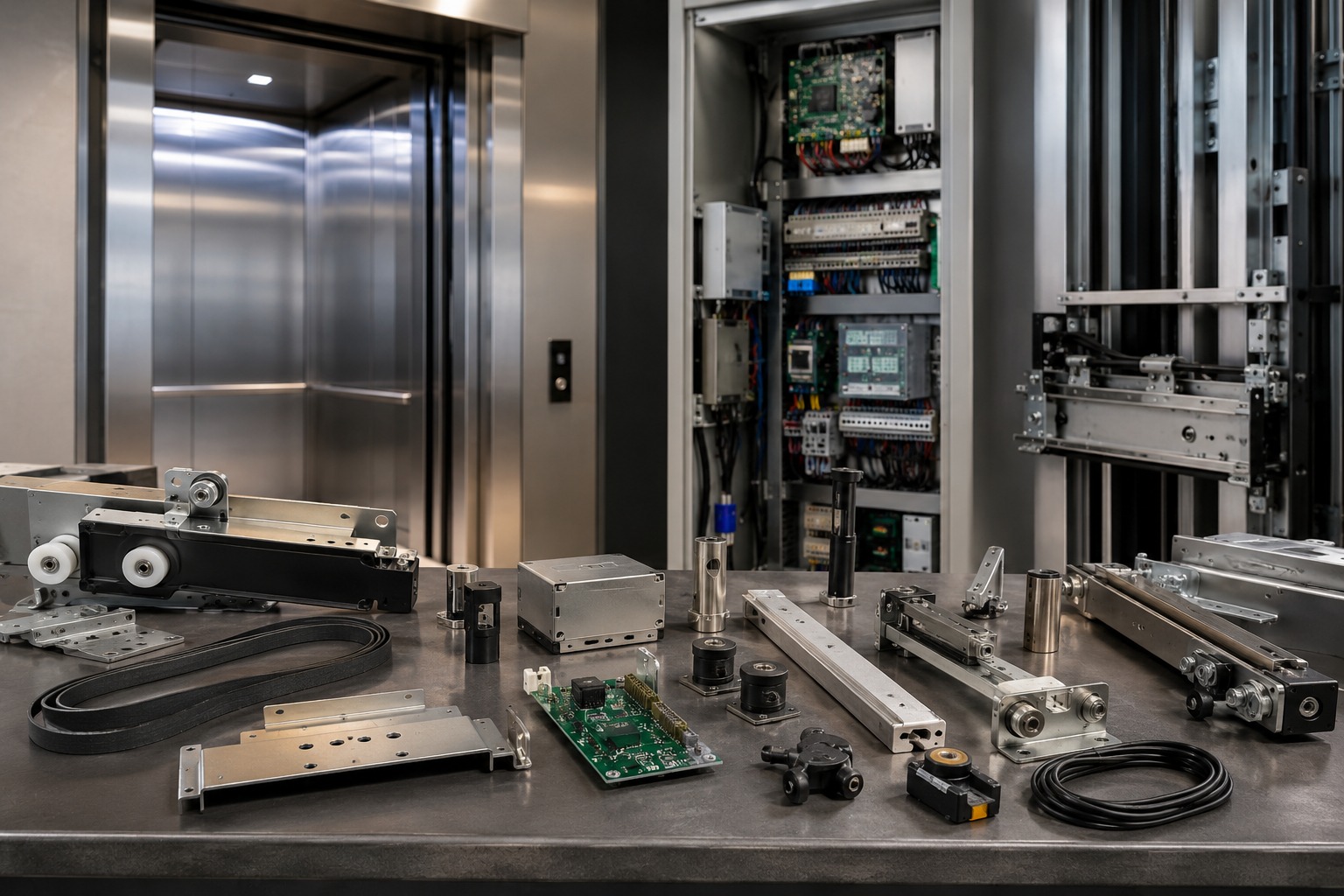
In South Africa, lift accessories create a practical and repeatable replacement market because elevators in commercial towers, hospitals, residential estates, retail centres, hotels, and public facilities operate under daily wear, variable power conditions, and strict uptime expectations. For maintenance contractors and distributors, the strongest demand usually comes from parts that fail through movement, dust, vibration, electrical fluctuation, or routine servicing intervals. That is why door parts, safety devices, guide shoe oil cups, sensors, electronic boards, power supplies, and inverter-related components remain some of the most searched and most reordered lift spare parts categories.
Across Johannesburg, Cape Town, Durban, Pretoria, Gqeberha, and Bloemfontein, buyers increasingly want three things at the same time: correct model matching, stable quality, and fast supply. Building owners are under pressure to reduce downtime, while maintenance companies need dependable stock for emergency callouts and preventive service contracts. Distributors also want product ranges that cover both high-volume routine items and specialist components for modernization projects. In this environment, choosing the right portfolio of lift accessories is not only a technical decision but also a commercial strategy.
This guide explains which product categories generate steady replacement demand, how local market conditions influence purchasing, and how distributors can connect content marketing with product pages to capture search traffic and convert it into enquiries. It also covers future trends leading into 2026, including energy efficiency, digital diagnostics, sustainability expectations, and product traceability.
South African lift accessories market overview
The South African elevator service market is shaped by a mix of mature urban buildings, ongoing retrofit needs, imported equipment platforms, and pressure on maintenance budgets. Office towers in Sandton and Cape Town CBD often require consistent door system maintenance and electronic troubleshooting. Residential high-rises in Umhlanga, Midrand, and Centurion need dependable replacement parts that balance cost with safety. Hospitals and transport-linked buildings demand especially high uptime, making stock availability a critical purchasing factor.
Import dependency also affects buying behaviour. Since many lift accessories are sourced through international supply chains entering via the Port of Durban, Cape Town Harbour, and logistics corridors feeding Gauteng, buyers pay close attention to lead times, packaging quality, and compatibility support. Contractors often prefer suppliers that can confirm dimensions, connector types, voltage ranges, signal compatibility, and brand substitution options before dispatch. This reduces installation risk and prevents repeat site visits.
Another major factor is mixed-brand service demand. South African maintenance companies routinely support equipment from Hitachi, Toshiba, KONE, Mitsubishi, and other systems installed over different decades. As a result, demand is not limited to one OEM platform. Instead, the market rewards suppliers that can support multi-brand replacement needs with careful model matching and dependable communication.
| Driver | Where it appears | Common effect on lifts | Parts affected | Buying priority | Commercial impact |
|---|---|---|---|---|---|
| High traffic usage | Malls, offices, hospitals | Mechanical wear and frequent door cycles | Door rollers, locks, springs, sensors | Fast replacement | Regular repeat orders |
| Power instability | Urban and peri-urban buildings | Board faults and power module stress | Power supplies, inverters, boards | Correct electrical matching | Higher-value emergency demand |
| Ageing installations | Older commercial buildings | Frequent service interventions | Encoders, relays, indicators, buttons | Compatibility checks | Steady modernization pipeline |
| Dust and climate exposure | Mixed environments nationwide | Contamination and sensor issues | Light curtains, sensors, guide shoes | Protective packaging | Increases maintenance frequency |
| Safety compliance pressure | Residential and public buildings | Need for functional safety parts | Door locks, safety switches, interlocks | Traceable quality | Supports premium purchasing |
| Reduced downtime targets | Property management portfolios | Urgent parts sourcing | All critical accessories | Responsive service | Builds long-term supplier loyalty |
The table above shows why the replacement market stays active. The strongest categories are not always the most expensive items; often they are the products most exposed to motion, traffic, electrical fluctuation, and maintenance cycles. For distributors, this means the best stock strategy combines fast-moving consumable-style accessories with high-value technical components.
Most searched lift accessories categories
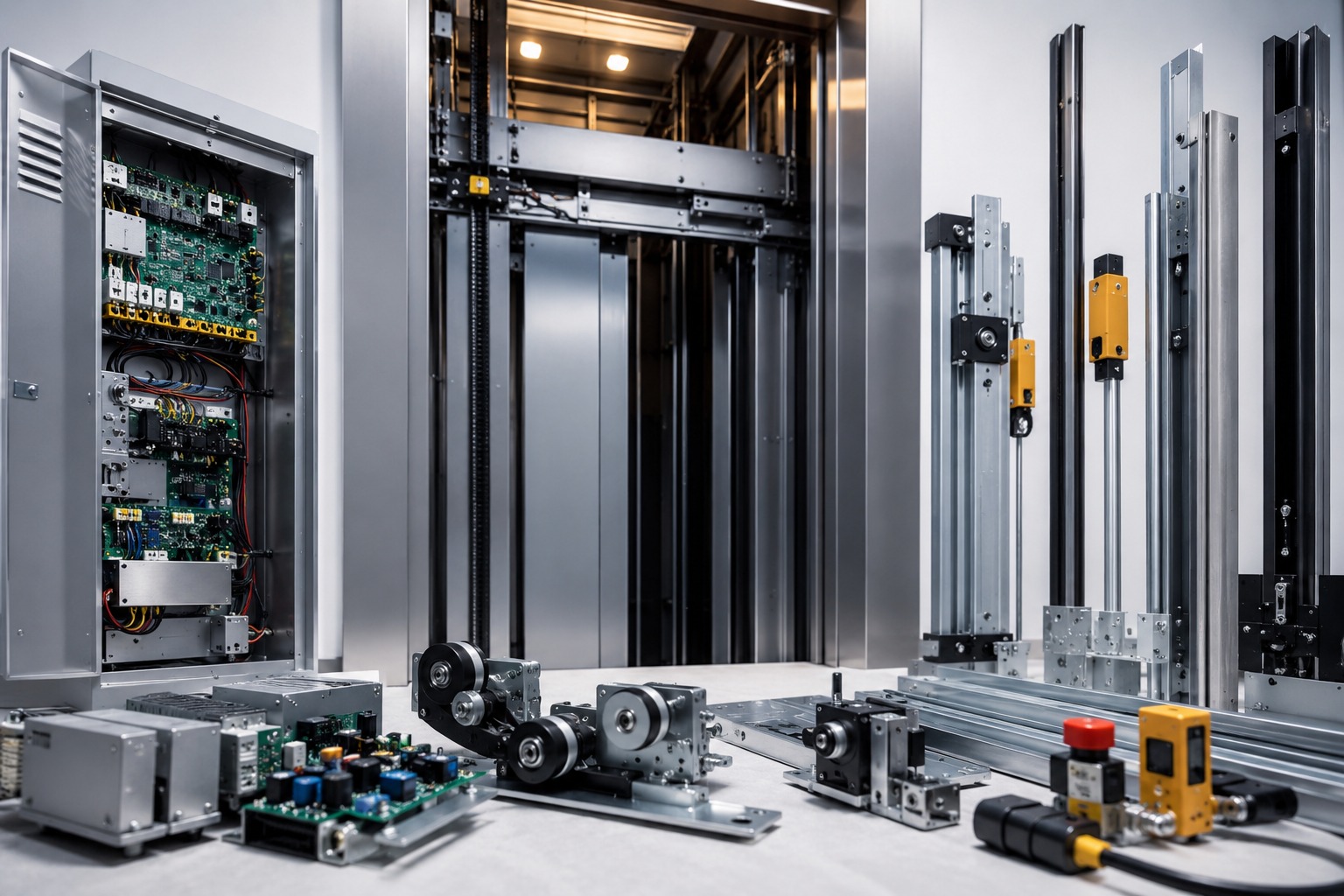
The most searched lift accessories categories in South Africa usually reflect urgency, install frequency, and fault visibility. When a building experiences repeated door errors, floor indication failure, or intermittent shutdowns, contractors immediately search for the part family involved. Search demand therefore tends to cluster around functional systems rather than abstract technical labels.
From an SEO and sales perspective, the leading categories typically include door operator components, door locks, light curtains, guide shoes, oil cups, sensors, encoders, control boards, power supplies, frequency converters, buttons, COP accessories, intercom parts, and indicator lights. Many buyers begin with a broad category search and only later refine to brand, model, or connector version. This is why category pages and educational articles should work together.
High-search categories also tend to map well to real maintenance routines. A technician may look for a door spring after noticing weak closing force, or search for a landing indicator when a display fails. For example, a buyer searching for a floor display solution may naturally land on an arrival light and forecast indicator for Hitachi elevator parts if the content clearly explains compatibility and use cases.
| Category | Main reason for search | Typical buyer | Urgency level | Repeat demand potential | Margin potential |
|---|---|---|---|---|---|
| Door parts | Frequent wear and operational faults | Maintenance contractor | Very high | Very high | Medium |
| Safety devices | Compliance and shutdown prevention | Service company | Very high | High | Medium to high |
| Guide shoes and oil cups | Routine wear and lubrication needs | Maintenance team | Medium | High | Stable |
| Electronic boards | Fault diagnosis and system recovery | Technical buyer | High | Medium | High |
| Sensors and encoders | Positioning and door detection issues | Technician or distributor | High | High | Medium to high |
| Power supplies and inverters | Electrical faults and modernization | Contractor and building owner | High | Medium | High |
This category pattern matters because it helps distributors decide where to invest in stock depth, landing page structure, and advertising. The fastest search-to-order flow usually comes from products linked to visible breakdowns. The longer decision cycle tends to involve technical boards and inverter parts that require model verification before purchase.
Demand for door parts and safety devices
Door systems produce some of the most reliable replacement demand in the lift industry. Every opening and closing cycle creates wear on springs, rollers, guides, locks, contact assemblies, and operator-related hardware. In busy South African buildings such as shopping centres in Durban, office complexes in Rosebank, and mixed-use developments in Cape Town, door faults are among the most common reasons for service calls.
Door accessories are commercially attractive because they are both frequent and diverse. A distributor can build recurring revenue from springs, locks, shoes, sliders, contact parts, couplers, and related hardware. A maintenance contractor, meanwhile, values product consistency because a poorly matched door part often causes return visits and customer frustration. This is why technical confirmation and clear product photos are essential.
A good example of a product that supports this category is a lift door spring for elevator spare parts, which suits the real-world need for durable replacement components in high-cycle systems. Safety devices linked to door operation, including interlocks and detection accessories, are equally important because they affect both compliance and passenger confidence.
Demand for safety devices remains strong because building owners cannot afford prolonged shutdowns linked to access protection or door monitoring failures. Even when the item value is moderate, the consequence of failure is serious. That keeps reorder activity steady across residential and commercial sectors.
| Part type | Failure cause | Where commonly used | Symptoms on site | Replacement frequency | Sales note |
|---|---|---|---|---|---|
| Door springs | Fatigue and repeated cycling | Passenger lifts | Weak or uneven movement | High | Ideal fast-moving stock |
| Door locks | Mechanical wear or misalignment | Residential and office buildings | Door fails to secure properly | Medium to high | Safety-critical category |
| Rollers and guides | Friction and dust | High-traffic sites | Noisy or rough operation | High | Strong repeat business |
| Light curtains | Impact, contamination, wiring faults | Malls and hospitals | False door reopen events | Medium | Good margin with clear specs |
| Interlocks | Usage wear and electrical issues | All building types | Lift unable to move safely | Medium | Often urgent purchase |
| Contact assemblies | Oxidation and vibration | Older installations | Intermittent door status faults | Medium | Useful for retrofit stock |
The bar chart illustrates how demand intensity often peaks in commercial, retail, and healthcare settings, where high lift usage magnifies wear and safety expectations. These sectors should guide initial stocking decisions for distributors targeting replacement volume.
Demand for guide shoe oil cups and lubrication parts
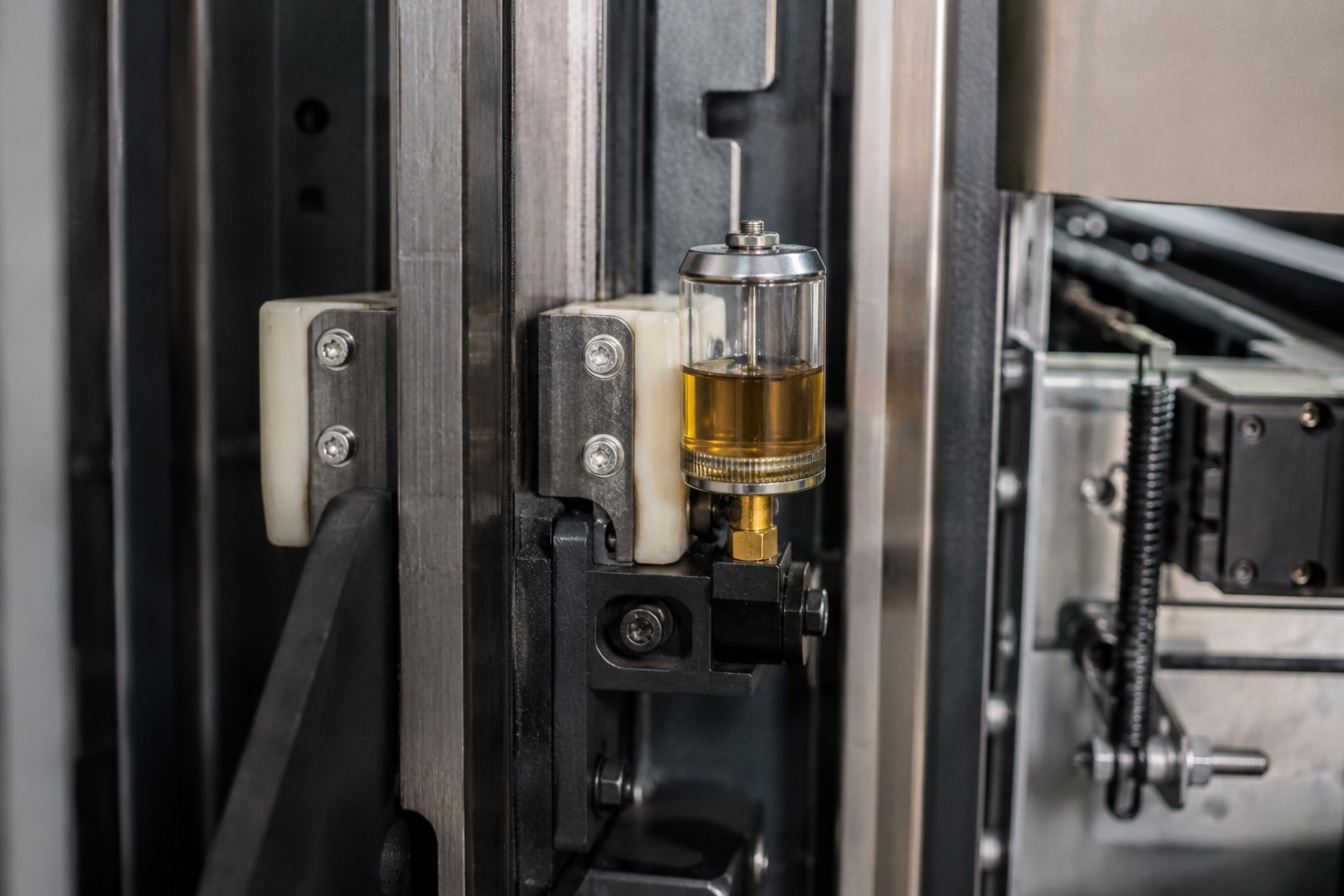
Guide shoe oil cups and lubrication-related accessories may not attract the same attention as control boards, but they represent a dependable service category. Their value lies in predictability. Elevators that rely on guided movement require consistent lubrication performance to reduce friction, noise, and accelerated wear. When lubrication fails or oil feed becomes inconsistent, downstream component wear can increase, raising overall maintenance costs.
In South African conditions, dust exposure, aging shafts, and inconsistent preventive maintenance can make these parts especially important. Contractors servicing older properties in Johannesburg South, industrial facilities near Durban, or residential towers in Pretoria often need affordable, quickly available lubrication accessories that fit established maintenance schedules. These are ideal products for distributors because they are easy to reorder, easy to bundle, and useful in both planned and corrective maintenance.
Guide shoe demand also overlaps with broader traction and sealing needs. For example, related mechanical support items such as a TKL traction seal used in lift accessories and elevator spare parts can sit within the same mechanical and maintenance-focused product family, improving cross-selling opportunities for distributors.
Lubrication products should not be treated as low-priority lines. They help prevent bigger failures, strengthen contractor loyalty through frequent small orders, and increase average basket value when included in service kits.
| Product | Main function | Maintenance value | Typical issue if neglected | Buyer type | Stocking advice |
|---|---|---|---|---|---|
| Guide shoe oil cup | Feeds lubricant to moving guide area | Reduces friction | Dry running and noise | Maintenance contractor | Keep multiple sizes |
| Guide shoe liner | Supports stable guided movement | Improves ride quality | Vibration and wear | Service company | Stock by common models |
| Lubrication wick | Transfers oil steadily | Controls oil delivery | Uneven lubrication | Technician | Bundle with oil cups |
| Oil reservoir parts | Supports retention and feed | Prevents leakage issues | Insufficient lubrication | Distributor | Useful add-on inventory |
| Fixing brackets | Secures lubrication assembly | Improves installation stability | Misalignment | Installer | Carry compatible hardware |
| Sealing components | Helps contain lubricant | Limits contamination | Leakage and dirt ingress | Workshop and site team | Ideal for kit sales |
The explanation from this table is straightforward: lubrication accessories may be low-cost compared with electronic assemblies, but they are important because they support preventive maintenance economics. A distributor with reliable stock in this category often becomes a preferred partner for routine service businesses.
Demand for electronic boards and sensors
Electronic boards and sensors form the technical core of modern lift troubleshooting. As elevators become more dependent on stable communication, signal accuracy, and control logic, faults in boards, sensors, encoders, and interface modules create high-value demand. In South Africa, this demand is further influenced by equipment diversity and variable site conditions. Contractors frequently need support identifying board revisions, connector arrangements, and software-related compatibility concerns.
Search demand in this category is strong because fault symptoms are disruptive: lifts stop responding correctly, floor positions misread, doors fail to register status, or displays lose communication. Many buyers begin with fault-based searches rather than exact part numbers. This makes educational content especially valuable. Articles that explain common symptoms, model-checking steps, and replacement logic can attract qualified traffic and guide buyers toward the correct product page.
Products in this family often include main control boards, outbound call boards, display interface boards, leveling sensors, magnetic switches, proximity sensors, and encoders. For instance, a contractor looking for hall call support parts may need an outbound call board bottom box for lift accessories when repairing external call systems or landing communication assemblies.
Because electronic parts carry higher technical risk, the winning supplier is rarely the cheapest one. The better partner is the supplier that can confirm specifications, inspect product condition carefully, and package sensitive parts securely for transit to Gauteng, the Western Cape, KwaZulu-Natal, and inland service regions.
| Component | Primary role | Typical failure sign | Technical matching need | Demand level | Business opportunity |
|---|---|---|---|---|---|
| Main control board | Coordinates lift logic | Lift unavailable or unstable operation | Very high | High | Premium value sale |
| Call board | Handles landing or car call input | Buttons fail to register | High | Medium to high | Good modernization fit |
| Sensor switch | Detects position or door state | Intermittent status errors | Medium | High | Frequent troubleshooting item |
| Encoder | Supports speed and position feedback | Levelling or motion faults | High | Medium | High technical value |
| Indicator board | Controls floor display output | Missing or wrong floor display | Medium | Medium | Useful for upgrades |
| Light curtain controller | Manages door detection signals | Repeated door reopening | High | Medium | Safety-linked sales |
The area chart highlights the trend shift from purely mechanical replacement demand toward a larger share of electronics and sensors. As more buildings modernize and diagnostics improve, this category is expected to expand further by 2026.
Demand for power supplies and inverter parts
Power supplies and inverter-related parts combine technical importance with strong commercial value. They are critical in systems affected by unstable voltage, ageing drive assemblies, or modernization projects. In South Africa, where electrical conditions can be challenging, demand for these products remains meaningful across both repair and upgrade work.
When a power supply fails, secondary systems such as indicators, communication modules, or control inputs may also stop functioning correctly. When inverter or frequency converter parts degrade, building owners may experience rough starts, abnormal speed behaviour, and greater downtime risk. These failures usually trigger urgent sourcing activity because the lift’s availability is directly affected.
This category tends to involve more technical consultation than simpler accessories. Buyers often need confirmation of rated voltage, current, control interface, drive family, or board compatibility. For distributors, that means product pages should include clear specification references, while blog content should answer common questions about symptom diagnosis, retrofit selection, and equivalent replacement criteria.
The commercial advantage here is clear: although order frequency may be lower than for door springs or lubrication parts, average transaction value is higher. These products also create cross-selling opportunities with sensors, boards, encoders, buttons, and display accessories during partial modernizations.
| Item | Main application | Common trigger for purchase | Technical check required | Order urgency | Value profile |
|---|---|---|---|---|---|
| Switching power supply | Stable low-voltage system support | Output instability or failure | Voltage and current rating | High | Medium |
| Drive inverter | Motor speed control | Drive faults or modernization | Model and motor compatibility | High | High |
| Frequency converter part | Drive subsystem support | Module-level repair needs | Series and configuration | Medium to high | High |
| Cooling fan module | Heat management in drives | Overheating or wear | Size and power specs | Medium | Medium |
| Rectifier or interface module | Power conditioning | Electrical fault diagnosis | Circuit and connection match | Medium | Medium to high |
| Drive keypad or display part | Monitoring and setup | Interface damage | Series compatibility | Medium | Specialist |
By 2026, energy efficiency policy, lifecycle extension projects, and rising attention to uptime are likely to make this category even more important. Building owners increasingly want drive and power components that support smoother operation, lower energy waste, and easier maintenance planning.
How distributors build strong lift accessory product ranges
Distributors build effective product ranges by balancing speed, breadth, and technical confidence. The best portfolios usually start with three layers. The first layer is fast-moving essentials such as door parts, locks, rollers, buttons, indicators, guide shoes, and oil cups. The second layer is technical control products including sensors, call boards, display boards, and encoders. The third layer is higher-value drive and power products used in urgent repairs or modernization work.
A strong range is not simply a long catalogue. It should reflect real fault frequency, local building stock, and supply chain realities in South Africa. For example, a distributor serving Gauteng may focus heavily on high-volume office and residential maintenance demand, while one servicing coastal regions may prioritize corrosion-aware packaging and logistics reliability through Durban or Cape Town channels.
Good distributors also build around interchangeability knowledge. Since many site teams do not start with a perfect part number, the distributor must organize products by brand, function, model series, and visual matching features. This improves both online conversion and quotation speed.
Another key practice is kit thinking. Rather than selling only single items, successful distributors prepare linked recommendations such as door spring plus roller, oil cup plus wick, sensor plus bracket, or board plus connector accessories. This increases order value and reduces the chance of incomplete repair visits.
The comparison chart shows what buyers usually value most in a supplier relationship. While stock matters, model matching and service responsiveness often make the biggest difference in whether a distributor wins repeat business.
How to connect blog content with product pages
For SEO and lead generation, blog content should answer buying-stage questions and naturally direct readers to product pages. The most effective approach is to write articles around specific failure themes, maintenance categories, and compatibility questions. Examples include “common causes of lift door faults,” “when to replace guide shoe oil cups,” “how to identify elevator control board problems,” or “signs a lift power supply may be failing.”
Each article should then link contextually to relevant products. Instead of placing all links in one block, the links should appear where the reader would logically need them. A discussion about landing communication faults can mention a compatible board product. A paragraph on door closing issues can point to a door spring page. A section on display failures can link to floor indication products. This creates a smoother path from information search to purchasing enquiry.
Category pages and blogs should also support each other through anchor text variety. Use phrases such as lift door spring replacement, arrival indicator for elevator display systems, or outbound call board for lift landing control rather than repeating the same wording every time. This improves readability and broadens keyword relevance.
For South Africa, geo-targeted content improves local visibility. Blog posts can reference service needs in Johannesburg, Durban, Cape Town, and Pretoria, mention logistics routes, and address common contractor concerns such as downtime, mixed-brand inventory, and installation support. This makes the content more useful and more locally relevant.
Applications, industries, and local sourcing expectations
Lift accessories are used across a wide range of sectors, and understanding those applications helps shape both inventory and marketing. Residential complexes usually prioritize cost-effective reliability, especially for door parts, buttons, displays, and intercom items. Commercial towers require quick-response supply because downtime affects tenants and asset managers. Hospitals need dependable safety devices and sensor performance. Hotels and retail centres place extra emphasis on smooth passenger experience and visible components such as indicators and COP accessories.
Industrial and public-sector properties often involve older systems, non-standard retrofits, or harder operating conditions. These sites can generate demand for seals, guide parts, power modules, and practical replacement hardware that supports extended equipment life. In all cases, local buyers prefer suppliers that provide stable packaging, clear photos, technical confirmation, and responsive follow-up before and after dispatch.
Case examples from the South African market
Consider a maintenance contractor in Sandton responsible for multiple office towers. The most frequent emergency calls may involve door reopening faults, landing call issues, and failed floor displays. In this case, having access to stocked door parts, light curtains, call boards, and display accessories cuts response time dramatically.
In Durban, a distributor serving mixed residential and commercial buildings may find steady movement in guide shoe oil cups, locks, buttons, and sensors, supported by occasional higher-value inverter enquiries. Products entering through the Port of Durban with secure packaging and verified model details can help that distributor build a reliable reputation.
In Cape Town, modernization contractors working on aging premium properties often need both cosmetic and technical accessories, such as COP-related parts, indicators, boards, and power modules. Their main concern is compatibility and project timing rather than only unit price. This type of buyer is likely to return if the supplier offers careful matching and clear communication.
Our capabilities for maintenance companies and distributors
Technological capabilities
We support customers with careful model matching across multiple lift brands and accessory categories. This includes attention to board versions, signal interfaces, voltage requirements, sensor types, and functional compatibility. For technical parts such as control boards, encoders, power supplies, and inverter-related components, the focus is on reducing mismatch risk before shipment. That approach helps contractors and distributors shorten downtime and avoid unnecessary returns.
Manufacturing capabilities
Our product sourcing and production coordination prioritise stable quality inspection, dependable component consistency, and protective packaging for international transit. Mechanical accessories such as door components, guide parts, oil cups, indicators, and support hardware are selected with practical field durability in mind. Packaging design is especially important for electronic boards, display parts, and fragile accessories moving through long logistics routes into South Africa.
Service capabilities
Responsive service is essential when a building is out of operation. We work to support maintenance companies, distributors, building owners, and modernization contractors with timely communication, clear specification checks, and practical assistance in identifying compatible replacement parts. The aim is simple: help buyers source the right lift accessories efficiently, reduce delays, and keep elevator systems operating safely.
Buying advice for South African contractors and distributors
When purchasing lift accessories, start with the failure mode rather than the catalogue name. Ask what function has failed, what brand and model the system uses, whether a connector or mounting detail matters, and whether the part is safety-critical. For urgent repairs, request dimensional photos, terminal references, label images, or control board markings before ordering.
Next, separate stock into three commercial groups: emergency-critical parts, routine maintenance parts, and modernization support parts. Emergency-critical items include locks, sensors, boards, power supplies, and drive-related parts. Routine items include oil cups, buttons, springs, and indicators. Modernization support parts include upgraded displays, control interfaces, and replacement electronic modules.
Finally, consider lifecycle cost instead of only purchase price. A correctly matched part with reliable packaging and responsive support usually saves more money than a cheaper alternative that causes delays or site rework.
2026 trends for lift accessories in South Africa
Looking toward 2026, several trends are likely to reshape the South African lift accessories market. First, electronics will take a larger share of demand as more buildings adopt modernization pathways instead of full equipment replacement. This will increase demand for control boards, display modules, sensors, encoders, and interface accessories.
Second, power quality and energy efficiency will push stronger interest in reliable power supply and inverter solutions. Building owners want stable operation, lower energy waste, and fewer drive-related shutdowns. Third, sustainability expectations will grow. Buyers will increasingly value durable components, packaging that protects parts without excess waste, and replacement strategies that extend equipment life instead of forcing unnecessary full-system change.
Fourth, policy and safety attention will continue to encourage demand for traceable safety devices and dependable replacement parts. Fifth, digital product content will become more important. Buyers will expect clearer specifications, image-based verification, and faster support for mixed-brand systems. Distributors that combine local market understanding with technically structured online catalogues will be in a strong position.
FAQ about lift accessories
Which lift accessories usually sell fastest in South Africa?
Door parts, safety devices, sensors, indicators, guide shoe oil cups, and buttons typically move quickly because they are linked to routine wear and visible service issues.
Why do door parts generate steady replacement demand?
Door systems cycle constantly. Springs, rollers, locks, guides, and detection parts wear out faster than many static components, especially in high-traffic buildings.
Are guide shoe oil cups important or just minor accessories?
They are important because they support proper lubrication. Neglecting them can increase friction, noise, and wear on guided movement components.
What should buyers confirm before ordering electronic boards?
Confirm brand, model, board number, revision, connector layout, voltage, and fault symptoms. Photos of labels and terminals help reduce mismatch risk.
Why is there strong demand for sensors and encoders?
Sensors and encoders affect position feedback, door monitoring, and operational accuracy. When they fail, lifts may stop, mislevel, or behave intermittently.
How do power supplies and inverter parts fit into replacement demand?
They are vital for system stability and motion control. Electrical fluctuation, age, and modernization work all contribute to ongoing demand.
How can distributors build a strong product range without overstocking?
Start with fast-moving door and safety items, add common sensors and boards, then selectively expand into higher-value power and drive components based on local service demand.
How should a blog connect to product pages?
Use fault-based educational content and insert contextual links where readers naturally need product solutions. This improves both SEO relevance and conversion quality.
What matters most to South African buyers besides price?
Correct model matching, stable quality, protective packaging, and responsive communication often matter more than the lowest price, especially when downtime is costly.
Which sectors create the strongest lift accessory demand?
Commercial offices, retail centres, hospitals, large residential complexes, and hotels are usually the strongest demand sources because of high usage and uptime pressure.