
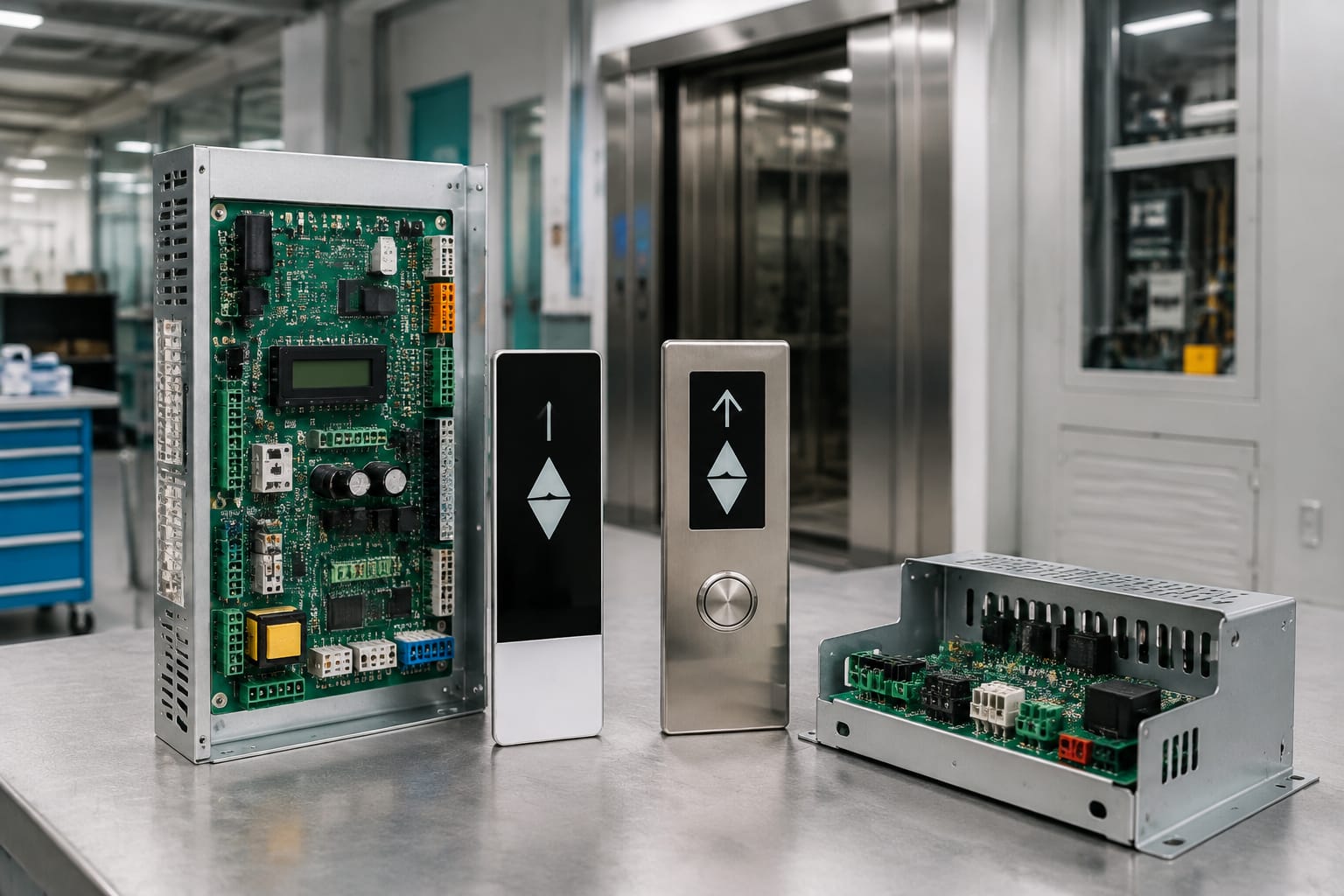
Ordering Schindler parts safely starts with identifying the exact equipment family and then matching the component's original code, revision, electrical details and physical connections. A lift labelled “Schindler” is not enough: similar-looking boards, displays and door controllers may differ in firmware, connector pinout, supply voltage or communication protocol.
For South African maintenance contractors, modernisation teams and parts buyers, the best approach is to treat each replacement as a compatibility check. Record the installation details, photograph the removed component before disconnecting it, and compare the proposed replacement against the original item rather than relying on a general model description.
Identify the Schindler equipment family
The equipment family is the first filter when sourcing Schindler spare parts. It establishes the likely controller architecture, door system, car operating panel arrangement and component generation. Start with the controller cabinet label, lift documentation, maintenance records and labels on the failed part.
Capture the following before searching:
- Lift and controller family designation
- Controller cabinet or installation reference
- Part number, board code and any serial or production number
- Lift type and application, such as passenger, goods or service lift
- Door operator type and landing door arrangement
- Car operating panel and display type
- Number of stops, door zones and entrances, where relevant
- Clear photographs of both sides of an electronic board and every connector
Do not assume all components within the same lift family are interchangeable. A controller board may be designed for a particular configuration, while a display board can vary by panel layout, indicator type or communication system. The equipment family narrows the search; the original component information confirms the fit.
Where a part has already been removed, retain it until the replacement has been checked and commissioned. The original board, harness and labels are often the most reliable evidence available for comparing an alternative.
Separate the lift model from the part identity
A lift model is useful context, but the part code normally carries more weight. Two installations described as the same model can have different revisions, options and site configurations. Conversely, a board code may identify a component more precisely than a broad lift model reference.
For procurement purposes, build the item description around both:
Equipment family + component function + full part code + revision + connector or configuration details
For example, “Schindler 3300 control board” is a starting point. “Schindler 3300 controller board, original code and revision confirmed, matching connector layout” is a sourcing specification that can be evaluated properly.
Common control and door components
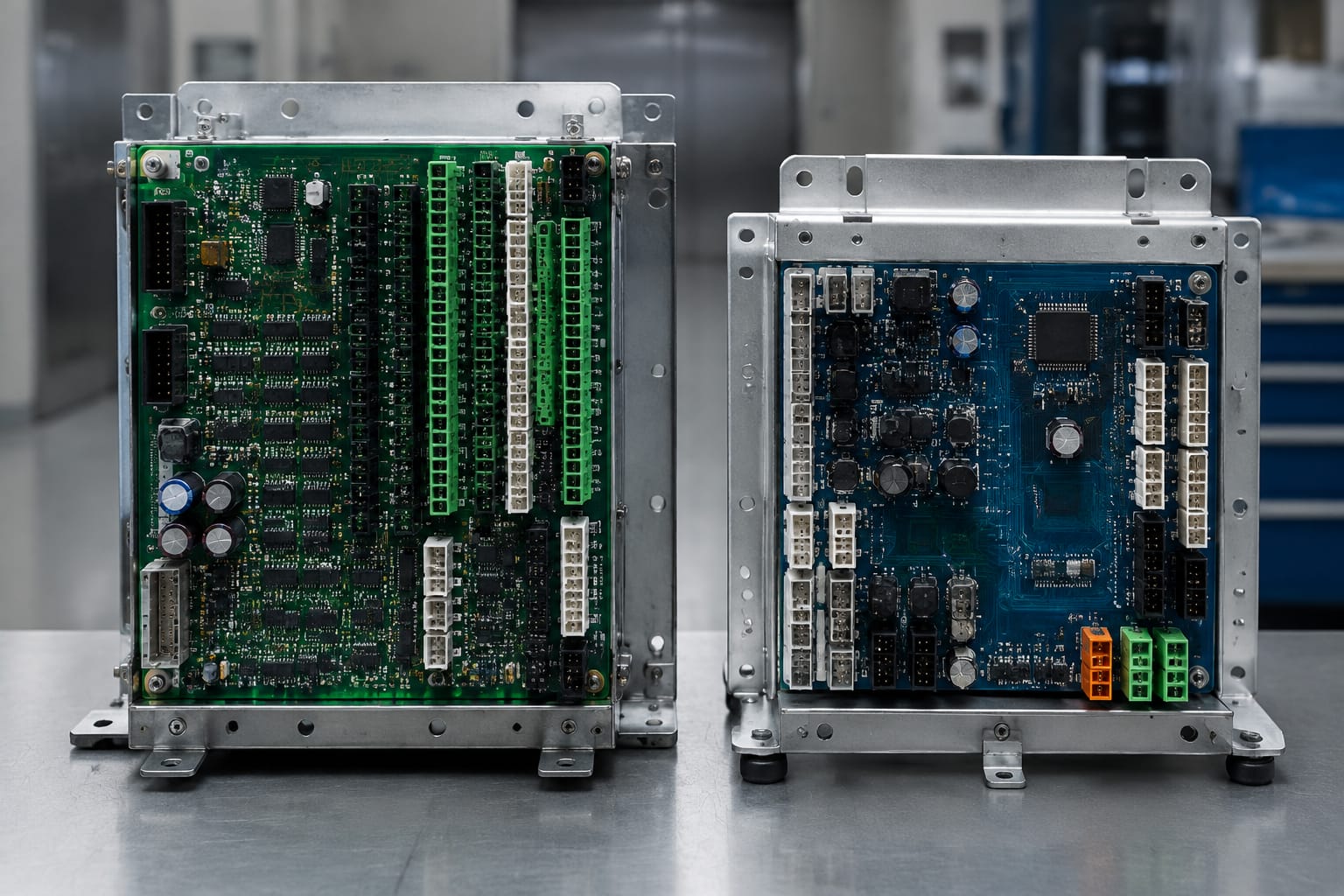
Schindler parts commonly requested for maintenance or repair include controller boards, car operating panel boards, displays, door operator controllers, power supplies, relays, sensors, contactors and wiring assemblies. Their interchangeability depends on more than their function.
| Component type | Primary role | Key identification checks |
|---|---|---|
| Main control board | Processes lift operation and safety-related inputs | Full board code, revision, firmware or programming status, connectors, voltage |
| I/O or interface board | Connects controller logic to field devices | Board code, input/output arrangement, plug positions, communication connection |
| COP display board | Drives car display and button-panel functions | Panel type, display format, board number, loom connector and mounting points |
| Door operator controller | Controls door movement and monitoring | Door operator family, motor type, supply, encoder or sensor inputs, connector layout |
| Power supply or transformer | Provides specified control voltage | Input and output ratings, terminals, mounting, protection characteristics |
| Sensors and switches | Detect door, car or shaft position conditions | Operating principle, mounting, cable connection, electrical rating and actuation arrangement |
| Contactors and relays | Switch control or power circuits | Coil voltage, contact configuration, current duty, mounting and auxiliary contacts |
A physical match alone is not proof of compatibility. An electronic board can have the same outline and connectors while using a different software revision or communication arrangement. Likewise, a door controller can fit in the same mounting location but be unsuitable for the installed motor or encoder.
When assessing [Schindler 3300 and 3600 elevator control boards](/products/3300-3600-elevator-control-board-id-lift-parts/), compare the original board label and revision against the product information, then confirm the application details with the supplier before treating it as a replacement.
Door equipment needs its own identification process
Door-related faults are often attributed to the controller when the cause is a mechanical obstruction, sensor issue, wiring fault or door operator component. Confirm the failed component through normal fault-finding before ordering a board.
For a door operator controller, record:
- Door operator designation and controller label
- Motor details and cable connection
- Encoder, position sensor and safety-edge connections
- Incoming supply voltage and earthing arrangement
- Connector count, shape, keying and pin positions
- Mounting pattern and enclosure dimensions
- Any adjustable settings or configuration markings on the original unit
A replacement must suit the door system fitted to the lift, not merely the lift brand. Use the component listing for [3300 door operator controllers](/products/door-operator-controller-3300-elevator-parts/) as a comparison point, but verify the original controller identification and electrical arrangement before ordering.
Read board labels and part codes
The label on the original component is usually the most valuable source of information. Read it exactly, including punctuation, suffixes and revision marks. A missing final character may identify a different revision, regional version, assembly option or updated design.
Look for these items on boards and assemblies:
- Manufacturer or brand marking
- Full part number or material number
- Board identifier, often printed on the PCB as well as on a label
- Revision level, such as Rev, R, index or issue number
- Serial number, date code or batch identifier
- Voltage, current and frequency information
- Firmware, software or configuration label where provided
- Barcode or data matrix reference
- Connector designations printed beside sockets
The board number printed into the circuit board is not always the same as the orderable assembly number. The printed code can identify the bare PCB, while the label identifies the completed board supplied as a spare part. Provide both to a supplier where possible.
Photograph labels before cleaning or removing parts
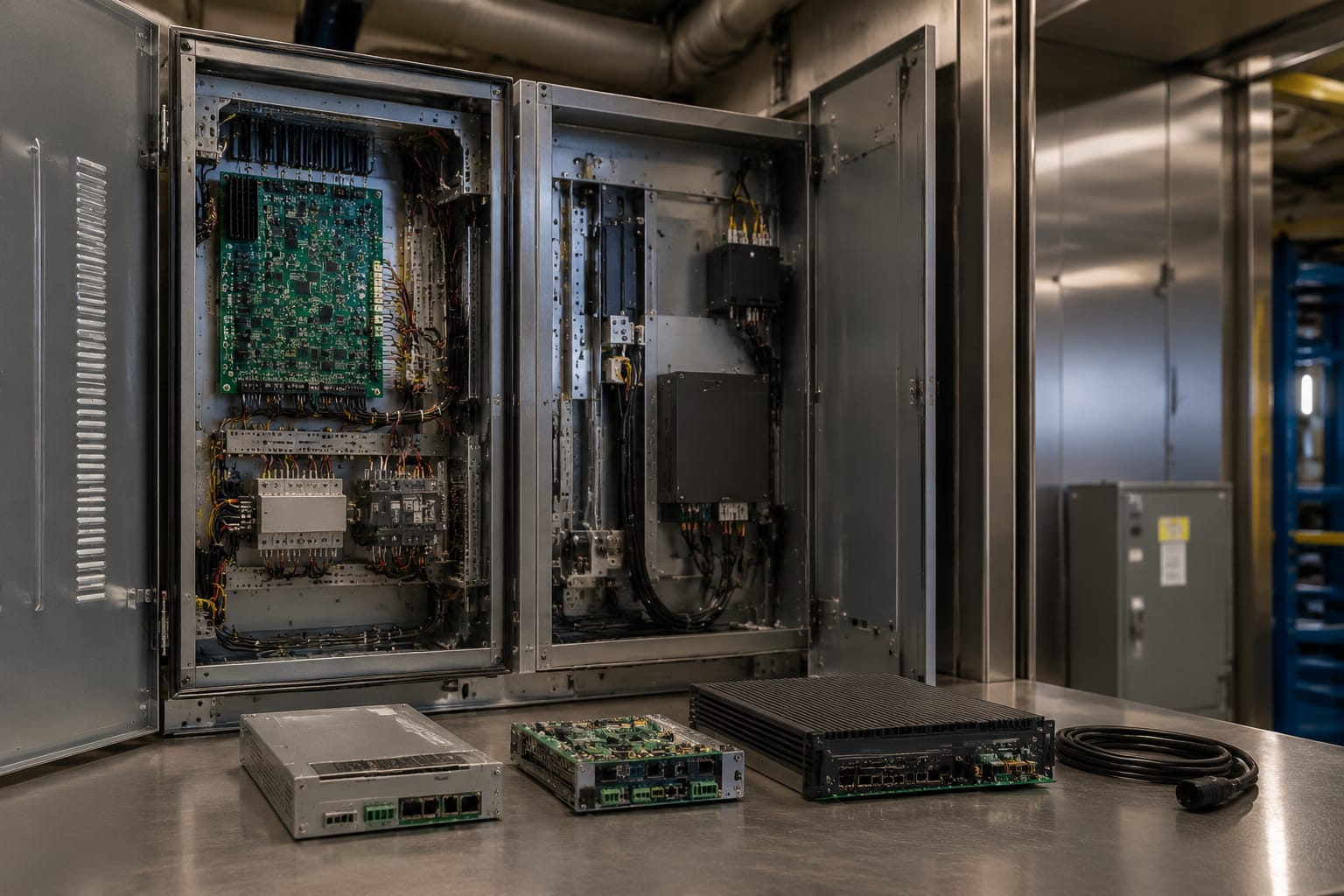
Dust, heat and age can make labels hard to read. Photograph them under good lighting before cleaning or disconnecting the item. Take close images of the label, the full board face, the underside, all plugs and the installed location.
Avoid using only a handwritten transcription. A photograph allows a buyer or technical reviewer to distinguish similar characters, such as 0 and O, 1 and I, or 5 and S. It also provides evidence of missing jumpers, add-on modules and connector orientation.
Compare 3300 and 3600 applications
Schindler 3300 and 3600 references are useful for identifying an application family, but they should not be treated as a blanket cross-reference. Control, display and door components should be matched to their specific original part details and installed configuration.
| Check area | 3300 application | 3600 application | Buying implication |
|---|---|---|---|
| Equipment reference | May identify the lift family in service records or cabinet labels | May identify a different lift family or configuration | Confirm the exact family rather than using the model name alone |
| Control components | Can use family-specific boards and interfaces | Can use boards with different codes, revisions or configurations | Match the original assembly code and board revision |
| Car panel electronics | Depends on COP design, display and communication arrangement | Depends on COP design, display and communication arrangement | Verify panel type, connector layout and display function |
| Door control | Depends on installed operator and motor arrangement | Depends on installed operator and motor arrangement | Identify the actual door operator controller, not only the lift model |
| Replacement decision | Requires application and code confirmation | Requires application and code confirmation | Do not substitute across families without documented compatibility |
This distinction matters especially when a catalogue title groups multiple applications. A grouped listing can mean the product range covers more than one application; it does not mean every unit fits every installation.
For car operating panel work, compare the display type, number of buttons, wiring connection and board code. A [3300/3600 COP display board](/products/3300-3600-elevator-cop-display-board-id-lift-parts/) should be evaluated against the existing panel assembly, including its connectors and required functions.
Check revisions and connectors
Revision control is essential for electronic Schindler parts. Manufacturers can change board layouts, components, firmware compatibility or connector arrangements while retaining a similar base reference. A newer revision may replace an earlier one, but this should be confirmed rather than presumed.
Record every revision marking on the original part. If the offered unit has a different revision, ask for evidence that it supersedes or is compatible with the original code and application. This can include manufacturer documentation, a stated interchange reference, or a clear technical comparison from the supplier.
Inspect connectors methodically
Connector checks prevent many incorrect orders. Compare more than the number of plugs:
- Count all connectors and note their locations.
- Check each connector's shape, pin count and keying.
- Read the connector references printed on the board, such as input, output, power or communication designations.
- Compare wire colours and harness labels only as supporting evidence, since site wiring can vary.
- Check for jumpers, terminals, sockets or expansion modules that the replacement must accommodate.
- Confirm mounting holes, standoffs, heat sinks and enclosure clearances.
Never force a connector because it appears nearly correct. A connector that is physically close but differently keyed may indicate an incompatible version. Forced connections can damage pins, the harness or the replacement board.
A common error is ordering from a front-facing product photo only. The component's underside and connector edge may reveal the difference that determines whether it can be installed.
Confirm voltage and communication details
Electrical compatibility must be confirmed before fitting any replacement. Check the original part's supply rating and the incoming supply available at the installation. Ratings may be printed on the board, power unit, enclosure label or wiring diagram.
Confirm these details:
- Supply voltage and whether it is AC or DC
- Frequency where an AC input is specified
- Required polarity for DC-powered equipment
- Rated current or power requirements
- Earthing and shielding arrangements
- Motor output requirements for door equipment
- Sensor, encoder and safety circuit interfaces
- Communication connection type and designated terminals or connectors
Communication compatibility is particularly important for controller, display and interface boards. A visually similar board may use a different bus, node addressing method or software expectation. Replacing it without confirmation can leave the lift unavailable or create faults that are difficult to diagnose.
Do not infer a board's voltage from the lift's main incoming supply. Control systems often use stepped-down or regulated voltages, and the board label or technical documentation should be the reference.
Configuration may be required after hardware fitment
A compatible physical replacement can still require parameter setting, address selection, firmware handling or commissioning by a competent lift technician. This is especially relevant to control-system electronics and communication devices.
Ask before purchase whether the supplied item is:
- A direct replacement for the stated original code
- Supplied with any required programmed configuration
- Expected to retain or require site-specific settings
- Dependent on other compatible modules or firmware versions
- Intended for testing, repair use or operational replacement
Do not assume a replacement board will transfer settings from a failed unit automatically. The commissioning requirement should be clear before the part is fitted.
Evaluate supplier documentation
A credible parts quotation should make it easier to verify what is being offered. Documentation is not only useful for purchasing approval; it reduces installation risk and supports traceability when a component must be checked later.
Useful supplier information includes:
- The offered part number and revision, where available
- Clear photographs of the actual or representative component, including labels and connectors
- A statement of the intended equipment application
- Identification of any known replacement or supersession relationship
- Condition description where applicable
- Technical data such as supply rating or connector information when relevant
- Information about configuration, programming or commissioning dependencies
- Commercial terms covering inspection, returns and any applicable support
Be cautious when an offer relies only on generic terms such as “Schindler board”, “3300 part” or “suitable replacement”. These descriptions may help discover a category, but they are insufficient to prove fitment.
For a sourcing team, keep the supplier's offer together with photographs of the removed component, cabinet records and the final purchase order. This creates an auditable record of why the item was selected and makes future maintenance faster.
Kelevator supplies multi-brand elevator spare parts to B2B importers, distributors, maintenance contractors and OEM buyers. When requesting an item, providing the original labels, board images and installation details enables a more meaningful compatibility assessment than a model reference alone.
Final sourcing checklist
Use this checklist before approving an order for Schindler parts:
- Confirm the exact lift and controller equipment family.
- Identify the component's function and fault diagnosis.
- Copy the full original part number exactly.
- Record the board code and revision separately.
- Photograph both sides of the part, all connectors and its installed position.
- Compare connector locations, pin counts, keying and board mounting points.
- Confirm supply voltage, polarity, frequency and relevant output requirements.
- Check communication, display, encoder or sensor interface details.
- Establish whether the offered revision is the same, a documented replacement, or only similar.
- Confirm whether programming, parameter setting or commissioning is required.
- Review the supplier's product identification and compatibility information.
- Keep the original item available until fitment and functional checks are complete.
The practical next step is to compile the original component label, revision, connector photographs and controller details into one purchase enquiry. That information gives a supplier enough context to evaluate fitment and helps your technical team avoid an unnecessary return or site delay.